Wild Cats: Types of Wild Cats, From Tigers to Margays and the House Cat's Ancestor
Cat Knowledge 6 min read reviewed November 2026, 6 sources
Wild cats make up a family of about 40 species, from the tiger down to small forest cats that weigh less than many house cats. The Cat Specialist Group of the IUCN recognizes 41 species in the cat family, 40 wild ones plus the domestic cat. Below you will find the main types of wild cats, a few remarkable small species, the African wild cat that gave rise to your sofa tiger, and a few animals that are called cats but are not.
How many types of wild cats are there?
Scientists group all cats into the family Felidae. A major revision of cat taxonomy published by the IUCN Cat Specialist Group in 2017 recognized two subfamilies, eight lineages, 14 genera and 41 species, of which 40 are wild and one is the domestic cat. The group notes that the classification is being reviewed again as new genetic research comes in, so the exact number may shift.
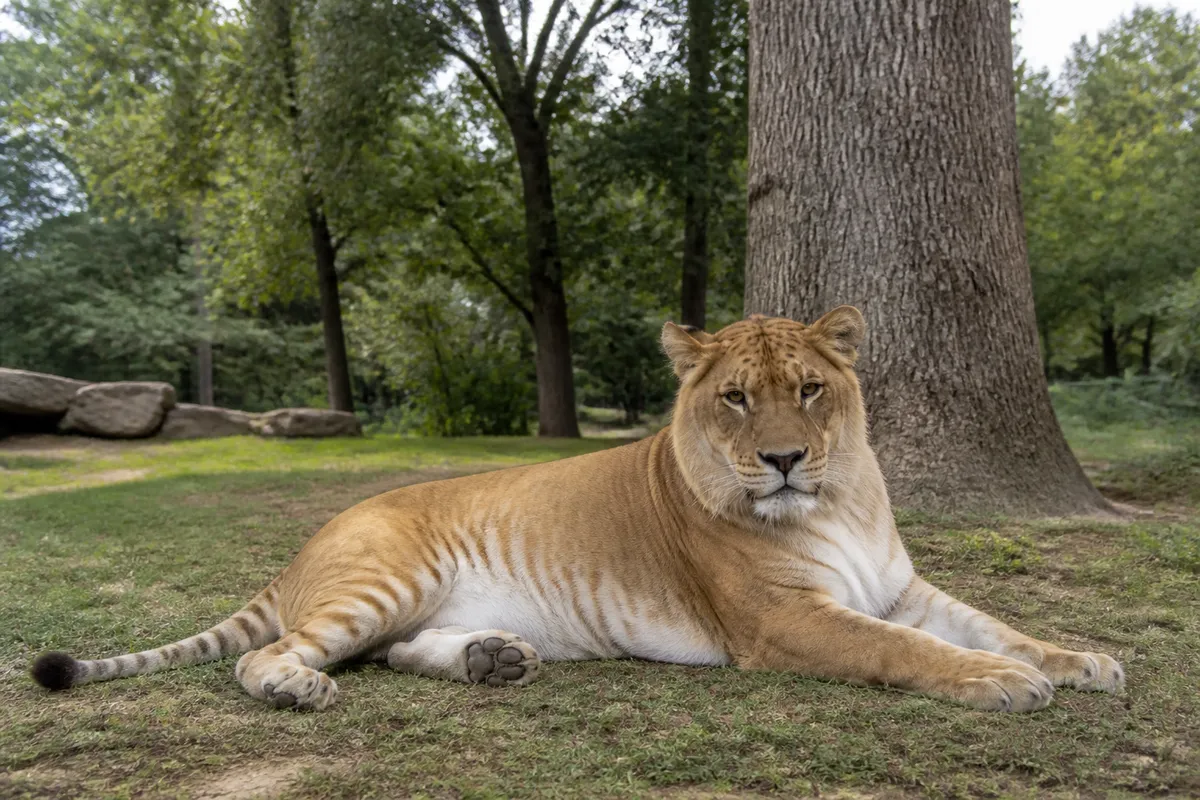
For everyday purposes, people split wild cats into big cats and small cats. Big cats include the lion, tiger, jaguar, leopard and snow leopard. Most other species, from the cougar to the sand cat, count as small cats, even when some of them are larger than a big dog. The clouded leopard sits in between: the Smithsonian's National Zoo describes it as neither a true great cat nor a true small cat, because it can neither roar nor purr.
The size range in the cat family is enormous. At the top is the tiger; our article on the biggest cat in the world covers the giants. At the bottom are small wild cats that weigh only a few pounds.
Wild cat types at a glance
Here is a quick overview of some well-known wild cats from different parts of the world, with typical weights from zoo and university sources.
| Species | Where it lives | Typical adult weight | Notable trait |
|---|---|---|---|
| Tiger | Asia, from Russia to Sumatra | Up to about 660 lb (Amur tiger males) | Largest wild cat |
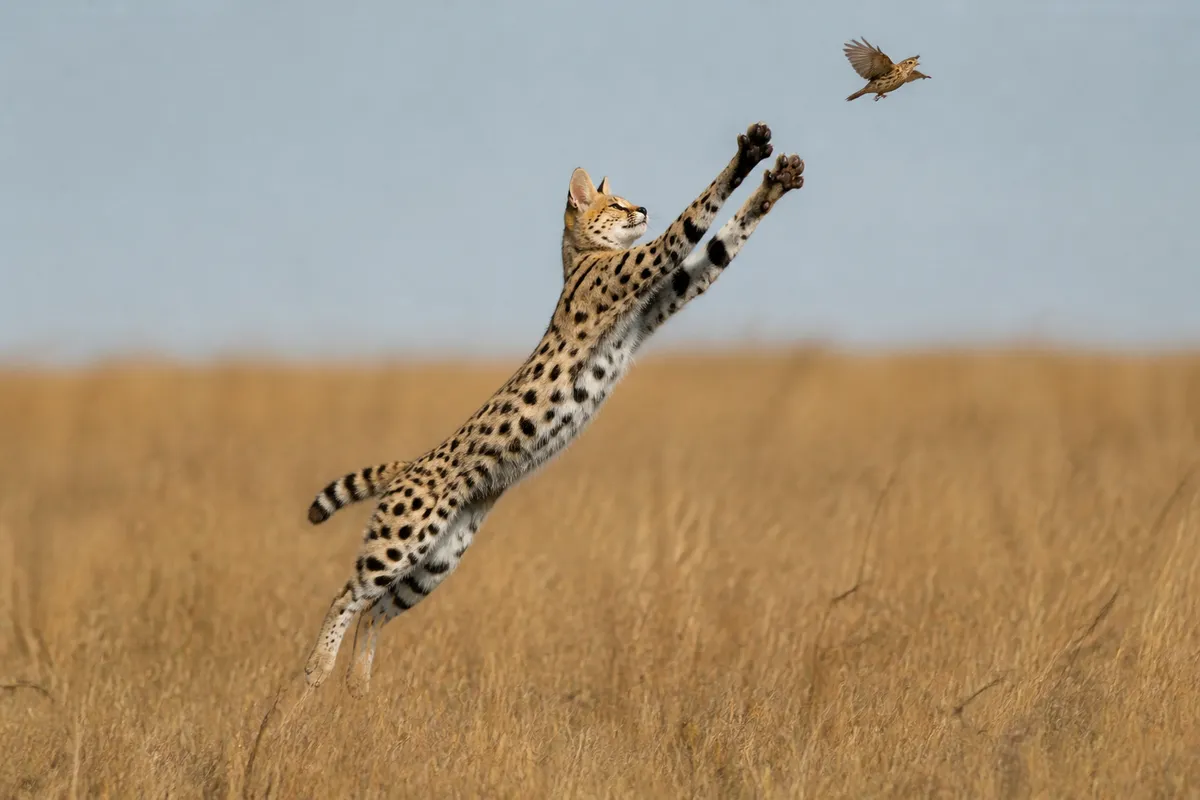
| Serval | African savannas near water | About 15 to 40 lb | Longest legs and largest ears for its size |
| Fishing cat | South and Southeast Asia wetlands | About 11 to 31 lb | Swims readily, partly webbed front toes |
| Jungle cat | Egypt and the Middle East to Southeast Asia | About 9 to 35 lb | Lives near water and reed beds |
| Leopard cat | South, East and Southeast Asia | About 7 to 15 lb | Size of a large house cat, spotted coat |
| Margay | Central and South American forests | About 6 to 9 lb | Can rotate its hind feet to climb down headfirst |
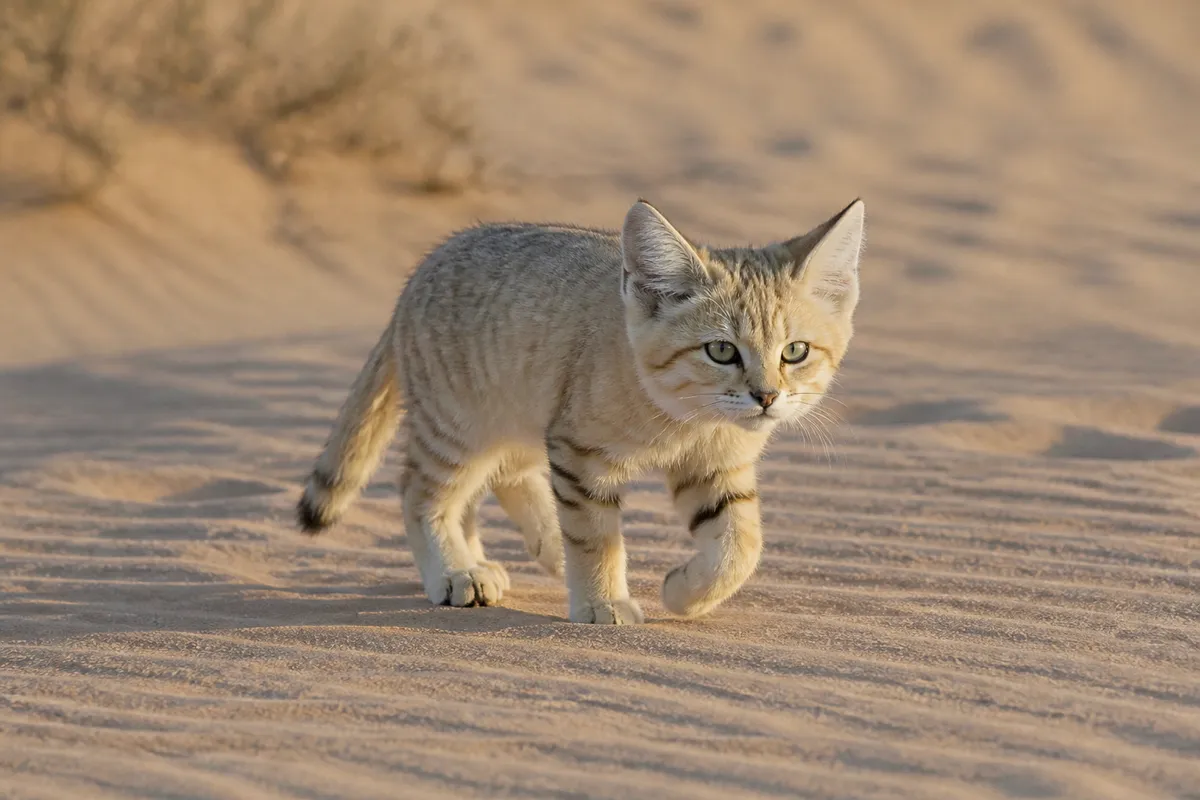
| Sand cat | Deserts of North Africa, the Middle East and Central Asia | About 3 to 7.5 lb | Furry soles for hot sand |
African wild cat: the ancestor of your house cat
Every pet cat in your neighborhood descends from a wild cat. A landmark genetic study by Carlos Driscoll and colleagues, published in Science in 2007, analyzed 979 domestic cats and wildcats from Europe, the Near East, Central Asia, southern Africa and China. It concluded that cats were domesticated in the Near East, probably around the time farming villages spread through the Fertile Crescent, and that domestic cats trace back to at least five founders from that region.
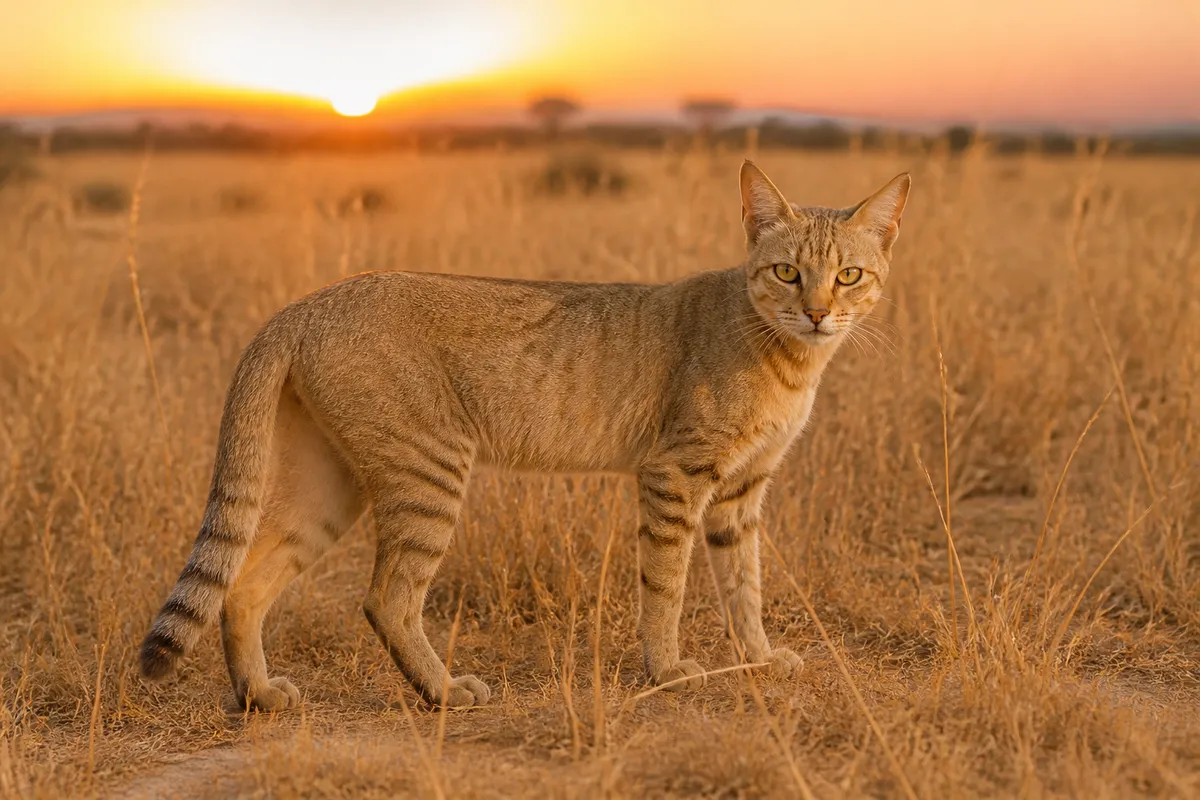
Today that ancestor is usually called the African wildcat or Near Eastern wildcat, Felis lybica. It is a sandy, lightly striped cat that looks a lot like a slim tabby with longer legs. The likely story is that grain stores attracted rodents, rodents attracted wildcats, and the boldest cats learned that humans were useful. Cats, in other words, domesticated themselves and then hired us as staff.
Our house cat article covers how today's pet cat differs from its wild relatives.
African cats beyond the lion
Africa is home to some of the most striking wild cats. Besides the lion, leopard and cheetah, the continent has several medium and small species that many people have never heard of.
The serval is the long-legged savanna specialist that can leap high to catch birds; its own article explains why it makes a poor pet. The caracal, with its long black ear tufts, ranges across Africa and the Middle East to India. The sand cat lives in true deserts and gets most of its water from its prey.
What these African cats share is a life tuned to one landscape: tall grass and wetlands for the serval, dry scrub for the caracal, open sand for the sand cat. That specialization is part of what makes them so fascinating to watch on a safari or in an accredited zoo, and part of why they struggle when their habitat disappears or when people try to keep them in a living room.
Margay: the acrobat of the rainforest
The margay (Leopardus wiedii) is a small spotted cat of Central and South American forests. According to the University of Michigan's Animal Diversity Web, adults weigh only about 2.6 to 3.9 kg (about 6 to 9 pounds). It looks a bit like a miniature ocelot, with big eyes and a long tail for balance.
Its superpower is climbing. Margays are capable of hind-foot reversal: they can turn their back feet around and descend trees headfirst like a squirrel, even hanging from their hind feet. They hunt mammals, birds, reptiles, insects and even eat some fruit.
A margay cat is sometimes offered in the exotic pet trade, but it is a wild forest animal with complex needs and is protected in its range countries.
Leopard cat, Asian leopard cat and jungle cat
The leopard cat, often called the Asian leopard cat, is one of the most widespread small cats in Asia. Animal Diversity Web describes it as the size of a large house cat, usually 3 to 7 kg, with a pale coat covered in rosettes and four dark bands running from the forehead to the neck. It adapts well and lives in forests, farmland and even near villages. According to The International Cat Association (TICA), the Bengal breed was developed by crossing domestic cats with leopard cats.
The 2017 taxonomic revision split the leopard cat into two species: the mainland leopard cat and the Sunda leopard cat of islands such as Java, Bali, Borneo and Sumatra.
The jungle cat (Felis chaus) is a long-legged, sandy-gray cat with short ear tufts. Despite the name, it prefers wetlands, reed beds and riverbanks more than dense jungle. Its range stretches from Egypt across the Middle East and Central Asia to Southeast Asia, and Animal Diversity Web reports weights of 4 to 16 kg, varying a lot by region.
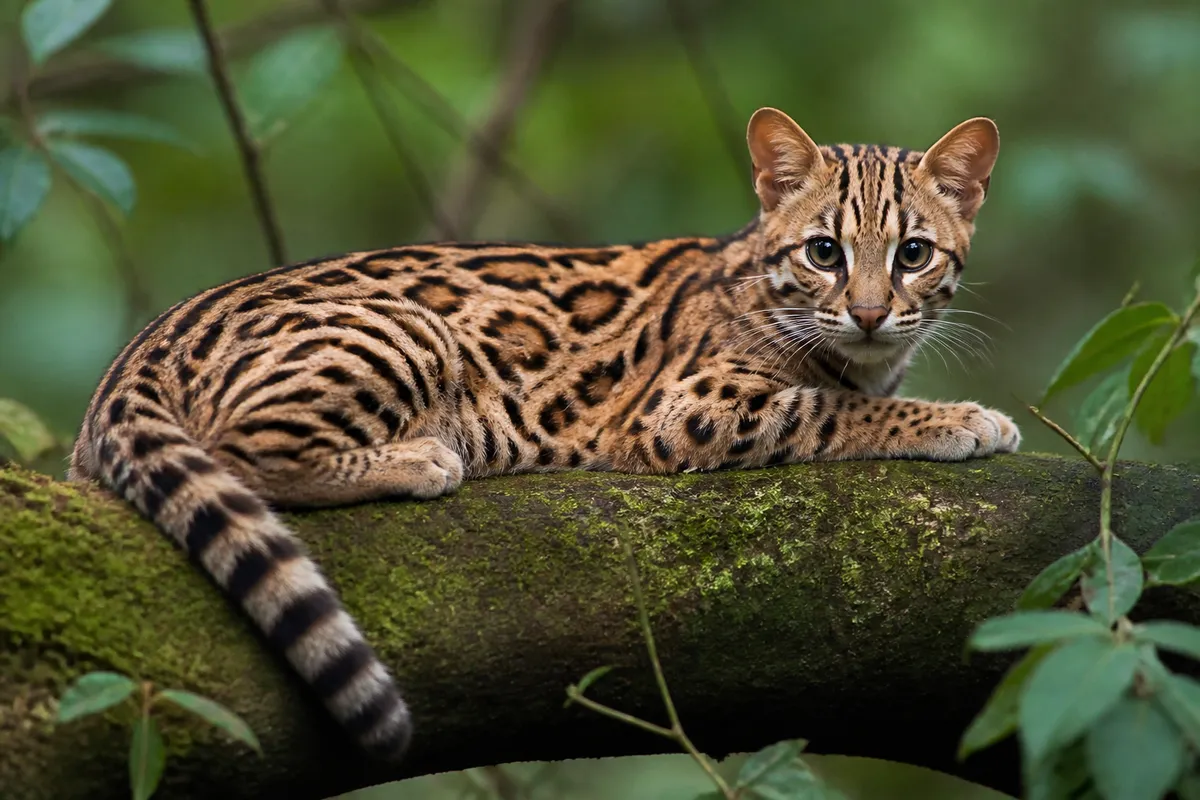
Fishing cat: the wild cat that loves water
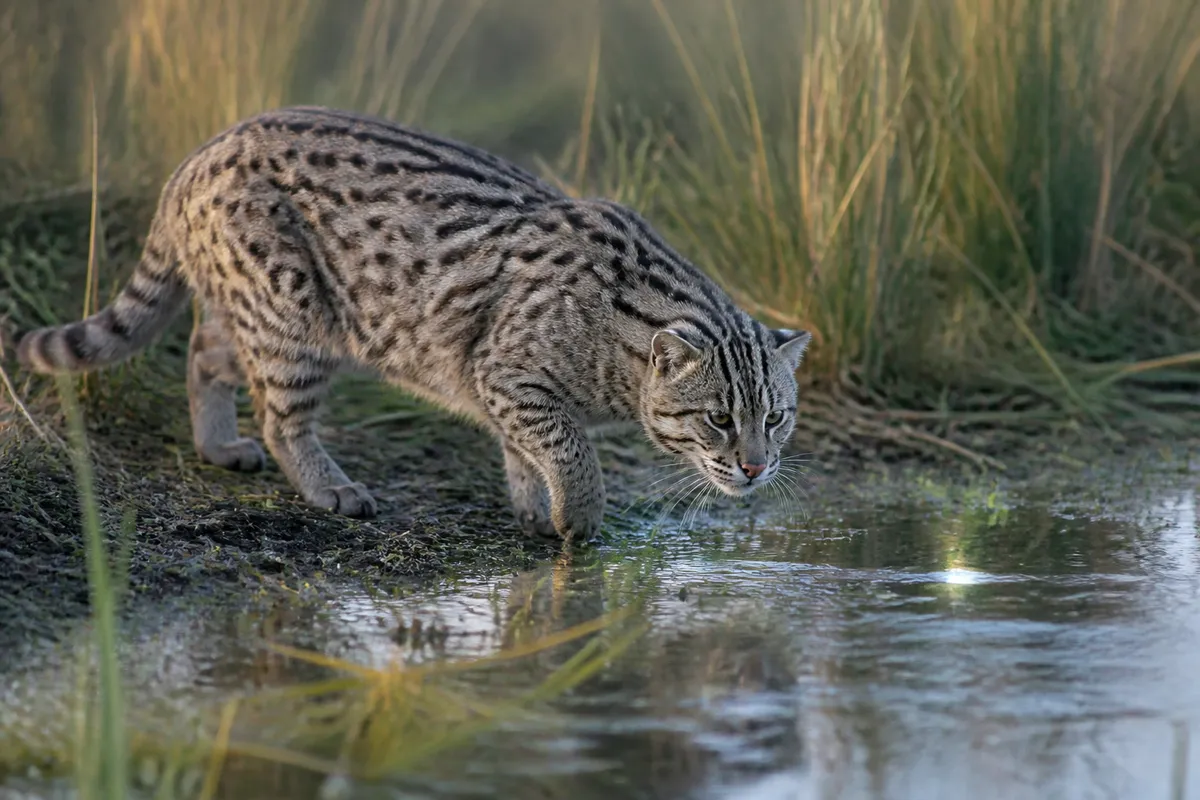
Most cats avoid getting wet. The fishing cat (Prionailurus viverrinus) does the opposite. The Smithsonian's National Zoo describes it as a stocky, deep-chested cat that readily swims and has partly webbed front toes. A dense underlayer of fur keeps water away from its skin.
Adult males weigh about 18 to 31 pounds and females about 11 to 20 pounds, making it one of the larger small cats. It lives in wetlands across South and Southeast Asia, where it hunts fish and other prey in and around the water. People sometimes search for it as a fish cat, which is understandable.
Civet cat and other animals that are not cats
Not every animal with cat in its name belongs to the cat family. Civets, often called civet cats, are members of a separate family, Viverridae, together with genets and linsangs. Their long bodies and pointed snouts give them away once you know what to look for.
If you are trying to name the cat family, the answer is Felidae, and every true wild cat, from the tiger to the margay, is in it. When an animal's common name includes the word cat, it is worth checking which family it really belongs to.
Exotic cats like servals, caracals and their hybrids are sometimes marketed as pets. Wild cats have needs no apartment can meet, laws vary widely by state, and our serval article explains the welfare and legal reality.
Frequently asked questions
How many wild cat species are there?
The IUCN Cat Specialist Group's 2017 revision recognizes 41 cat species, 40 wild and one domestic. The classification is under review as new genetic studies appear, so numbers may change slightly in the future.
What wild cat did house cats come from?
Domestic cats descend from the Near Eastern or African wildcat, Felis lybica. A 2007 genetic study found that cats were domesticated in the Near East, probably as farming villages developed, from at least five founding lineages.
Is a civet a cat?
No. Civets belong to the family Viverridae, along with genets and linsangs. Despite the common name civet cat, they are not part of the cat family, Felidae.
Are wild cats endangered?
Many are. Tigers, for example, are endangered and occupy only about 7 percent of their historic range, according to the Smithsonian's National Zoo. There is good news too: the IUCN moved the Iberian lynx from Endangered to Vulnerable in 2024 after decades of conservation work.
Can you keep a wild cat as a pet?
In many states it is banned or requires permits, and wild cats are poorly suited to home life. They need large territories, specialized diets and experienced care. Responsible sanctuaries and accredited zoos are the right places for them.
Are there wild cats in the United States?
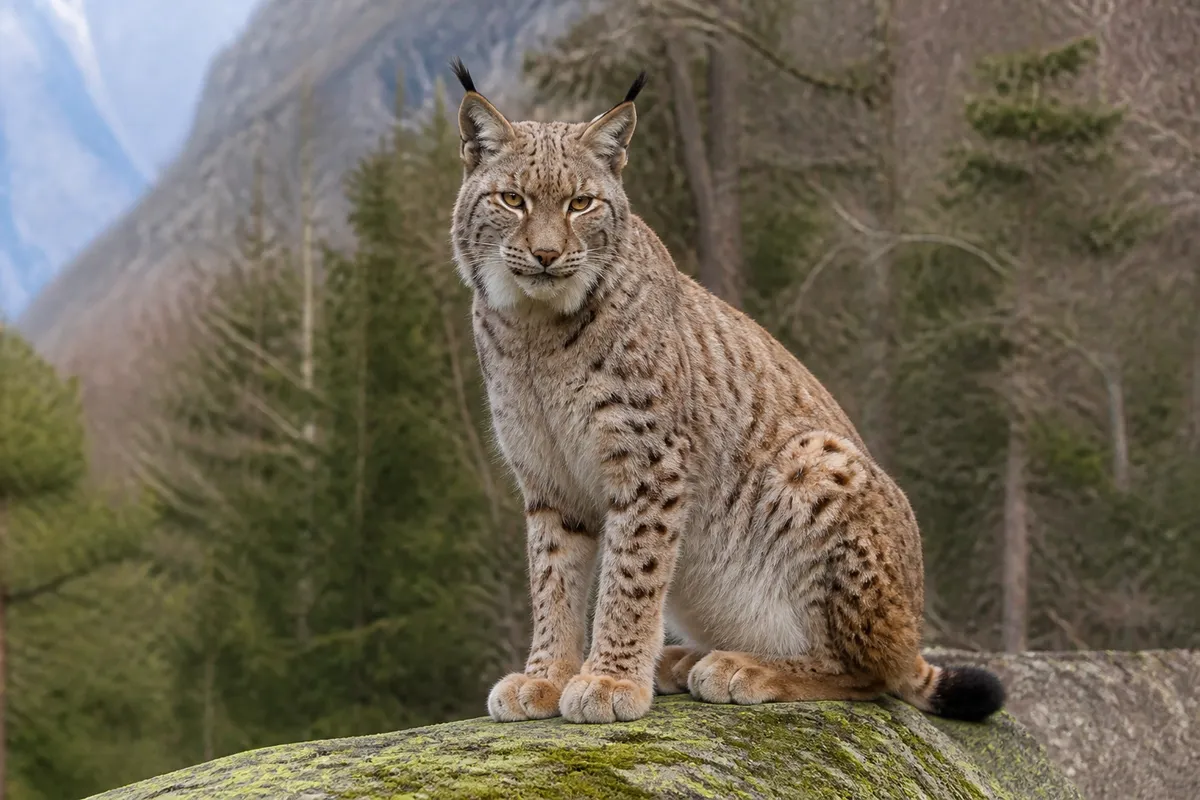
Yes. The bobcat lives in much of the country, the Canada lynx is found in northern forests and is listed as threatened in the lower 48 states, and the cougar roams parts of the West and Florida. Our lynx article covers the bobcat and Canada lynx.
Sources
- Cat Classification, IUCN SSC Cat Specialist Group
- The Near Eastern Origin of Cat Domestication (Science, 2007), Tel Aviv University research portal
- Leopardus wiedii (margay), Animal Diversity Web, University of Michigan
- Prionailurus bengalensis (leopard cat), Animal Diversity Web, University of Michigan
- Felis chaus (jungle cat), Animal Diversity Web, University of Michigan
- Fishing cat, Smithsonian's National Zoo and Conservation Biology Institute
Last reviewed: November 2026