Serval Cat: Facts, Pet Laws, Real Costs and Why It Is Not a House Cat
Cat Knowledge 6 min read reviewed November 2026, 4 sources
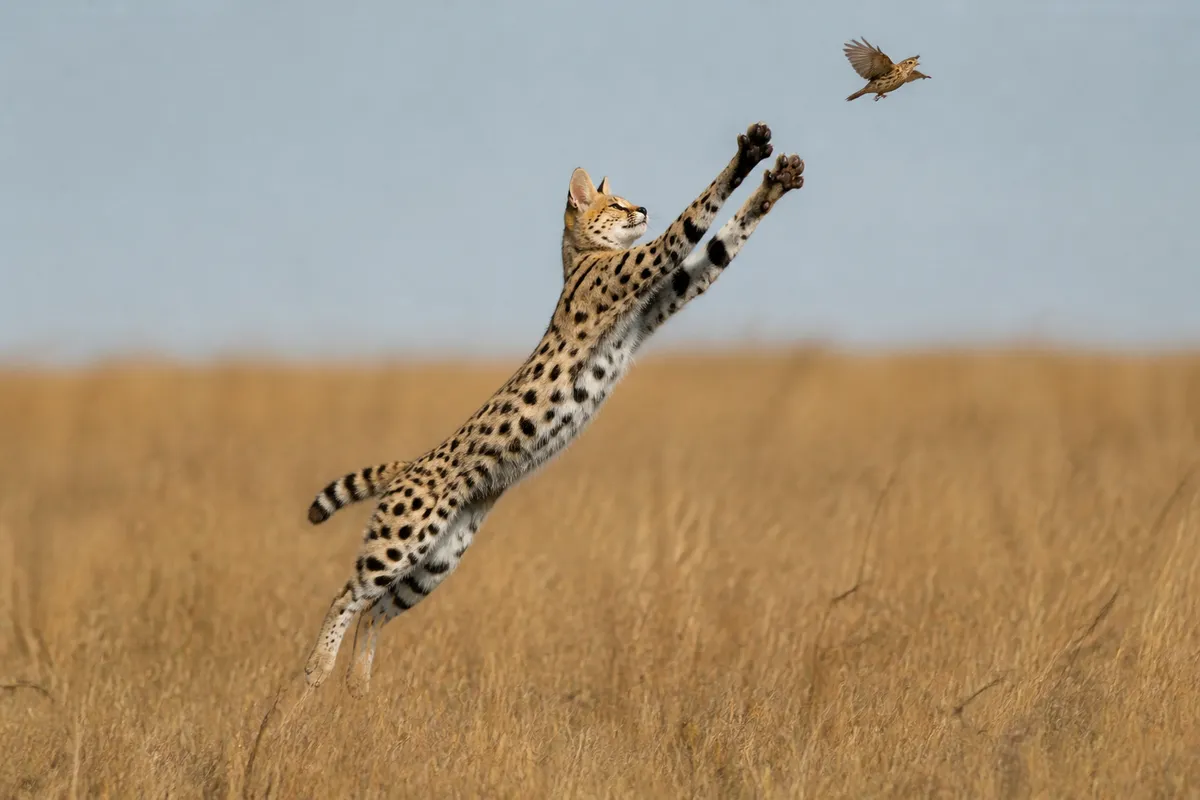
The serval cat is a wild African cat with the longest legs and largest ears for its size of any cat, built to hunt rodents and birds in tall grass. It is not a domesticated pet: servals stay wild animals with wild needs, they are banned or tightly regulated in many states, and keeping one well costs far more than the purchase price. Here is what a serval is like, where ownership is legal, and what to consider instead if you love the look.
What is a serval cat?
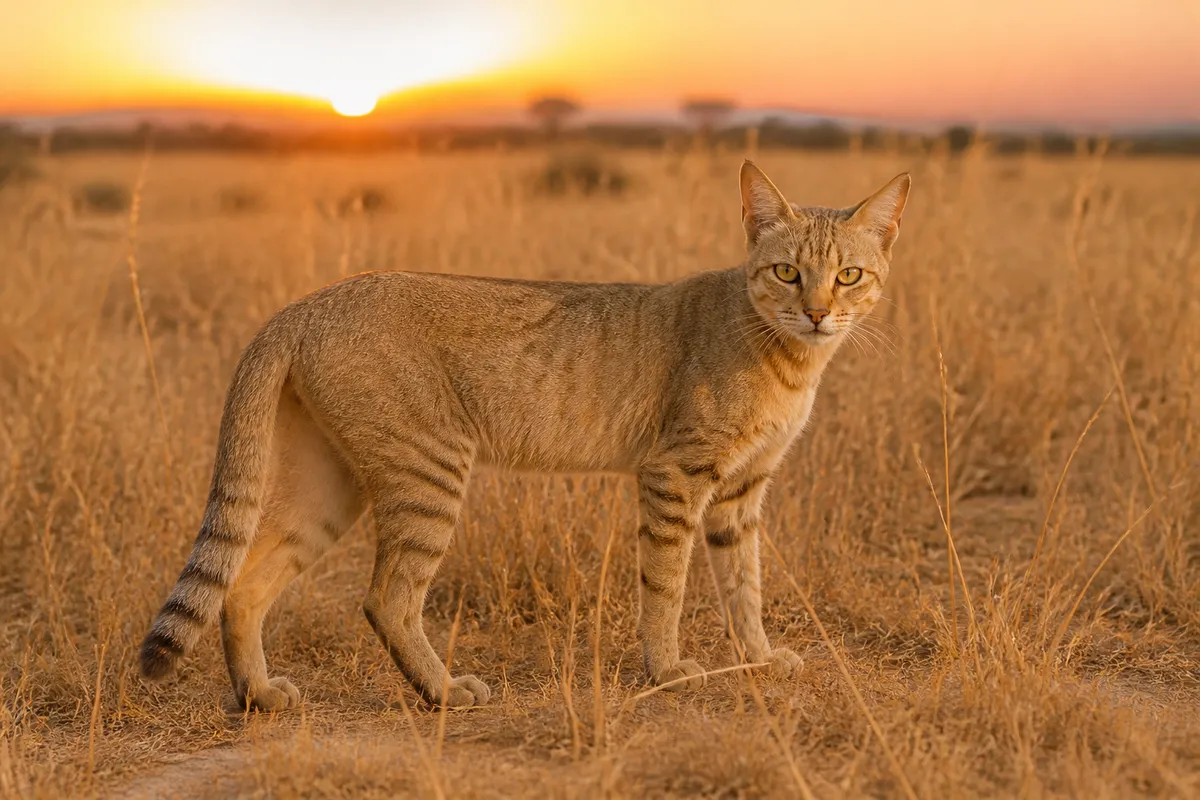
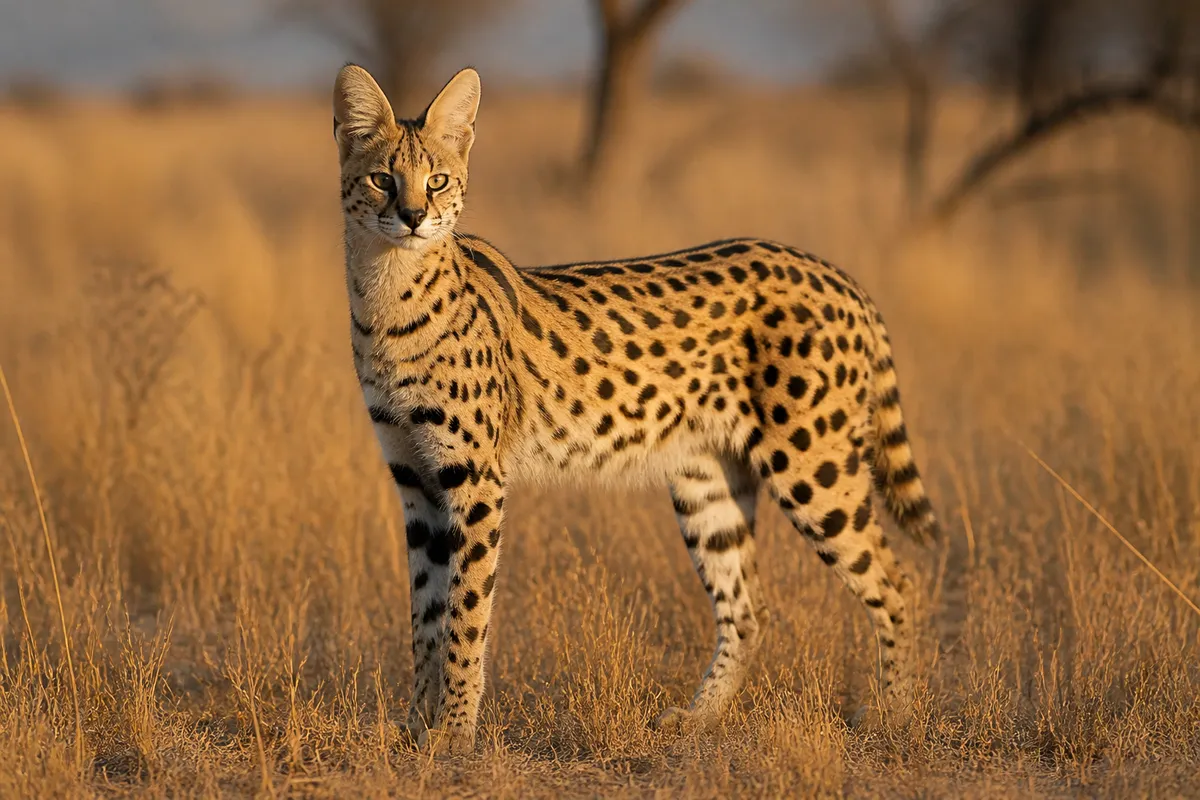
The serval (Leptailurus serval) lives in the savannas of central and southern Africa, usually near streams and rivers with thick vegetation. According to the San Diego Zoo, servals have the longest legs and the largest ears relative to body size of any cat, which has earned them the nickname giraffe cat.
Adults are 23 to 36 inches long, stand 17 to 24 inches at the shoulder and weigh about 15 to 40 pounds, with males larger than females. Their golden coat is covered in black spots and stripes. In zoos, servals can live up to 19 years.
In the wild, servals are mostly active at dawn and dusk. They sit in tall grass, locate prey with those huge ears and pounce. Standing on their hind legs, they can jump more than 9 feet straight up to snatch a bird. They mainly eat small rodents but also take birds, frogs, reptiles, crabs and large insects.
| Trait | Serval |
|---|---|
| Scientific name | Leptailurus serval |
| Native range | Savannas of central and southern Africa |
| Weight | About 15 to 40 pounds |
| Shoulder height | 17 to 24 inches |
| Diet in the wild | Mainly small rodents, also birds, frogs, reptiles, crabs, insects |
| Social life | Mostly solitary, marks territory by spraying urine |
| Lifespan | Up to 19 years in zoos |
| Conservation | Declining in places; the North African subspecies is endangered |
Servals in the wild: family life and conservation
Serval mothers raise their kittens alone. According to the San Diego Zoo, there is no fixed breeding season; after a pregnancy of about 70 to 79 days, a female usually has around three kittens in a den of tall grass or an abandoned burrow. Newborns weigh only about half a pound, and the young reach maturity at 18 to 24 months.
As a species, the serval is not considered endangered overall, but populations have declined in places, and the North African subspecies is endangered. The main threats are habitat loss, climate change and hunting for fur. Supporting organizations that protect African grasslands and wetlands helps servals along with the many other animals that share their habitat.
Serval cat pet: what living with one is really like
Videos of servals lounging on sofas make them look like oversized house cats. Daily life is different. A serval is an athletic hunter that is built to cover large areas, leap high and catch live prey. Even hand-raised servals keep these instincts.
In the wild, adult servals are mostly solitary and mark their territory by spraying urine on bushes and trees. In a home, that instinct does not simply switch off, and a wild cat spraying the living room is a very different problem from an occasional accident. A serval also needs a diet that resembles its natural prey, secure outdoor space, sturdy enclosures and a vet experienced with exotic cats, which can be hard to find.
There is also the question of welfare and public safety. A frightened or overstimulated 30-pound wild cat can injure children, guests and other pets. When things go wrong, rehoming a wild cat is far harder than rehoming a house cat, because few people and places are equipped to take one.
- Needs a large, secure enclosure plus enrichment for hunting, climbing and jumping
- Urine marking is normal behavior and often persists indoors
- Specialized diet closer to whole prey than to regular cat food
- Exotic-animal vet care, often far away and more expensive
- Can live up to 19 years, so this is a two-decade commitment
- Permits, inspections, insurance or outright bans depending on where you live
Is it legal to own a serval in the US?
It depends on your state, county and city. Servals are not covered by the federal Big Cat Public Safety Act, which the US Fish and Wildlife Service says applies to lions, tigers, leopards, snow leopards, clouded leopards, jaguars, cheetahs, cougars and their hybrids. That leaves small and medium wild cats to state and local law.
State rules fall into a few groups. The Animal Legal and Historical Center at Michigan State University counts 20 states with comprehensive bans on dangerous exotic animals (typically including wild cats), 13 with partial bans, 14 that use a license or permit system, and 3 with no direct ban. Within a state, counties and cities often add their own restrictions, and HOA rules and landlords may forbid wild animals regardless.
Before you even look at a breeder, call your state wildlife agency and your local animal control and ask in writing whether a serval is allowed and which permits are required. Laws change, and online state-by-state lists are often out of date.
Serval cat price: what drives the cost
We do not list a serval cat price, because there is no reliable, independent source for it and asking prices vary widely. What we can say is that the purchase price is only the beginning. The ongoing costs of caring for a serval properly are much higher than for a domestic cat.
If you see a serval cat for sale, be very cautious. Sellers who do not ask about your permits, enclosure and experience, who ship kittens sight unseen, or who promise a litter-trained, apartment-friendly serval are red flags. Buying from such sources supports a trade that produces many surrendered and neglected animals.
- Permits, licenses and any required liability insurance
- Building and maintaining a large, escape-proof outdoor enclosure
- A prey-like diet for up to 19 years
- Exotic-animal vet visits, vaccines and emergency care
- Repairs to the home from urine marking, scratching and jumping
- Travel and boarding, since few pet sitters or kennels accept wild cats
Savannah cat: the domestic breed with serval ancestry
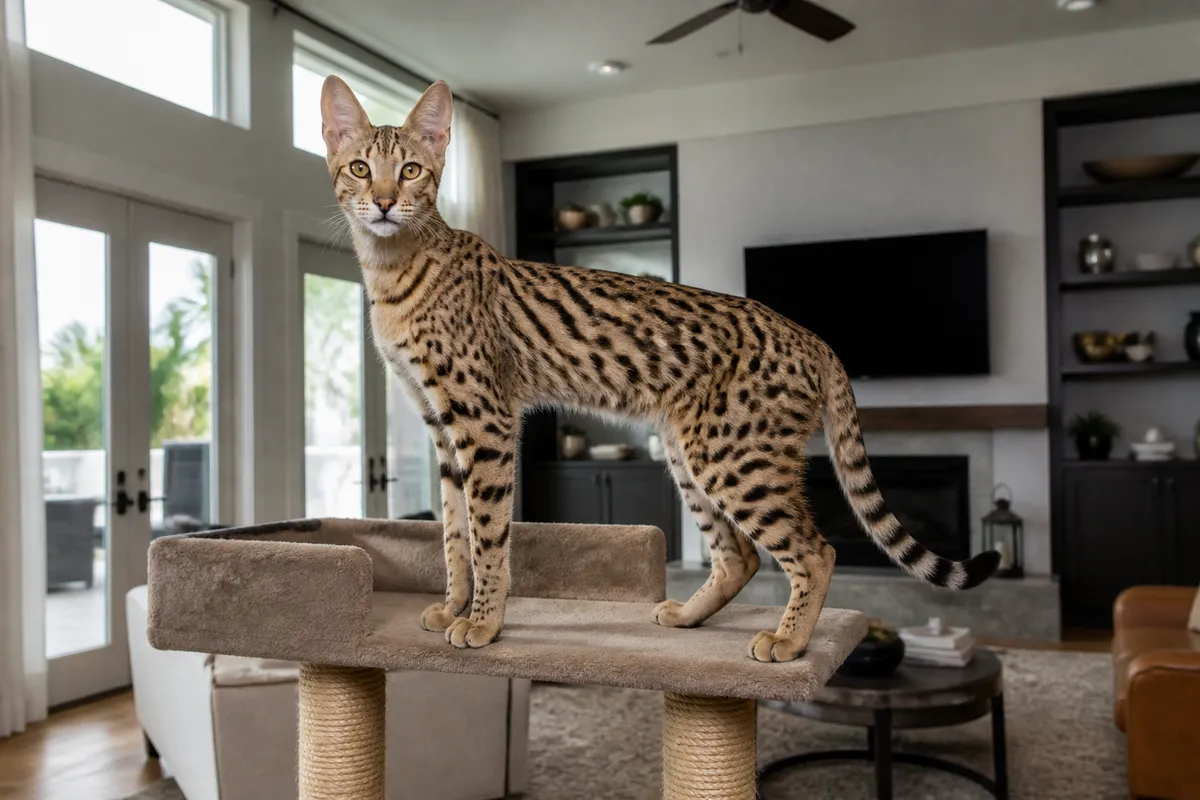
If you love the serval look, the Savannah cat is the breed most people consider next. According to The International Cat Association (TICA), the first known Savannah was born in 1986 from a domestic cat and an African serval. TICA accepted the breed for registration in 2001 and for championship status in 2012.
TICA describes Savannahs as tall, lean, spotted cats with long legs, big upright ears and a very active, curious personality. They need lots of daily interaction and play, many love water and fetch, and they are generally not lap cats. Most are about the size of a large domestic cat.
One important caveat: TICA itself notes that the Savannah is still illegal in some states and countries because of its serval ancestry, so check local laws for this breed too.
Better ways to enjoy servals
Servals are best admired where they can be servals. Accredited zoos and true sanctuaries that do not breed or sell animals let you see them hunt, leap and listen in surroundings designed for them. The San Diego Zoo notes that fewer than 300 servals live in zoos worldwide, so seeing one is still special.
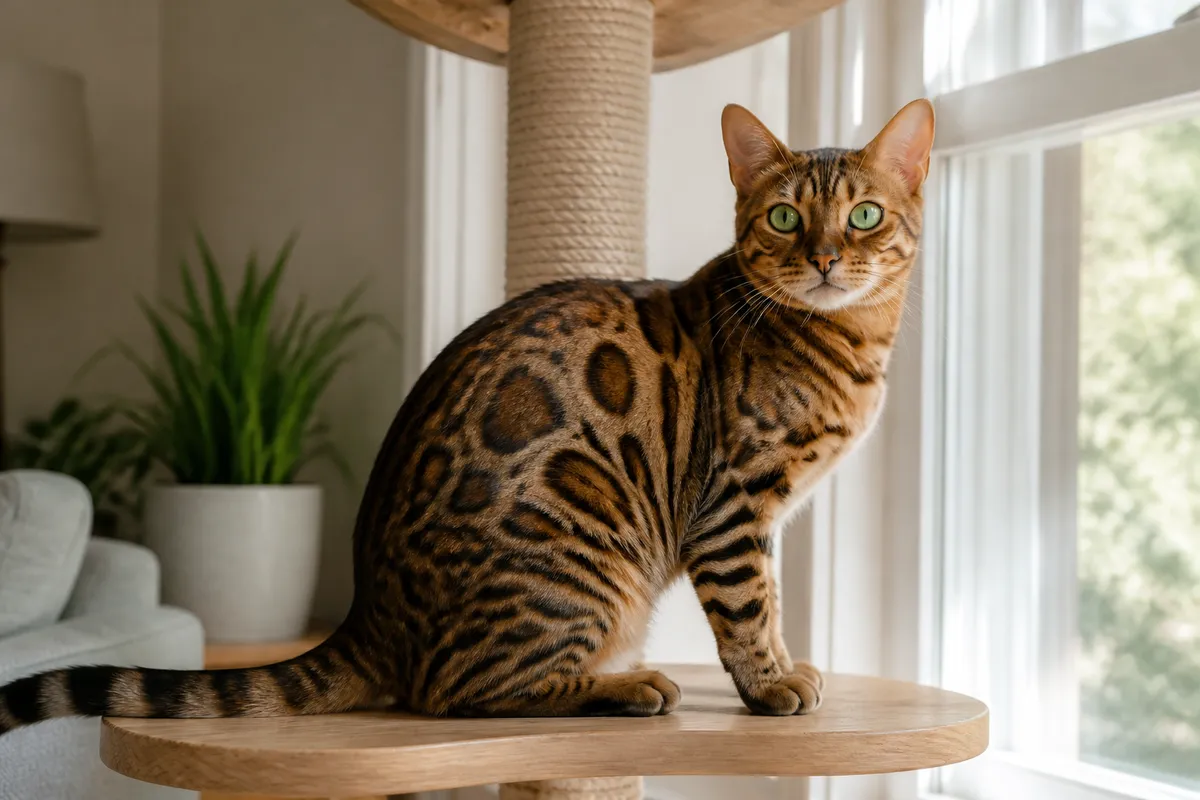
If you want a spotted, athletic companion at home, domestic breeds like the Bengal or an energetic shelter cat with a tabby coat can give you plenty of wild looks and personality without the permits. Supporting conservation of servals in the wild, where habitat loss and hunting for fur are threats, is another way to help.
Frequently asked questions
Do serval cats make good pets?
For most people, no. Servals remain wild animals that spray urine to mark territory, need large enclosures and a prey-like diet, and require exotic-animal vet care. They are also banned or regulated in many states.
Is a serval cat legal in my state?
It depends. Some states ban dangerous exotic animals including wild cats, others require permits, and counties and cities can add rules. Contact your state wildlife agency and local animal control and get the answer in writing.
How big does a serval cat get?
Adult servals weigh about 15 to 40 pounds and stand 17 to 24 inches at the shoulder, with long legs and very large ears. Males are bigger than females.
How much does a serval cat cost?
There is no reliable public price, and asking prices vary. The bigger costs come later: permits, a secure enclosure, a specialized diet and exotic vet care for up to about 19 years.
What is the difference between a serval and a Savannah cat?
A serval is a wild African cat. A Savannah is a domestic cat breed recognized by TICA that was developed from crosses between servals and domestic cats. Savannahs are smaller, but some places restrict them too.
Is the serval covered by the Big Cat Public Safety Act?
No. The federal law covers lions, tigers, leopards, snow leopards, clouded leopards, jaguars, cheetahs, cougars and their hybrids. Servals are regulated by state and local laws instead.
Sources
- Serval, San Diego Zoo Wildlife Alliance
- What You Need to Know About the Big Cat Public Safety Act, U.S. Fish and Wildlife Service
- Map of Private Exotic Pet Ownership Laws, Animal Legal and Historical Center, Michigan State University
- Savannah, The International Cat Association (TICA)
Last reviewed: November 2026