Cat Years to Human Years: Age Chart and How Cats Really Age
Cat Knowledge 6 min read reviewed November 2026, 2 sources
To convert cat years to human years, count the first year as about 15 human years, the second year as bringing your cat to about 24, and then add 4 human years for every year after that. So a 5-year-old cat is roughly 36 in human terms and a 10-year-old is about 56. The old rule of multiplying by seven does not work, because cats grow up very fast and then age more slowly. Here is the full chart and what each life stage means for your cat's care.
Why the times-seven rule is wrong
The idea that one cat year equals seven human years is easy to remember, but it misses how cats actually develop. In their first year, cats go from helpless newborn to fully grown, sexually mature adult. No human gets through childhood and puberty that fast.
After that sprint, the pace slows down. A cat of three is a young adult, not a 21-year-old about to finish college, and a 15-year-old cat is a true senior, not a 105-year-old. That is why modern charts, like the one from International Cat Care (iCatCare), use a fast start and a steady pace afterward.
The short version of the formula: the first two years of a cat's life equal about 24 human years, and every year after that equals about 4 human years.
Cat to human years chart
This chart follows the age comparison published by iCatCare. Treat the numbers as a guide to life stage, not an exact biological measurement.
| Cat's age | Human equivalent | Life stage (iCatCare) |
|---|---|---|
| 1 month | about 1 year | Kitten |
| 3 months | about 4 years | Kitten |
| 6 months | about 10 years | Kitten |
| 12 months | about 15 years | Junior |
| 18 months | about 21 years | Junior |
| 2 years | about 24 years | Junior |
| 3 years | about 28 years | Adult |
| 5 years | about 36 years | Adult |
| 7 years | about 44 years | Mature |
| 10 years | about 56 years | Mature |
| 12 years | about 64 years | Senior |
| 14 years | about 72 years | Senior |
| 15 years | about 76 years | Super senior |
| 18 years | about 88 years | Super senior |
| 20 years | about 96 years | Super senior |
| 25 years | about 116 years | Super senior |
How to calculate cat years yourself
If your cat's age is not in the chart, you can work it out in your head. For any cat aged two or older, take the cat's age, subtract 2, multiply by 4, and add 24.
Examples: a 4-year-old cat is (4 minus 2) times 4 plus 24, which is 32. A 9-year-old cat is (9 minus 2) times 4 plus 24, which is 52. A 16-year-old cat is 80 in human terms, and yes, that is why your senior cat has opinions about drafts.
For cats under two, use the chart, since the first two years move so quickly. A 6-month-old kitten is roughly a 10-year-old child, and a 1-year-old cat is roughly a 15-year-old teenager, which explains a lot about the curtains.
Cat life stages and what they mean
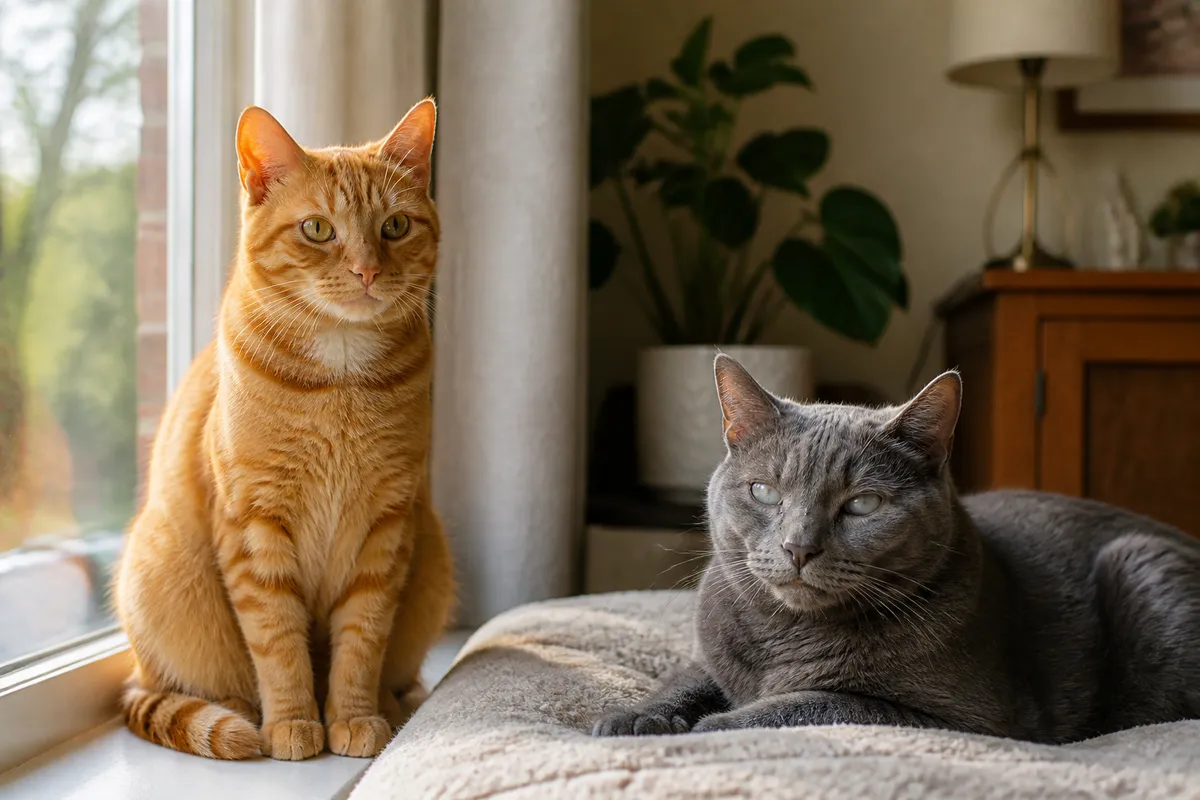
Veterinarians use life stages to plan care. The 2021 AAHA/AAFP Feline Life Stage Guidelines define four age-related stages plus an end-of-life stage that can come at any age: kitten from birth to 1 year, young adult from 1 to 6 years, mature adult from 7 to 10 years, and senior from 10 years on.
iCatCare uses a slightly finer split with six stages, which is what the chart above shows. Both systems agree on the big picture: rapid growth in the first year, a long adult phase, and gradual aging after about 10.
The guidelines also stress that age groups are not absolutes. One cat may still be leaping onto the fridge at 12 while another slows down at 9, so your vet looks at the individual cat at every exam.
- Kitten (0 to 1 year): fast growth, vaccines, parasite control, spay or neuter, lots of play and socializing
- Young adult (1 to 6 years): peak fitness; yearly checkups, weight control, dental care
- Mature adult (7 to 10 years): similar to humans in their mid-40s to mid-50s; watch weight and activity, consider routine bloodwork
- Senior (10 years and older): more frequent checkups, attention to joints, kidneys, thyroid, teeth and changes in behavior
- End of life (any age): comfort, quality of life and an honest conversation with your vet
How cat aging actually works
Aging is not only about the number of birthdays. Genetics, body weight, diet, dental health, indoor or outdoor lifestyle and regular vet care all shape how quickly a cat's body changes. iCatCare notes that cats live on average around 12 to 14 years and that it is not unusual for some to reach their late teens or early twenties; our cat lifespan guide goes deeper into what helps cats live longer.
Cats are also masters at hiding discomfort. Knowing your cat's age in human years helps you anticipate problems that become more likely with time, such as arthritis, dental disease, kidney disease or an overactive thyroid. A 13-year-old cat is the equivalent of a person in their late 60s, which is a good reminder to book those senior checkups.
Signs your cat is getting older
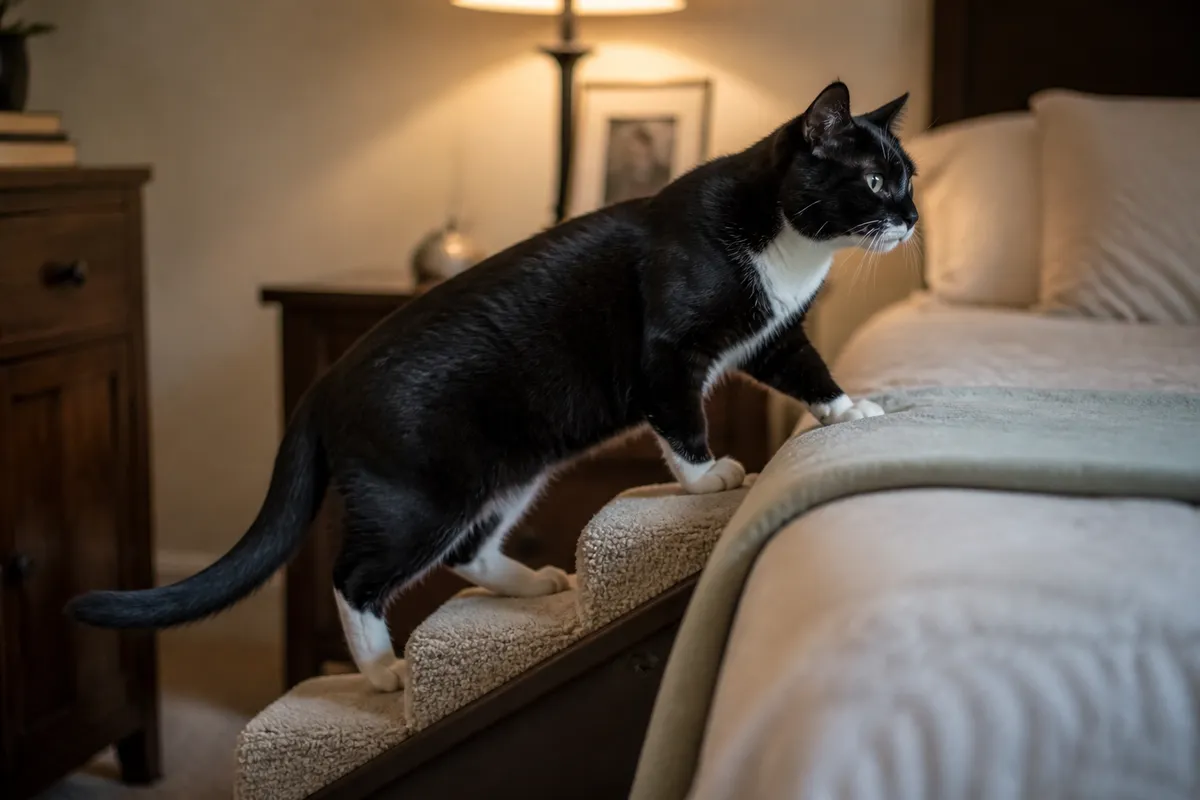
Age creeps up quietly. iCatCare points out that by the senior stage, many cats become less active and may need help reaching favorite places, such as ramps to a bed or a litter box with lower sides. Watch for changes like these and mention them to your vet, because many have treatable causes.
- Sleeping more and playing less
- Hesitating before jumping, or no longer using high perches
- Weight loss or gain without a diet change
- Drinking or urinating more
- Changes in grooming, a scruffy or matted coat
- Bad breath, dropping food or chewing on one side
- Confusion, nighttime yowling or changes in litter box habits
What your cat's human age means for everyday care
Translating cat years into human years is more than a party trick. It helps you match your expectations and your home to your cat's stage of life.
A kitten in its first months is the equivalent of a child, and like a child it needs safe exploration, plenty of play and gentle handling so it learns that people, carriers and nail trims are normal. Between about 7 and 18 months, your cat is a teenager: energy peaks, boundaries get tested, and bedtime zoomies are standard. More play sessions, puzzle feeders and climbing space help much more than scolding.
From the young adult years through the mid-40s in human terms, most cats are at their fittest. This is the time to keep an eye on weight, because a few extra ounces a year add up, and to keep up daily play.
Once your cat reaches the senior years, small adjustments make life easier. iCatCare suggests things like a litter box with lower sides and ramps to favorite sleeping spots. Add a warm bed away from drafts, food and water on the same floor as your cat's favorite room, and more frequent vet visits, because your cat is now aging about four human years every calendar year.
How to estimate the age of an adopted cat
If you adopted an adult cat with an unknown birthday, your vet can give you an estimate. Clues include the teeth (adult teeth come in during kittenhood, then wear and tartar build up over the years), the eyes, muscle tone, coat condition and overall body shape.
These are estimates, not certainties, so a vet may say something like four to six years. Pick a birthday you like, such as your adoption day, and use the chart to translate. Your cat will not check your math, but it will expect a celebration.
Frequently asked questions
How old is a 1-year-old cat in human years?
About 15 human years. Cats grow up very fast in their first year, reaching their adult size and sexual maturity, which is why a 1-year-old cat is often compared to a teenager.
How old is a 10-year-old cat in human years?
About 56 human years using the iCatCare chart. Vets consider cats 10 years and older to be seniors, so regular checkups become more important from this age on.
What is the formula for cat years?
The first two years equal about 24 human years. After that, add about 4 human years for each cat year. For example, a 6-year-old cat is about 40 and an 8-year-old is about 48.
Is one cat year equal to seven human years?
No. That rule underestimates how fast young cats mature and overestimates the age of older cats. A 1-year-old cat is closer to 15 human years, but a 10-year-old is about 56, not 70.
At what age is a cat considered a senior?
The 2021 AAHA/AAFP Feline Life Stage Guidelines consider cats seniors from 10 years of age. iCatCare places the senior stage at 11 to 14 years and calls cats 15 and older super seniors.
How old is a 20-year-old cat in human years?
About 96 human years on the iCatCare chart. Cats that reach 20 are true super seniors and usually need extra comfort, warmth and regular veterinary monitoring.
Sources
- How to tell your cat's age in human years, International Cat Care
- 2021 AAHA/AAFP Feline Life Stage Guidelines, American Association of Feline Practitioners
Last reviewed: November 2026