Cat House Guide: Indoor Hideouts, Cardboard Houses and How to Choose
Gear Guides 6 min read reviewed November 2026, 2 sources
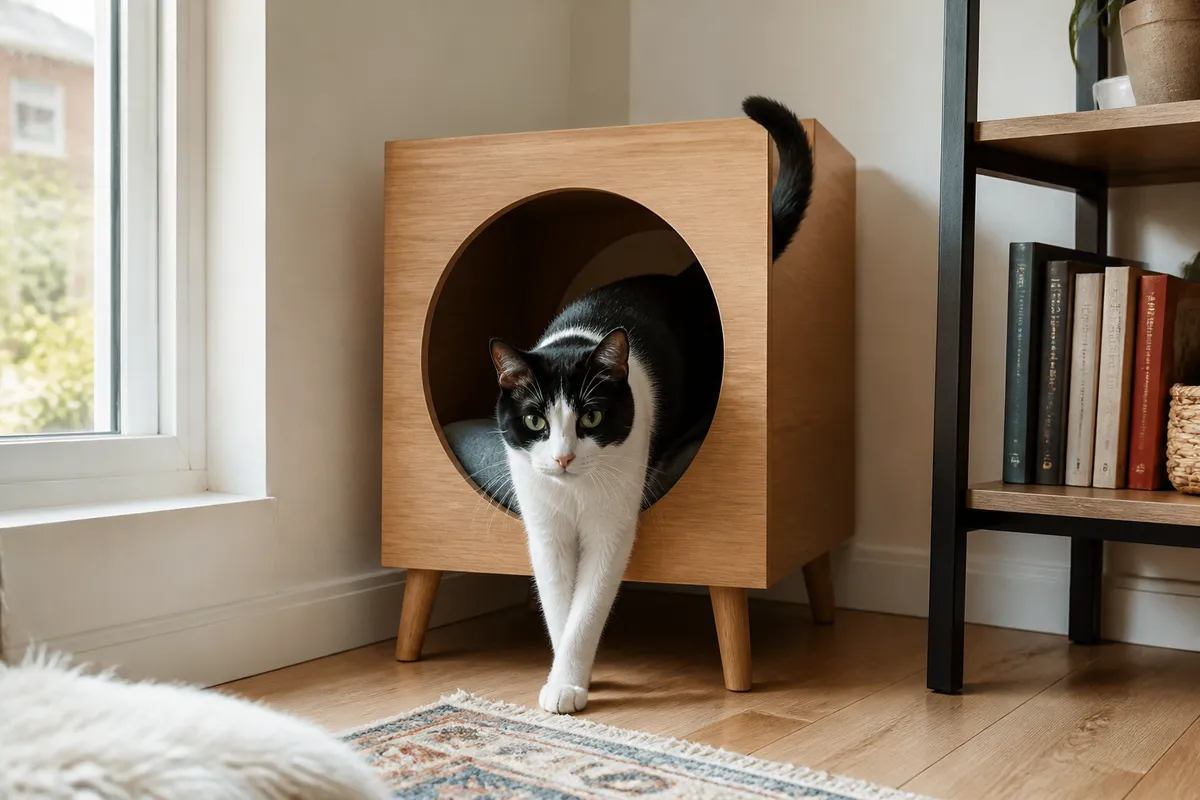
An indoor cat house gives your cat something every cat needs: a safe, enclosed spot to retreat to when the vacuum, the visitors or the new dog get to be too much. Veterinary environmental guidelines list a safe hiding place as a core need, and a cozy cat house is one of the easiest ways to provide it. Below you will find why hideouts matter, which types work, and how to choose one your cat will actually use instead of the shipping box it came in.
Why indoor cats need a cat house or hideout
Cats are both predators and prey. In the wild, a small cat stays safe by watching from cover. Your apartment cat keeps that instinct: when something feels threatening, the first move is to hide. Without a good hiding place, a stressed cat may squeeze behind the couch or the litter box, which does not let it relax.
The feline environmental needs guidelines from the American Association of Feline Practitioners (AAFP) and International Society of Feline Medicine, summarized by VCA Animal Hospitals, start with a safe place as the first of five pillars. They suggest at least one safe space per cat, such as a cardboard box, a carrier, a raised perch or a hideaway hole.
Research supports this. In a small study at a Dutch shelter, newly arrived cats that had a hiding box showed lower stress scores in the first days and adjusted faster than cats without one. Your living room is not a shelter, but the principle is the same: a place to hide helps cats cope with change.
- Moving, renovations or new furniture
- Visitors, parties and holidays
- A new cat, dog or baby in the home
- Loud noise such as thunderstorms or fireworks
- Shy or newly adopted cats settling in
Types of indoor cat houses compared
Cat houses come in more shapes than most cats have opinions, and that is saying something. The best type depends on your cat's size, whether it likes to hide low or perch high, and how much you care about how it looks in your living room.
| Type | Good for | Keep in mind |
|---|---|---|
| Cardboard cat house | Trying out a hideout cheaply, scratching, kittens | Wears out and is hard to clean; replace when soiled |
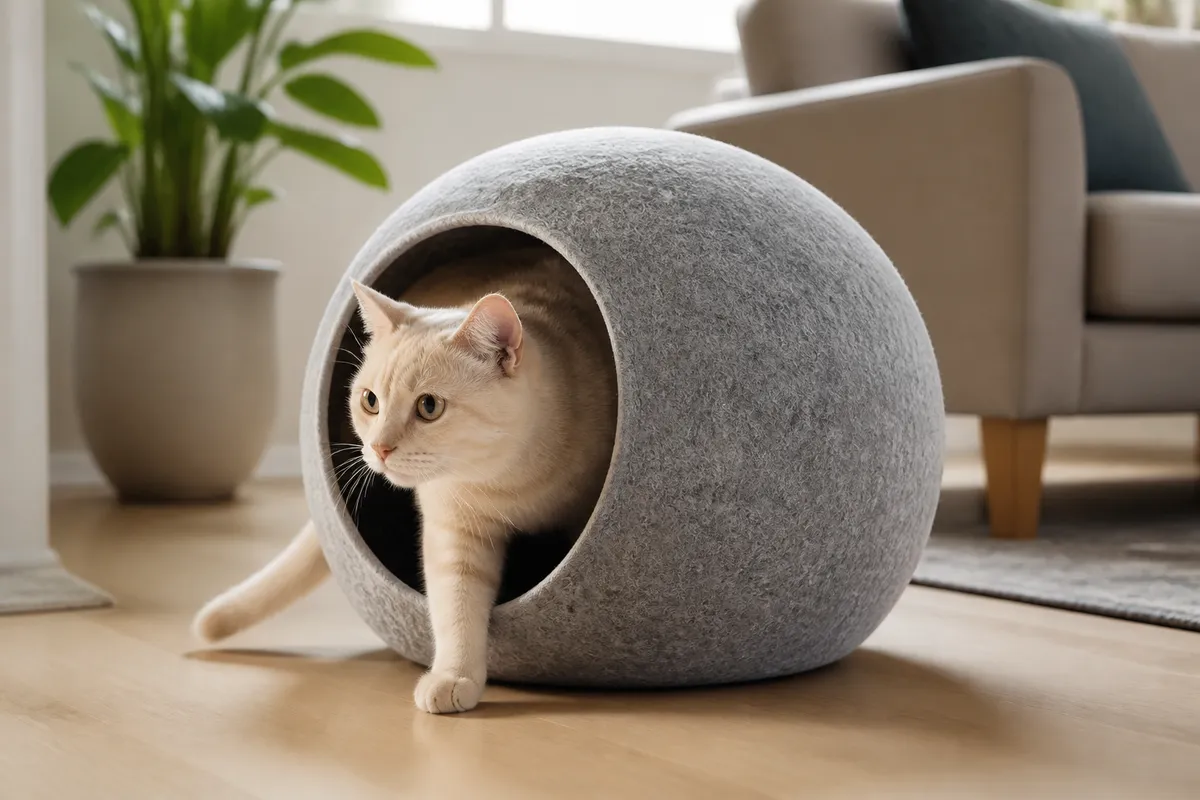
| Felt or wool cave | Cats who like to burrow and sleep enclosed | Choose a washable or easy-to-shake-out model |
| Soft fabric cube or tent | Light, foldable, easy to move between rooms | Thin walls may collapse under bigger cats |
| Wooden cat house or furniture-style hideout | Durability, blends in with home decor | Heavier and pricier; check for smooth edges |
| Covered cave bed | Cats who want warmth and padding in one spot | Can get warm; make sure the cushion washes easily |
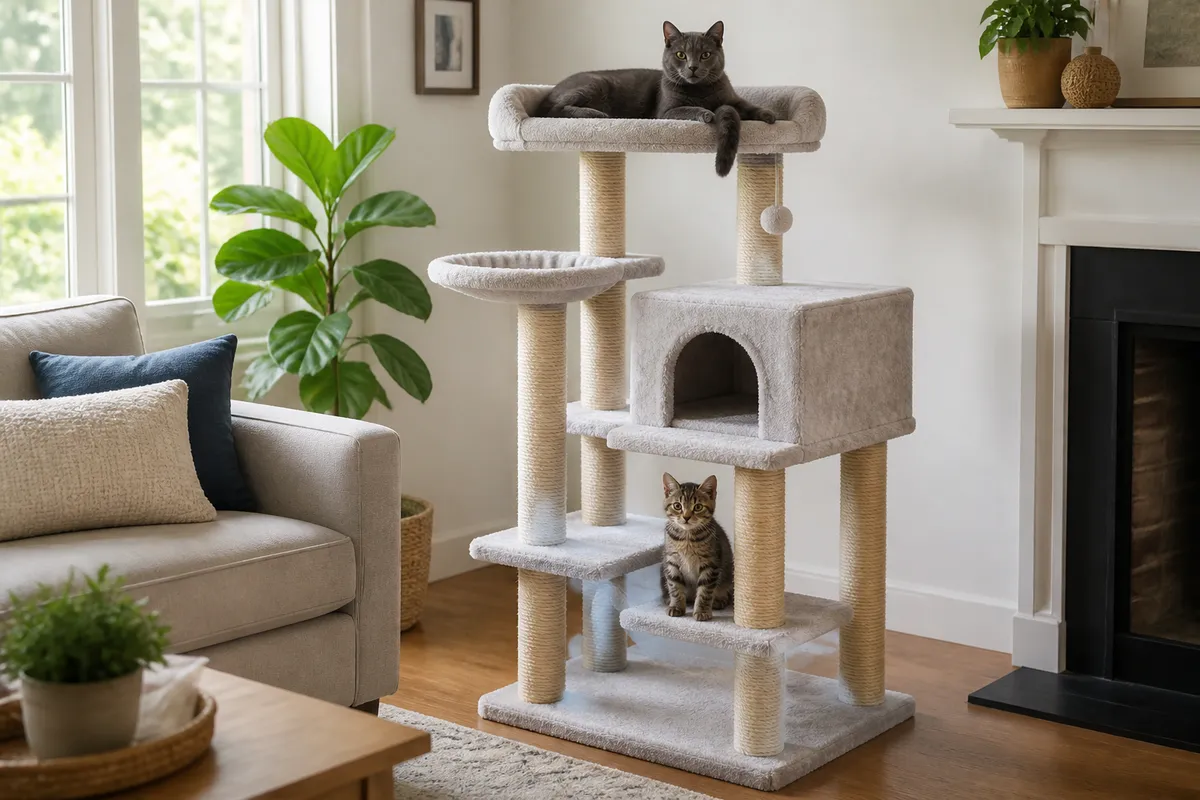
| Hideaway built into a cat tree or condo | Cats who like to hide up high | Needs a stable base; see our cat tree guide |
Cardboard cat house: cheap, popular and a great test
A cardboard cat house is often the first one owners try, and for good reason. Cardboard is light, insulating and pleasant to scratch, and many cats seem to love the texture and smell. Some designs double as a scratcher with a corrugated floor or roof.
Cardboard is also an inexpensive way to find out what your cat prefers. Does it like a single entrance or two? A low hideout on the floor or one on a shelf? Watch for a week or two before investing in a pricier wooden or felt house.
The downsides are durability and hygiene. Cardboard soaks up spills and accidents and cannot be washed. Replace it when it gets soiled, soggy or shredded. Remove any staples, tape and plastic windows your cat might chew.
What to look for when you buy a cat house
A good indoor cat house is mostly about fit, stability and cleaning. Use this checklist before you click buy:
- Size: your cat should be able to turn around and lie curled up, but the space should still feel snug; measure your cat nose to tail base
- Entrance: big enough to walk in without squeezing, and for multi-cat homes ideally two exits so no cat can be cornered
- Stability: it should not tip or slide when your cat jumps on or out
- Materials: no loose small parts, strings or toxic finishes; smooth edges on wood
- Cleaning: a removable, washable cushion or a cover you can shake out
- Weight limit: for raised or wall-mounted hideouts, check that it supports your cat with room to spare
Where to put a cat house indoors
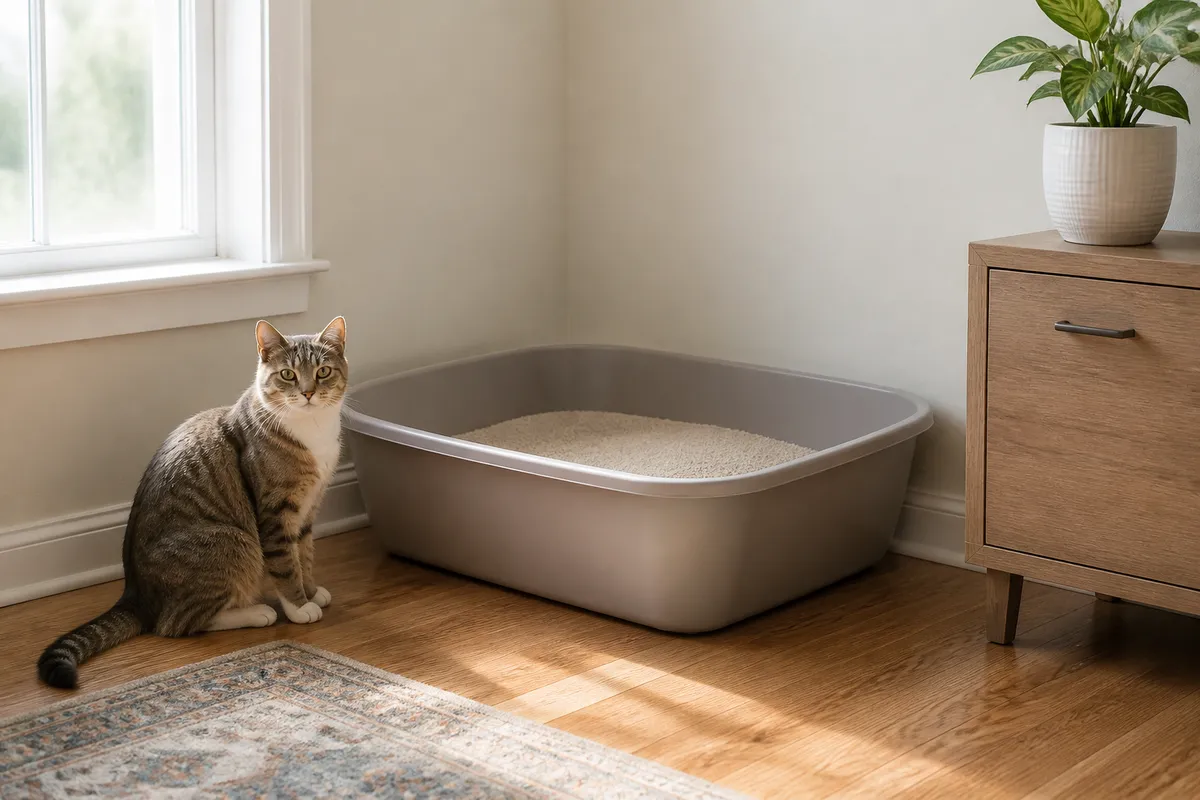
Location often matters more than the house itself. Choose a quiet spot that is still part of the household, so your cat can retreat without feeling exiled. Corners, behind a chair or under a desk work well. Avoid placing it right next to the food bowl or the litter box: the same guidelines recommend keeping key resources in separate locations.
Many cats prefer to hide up high, where they can watch the room. A hideout on a sturdy shelf, a window perch with a cover or a cat tree with an enclosed condo gives them both cover and a view.
In multi-cat homes, provide at least one safe space per cat, placed in different areas, so one cat cannot block another from all hiding spots.
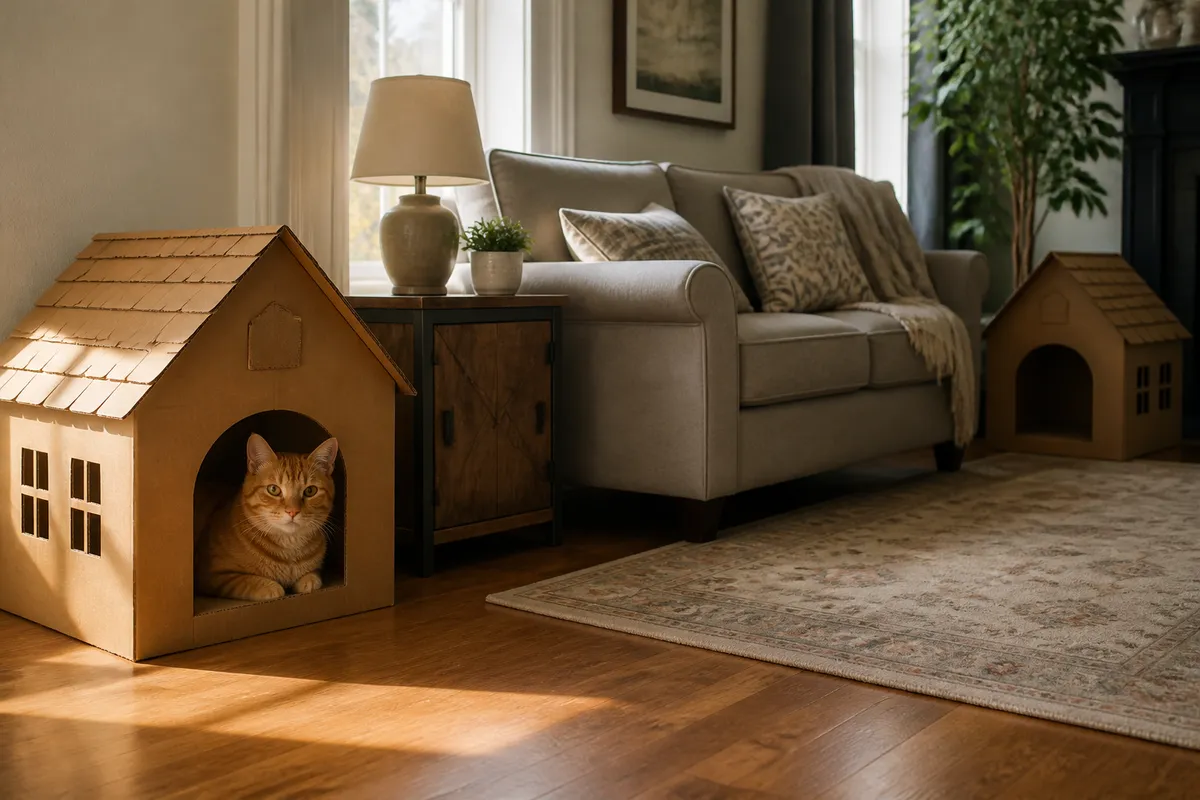
Cat houses for shy cats, kittens, seniors and multi-cat homes
A newly adopted or shy cat benefits most from a hideout. Set up one quiet room with food, water, a litter box placed away from the food, and a cat house or open carrier. Let the cat choose when to come out. Many owners find that a cat who has a safe base explores the rest of the home sooner.
Kittens love cardboard and soft tents for play and naps, but check regularly for chewed pieces. Senior cats or cats with stiff joints do better with a low entrance and a padded floor than with a tall condo they have to jump into.
In homes with several cats, hideouts reduce tension. Place them in different rooms or at different heights, and prefer designs with two openings. If one cat keeps blocking another from resting spots, food or the litter box, add resources rather than removing the house.
Common mistakes with cat houses
Cats are famously picky, but most rejected cat houses have a fixable reason.
- Too small or too big: cramped houses get ignored, and huge ones do not feel safe
- In the middle of traffic: a hideout next to the front door or the TV is not a retreat
- Pulling the cat out: if your cat learns that the hideout is where it gets grabbed for pills or the carrier, it stops feeling safe there
- Strong smells: new products can smell of glue or plastic; air them out first
- Only one hideout for several cats: one cat may claim it and guard it
How to get your cat to use its new cat house
Patience is the main ingredient. Put the house in a spot your cat already likes, add a blanket or T-shirt that smells like home, and walk away. Cats explore new objects on their own schedule, usually when nobody is staring at them.
You can make it more tempting with a few treats or a sprinkle of catnip near the entrance, or by dragging a wand toy past the door. Never push or lock your cat inside. If it is still ignored after a week or two, try a different spot or a different style, such as an open-front cave instead of a closed cube.
When your cat hides, let it be. A hideout only works if it is respected. If your cat suddenly hides much more than usual, stops eating or seems unwell, that is a reason to call your vet, because hiding can also be a sign of pain or illness.
Frequently asked questions
Do cats really need a cat house indoors?
They need a safe place to retreat to, and a cat house is an easy way to give them one. A box, a carrier left open or a covered bed can do the same job. What matters is that the spot is quiet, enclosed and respected.
Why does my cat love cardboard boxes?
An enclosed box lets a cat watch the world while feeling hidden, which helps it relax. Cardboard is also insulating and fun to scratch. A small shelter study found that hiding boxes helped newly arrived cats cope with stress sooner.
How big should a cat house be?
Your cat should be able to step in, turn around and curl up comfortably, with a bit of room to spare. Too much space feels less safe and less warm. Large breeds like Maine Coons need a house sized for them.
How many cat houses do I need for two cats?
Aim for at least one safe space per cat, placed in different areas of your home. Hideouts with two openings help prevent one cat from cornering the other.
How do I clean a cat house?
Shake out or vacuum loose hair weekly and wash removable cushions according to the label. Wipe wood or plastic with mild soap and water and let it dry fully. Replace cardboard houses once they are soiled or damp.
Can I use an indoor cat house outside?
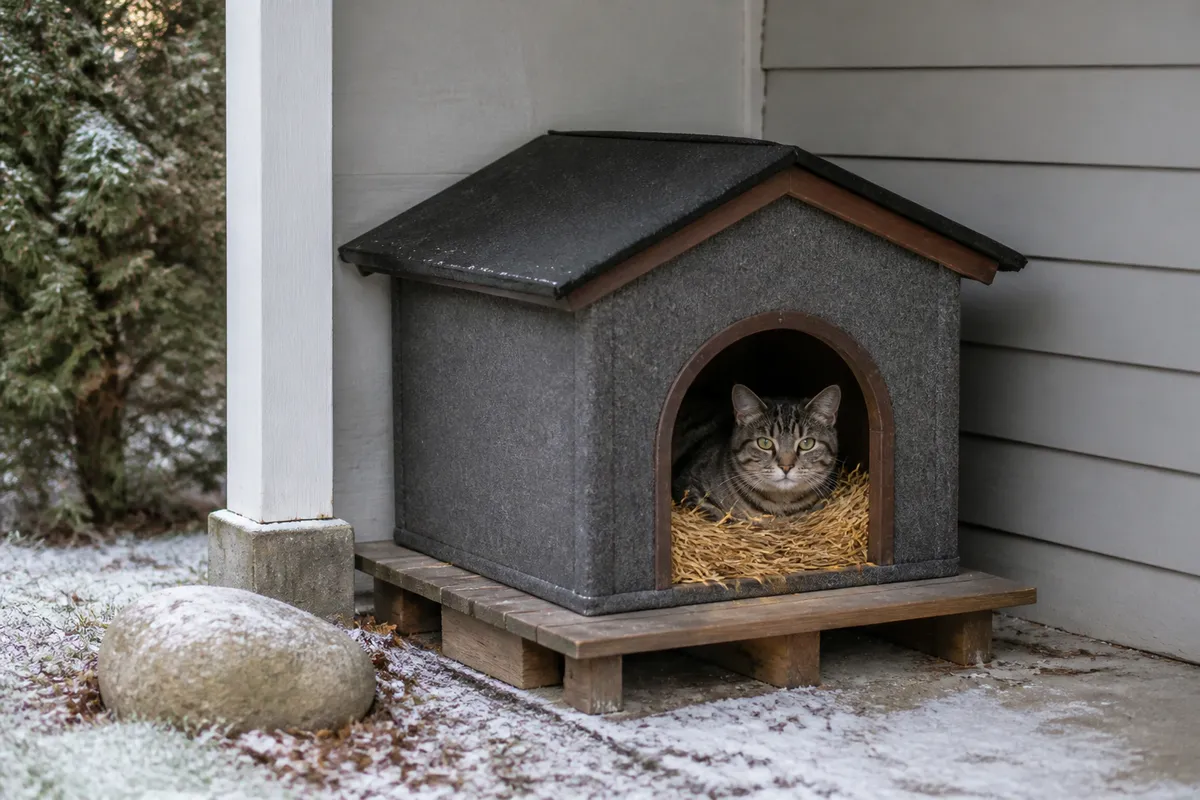
Usually not. Indoor houses are not waterproof or insulated enough for weather. Outdoor shelters need a raised floor, a small door and straw bedding, which we cover in our outdoor cat house guide.
Sources
- Feline Environmental Needs Guidelines, VCA Animal Hospitals
- Will a hiding box provide stress reduction for shelter cats?, Utrecht University (Applied Animal Behaviour Science)
Last reviewed: November 2026