Cat Paws Explained: Toe Beans, Retractable Claws and Everyday Paw Care
Cat Knowledge 6 min read reviewed November 2026, 6 sources
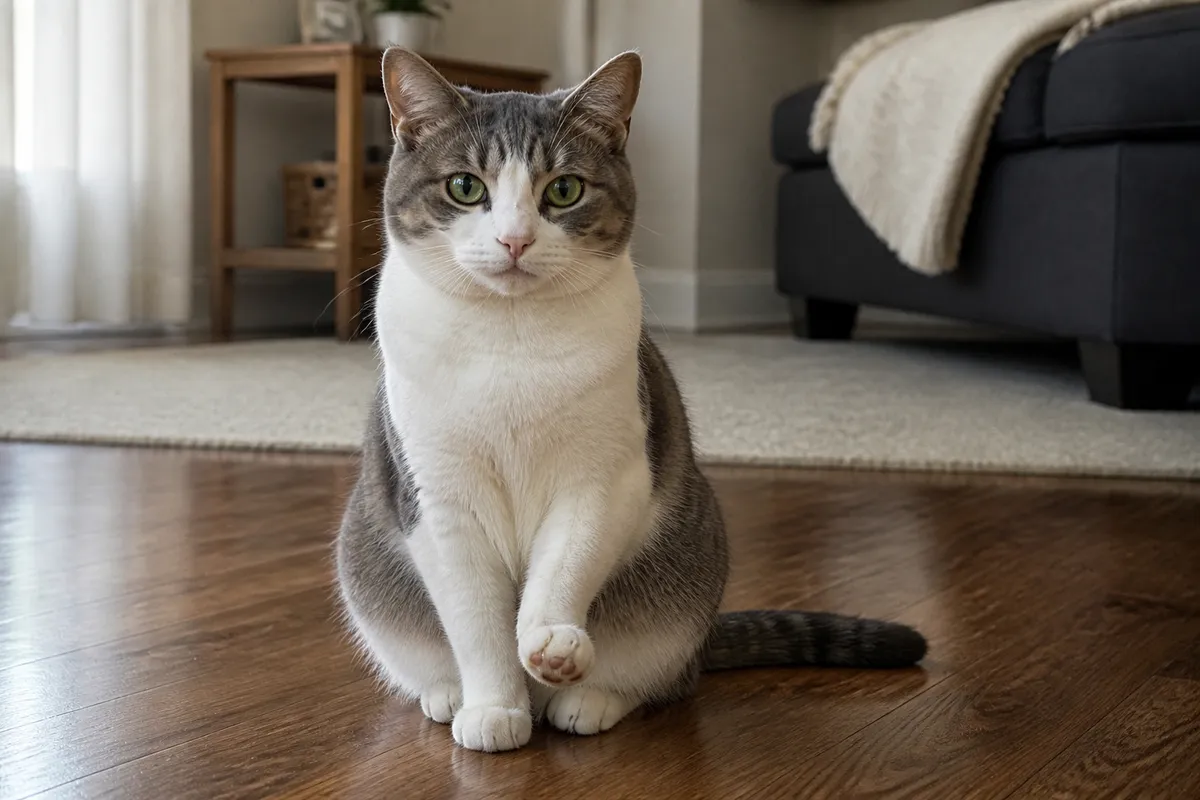
Cat paws are precision tools: soft toe pads (the famous toe beans) cushion every step and carry scent glands, while retractable claws stay tucked away until a cat needs them for climbing, gripping or defense. Most cats have five toes on each front paw, including the dewclaw, and four on each back paw. Here is how cat paws and cat claws work, why your cat scratches, and how to look after them without a fight.
Cat paw anatomy: toes, pads and dewclaws
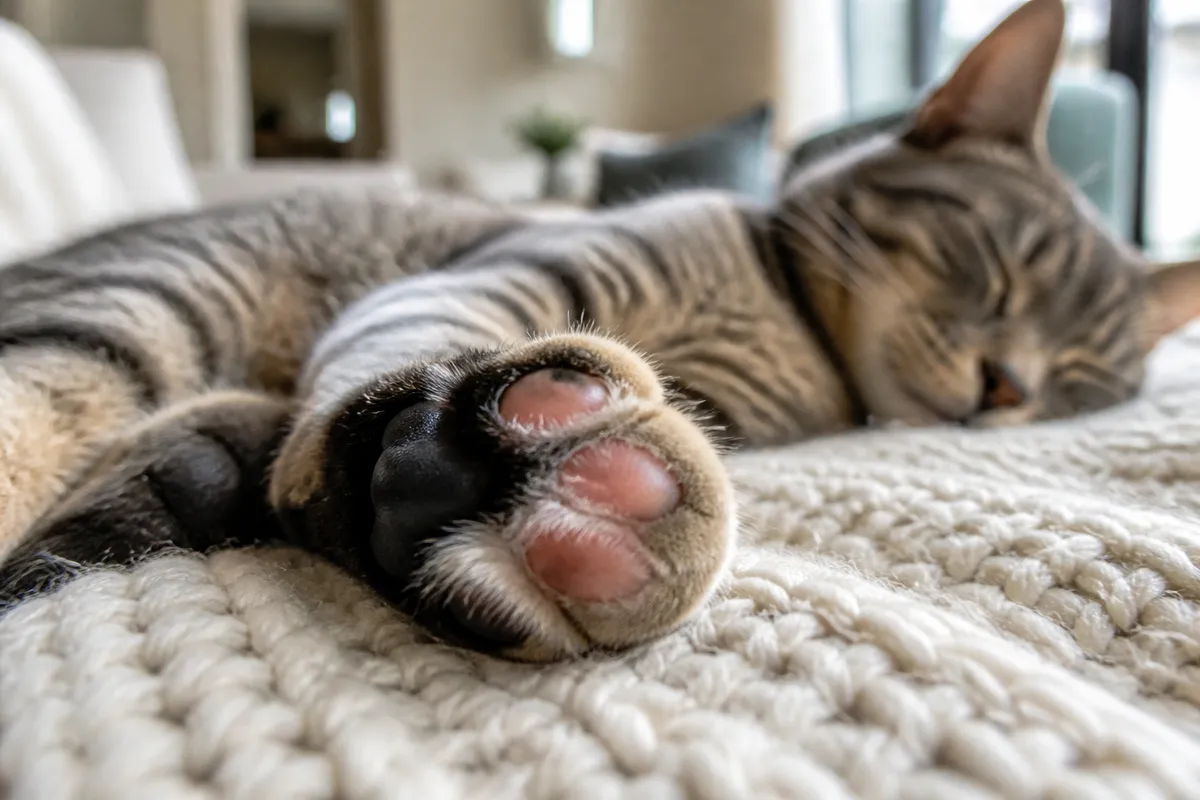
Look at the underside of a relaxed paw and you will see several pads: one small pad under each toe and a larger, heart-shaped pad behind them. These pads are thick, tough skin over a cushion of fat and connective tissue, which absorbs shock when your cat jumps off the fridge at 3 a.m.
The dewclaw sits on the inner side of each front paw, a little higher than the other toes. It works a bit like a thumb when a cat grips prey or a toy. Washington State University's veterinary hospital points out that dewclaws never touch the ground, so walking does not wear them down, and they can grow into the skin if they are not trimmed.
Cats also walk on their toes rather than on the whole foot, which keeps them quiet and quick. Britannica adds a fun detail: a walking cat moves the front and back legs on one side of its body first, then the legs on the other side. Only camels and giraffes are described as moving in a similar way. Next time your cat crosses the kitchen, watch the paws and you will see it.
Some cats have extra toes. These polydactyl cats can have six or more toes on a paw; our polydactyl cats guide explains the genetics.
| Part | Where | What it does |
|---|---|---|
| Toe pads (toe beans) | Under each toe | Cushion, grip, sense the ground, carry scent |
| Large central pad | Behind the toe pads | Main shock absorber for landing |
| Claws | Tip of each toe, retracted at rest | Climbing, gripping, hunting, defense, scratching |
| Dewclaw | Inner side of each front paw | Holding prey and toys; needs trimming |
Why are they called toe beans?
Toe beans is the internet's name for the little digital pads under a cat's toes, because they look like jelly beans or tiny coffee beans. They come in pink, black, gray, brown or a speckled mix, and a cat with a patchy coat may well have a patchy set of beans, which is entirely normal.
Beyond being cute, International Cat Care explains that the pads are tightly packed with nerve endings that tell the brain what the cat is touching. They also act as shock absorbers and can even pick up vibrations such as footsteps, which may help cats cope with hearing loss. The largest pad has glands that produce pheromones used to communicate with other cats. That sensitivity is one reason many cats do not love having their paws handled, and why paw training takes patience.
How retractable cat claws work
Cat claws are retractable. Britannica explains that an elastic ligament holds each claw in its sheath at rest; when a cat strikes, a leg muscle pulls on a tendon and the claws come out in a split second. Keeping them tucked away protects the sharp tips. The cheetah is the only cat that cannot fully retract its claws. You can see this yourself by gently pressing on a toe pad, which is exactly how you extend a claw for trimming.
Each claw has a living core called the quick, made of blood vessels and nerves, covered by a hard shell of keratin. VCA Animal Hospitals explains that a torn nail can be extremely painful and bleed because of this living core. The outer layers grow continuously, and cats shed worn sheaths as they scratch, which is why you sometimes find what looks like a whole hollow claw on the carpet. It is not a lost claw, just an old casing.
Claws are part of the bone at the end of each toe. That is why the ASPCA describes declawing as the amputation of the last bone of each toe, not a simple nail removal, and strongly discourages it.
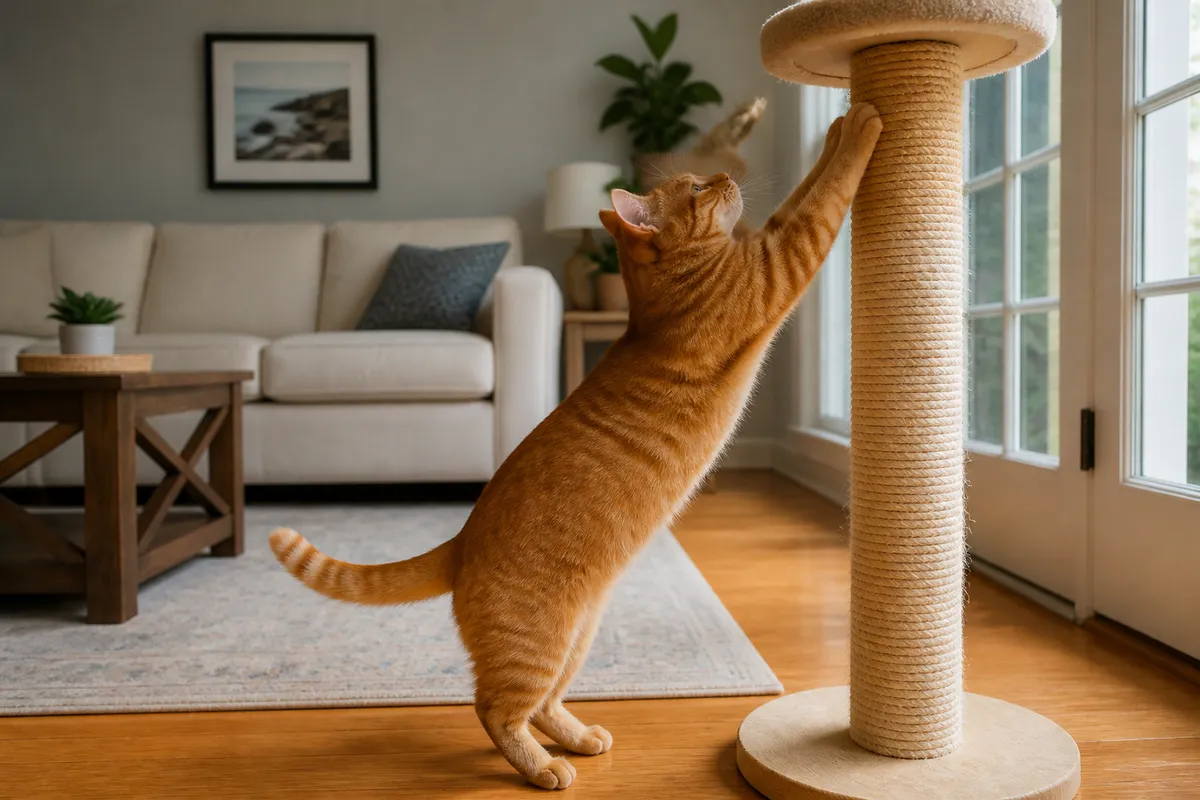
Why cats scratch and knead with their paws
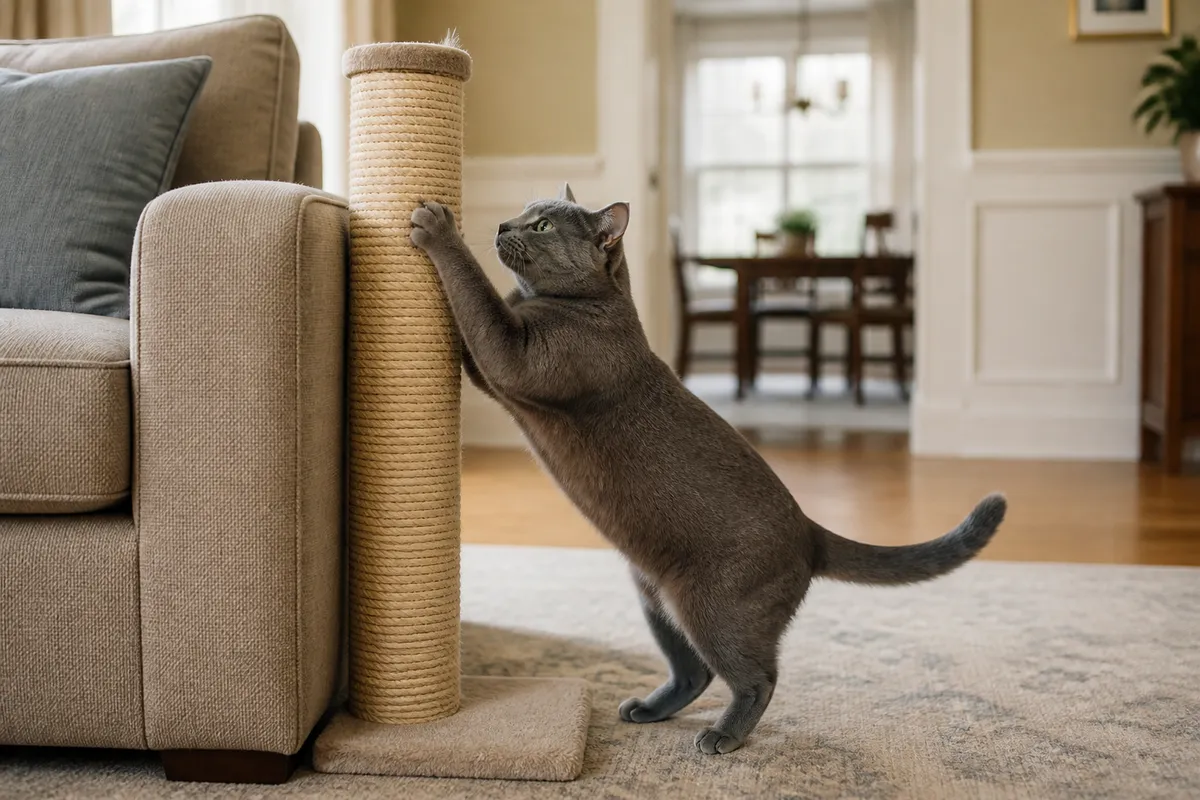
Scratching is not bad behavior; it is paw maintenance and communication in one. According to VCA, cats scratch to remove worn claw sheaths, to stretch and exercise their muscles, and above all to mark territory, both visibly with scratch marks and invisibly with scent from glands in their foot pads.
The ASPCA adds that scratching relieves stress. So instead of trying to stop it, give your cat good places to do it: sturdy, tall posts and horizontal scratchers near sleeping spots and room entrances. Our guides on scratching posts and on stopping cats from scratching furniture go into detail.
Paws also do kneading, the rhythmic pushing many cats do on soft blankets or laps. That behavior has its own guide on why cats knead.
Everyday cat paw care
Healthy cat paws need little attention, but a quick weekly look catches problems early. Do it when your cat is relaxed, with a treat ready.
- Check pads for cuts, cracks, swelling or anything stuck between the toes
- Look at the claws: are any too long, split, or curling toward the pad?
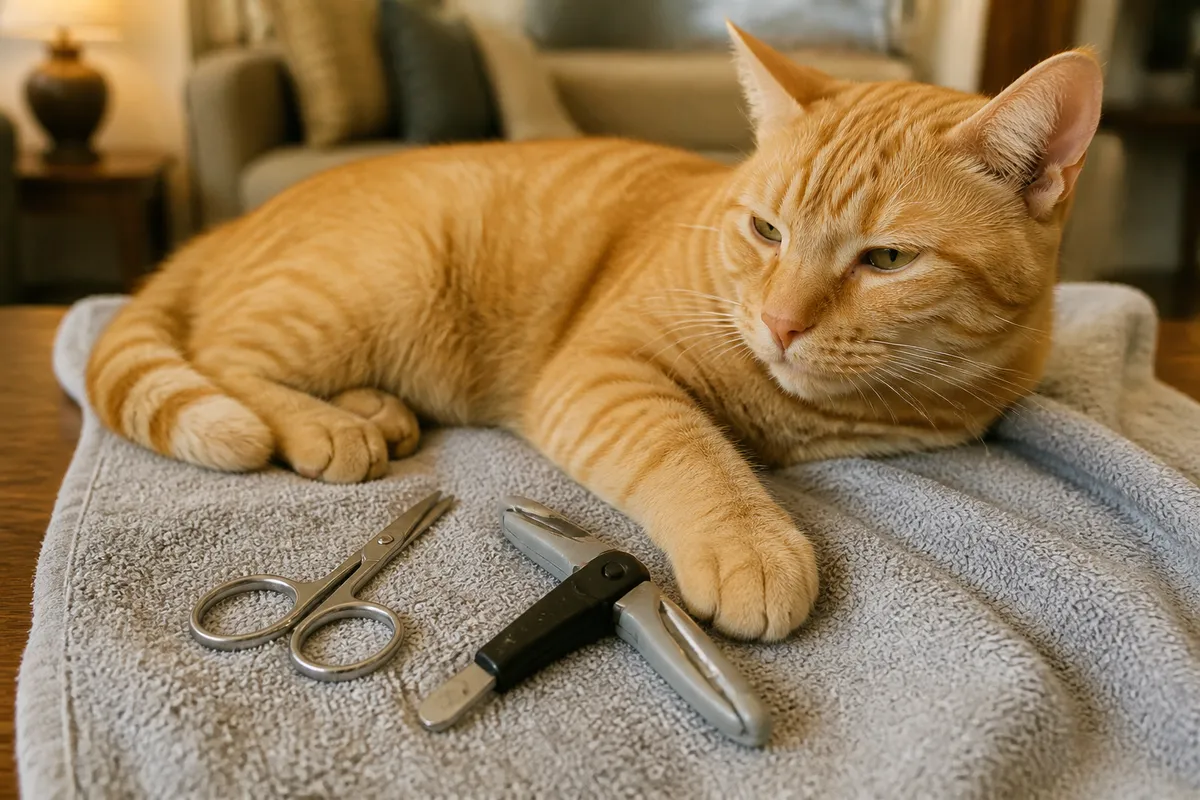
- Trim claw tips every few weeks if your cat does not wear them down
- Trim long fur between the toes of long-haired cats if it collects litter or mats
- Wipe paws after outdoor time or a catio visit, especially in winter
- Keep cats away from salt and chemical ice melt, which they may lick off their paws
Common paw problems and when to see the vet
Older cats deserve extra attention. VCA notes that seniors are often less active and use scratching posts less, so their claws can grow thick and curve back into the paw pads, which hurts and can become infected. Gentle, regular trims prevent this.
A broken or torn nail is another common problem. VCA describes how a cat can snag a claw on carpet, upholstery or a scratching post, or bend it on a bad landing. Signs include limping, holding up the foot and bleeding. Because the quick is exposed, a torn nail needs prompt veterinary attention.
See your vet if you notice limping, swelling, a bad smell, discharge, a claw growing into a pad, a pad that looks puffy or discolored, or if your cat suddenly will not let you touch one paw. Persistent licking or chewing at the paws can point to pain, allergies or skin problems.
Getting your cat comfortable with paw handling
Because paws are so sensitive, many cats pull away when you touch them. The ASPCA recommends a slow approach: hold one paw gently for only a few seconds, press a pad lightly so a claw appears, then reward with a treat. Repeat over several days, working up to all toes.
Starting with kittens makes this much easier, but adult cats can learn too. Keep sessions short, never scold, and stop before your cat gets annoyed. Once paw touching is boring, nail trims and paw checks become routine instead of a wrestling match. Our cat nail clippers guide covers the trimming part step by step.
Frequently asked questions
How many toes do cats have?
Most cats have 18 toes: five on each front paw, counting the dewclaw, and four on each back paw. Polydactyl cats are born with extra toes, usually on the inner sides of the front feet or of all four feet.
Why do cats have retractable claws?
Keeping claws retracted at rest protects their sharp tips and lets cats walk quietly. Tendons extend the claws when a cat climbs, hunts, defends itself or scratches.
What are cat claws made of?
The outer claw is hard keratin. Inside is the quick, a living core of blood vessels and nerves. Claws grow from the last bone of each toe, which is why declawing is an amputation.
Is it normal to find cat claws on the floor?
Yes. Cats shed the worn outer sheaths of their claws, mostly while scratching. The hollow casings look like whole claws but are just old layers. A bleeding toe or limping is different and needs a vet.
Why does my cat not like having its paws touched?
Cat paws are full of nerve endings and are vital for balance, hunting and escape, so many cats guard them. Short, gentle handling sessions with treats can build trust over time.
Is it normal for cat paw pads to be different colors?
Pads come in many colors, and mixed colors are normal. What matters is change: new dark spots, redness, swelling, cracks or puffy pads should be checked by your vet.
Sources
- Scratching Behavior in Cats, VCA Animal Hospitals
- First Aid for Broken Nails in Cats, VCA Animal Hospitals
- Position Statement on Declawing Cats, ASPCA
- Why do cats..?, International Cat Care
- Cat, Britannica
- Physical Description of Cats, Merck Veterinary Manual
Last reviewed: November 2026