Sand Cat: The Tiny Desert Wild Cat and Why It Is Not a Pet
Cat Knowledge 6 min read reviewed November 2026, 3 sources
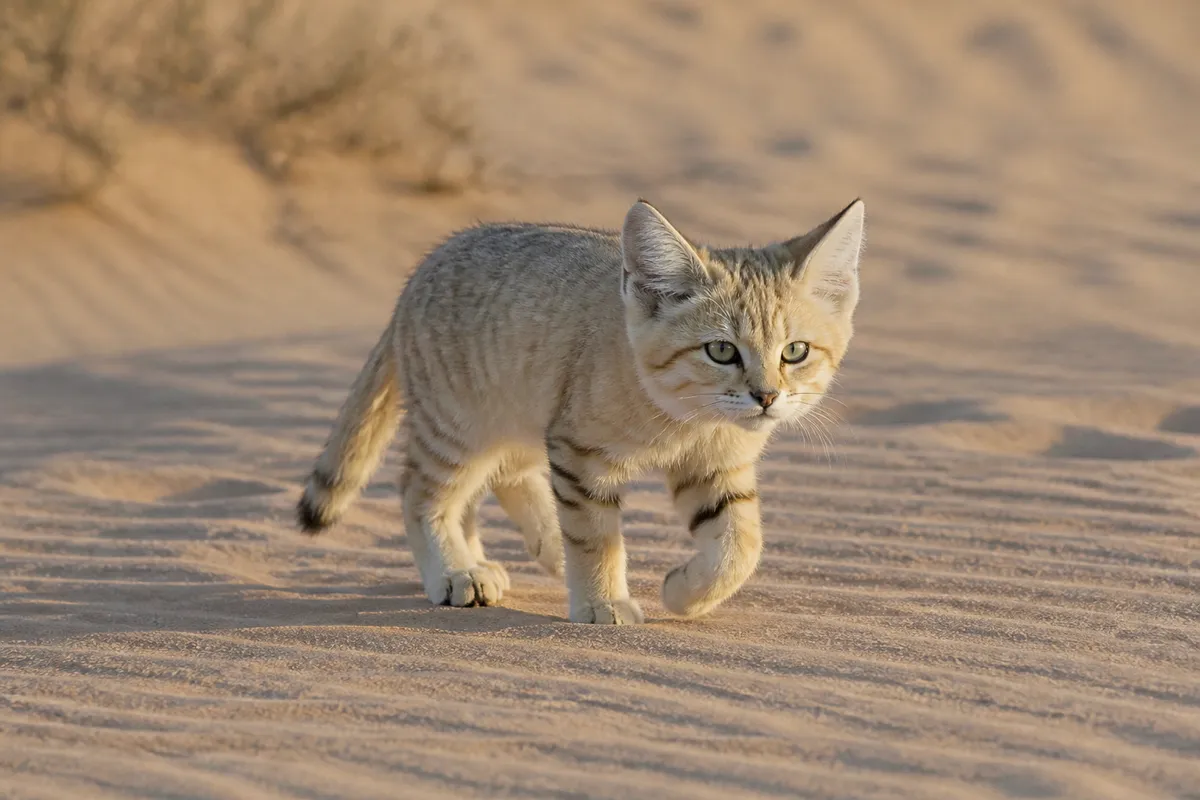
The sand cat (Felis margarita) is a small wild cat that lives in some of the harshest deserts on Earth, from the Sahara to the Arabian Peninsula and Central Asia. It weighs only about 3 to 8 pounds, has wide ears that can hear prey moving under the sand, and fur on the soles of its feet that works like built-in snowshoes for hot dunes. Despite its kitten-like face, it is a wild animal, and the illegal pet trade is one of the threats it faces.
What does a sand cat look like?
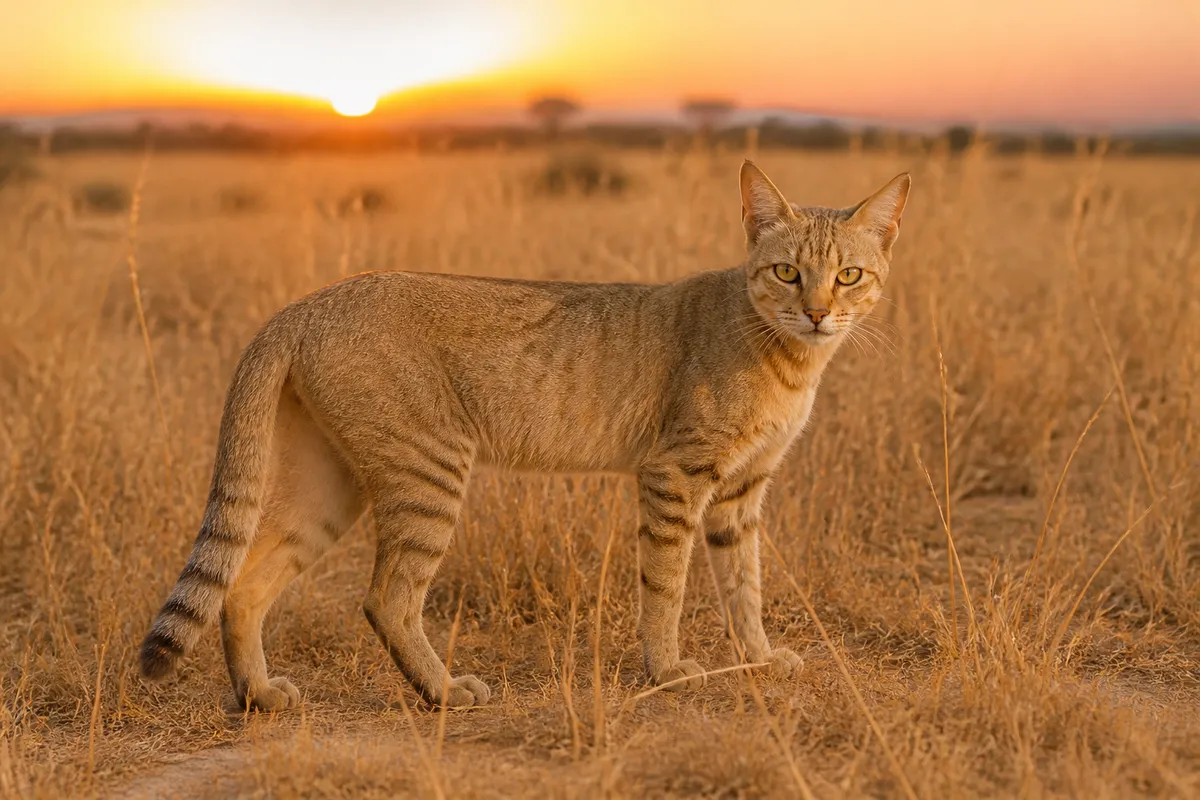
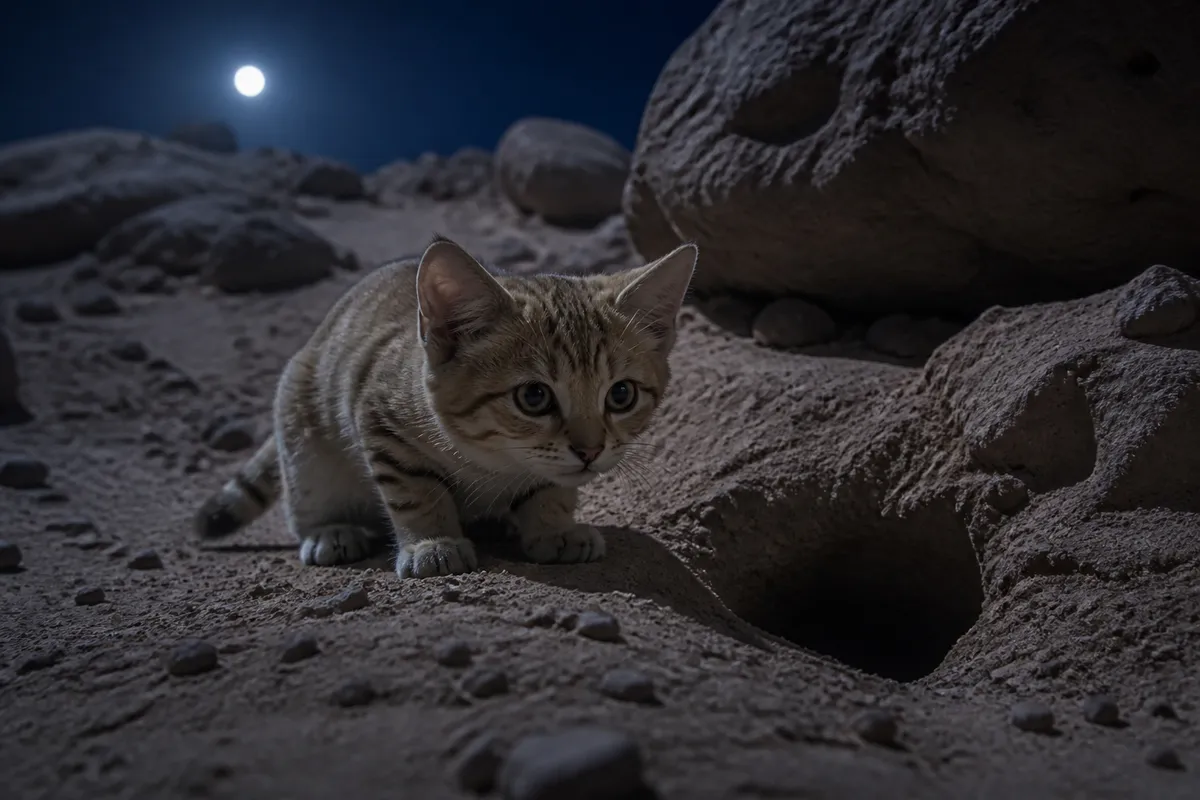
At first glance, a sand cat looks like a pale, fluffy house cat with an unusually wide head. Its coat ranges from pale yellow to gray, which blends into sand and rock. According to the Ross Park Zoo, dark brown to black stripes cross the legs and tail, reddish-orange lines mark the face beside the eyes, and the chest and chin are always white.
The most striking features are the large, low-set ears, which protect the inner ear from blowing sand, and the wiry black fur that covers the pads of the feet. That fur shields the toes from scorching ground and helps the cat move across shifting sand. Researchers have noted that it also makes the sand cat's footprints almost invisible, which does not make them easier to study.
Sand cats are small. The University of Michigan's Animal Diversity Web lists weights of about 2.1 to 3.4 kg for males and 1.4 to 3.1 kg for females, with a head and body length of about 18 to 22 inches. Males are a bit larger than females.
| Trait | Sand cat |
|---|---|
| Scientific name | Felis margarita |
| Range | Sahara Desert, Arabian Peninsula, parts of Central Asia |
| Weight | About 3 to 8 lb (1.4 to 3.5 kg) |
| Head and body length | About 18 to 22 inches |
| Activity | Mostly nocturnal |
| Diet | Gerbils, voles, hares, birds, reptiles, insects, spiders, venomous snakes |
| Litter size | 1 to 8 kittens, usually 4 to 5 |
| Lifespan | About 13 years in professional care |
| Conservation status | IUCN: Least Concern; CITES Appendix II |
Where sand cats live
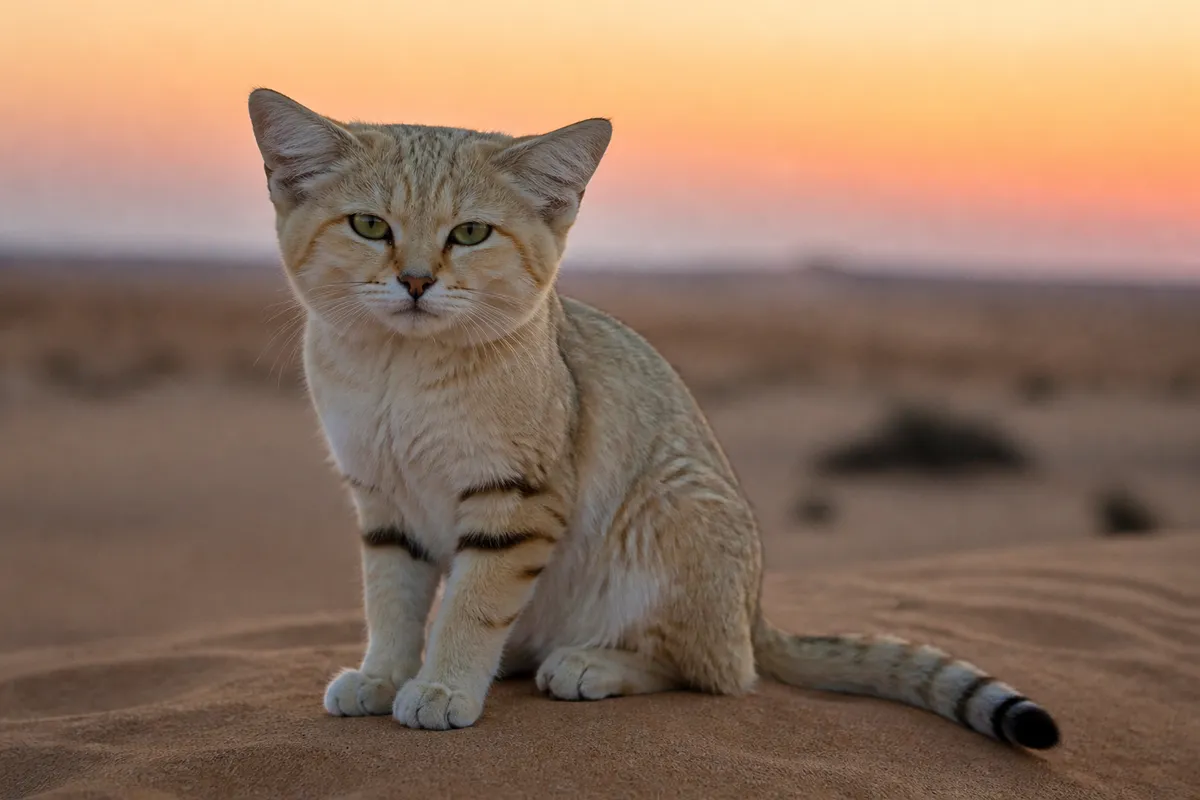
The sand cat is a true desert specialist. Animal Diversity Web describes three separate areas where it lives: the Sahara in countries such as Algeria, Niger and Morocco; the Arabian Peninsula; and parts of Central Asia, including Turkmenistan, Iran, Pakistan and Afghanistan.
Its habitats range from flat sandy plains with very little vegetation to rocky valleys with some shrubs. The conditions are extreme: daytime ground temperatures can reach about 51 degrees Celsius (about 124 degrees Fahrenheit), while nights can drop to around freezing. The sand cat's thick fur protects it from the cold nights, and its habits protect it from the heat.
How the sand cat survives the desert
Water is scarce, so the sand cat barely drinks. The Ross Park Zoo notes that sand cats can go weeks without drinking and get almost all the water they need from their prey. Their small body size also helps them avoid overheating.
During the hottest part of the day, sand cats retreat underground. They are poor climbers and jumpers but excellent diggers, and they dig shallow burrows to escape heat and cold. When they get too hot, they may lie on their backs outside the burrow to release heat, showing their white bellies to the sky.
Timing is part of the strategy. Sand cats are generally nocturnal, but Animal Diversity Web notes that a subspecies in Pakistan stays nocturnal in summer and becomes active at dawn and dusk during the winter months. Adjusting the daily schedule to the season is one more way this small cat copes with a landscape that swings from scorching to freezing.
Their hearing is extraordinary. Animal Diversity Web reports that parts of the sand cat's ear are relatively much larger than in any other cat, and the Ross Park Zoo says its hearing is excellent even compared with other felids. That lets it locate prey moving below the surface of the sand at night.
- Furry soles for walking on hot, loose sand
- Large ears for detecting prey underground
- Gets moisture from food instead of drinking
- Digs burrows to escape daytime heat and nighttime cold
- Mostly active at night, when the desert is cooler
What sand cats eat: fearless snake hunters
Sand cats are opportunistic hunters that take whatever their barren habitat offers. Animal Diversity Web lists gerbils, sand voles, hares, spiders, reptiles, birds, insects and venomous snakes on the menu, and describes the sand cat as a fearless snake hunter that attacks venomous vipers.
They also cache food, storing prey to eat later. In the desert, where the next meal may be far away, that is a sensible strategy. Your house cat hiding a toy mouse under the sofa is following the same instinct, just with fewer vipers.
Sand cat kittens and family life
Sand cats are solitary, and little is known about their mating systems in the wild. Breeding seasons vary by region; Animal Diversity Web notes that the season begins in April in Turkmenistan and runs from September to October in Pakistan.
After a pregnancy of about 59 to 63 days, a mother gives birth to between one and eight kittens, usually four or five. The kittens become relatively independent at six to eight months and mature at nine to fourteen months, a fast pace that suits a hostile environment. Juvenile mortality is high.
Burrows may be used by several sand cats over time, but not by more than one cat at the same time.
Is the sand cat endangered?
Overall, no. The Ross Park Zoo reports that the IUCN Red List classifies the sand cat as Least Concern and that the total population is conservatively estimated at around 27,000 adults. The species is listed in CITES Appendix II, which means international trade is controlled to keep it from becoming threatened. In the US, the Endangered Species Act lists the Pakistan sand cat subspecies as endangered.
That does not mean sand cats are safe everywhere. Habitat degradation and loss are the main threats, from infrastructure and settlements to overgrazing by livestock. Drought and desertification can shrink the small mammal populations the cats depend on. Animal Diversity Web also lists poisoning and capture for the illegal pet trade as threats.
Because they are secretive and live in remote places, sand cats are hard to count, and scientists suspect their true population and range may be larger than estimated.
Why a sand cat is not a pet
Videos of sand cat kittens look irresistible, and some people search for one as a pet. It is a wild animal, not a tiny domestic breed. Sand cats are adapted to vast, dry, quiet deserts and to hunting live prey at night, not to apartments, air conditioning and cat food.
In the US, private ownership of wild cats is banned or tightly regulated in many states, and international trade is controlled under CITES. Taking sand cats from the wild for the pet trade is one of the pressures the species already faces. If you want to see one, visit an accredited zoo, where they are cared for by specialists in an environment built for them.
If you love the look, many shelter cats with pale tabby coats and big personalities are waiting for homes, and none of them will demand venomous snakes for dinner.
Frequently asked questions
How big is a sand cat?
Sand cats weigh about 3 to 8 pounds and measure about 18 to 22 inches from head to the base of the tail. Males are slightly larger than females. They are smaller than most adult house cats.
Where do sand cats live?
In deserts of North Africa (the Sahara), the Arabian Peninsula and parts of Central Asia, including Turkmenistan, Iran, Pakistan and Afghanistan. They prefer sandy plains and rocky desert valleys.
Can you have a sand cat as a pet?
No, and you should not try. Sand cats are wild animals, international trade is controlled under CITES, and many US states ban or restrict private ownership of wild cats. Capture for the illegal pet trade is one of the threats the species faces.
Do sand cats drink water?
Rarely. They can go weeks without drinking and get most of the moisture they need from their prey, which is a key adaptation to life in the desert.
Why do sand cats have fur on their feet?
The wiry black fur on their soles protects the pads from scorching sand and helps them walk on loose sand, a bit like snowshoes. It also makes their footprints hard to see.
How long do sand cats live?
In professional care, sand cats live about 13 years. In the wild, life is much shorter and juvenile mortality is high; the Ross Park Zoo gives a wild life expectancy of about 4 years.
Sources
- Felis margarita (sand cat), Animal Diversity Web, University of Michigan
- Sand Cat, Ross Park Zoo
- Map of Private Exotic Pet Ownership Laws, Animal Legal and Historical Center, Michigan State University
Last reviewed: November 2026