Tabby Cat: Why Tabby Is a Pattern, Not a Breed
Coat Colors & Patterns 5 min read reviewed November 2026, 4 sources
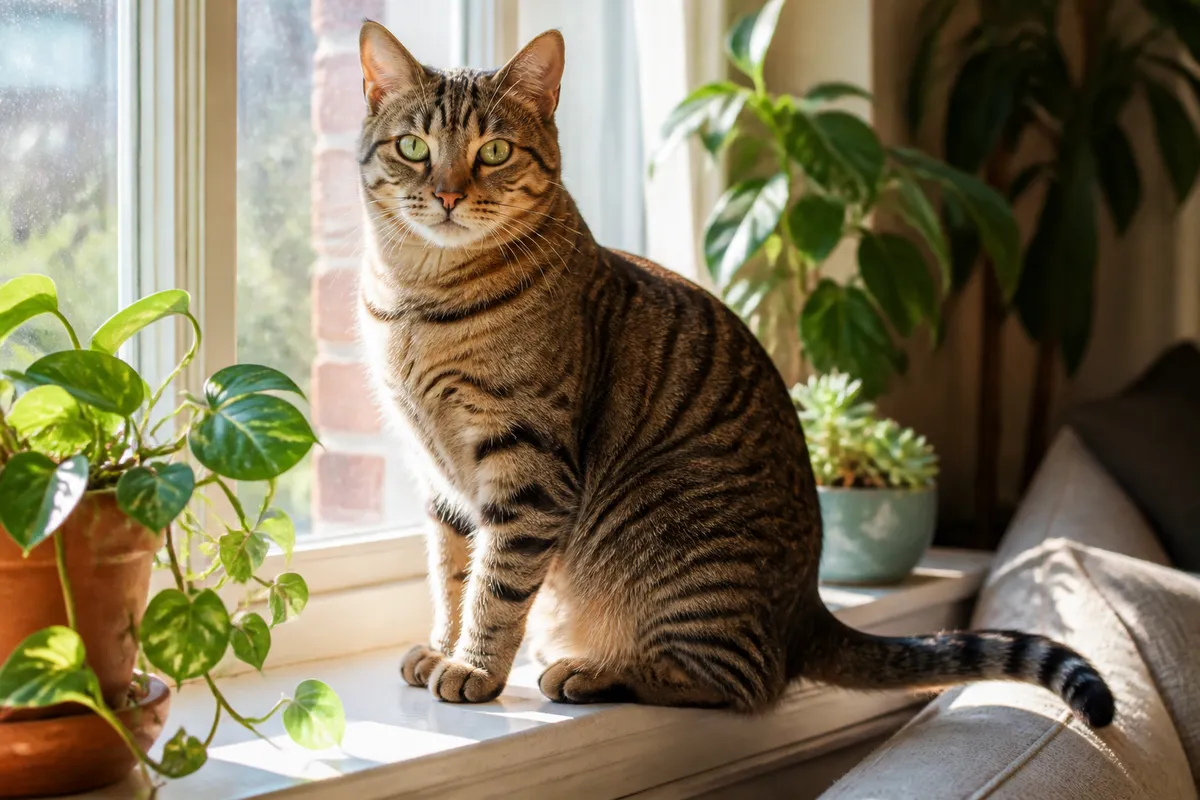
A tabby cat isn't a breed: tabby is a coat pattern, and you'll recognize it by the M-shaped marking on the forehead plus stripes, swirls, spots or banded hairs on the body. It's the original cat pattern, inherited from the wild ancestor of every house cat, and it shows up in mixed-breed cats and dozens of pedigreed breeds alike.
Tabby is a pattern, not a breed
When a shelter lists a cat as a brown tabby, it's describing the coat, not the ancestry. Most tabbies in the US are domestic shorthairs or longhairs, and many pedigreed breeds, from the Maine Coon to the Abyssinian, come in tabby patterns too.
The pattern is old. According to the CFA, today's house cats descend from the African wildcat, Felis silvestris lybica, which is itself a brown mackerel tabby. Solid colors, blotched swirls, orange and white spotting all arose later as mutations. In other words, a tabby is what a cat looks like by default.
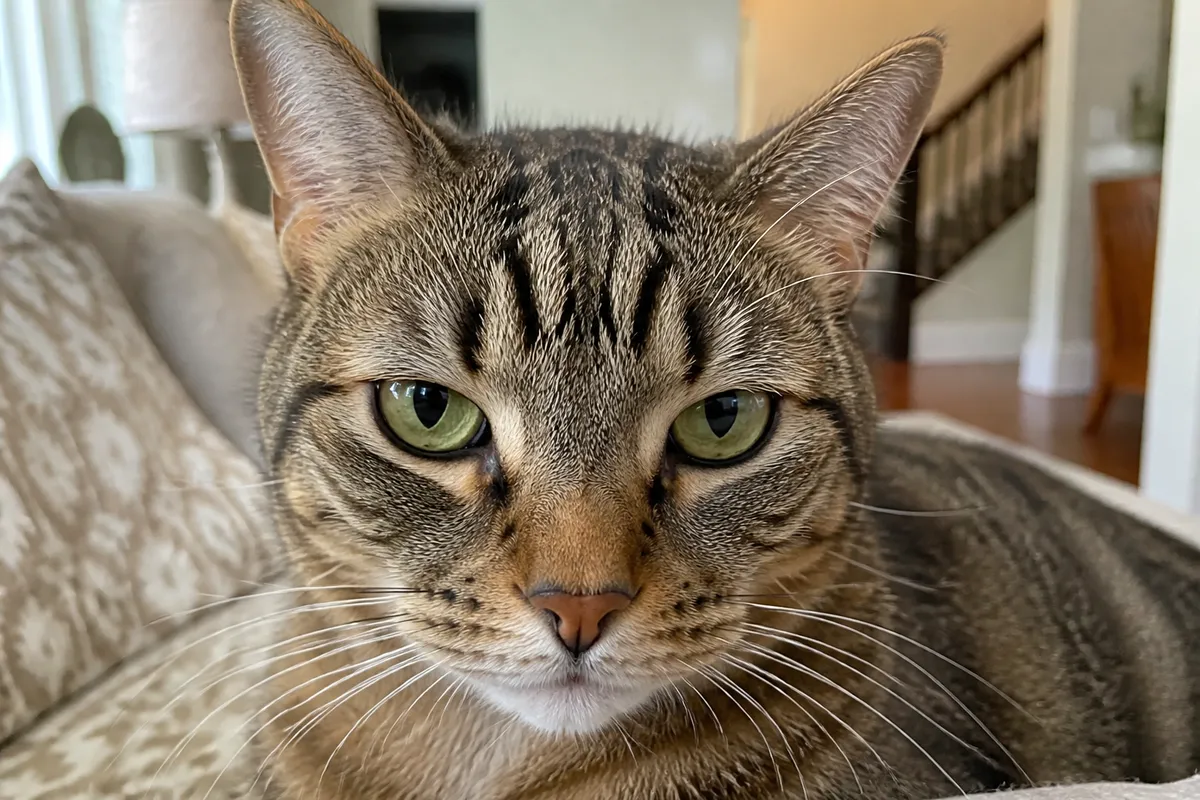
The M on a tabby's forehead
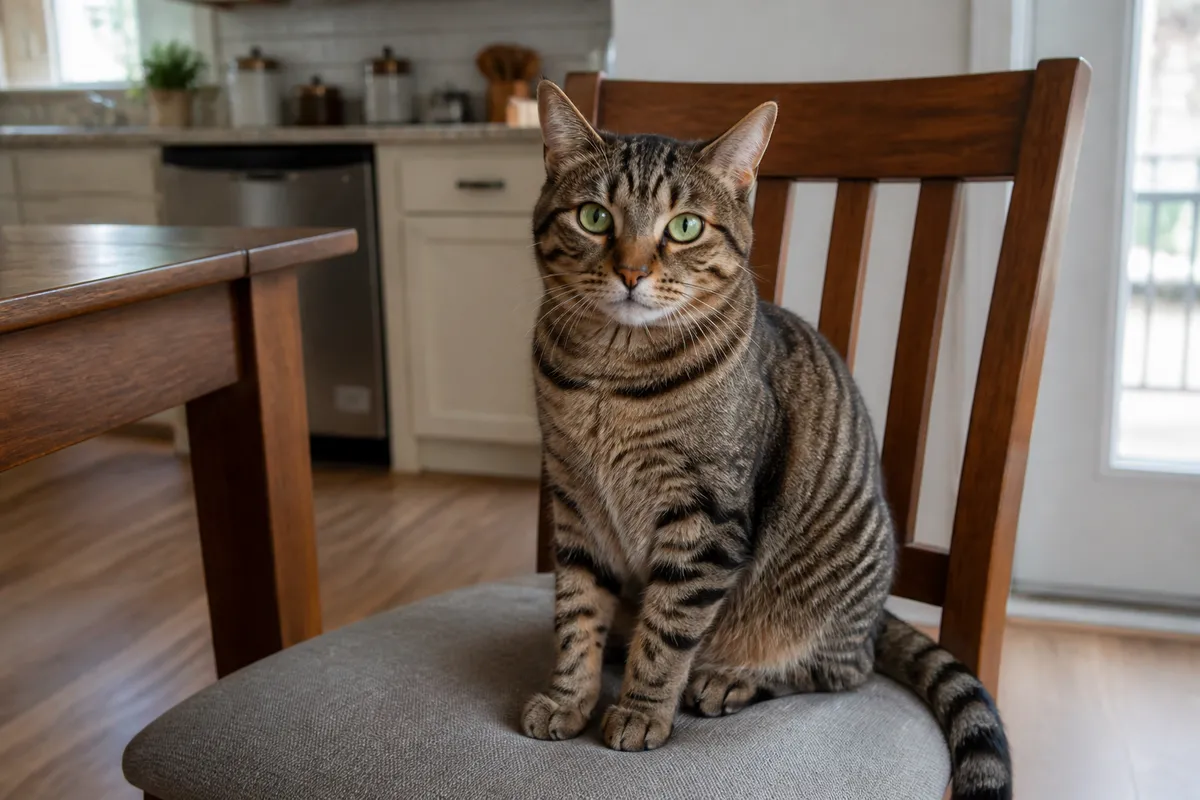
The CFA notes that every tabby-patterned cat has a characteristic M marking on its forehead. It's the quickest way to identify a tabby, even when the body pattern is faint, as it is in ticked cats.
There are plenty of charming legends about where the M comes from, but the real reason is genetic: it's simply part of how tabby markings are laid out on the face, along with the thin lines running from the outer corners of the eyes, often called mascara lines. Next time you see a cat with an M, you can tell its staff exactly what that means.
The four tabby patterns
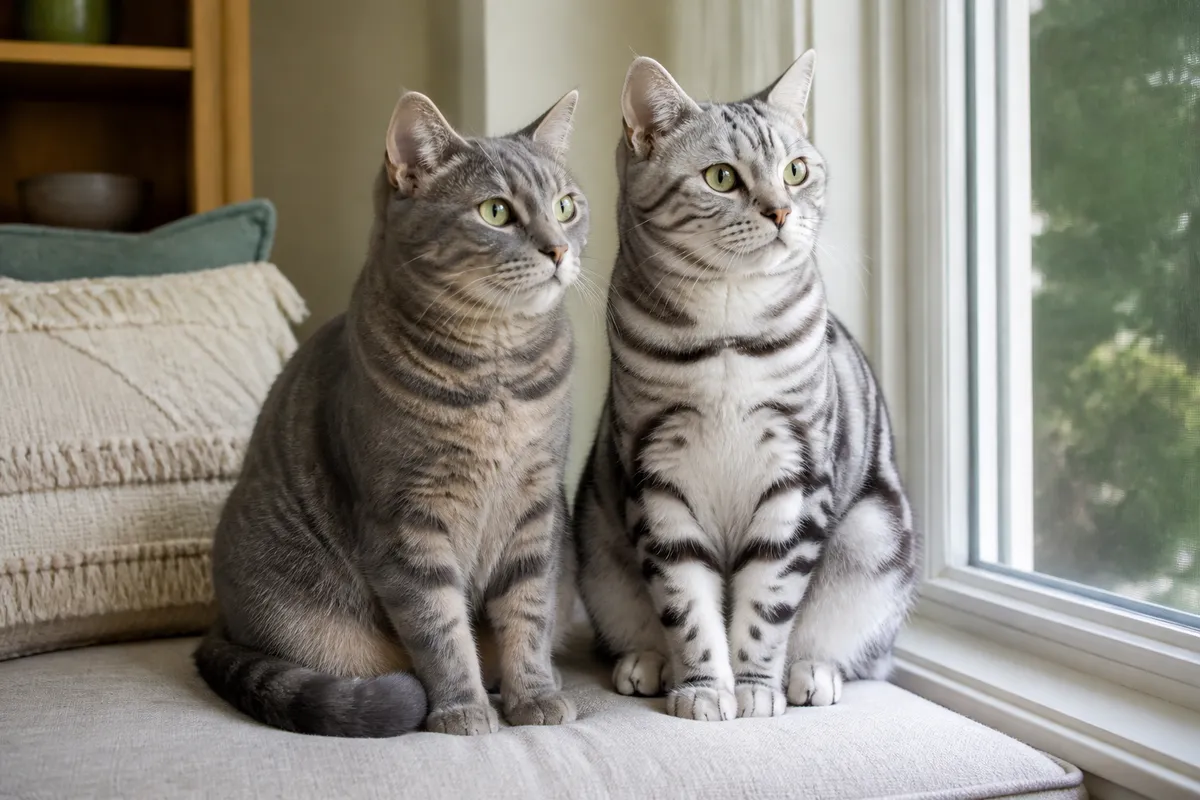
The CFA describes four main tabby patterns plus several variations such as patched, rosetted and marbled. Each one combines banded (agouti) background hair with darker solid-colored markings.
- Patched tabby (torbie): any tabby pattern with red or cream patches
- Rosetted and marbled: spotted and swirled variants seen in the Bengal
| Pattern | What it looks like | Breeds that show it |
|---|---|---|
| Mackerel | Narrow, parallel stripes down the sides, like a fish skeleton | Mixed-breed cats and many breeds |
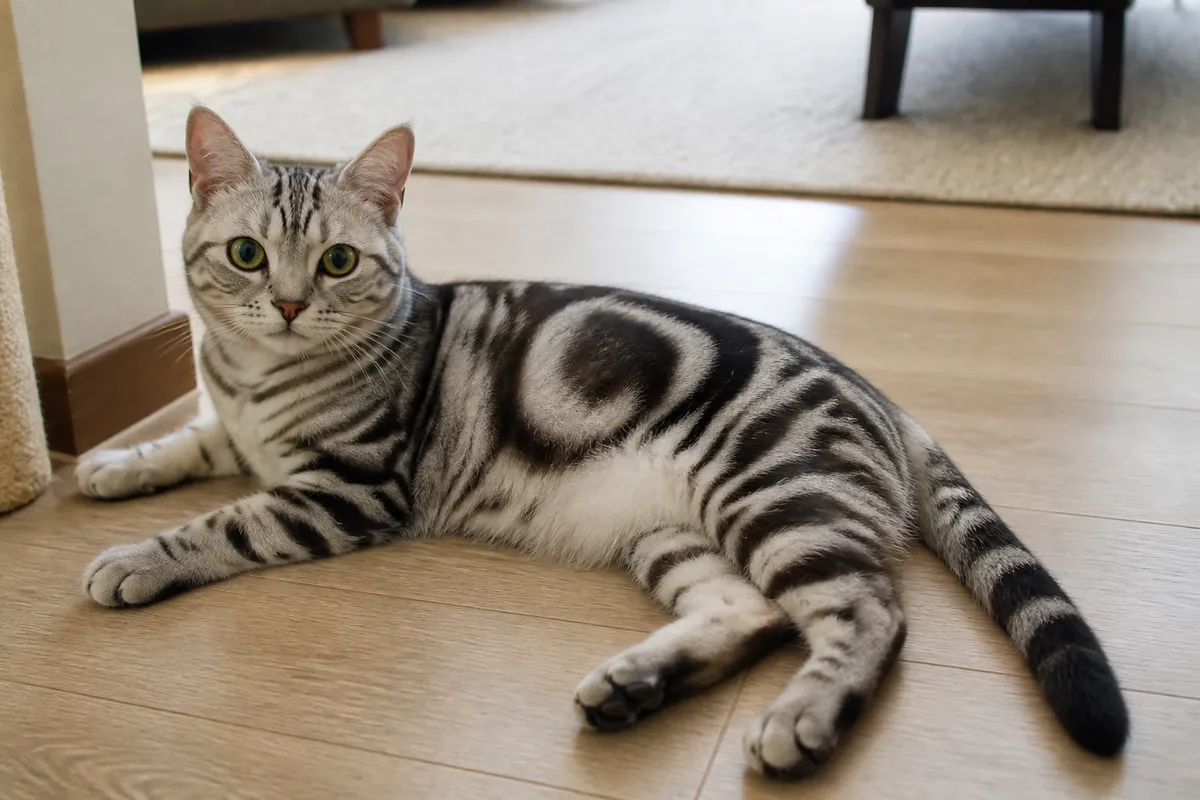
| Classic (blotched) | Bold swirls on the sides, often a bullseye, and a butterfly over the shoulders | Mixed-breed cats and many breeds |
| Spotted | Stripes broken into spots | Egyptian Mau, Ocicat |
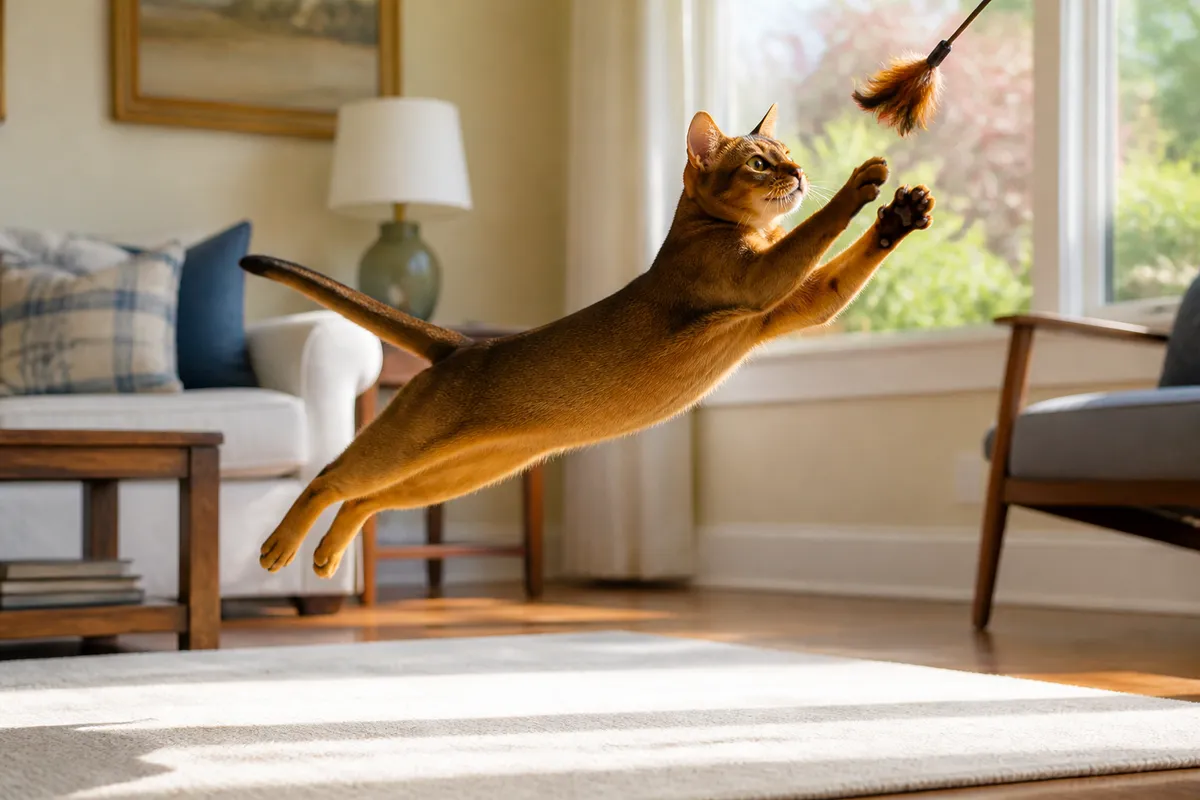
| Ticked | Banded hairs all over, little or no body pattern; stripes only on face, legs, tail | Abyssinian, Somali, Singapura |
How to tell which tabby pattern your cat has
You do not need a genetics lab, just good light and a cooperative cat (bribery with treats is allowed). Look at the sides of the body first, because that is where the patterns differ most. The face, legs and tail carry stripes in almost every tabby, so they will not help you much.
Kittens can be tricky, because the fuzzy kitten coat blurs the markings, and longhaired tabbies hide their pattern under fluff. Part the coat on the side and look at the skin-level pattern, or wait for a summer coat. If you are still unsure, take a clear side photo in daylight and compare it with the table above.
- Thin, parallel stripes running down from the spine: mackerel
- Wide swirls, a bullseye circle on the side and a butterfly shape over the shoulders: classic
- Round or oval spots instead of stripes on the body: spotted
- Almost no body pattern, but each hair shows bands of color, plus stripes on legs, tail and face: ticked
- Tabby pattern mixed with patches of red or cream: patched tabby (torbie)
Tabby genetics in plain English
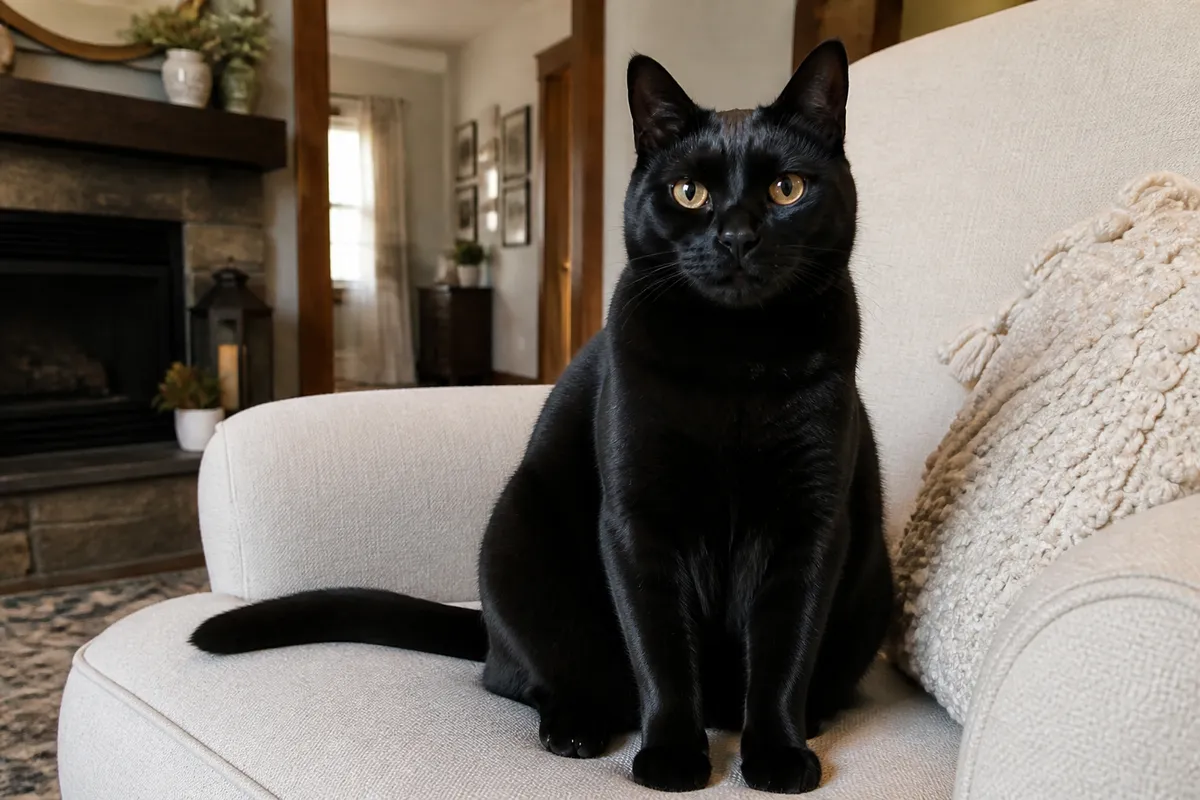
Two kinds of genes work together. First, the agouti gene decides whether the pattern shows at all. CFA explains that the dominant agouti allele produces banded hair and a tabby coat, while the recessive non-agouti version suppresses the banding and produces a solid coat. A black cat is genetically a tabby whose pattern has been switched off.
Second, the tabby genes decide which pattern appears. CFA notes that mackerel is dominant and classic (blotched) is recessive, so a classic tabby needs two copies. Ticked comes from a separate gene that overrides the other patterns, and spotted is usually the mackerel pattern broken up by additional modifier genes.
In 2012, researchers at HudsonAlpha, Stanford and partner institutions identified a gene called Taqpep: blotched cats carried mutations in both copies, while striped cats didn't. The same gene is mutated in the rare king cheetah, which has blotched stripes instead of spots.
Brown tabby, black tabby and other tabby colors
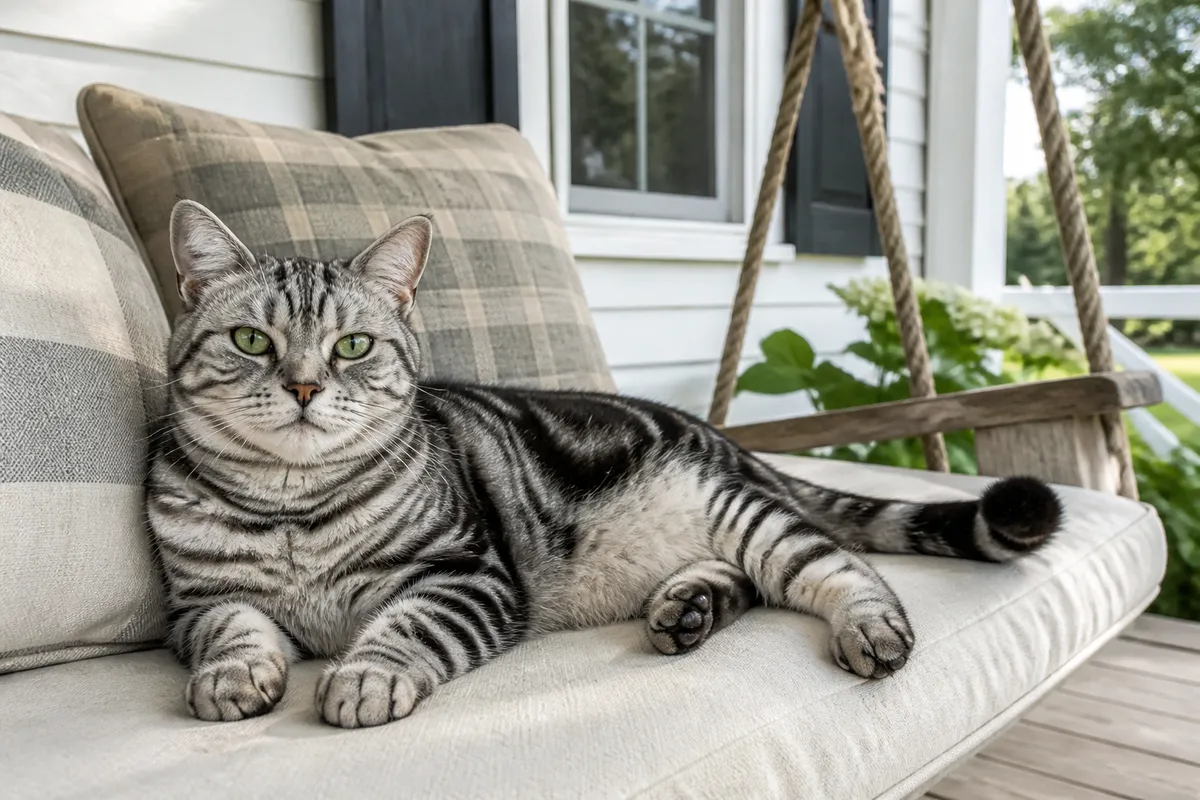
Tabby colors are named after the background and markings. CFA describes a brown tabby as having a warm brown or bronze background with black stripes. That's the color many people call a black tabby cat. In cat fancy terms, a tabby with black stripes is a brown tabby on a warm background or a silver tabby on a silver-white background; a truly black cat is a solid color without the agouti pattern.
Other common tabby colors include red (orange), cream, blue (creamy background with blue-gray stripes) and silver. CFA notes the orange gene masks the non-agouti gene, which makes all red cats tabbies; the orange cat article explains why that matters. Patched tabbies get their patches from the sex-linked red gene, and CFA says over 90% of them are female.
- Brown tabby: warm brown or bronze background, black markings
- Silver tabby: silver-white background, black markings
- Red tabby: orange background, deeper red markings
- Blue tabby: creamy background, blue-gray markings
- Cream tabby: light beige background, darker beige markings
Do tabby cats have a special personality?
You'll find plenty of claims online that tabbies are friendlier, wilder or more laid-back than other cats. There's no good evidence that a coat pattern decides temperament. Personality comes from genetics you can't see, early socialization and how a cat is treated, and those vary just as much among tabbies as among any other cats.
So if you're choosing a tabby kitten, choose by behavior, not stripes. A kitten that's curious, comfortable being handled and playful is a better bet than one with the perfect bullseye pattern. Ask the shelter or breeder how each kitten reacts to people, noise and other animals.
Tabby kittens: what to expect
Most tabby kittens are mixed-breed cats, so their adult size, coat length and personality depend on their parents, not their pattern. Shelters often have tabby kittens of every color, especially in spring and summer.
Tabby is also the easiest pattern to find: because it is the default look of the cat, almost every shelter has a few tabbies waiting, in every size, age and coat length.
Grooming depends on coat length, not pattern: a short-coated tabby needs a weekly brush, a longhaired one more often. Use those sessions to check skin, ears and claws, and to bond. If your tabby has a gray or silver base color, the gray tabby article has more on that specific look.
Frequently asked questions
Is a tabby cat a breed?
No. Tabby is a coat pattern that appears in mixed-breed cats and many pedigreed breeds. A cat with an M on its forehead and stripes, swirls, spots or banded hair is a tabby, whatever its ancestry.
Why do tabby cats have an M on their forehead?
The M is part of the tabby pattern itself. CFA notes every tabby-patterned cat has it, which is why it's the easiest way to spot a tabby.
What is the most common tabby pattern?
Mackerel and classic are the patterns you'll see most often in everyday house cats. CFA calls mackerel the genetically dominant pattern, while classic is recessive.
What is the difference between a brown tabby and a black tabby?
They usually describe the same cat. The official name for black stripes on a warm brown background is brown tabby. A truly black cat is solid, because the non-agouti gene hides the tabby pattern.
Are all orange cats tabbies?
Yes. CFA explains that the orange gene masks the non-agouti gene, so red and orange cats always show tabby markings, even if they're faint.
Are most tabby cats male or female?
Plain tabbies can be either sex. Patched tabbies (torbies) are a different story: CFA says over 90% are female, because the patches come from a sex-linked gene.
Sources
- Patterns in the Domesticated Cat: Tabby Patterns, The Cat Fanciers' Association
- An Introduction to Color Genetics, The Cat Fanciers' Association
- Coat and Color Descriptions, The Cat Fanciers' Association
- How the cat got his blotches, HudsonAlpha Institute for Biotechnology
Last reviewed: November 2026