American Shorthair: The Pedigreed Version of America's Working Cat
Cat Breeds 5 min read reviewed November 2026, 4 sources
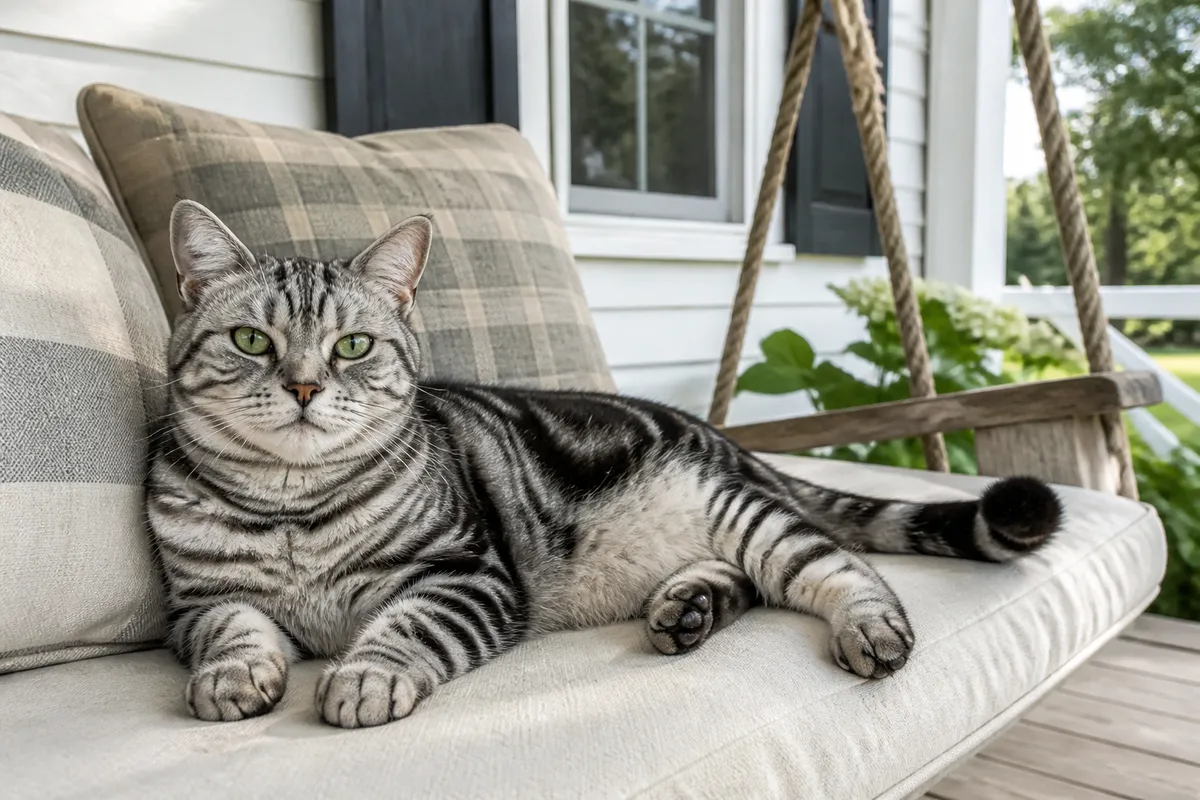
The American Shorthair is a pedigreed breed descended from the working cats that came to North America with early settlers: sturdy, healthy, easygoing and famous for its silver classic tabby coat. It's not the same as the everyday "domestic shorthair" in shelters, even though the two can look alike, and that difference matters for price, predictability and paperwork.
Where the American Shorthair comes from
Shorthaired cats crossed the Atlantic on settlers' ships, where they earned their keep catching rats. As pioneers moved west, the cats guarded barns, stores and homes, and natural selection favored tough, healthy, practical animals with dense, weather-resistant coats.
In the early 1900s, breeders began selecting the best of these cats to preserve their type. The breed appeared at the first major US cat show in 1895 and was among the first five breeds recognized by the Cat Fanciers' Association at its founding in 1906. It was originally shown as the "Domestic Shorthair" and renamed American Shorthair in the mid-1960s.
American Shorthair vs. domestic shorthair: what's the difference?
This is the confusion behind most searches for an "American cat." A domestic shorthair is any shorthaired cat of mixed or unknown ancestry, and according to VCA Animal Hospitals it's the most popular cat in the United States. Most short-coated shelter cats, including many silver tabbies, are domestic shorthairs.
An American Shorthair is a registered pedigreed breed with generations of documented ancestry and a written breed standard. The practical difference: with a pedigreed kitten you can predict adult size, coat and temperament more reliably and see health records for the parents. With a domestic shorthair, you get a unique cat whose personality you judge individually, usually at a fraction of the cost. Both make excellent pets; the domestic shorthair has its own guide.
| Feature | American Shorthair | Domestic shorthair |
|---|---|---|
| Ancestry | Pedigreed, registered with CFA or TICA | Mixed or unknown |
| Look | Predictable: sturdy, round face, thick coat | Varies widely |
| Where you get one | Registered breeders | Shelters, rescues, friends |
| Paperwork | Pedigree, contract, health records | Shelter vet records |
| Cost | Breeder price | Adoption fee |
| Personality | Typically easygoing, breed-typical | Individual; meet the cat first |
Looks and the famous silver tabby
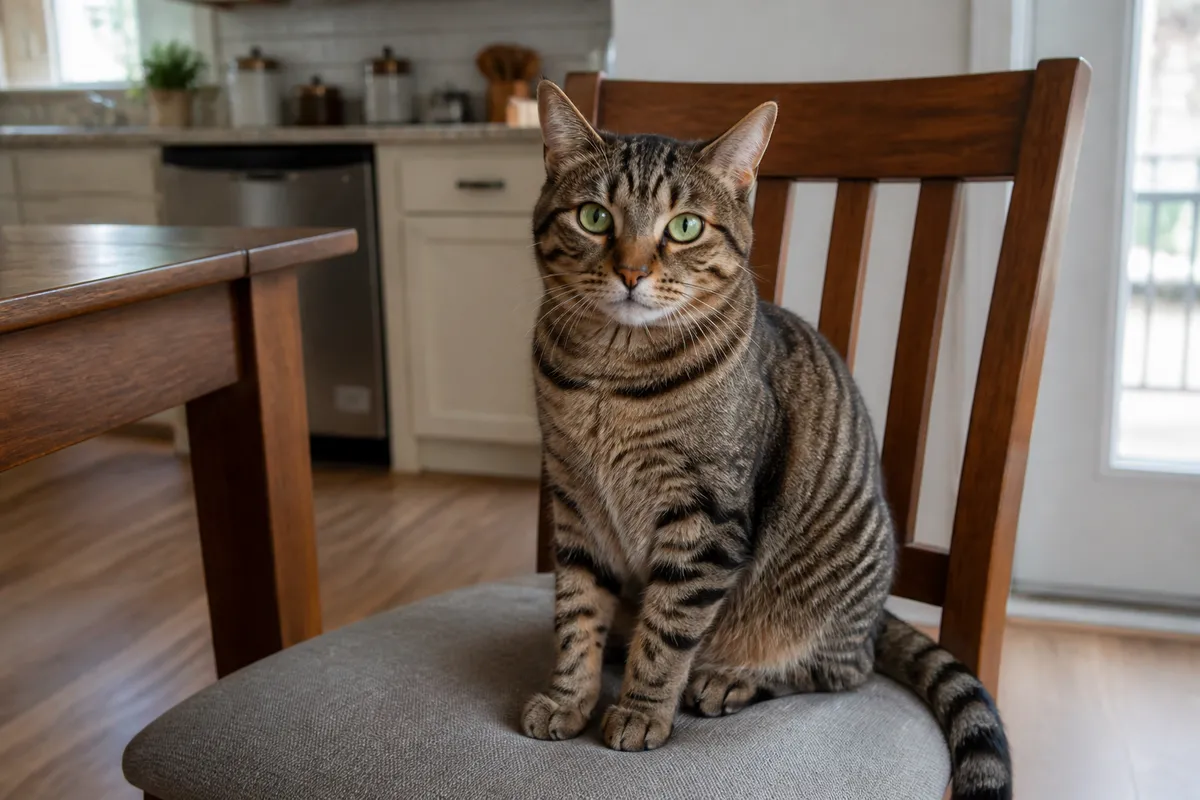
American Shorthairs are medium to large, muscular and slightly longer than tall, with a broad face, full cheeks and a thick, short, hard-textured coat built for rough weather. VCA lists a typical weight of about 8 to 12 pounds; males are usually larger than females.
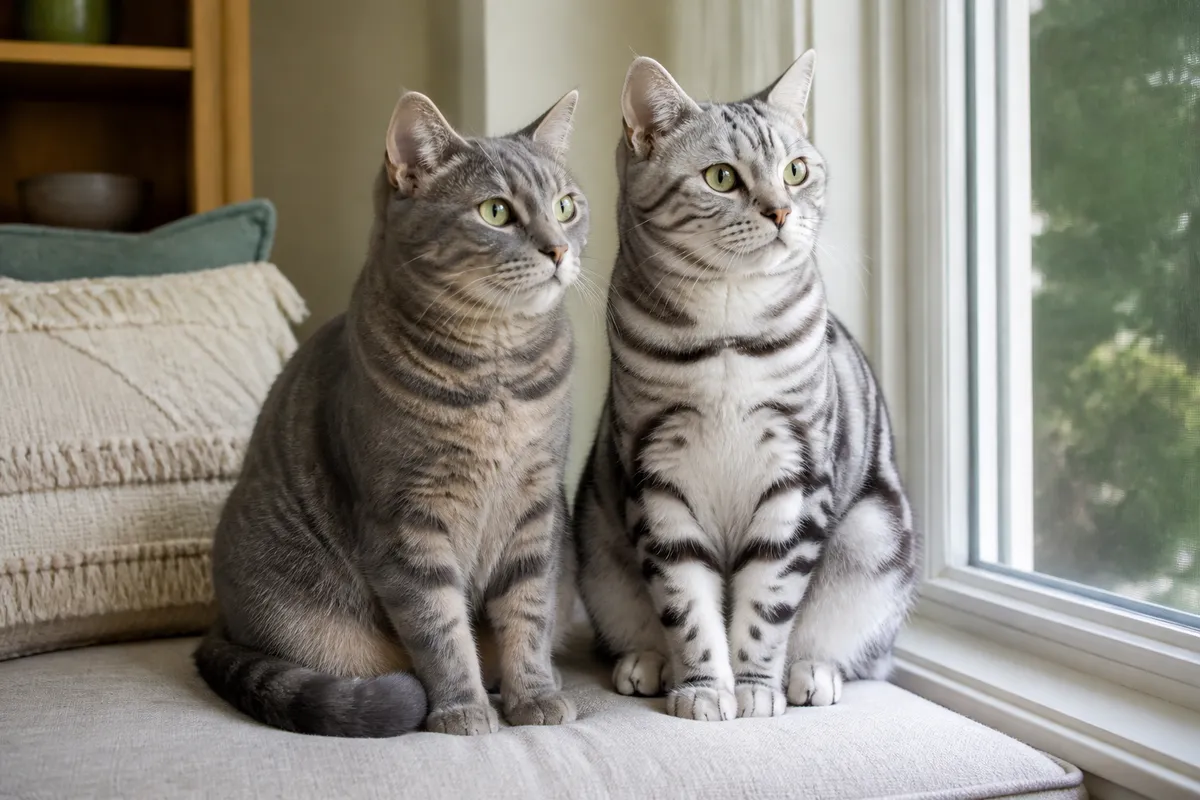
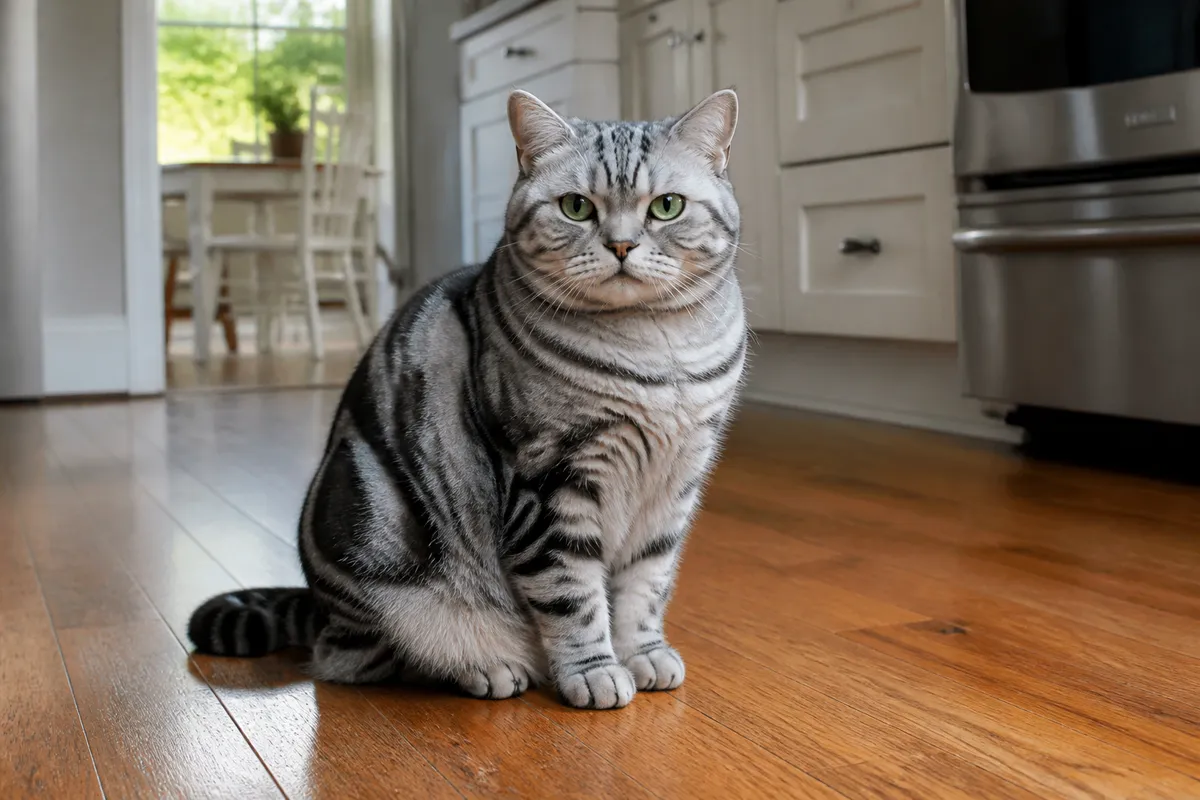
There are more than 100 color combinations, but the silver classic tabby is the icon: a pale, clear silver background with dense black swirls, brick-red nose leather and green to hazel eyes. Brown classic tabbies are also popular. If you love that silver swirl look but don't need papers, many gray tabby shelter cats have it too.
American Shorthair temperament
The breed is affectionate, easygoing, smart and even-tempered. American Shorthairs like interactive play, especially hunting-style games, but they're independent enough to entertain themselves while you're at work. They tend to follow their people around without being clingy and usually prefer walking beside you to being picked up.
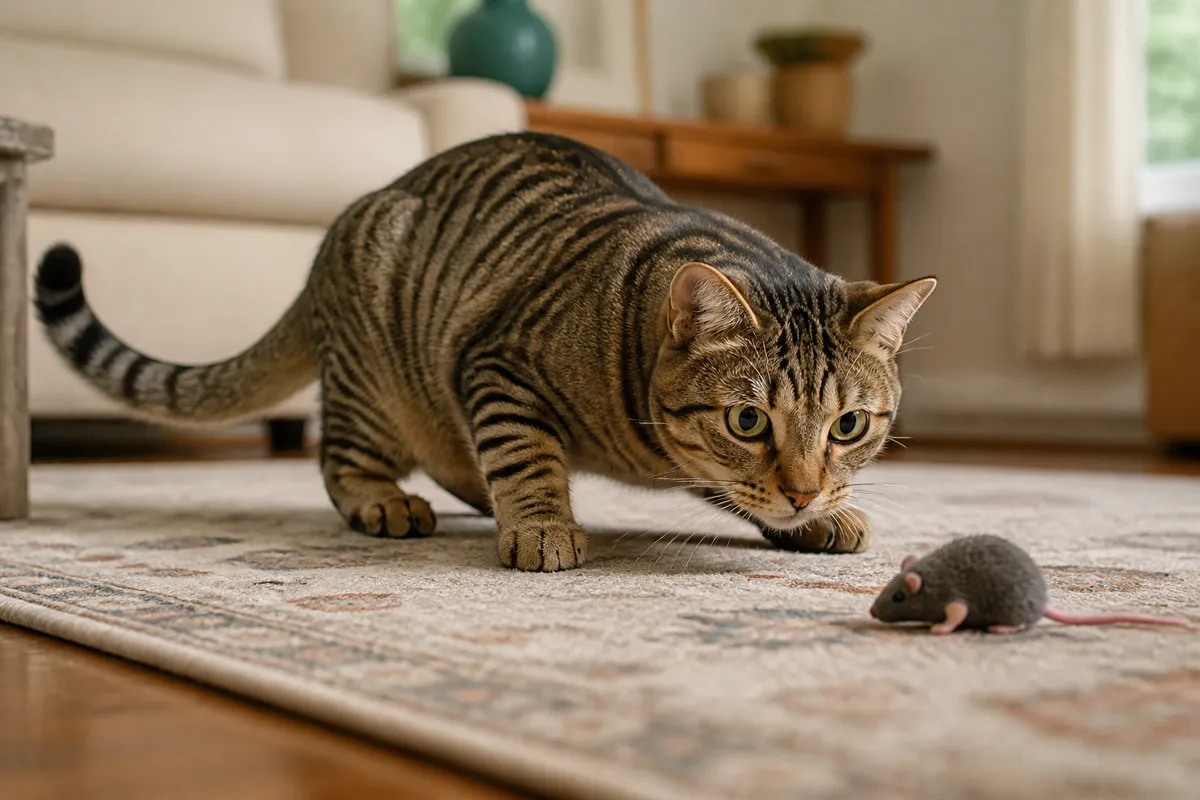
They're quiet, communicating with soft chirps and the occasional "silent meow," and they're known for tolerating children and other pets well. That working-cat heritage still shows: they're keen hunters of toys, bugs and anything that moves, and some learn to open cupboards or doors.
In daily life that means a cat who greets you at the door, supervises dinner prep from a safe distance and then naps on the sofa without demanding a lap. They adapt well to apartments and to busy homes, and most handle visitors calmly. Give that hunting drive an outlet every day, though: a bored American Shorthair may start stalking ankles or knocking things off counters to see what happens.
Care and grooming
Grooming is simple. Brush the dense coat about once a week, more often during the heavier spring shed, and trim claws regularly. Baths are rarely needed.
The main care point is weight. American Shorthairs are sturdy and only moderately active, so measure portions instead of leaving food out, and keep up daily play with wand toys and puzzle feeders. A cat who "hunts" its meals in a food puzzle stays leaner and less bored.
- Weekly brushing, more in spring
- Measured meals, no free-feeding
- Daily hunting-style play sessions
- Cat-proof latches if yours learns to open cupboards
- Annual vet checks, including weight and heart
American Shorthair health and lifespan
American Shorthairs are one of the healthier pedigreed breeds, a legacy of their working-cat origins. The CFA notes no known breed-specific health problems. Hypertrophic cardiomyopathy (HCM) appeared in some lines in the 1980s and 1990s but has largely disappeared thanks to screening and selective breeding, so ask whether the parents had heart checks anyway.
Lifespan is long: VCA gives about 15 to 20 years. Keeping the cat lean is the single most useful thing you can do, because obesity raises the risk of diabetes, arthritis and other problems in any cat.
American Shorthair kittens: price and breeders
There's no official price, and it depends on the breeder, region, color and whether you're buying a pet or a show or breeding cat. Because the breed is less trendy than some, you may need to search beyond your area and join a waitlist.
A good breeder is registered with a major association, can show the parents and their health records, provides a contract and health guarantee and keeps kittens until at least 12 weeks; the CFA prefers 16. Be cautious with any "American Shorthair" sold without papers: that's simply a domestic shorthair, and should be priced like an adoption.
- Is the cattery registered with CFA or TICA, and can I see the kitten's registration?
- Have the parents had heart checks, and what did their vet records show?
- Can I meet the mother, in person or on a live video call?
- What do vaccinations, deworming and the vet check before pickup include?
- Is there a written contract and health guarantee, and what does it cover?
- Is the deposit small and refundable under clear conditions?
Who the American Shorthair suits
It's a great choice for families with kids, homes with other pets, first-time cat owners and people who work but want an affectionate, low-drama companion. It's less ideal if you want a lap cat who loves to be carried, or a very vocal, high-energy breed. And if papers don't matter to you, a domestic shorthair from a shelter offers much of the same charm.
Frequently asked questions
How much does an American Shorthair cost?
Prices depend on the breeder, region, color and pet versus breeding rights, and there's no official figure. A pedigreed kitten costs considerably more than adopting a domestic shorthair, which may look similar.
How can I tell if my cat is an American Shorthair?
Only registration papers prove it. A sturdy build, round face and thick coat, especially a silver classic tabby pattern, are typical, but most cats with that look are domestic shorthairs.
Is an American Shorthair the same as a domestic shorthair?
No. The American Shorthair is a pedigreed breed with documented ancestry. A domestic shorthair is a mixed-breed cat with a short coat, the most common cat in the US.
Are American Shorthairs good family cats?
Yes. They're easygoing, tolerant of children and other pets, playful and quiet, which makes them a popular family breed.
How long do American Shorthairs live?
Often about 15 to 20 years with good care. Keeping them at a healthy weight helps a lot.
Do American Shorthairs shed?
Yes, moderately, with heavier shedding in spring. Weekly brushing keeps it under control.
Sources
- American Shorthair breed profile, Cat Fanciers' Association
- American Shorthair, VCA Animal Hospitals
- Character and quirks of the 5 most common cat breeds, VCA Animal Hospitals
- Good Things Come To Those Who Wait, Cat Fanciers' Association
Last reviewed: November 2026