Orange Cat: Why Most Are Male and the Truth About Their Personality
Coat Colors & Patterns 5 min read reviewed November 2026, 6 sources
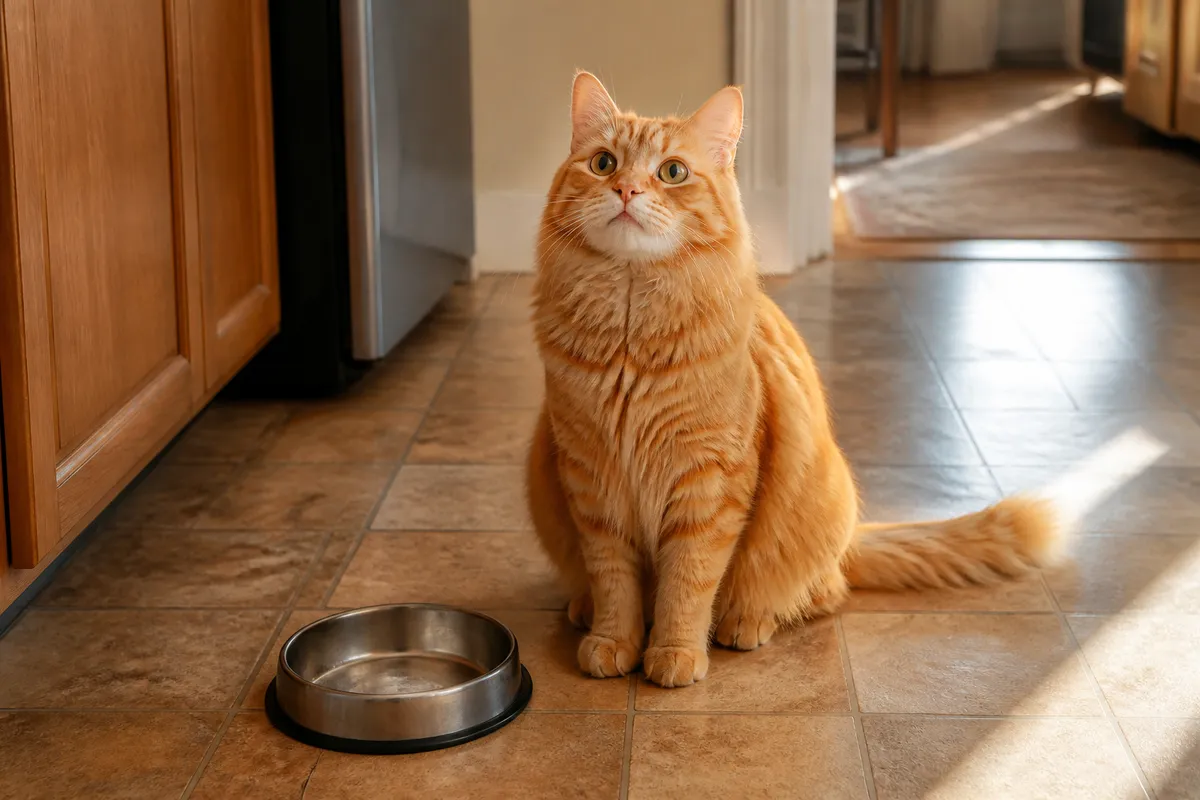
An orange cat owes its ginger coat to a tiny change on the X chromosome, which is why about 80% of orange cats are male. Scientists only pinned down the exact gene in 2025, and despite the internet's favorite joke, there's no evidence that orange cats are any less clever than other cats.
Why are orange cats orange?
Orange fur has puzzled geneticists for more than a century. In 2025, two independent teams from Stanford University and Kyushu University in Japan published the answer in Current Biology. As Scientific American reports, both found the same small deletion on the X chromosome, close to a gene called ARHGAP36 that nobody had linked to fur color before.
That deletion doesn't break the gene. It turns it up in pigment cells. Smithsonian Magazine notes that orange cats produced almost 13 times more ARHGAP36 RNA in those cells than other cats, which pushes them to make light red pigment instead of black or brown. Stanford geneticist Kelly McGowan called the orange cat a "genetic unicorn", because orange coats in dogs, horses and other animals come from a completely different mechanism.
Why did it take so long to find? ARHGAP36 helps control aspects of embryonic development, so scientists assumed big changes to it would be harmful and never put it on the list of suspects. Instead, the missing piece of DNA only changes how the gene behaves in pigment cells and leaves everything else alone.
The good news for ginger fans: because the change is limited to pigment cells, researchers consider these cats perfectly healthy. Orange fur is not linked to any disease.
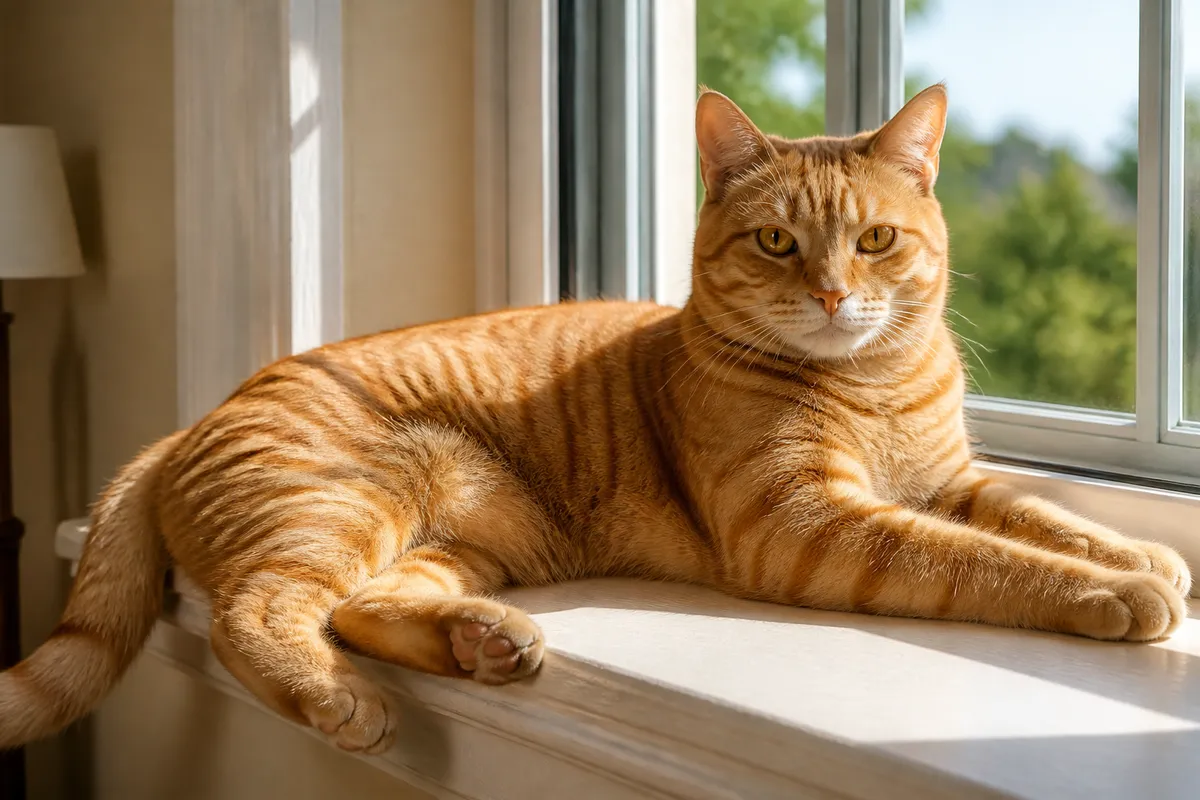
Why are most orange cats male?
NPR's science show Short Wave sums up the numbers: approximately 80% of orange cats are male. The reason is the X chromosome.
A male cat has one X and one Y. If his single X carries the orange variant, he's orange all over. A female has two X chromosomes and needs the orange variant on both to be fully orange. With only one copy, she becomes a tortoiseshell or calico, because each patch of her skin randomly uses one X or the other. So orange females exist, roughly one in five orange cats, but they need more genetic luck.
- Male (XY): one orange X is enough for an orange cat
- Female (XX) with two orange X chromosomes: orange cat
- Female with one orange X: tortoiseshell or calico
- Result: about 4 out of 5 orange cats are male
Orange tabby cat: are all orange cats tabbies?
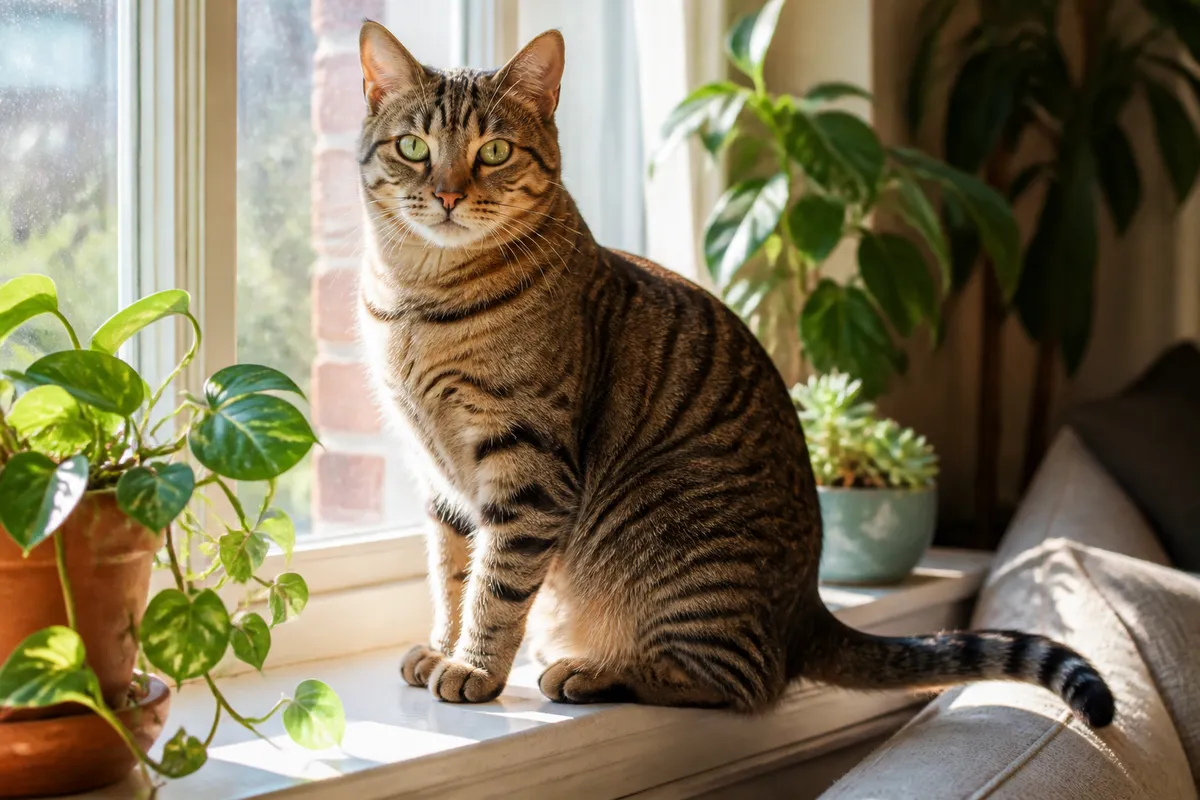
Practically, yes. Veterinarian Marty Becker explains on Vetstreet that in males the orange color is nearly always expressed in a tabby pattern, which is why you'll hear the nickname "ginger tom". Even orange cats that look plain usually show faint stripes on the legs, tail or forehead if you look closely.
The tabby pattern itself can vary. Cat Fanciers' Association (CFA) standards describe red tabbies in classic (swirled), mackerel (thin stripes), spotted and ticked versions. The familiar "M" on the forehead appears on all of them.
| Name you'll hear | What it means | Notes |
|---|---|---|
| Orange tabby | Everyday term for an orange cat with tabby markings | Most orange cats fit here |
| Ginger cat / ginger tabby | Same coat, common in the UK and online | Purely a naming habit |
| Red tabby | Breeders' and cat show term for orange | Used in CFA breed standards |
| Cream or yellow cat | Diluted orange, a pale, buttery shade | Caused by the dilution gene |
| Orange and white cat | Orange with white patches | White comes from a separate spotting gene |
Orange and white cats
An orange and white cat carries the orange variant plus a white spotting gene, which leaves some areas without pigment. The amount of white can range from a small chest patch and white socks to a mostly white cat with orange on the head and tail.
Because the white comes from a different gene than the orange, orange and white cats follow the same rule as solid orange ones: most are male, but females are not unusual. Two colors don't make a calico. A calico needs orange, black and white together.
Orange cat personality: friendly, chaotic or "one brain cell"?
Orange cats have a big online reputation as friendly, food-obsessed goofballs who share a single brain cell among them. It's a great running joke, but that's all it is. Stanford's Greg Barsh, senior author of one of the 2025 studies, told Scientific American that there's no scientific evidence linking coat colors and behavioral differences.
There's a twist the researchers find intriguing. ARHGAP36 is active not only in pigment cells but also in the brain and hormonal glands, so the team would like to study next whether the orange mutation might play some role in behavior. Until that research exists, your orange cat's personality is best explained the usual way: genes, early socialization and how they're treated.
So if your orange cat falls off the couch while chasing his own tail, that's a personal achievement, not a color trait. Plenty of orange cats are cautious, shy or downright dignified. When you adopt, ask the shelter staff how a specific cat behaves with people, kids or other pets. That tells you far more than the coat ever will.
Black spots on an orange cat's nose or lips
Many owners panic the first time they see dark freckles on their ginger cat's lips, nose or eyelids. Usually there's no reason to. Dr. Adam Patterson of the Texas A&M College of Veterinary Medicine explains that these black spots are a normal finding in young orange cats. The condition is called lentigo simplex, the spots are comparable to freckles in humans, and they aren't itchy or painful.
What isn't normal is a spot that is raised, inflamed, sore or growing quickly. Dr. Patterson advises having those examined by your veterinarian. Pale noses and ear tips on orange and white cats can also sunburn, so a cat that loves sunbathing in a bright window deserves the occasional look at those areas.
- Flat, dark, painless freckles that appear slowly: typical lentigo, mention at the next checkup
- Raised, crusty, bleeding or sore spots: book a vet visit
- Red, scaly ear tips or nose on white-patched cats: ask your vet about sun damage
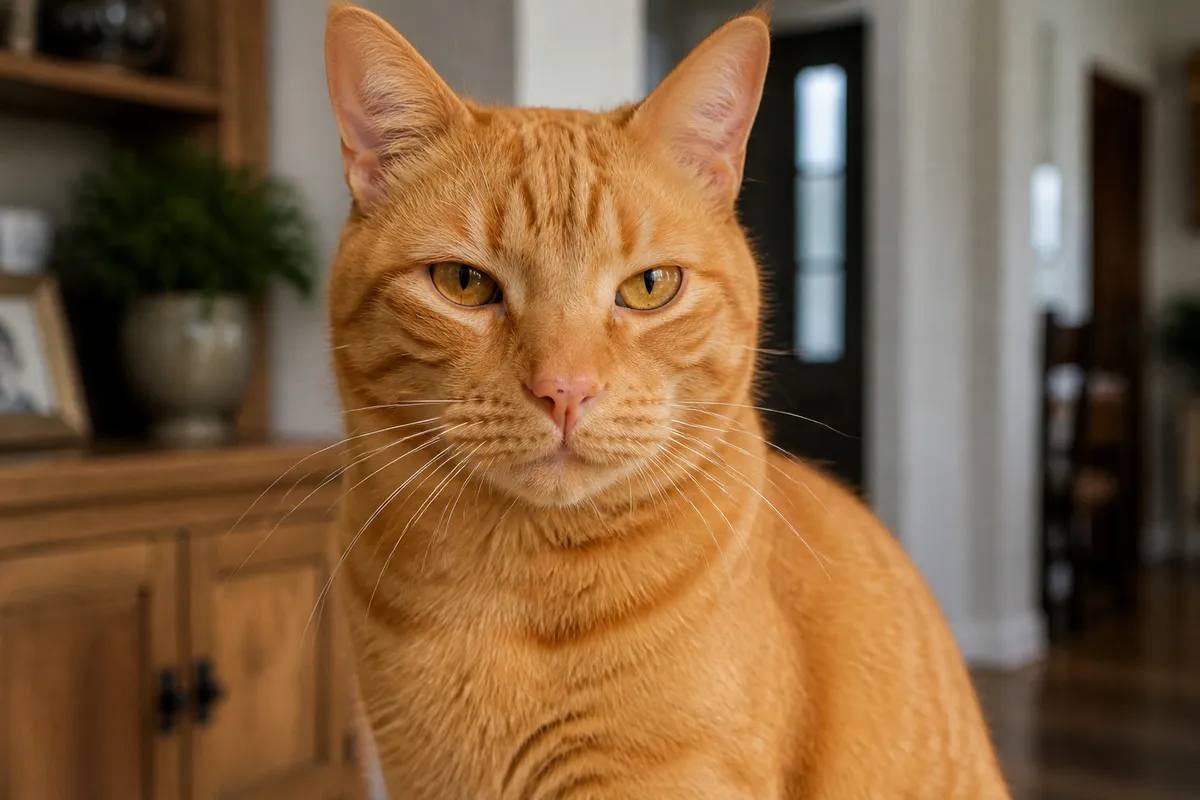
Bringing home an orange kitten
Orange kittens are easy to find, especially in shelters during kitten season, and their care is no different from any other kitten. Start with the basics in our kittens guide, then plan for lots of interactive play.
Two practical tips: if you're hoping for a female, ask the shelter, because the odds are against you in a random litter. And if you're choosing between an orange kitten and a quieter sibling of another color, pick by personality, not by fur. The color tells you almost nothing about the cat who'll be running your household.
Frequently asked questions
Are all orange cats male?
No, but most are. About 80% of orange cats are male because the orange variant sits on the X chromosome. A female needs it on both X chromosomes to be fully orange.
Are orange cats always tabbies?
Nearly always. Orange cats almost always show a tabby pattern, sometimes only as faint stripes on the legs, tail or forehead. The pattern can be classic, mackerel, spotted or ticked.
Do orange cats really have one brain cell?
No, that's an internet joke. Researchers behind the 2025 orange gene studies say there is no scientific evidence that coat color affects behavior or intelligence.
Why does my orange cat have black spots on his lips?
Most likely lentigo simplex, harmless freckles that are common in young orange cats. Have any spot checked by your vet if it is raised, inflamed, sore or changing quickly.
What's the difference between an orange, ginger and red cat?
Nothing genetic. Orange and ginger are everyday words, red is the term breeders and cat shows use. A pale, buttery version is called cream and comes from the dilution gene.
Are female orange cats rare?
They're less common, roughly one in five orange cats, but not truly rare. A female needs the orange variant on both of her X chromosomes, so she needs an orange father and a mother who carries orange.
Sources
- This Strange Mutation Explains the Mystifying Color of Orange Cats, Scientific American
- Geneticists Solve the Mystery of Why Some Cats Are Orange, and Why They Tend to Be Males, Smithsonian Magazine
- Science says orange cats are special. Here's why, NPR Short Wave
- Can Calico Cats Be Male?, Vetstreet (Dr. Marty Becker)
- Know the nose of your pet, Texas A&M College of Veterinary Medicine
- Feline Coat Color, UC Davis Veterinary Genetics Laboratory
Last reviewed: November 2026