Sphynx Cat: Skin Care, Personality, Health and Buying a Kitten
Cat Breeds 5 min read reviewed November 2026, 5 sources
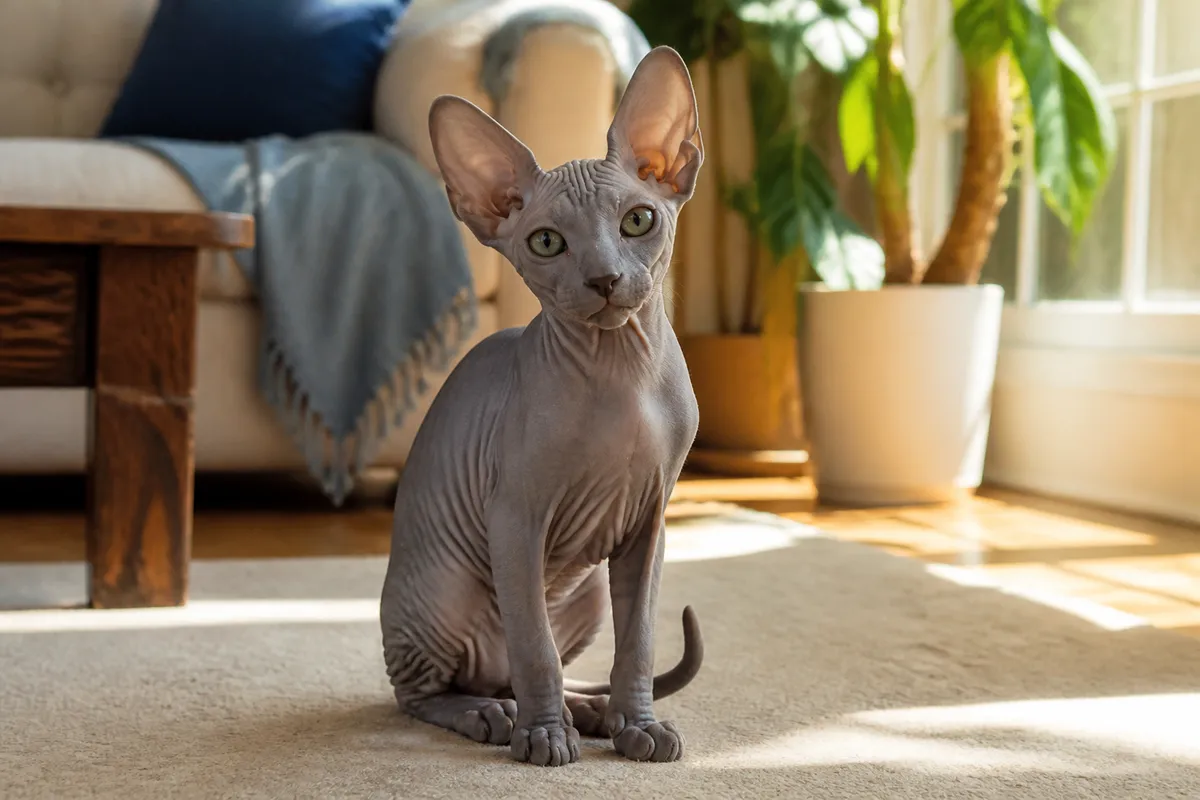
A Sphynx cat is the famously hairless breed with warm, suede-like skin, big ears and a personality that's equal parts velcro and comedian. Living with one is less about brushing and more about bathing: the skin gets oily, needs regular washing and has no fur to protect it from cold or sun. And no, a Sphynx is not hypoallergenic.
Where the Sphynx comes from
The breed began with a natural mutation. In 1966 a domestic cat in Toronto, Canada, gave birth to a hairless kitten. The trait is recessive, so breeders spent about 30 years outcrossing to coated cats and back to hairless ones to build a genetically sound breed.
In 1975 two more hairless cats appeared in Minnesota, named Epidermis and Dermis, and they were added to the gene pool with help from American Shorthairs and Devon Rex. The Cat Fanciers' Association accepted the Sphynx for registration in 1998 and for championship in 2002.
What a Sphynx looks and feels like
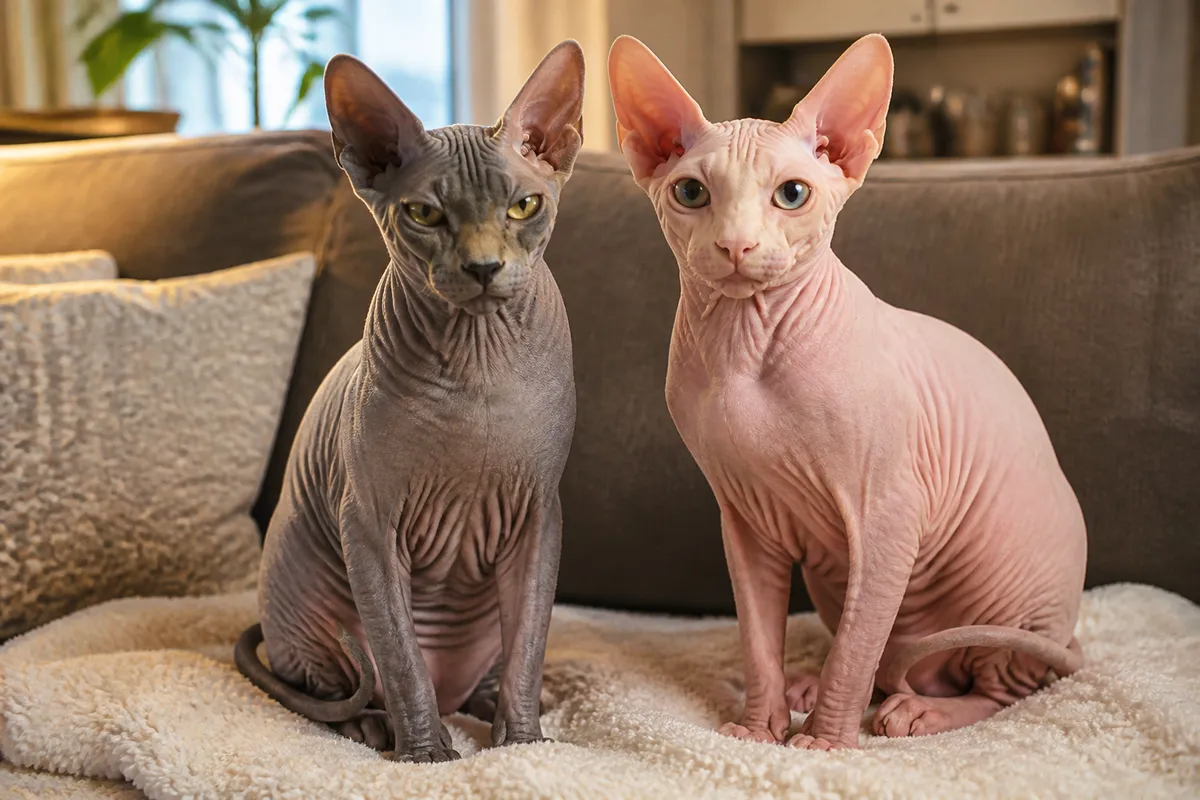
A Sphynx is a medium-sized, surprisingly sturdy and muscular cat with a rounded belly, wrinkles (especially on the head), large bat-like ears, lemon-shaped eyes and long, finger-like toes. Most aren't truly bald: the skin has a fine, almost invisible down, and whiskers and eyebrows may be sparse or missing.
The skin feels warm and soft, often compared to suede or a ripe peach. Every color and pattern exists, from solid black to calico and pointed; it's simply printed on the skin instead of fur. A black Sphynx cat is fully pigmented skin, and sunlight tends to darken colors over time.
| Trait | Typical for the breed |
|---|---|
| Weight | About 8 to 10 lb; males usually larger |
| Coat | Hairless or fine peach-fuzz down |
| Colors | Every color and pattern, visible on the skin |
| Personality | Outgoing, curious, affectionate, needs company |
| Grooming | Regular baths, weekly ear cleaning |
| Shedding | Minimal, but oily skin leaves marks on fabric |
| Allergies | Not hypoallergenic |
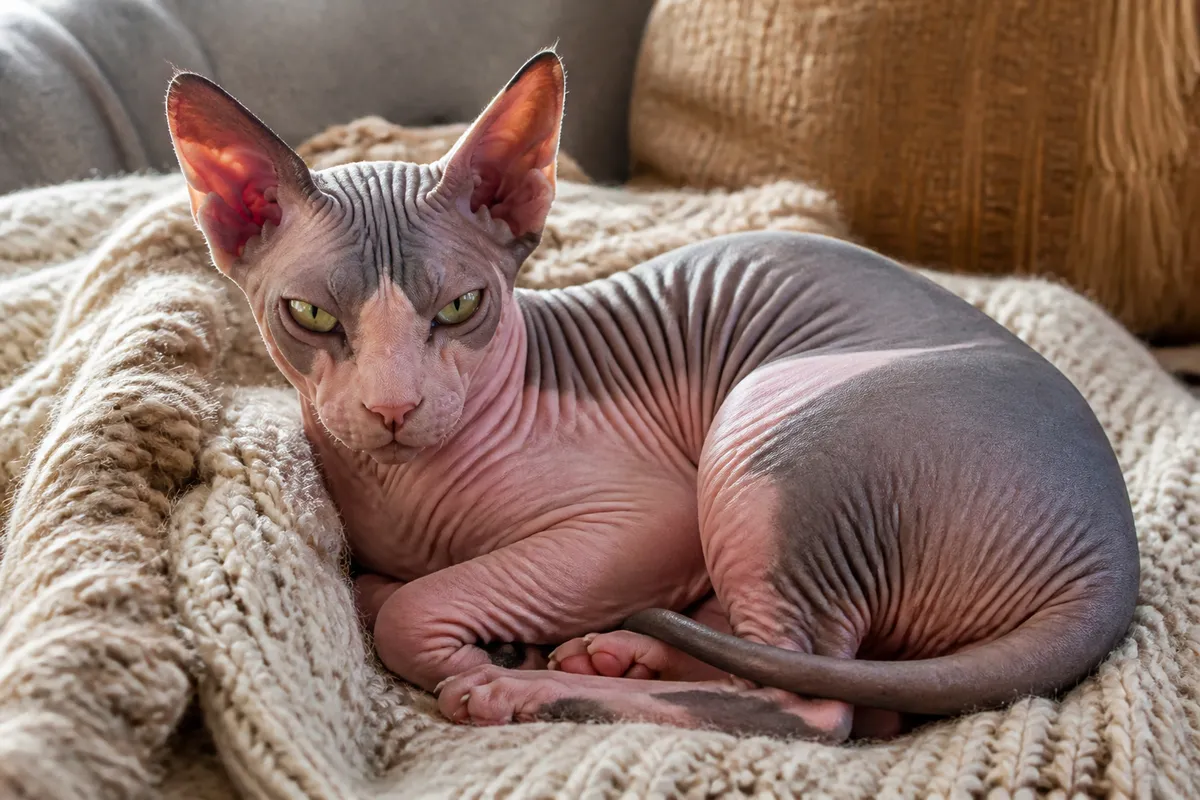
Sphynx personality: a heat-seeking social butterfly
Sphynx cats are curious, outgoing, clever and very affectionate. They follow their people, chat, show off and want to be involved in everything. Breeders describe them as body-heat magnets that will spend hours pressed against a warm human, which makes them excellent bed-warmers and terrible at respecting personal space.
That social streak has a downside: a Sphynx doesn't cope well alone for long stretches. If you work long hours, many breeders recommend a pair, or at least another friendly pet. They can do well with children who are old enough to handle them gently, since the skin is delicate and scratches easily.
Skin care: bathing, ears and nails
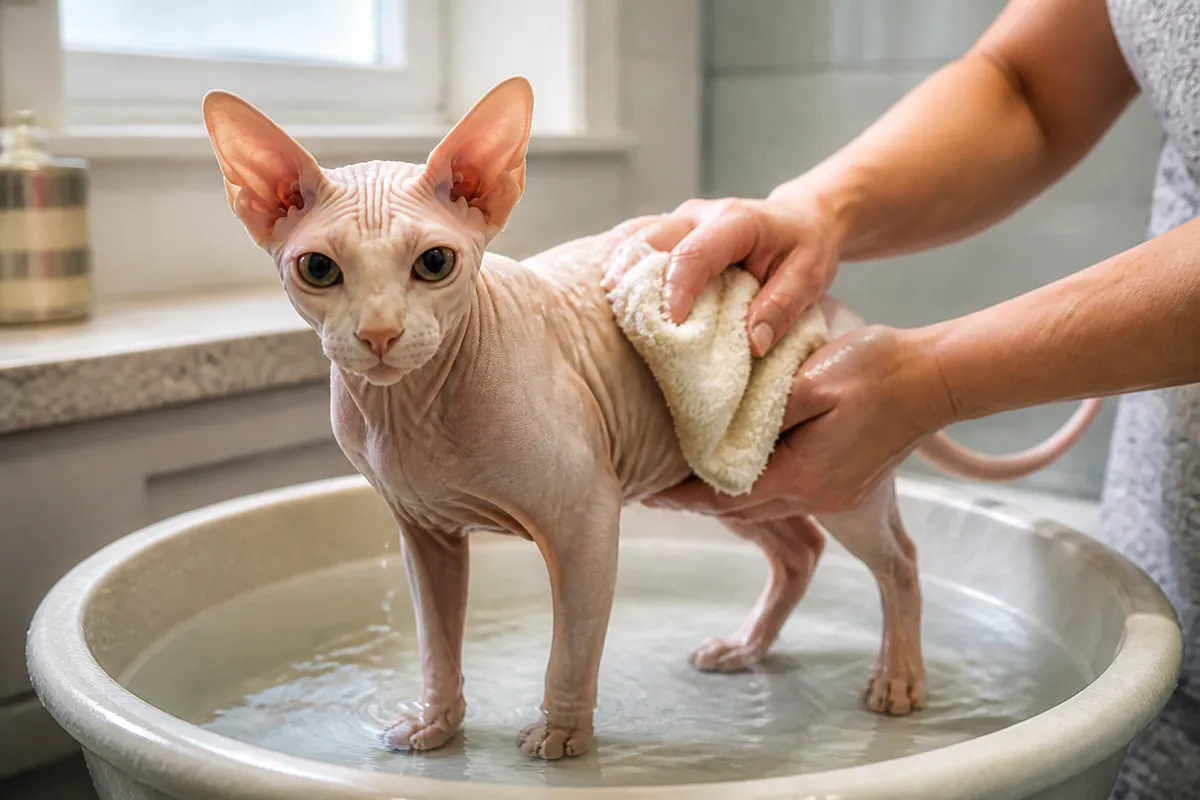
Without fur to absorb it, the natural skin oil builds up on the body and leaves greasy spots on furniture and bedding. That's why a Sphynx needs regular baths, often weekly, plus wiping in between where the skin gets oily. Ask your breeder or vet which gentle cat-safe shampoo to use, rinse thoroughly and dry the cat right away in a warm room.
Oil and wax also collect in those huge ears, between the toes and in the nail folds, so plan for weekly ear cleaning and frequent checks of the paws. Start the routine in kittenhood so bath day becomes boring rather than a wrestling match.
- Bath: regularly, often about once a week, with a mild cat shampoo
- Between baths: wipe oily spots with a soft damp cloth
- Ears: clean weekly, since there's no hair to keep wax and dirt out
- Paws and nail beds: wipe oily residue and trim nails
- Laundry: wash their favorite blankets often
Keeping a Sphynx warm and safe from the sun
No fur means no insulation. A Sphynx needs a warm home, cozy beds, blankets to burrow into and, in colder rooms, a soft sweater the cat actually tolerates. Kittens in particular are prone to respiratory infections, so avoid drafts and cold floors.
The skin can also sunburn. Keep your Sphynx indoors or supervised outside, and limit long naps in strong sun through the window. Because they burn energy to stay warm, many Sphynx cats eat more than you'd expect for their size; ask your vet how much to feed.
Is a Sphynx cat hypoallergenic?
No. The main cat allergen, a protein called Fel d 1, comes from the cat's skin glands and saliva, not from hair itself. A hairless cat still produces it and still spreads it by grooming. Research reviews find no breed that is reliably allergen-free, and differences between individual cats are often larger than differences between breeds.
Some allergic people do tolerate a freshly bathed Sphynx better, because bathing removes allergen from the skin for a while. If you have allergies, spend real time with the breeder's adult cats before committing, and talk to your doctor. The full picture is in the guide to hypoallergenic cats.
Sphynx health problems
Sphynx cats are generally robust, but the breed has several known concerns, and a responsible breeder will discuss all of them openly.
International Cat Care goes further: it points to skin yeast overgrowth, ear infections, eye problems and a short average life expectancy in the breed, and states that a coat is essential for a cat and hairless cats shouldn't be bred. If you're set on a Sphynx, consider an adult from a rescue, and choose a breeder who is open about these issues.
- Hypertrophic cardiomyopathy (HCM): a heart muscle disease that's a major concern in the breed. Breeders should screen breeding cats regularly by heart ultrasound.
- Hereditary myopathy: an inherited muscle disorder that affects muscle function.
- Skin problems, including urticaria pigmentosa, an itchy skin condition seen in the breed, plus sunburn and skin irritation.
- Periodontal (gum) disease: dental care and regular vet dental checks matter.
- Sensitive digestion and respiratory infections in young kittens.
Sphynx kittens for sale: price and breeders
Sphynx prices vary by breeder, color, region and pet versus breeding rights. There's no official figure. What you're paying for is heart-screened parents, careful early care of a fragile kitten and socialization, so ask what's included and compare several registered breeders.
Hairless kittens are a favorite of online scammers. The CFA warns about breeders with many kittens listed at once, kittens sold at six to eight weeks, large nonrefundable deposits and pressure to ship without meeting. Expect a kitten to go home at 12 weeks at the very least, with 16 weeks preferred. Ask for the parents' echocardiogram reports, a written contract and a health guarantee, and see the kitten live, in person or by video. Sphynx cats also turn up in breed rescues, often from owners who underestimated the bathing and attention.
Who a Sphynx suits, and who it doesn't
A Sphynx suits people who are home a lot, love an affectionate, clownish cat and don't mind a weekly bath routine. It's not the right choice if you're hoping for an allergy-proof cat, if your home is cold and drafty, or if you're away all day with no company for the cat.
Frequently asked questions
How much is a Sphynx cat?
Prices vary widely by breeder, color and region, and there's no official figure. Reputable breeders include heart screening, vet care and socialization. Very cheap Sphynx kittens advertised online are a common scam.
Are Sphynx cats hypoallergenic?
No. The main allergen comes from skin glands and saliva, not hair, so Sphynx cats still produce it. Some allergic people react less to a freshly bathed Sphynx, but there's no guarantee.
How often do you bathe a Sphynx cat?
Regularly, often about once a week, because the oily skin builds up residue. Wipe oily spots between baths and clean the ears weekly.
Do Sphynx cats get cold?
Yes. Without fur they lose heat easily, so they seek out warm spots and people. Keep your home warm, provide blankets and cozy beds, and protect kittens from drafts.
How long do Sphynx cats live?
Many Sphynx cats live into their teens, but a study in the Journal of Feline Medicine and Surgery found the breed had the shortest life expectancy of the breeds examined, as International Cat Care reports. Heart screening, skin and dental care and regular vet checks matter a lot.
Do Sphynx cats smell?
Oil that builds up on the skin, in skin folds and in the ears can start to smell if baths are skipped. A regular bath and ear-cleaning routine usually solves it; a strong or sudden odor is worth a vet check.
Sources
- Sphynx breed profile, Cat Fanciers' Association
- Sphynx, VCA Animal Hospitals
- Sphynx, International Cat Care
- Taming pet allergens: strategies to make furry cats less allergenic, PubMed Central
- Could This Kitten Be A Scam?, Cat Fanciers' Association
Last reviewed: November 2026