Devon Rex Cat: Pixie Looks, Wavy Coat and a Velcro Personality
Cat Breeds 5 min read reviewed November 2026, 6 sources
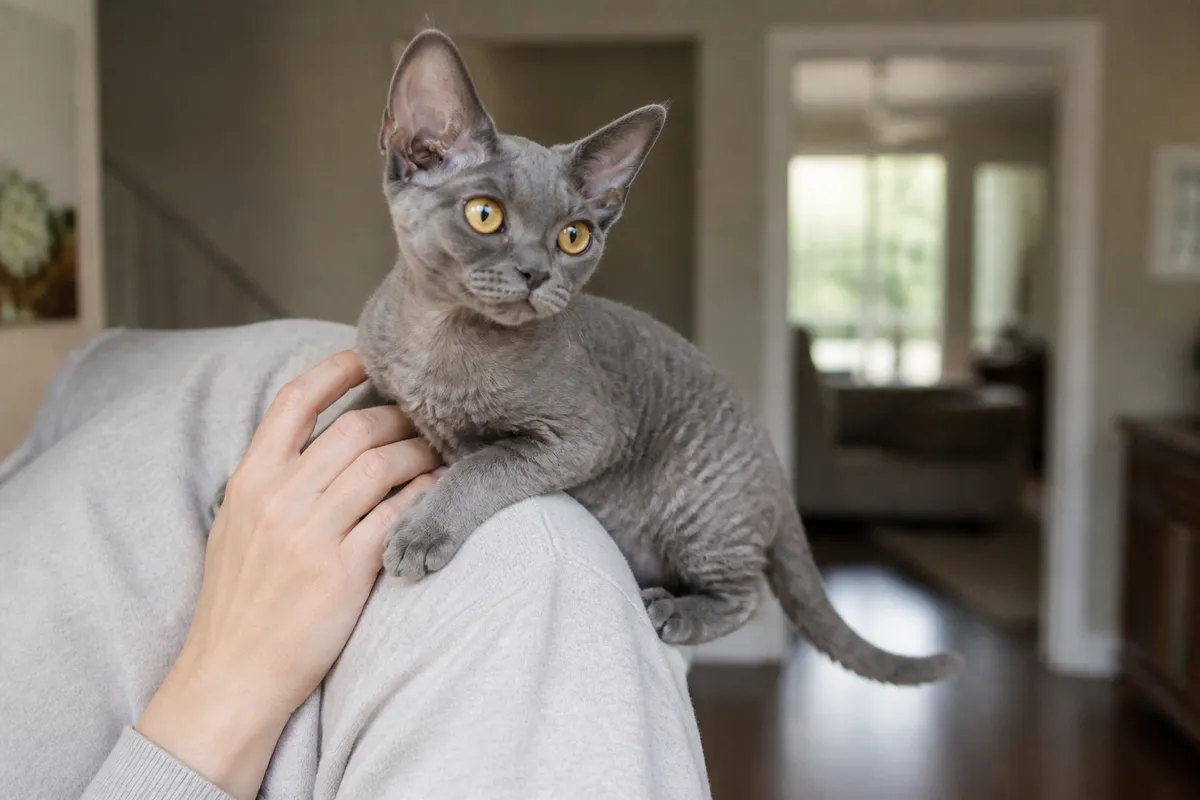
The Devon Rex is a small, elf-faced cat with huge low-set ears and a short, wavy coat that sheds less than most cats. It's affectionate to the point of being glued to you, playful well into adulthood, and despite the rumors, not hypoallergenic.
Where the Devon Rex cat comes from
According to the CFA, a curly-coated male kitten turned up in 1959 in a litter born in a garden in Devon, England. Beryl Cox adopted him and named him Kirlee. (VCA gives the breed's start as 1960; either way, it's a young breed.)
Breeders first assumed Kirlee carried the same mutation as the Cornish Rex, discovered a few years earlier in the neighboring county. Test matings proved them wrong: crossing the two produced straight-coated kittens, so the Devon gene is its own mutation. The first Devon Rex cats arrived in the United States in 1968, and today the major registries, including CFA and TICA, accept the breed.
The CFA notes that Devons have ranked among its ten most popular breeds for several years, so this odd little cat clearly has fans.
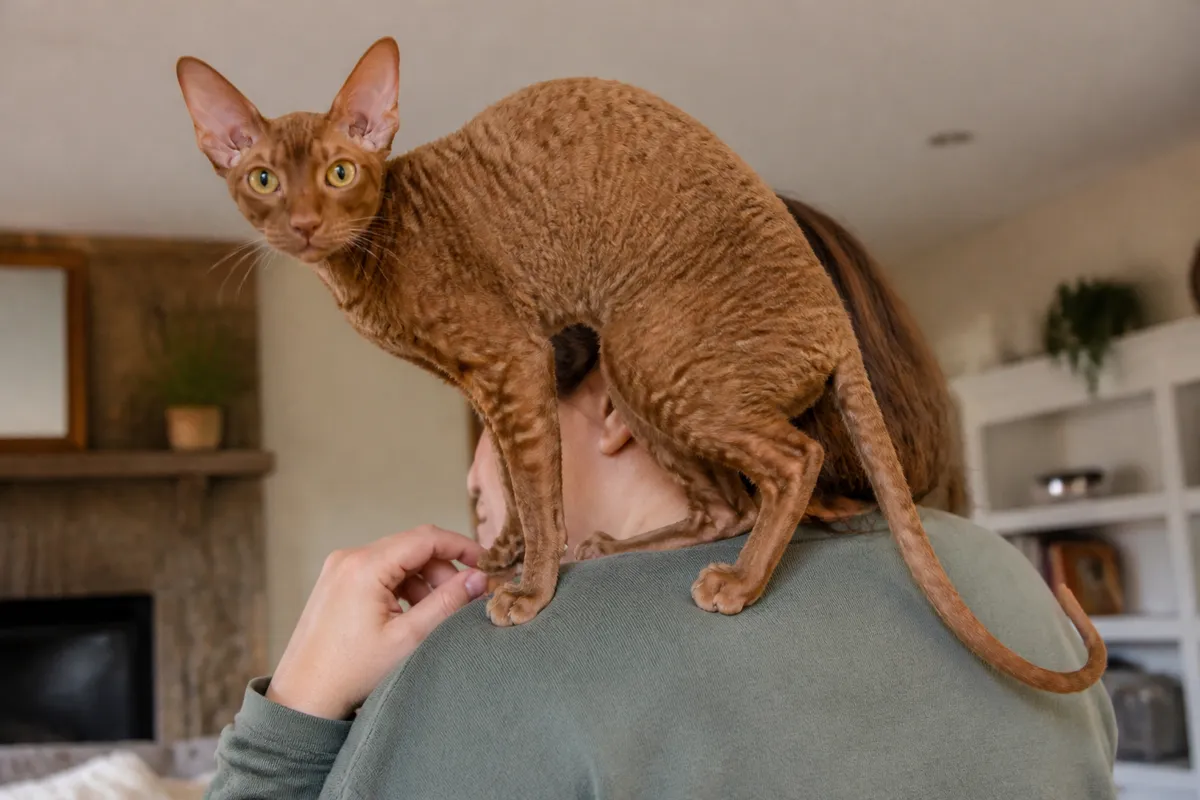
Looks: the pixie face and the famous coat
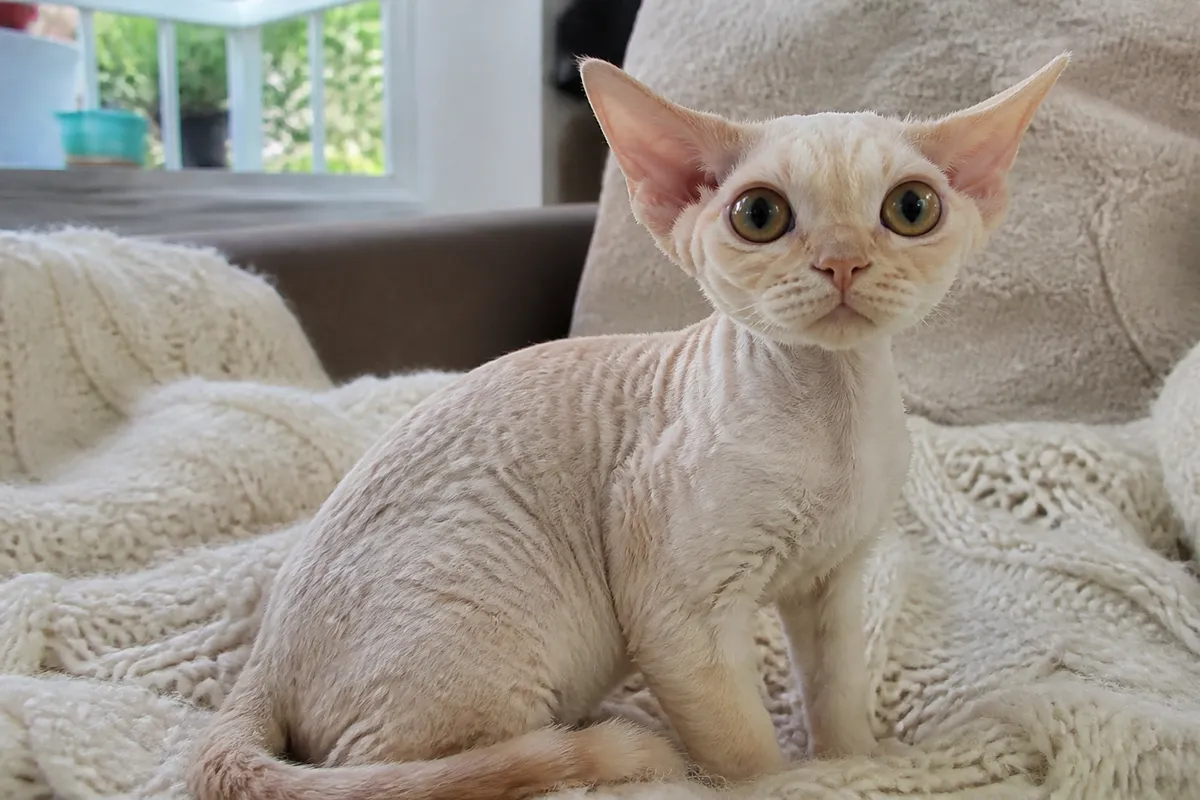
Big eyes, very large low-set ears, wide cheekbones and a short muzzle give the Devon its elfin, slightly mischievous expression. The body is small to medium but surprisingly muscular, with a broad chest, slender neck and hind legs a bit longer than the front legs. CFA lists adults at about six to nine pounds; VCA gives a wider range of 7 to 12 pounds, and males may be larger.
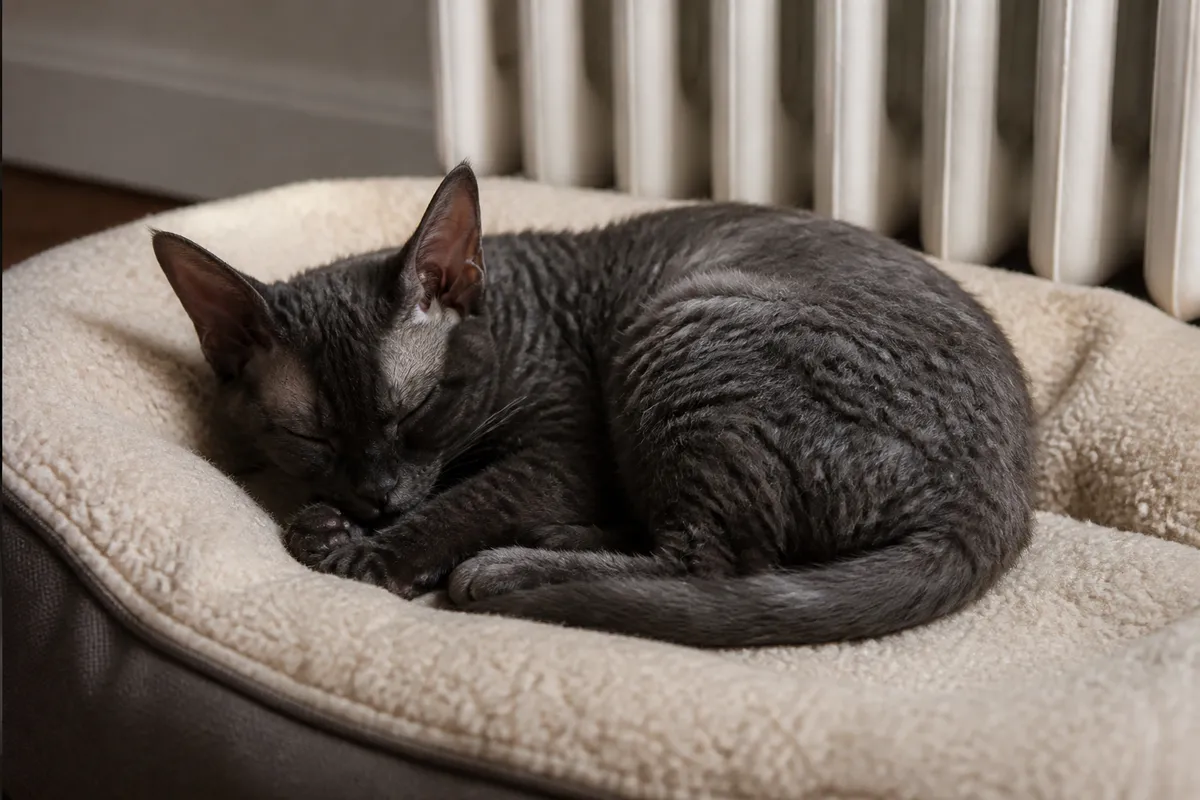
The coat ranges from thin and suede-like to full and loosely waved. Devons do have guard hairs, but they're sparse, short and rexed, which is one of the ways to tell them apart from the Cornish Rex. Whiskers and eyebrows are curly too, and they're fragile, so short bent stubs are normal. Every color and pattern is allowed.
Devon Rex personality
CFA describes Devons as intelligent, eager to please and very attached to their people, and says they don't like being left alone for long. VCA adds that they love high perches, give body hugs rather than sitting quietly in a lap, and like to squeeze into tight spaces, like under your sweater or behind your neck.
They talk, but softly, with chirps, trills and peeps plus a loud purr. They're usually good with children, dogs and other cats, and they're very trainable. Food is a big motivator: VCA mentions their habit of sneaking food and an appetite bigger than their size.
Plan your home accordingly: covered trash cans, closed food containers and a cat tree tall enough to watch you from above.
- Shoulder rider and lap sharer
- Playful and kitten-like as an adult
- Learns tricks fast with treats and clicker training
- Not happy alone all day
Devon Rex shedding and allergies
Devons shed less than most cats, which is why they're often marketed to allergy sufferers. CFA says they may be well tolerated by some people sensitive to cats but are not hypoallergenic, and VCA is just as clear. The main cat allergens come from saliva and skin glands, not from hair length, and every cat produces them.
If you have allergies, spend real time with Devons, ideally several visits in a home, before you put down a deposit. The hypoallergenic cats article explains how to test yourself safely.
Grooming and care
Grooming is light but a little different. Brushing hard can damage the delicate coat, so many owners simply stroke it with their hands or a chamois cloth to spread natural oils. VCA recommends periodic ear cleaning and wiping the coat with a warm, damp cloth or a cat-safe wipe now and then.
Bare or suede-like patches can happen in this breed, according to CFA, but new hair loss should still be checked by a vet. A thin coat also means less insulation, so a heated bed or a cozy blanket in winter is a kindness, not a luxury.
Keep an eye on weight. A cat that sneaks food will gain it, and extra pounds are hard to hide under a coat this short.
Health: what to ask the breeder
CFA says the breed's varied background means few health concerns would be expected, but it names one big breeding issue: blood type B is common in Devons. If a type A kitten is born to a type B mother, the mother's antibodies in her first milk can destroy the kitten's red blood cells, a condition Cornell calls neonatal isoerythrolysis. Good breeders blood-type their cats to prevent this. Blood type also matters if your cat ever needs a transfusion.
International Cat Care also lists Devon Rex myopathy, an inherited muscle disorder, among feline inherited diseases. Ask any breeder which conditions they test for and how.
- Ask for blood types of the parents
- Ask which genetic tests the breeding cats have had
- Ask about the health guarantee and return policy in writing
Devon Rex kittens for sale: price and responsible breeders
There's no reputable current price survey for Devon Rex kittens. The CFA's general buying guide names about $300 to $1,500 for pedigreed kittens depending on breed and region, and the price of a particular kitten depends on health testing, pet or show quality, demand and what's included (spay or neuter, vaccines, microchip, guarantee).
CFA's advice: visit the breeder's home, meet at least one parent, and expect a purchase agreement. Reputable breeders don't sell through pet stores. Be wary of online ads with stock photos, pressure to pay a deposit immediately, or a seller who won't show you where the kittens live.
Rescue is possible too. Breed clubs sometimes rehome adults, and a retired breeding cat can be a wonderful, already-civilized companion.
Rex cat breeds compared
Rex simply means a curly or wavy coat caused by a gene mutation, and several unrelated breeds have one. The Selkirk Rex and LaPerm have their own articles, so here's just the quick overview.
| Breed | Origin | Coat |
|---|---|---|
| Devon Rex | Devon, England, 1959 | Short, loose waves, sparse rexed guard hairs |
| Cornish Rex | Cornwall, England, 1950 | Tight marcel waves, no guard hairs |
| German Rex | Berlin, Germany, found 1951 | Short, wavy, silky, no guard hairs |
| Selkirk Rex | United States | Plush, loose curls |
| LaPerm | United States | Loose curls, short or long |
Who the Devon Rex suits
A Devon is ideal if you want an affectionate, funny, involved cat, you're home a lot or have another pet, and you like a cat that wants to be held. It's also a good fit for people who hate vacuuming up long fur.
It's a poor fit if you want an independent cat, if the house is empty most of the day, or if you're counting on it to cure a serious cat allergy. And if you guard your dinner plate fiercely, know that this breed considers your food a shared resource.
Frequently asked questions
Are Devon Rex cats hypoallergenic?
No. They shed less than most cats, and some sensitive people tolerate them better, but CFA and VCA both say they are not hypoallergenic. The allergens come from saliva and skin, which every cat has.
What is the difference between a Devon Rex and a Cornish Rex?
They come from two different mutations. The Devon has a pixie face, low-set ears and sparse guard hairs, while the Cornish has an egg-shaped head, high-set ears, a Roman nose and no guard hairs at all. Crossing them produces straight-coated kittens.
How big does a Devon Rex get?
Devons are small to medium cats. CFA lists about six to nine pounds for adults, and VCA gives 7 to 12 pounds, with males usually on the larger side.
How long do Devon Rex cats live?
VCA gives a lifespan of about 15 to 20 years. Good weight control, dental care and regular checkups help them reach the upper end.
Do Devon Rex cats like to be held?
Most do. They're known for climbing onto shoulders, hugging and burrowing under blankets with their people. They're less likely to sit still in a lap for hours.
What is a rex cat?
Rex describes a curly or wavy coat caused by a gene mutation. Devon Rex, Cornish Rex, German Rex, Selkirk Rex and LaPerm are separate breeds with separate rex genes.
Sources
- Devon Rex breed profile, The Cat Fanciers' Association
- Devon Rex, VCA Animal Hospitals
- Anemia, Cornell Feline Health Center
- Inherited disorders in cats, International Cat Care
- Finding the Purr-fect Pedigreed Kitten, The Cat Fanciers' Association
- German Rex, FIFe
Last reviewed: November 2026