Hairless Cat Breeds: Sphynx, Peterbald, Donskoy and What Owning One Takes
Cat Breeds 5 min read reviewed November 2026, 6 sources
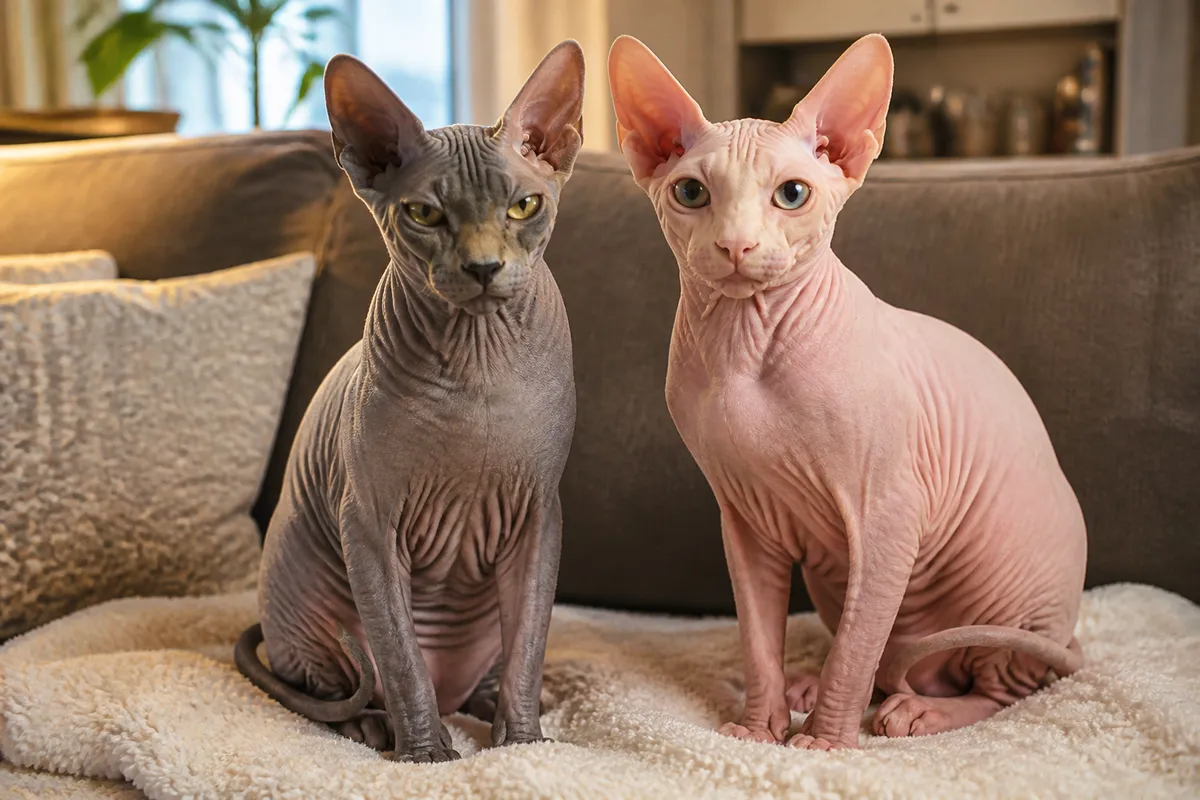
A hairless cat isn't one breed but several: the Canadian Sphynx is by far the most common in the US, followed by the Russian Peterbald and Donskoy (Don Sphynx) and rare short-legged crosses like the Minskin and Bambino. All of them need weekly baths, warmth and sun protection, none is truly allergy-free, and animal welfare experts have serious concerns about breeding cats without a coat.
How a cat with no hair happens
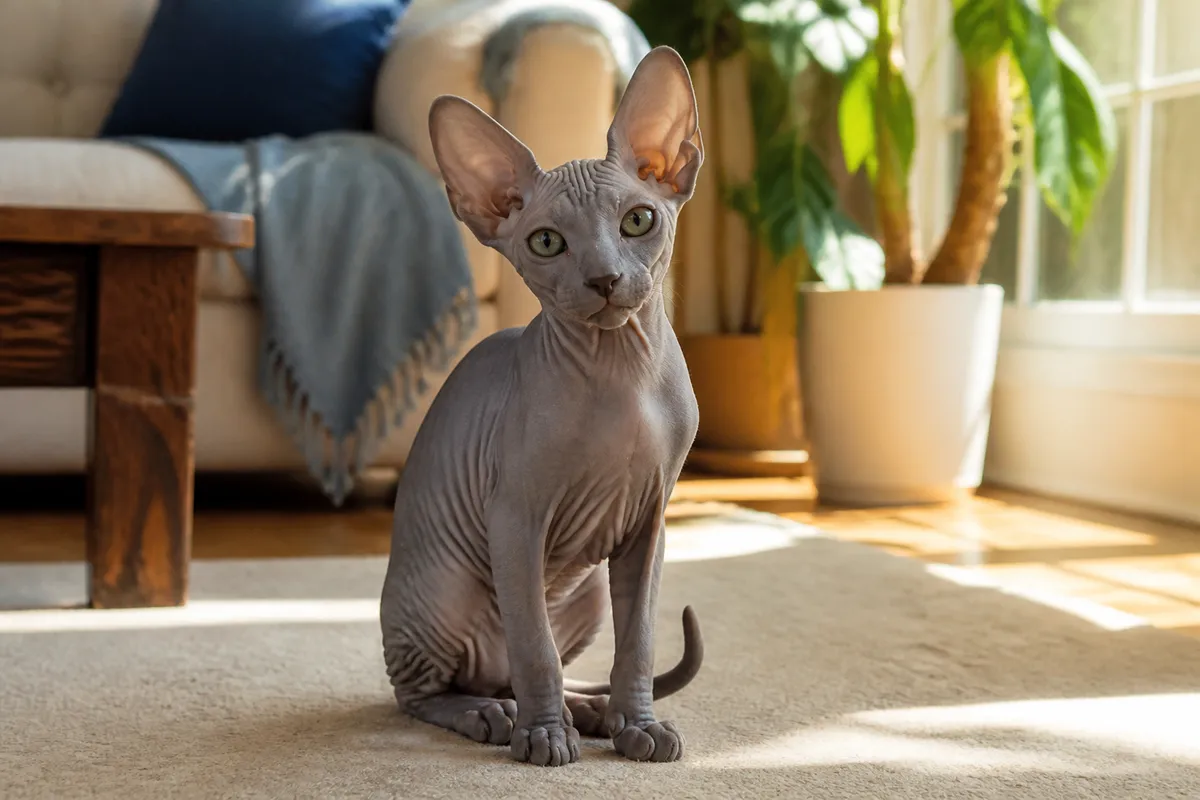
Hairlessness in cats comes from natural mutations, and the breeds don't share the same one. The Sphynx carries a recessive gene first seen in a Toronto kitten in 1966: a kitten needs a copy from both parents to be hairless.
The Russian breeds work differently. The Donskoy began with a female named Varvara, found in Rostov-on-Don in 1987, who lost her hair as she grew up. Her mutation is a dominant "hair-losing" gene, which means some kittens are born with fuzz or a short coat and gradually go bald. The Peterbald inherited that same gene. So two hairless cats can look alike and still be genetically unrelated.
Hairless cat breeds compared
Most hairless cats you'll meet in the US are Sphynx. The Russian breeds are rarer and mostly found through breeders who import lines, while the short-legged crosses are newer and controversial.
| Breed | Origin | Hair gene | Look and character |
|---|---|---|---|
| Sphynx | Toronto, Canada, 1966; later Minnesota lines | Recessive | Sturdy, pot-bellied, wrinkled, big ears; extremely social |
| Donskoy (Don Sphynx) | Rostov-on-Don, Russia, 1987 | Dominant hair-losing gene | Medium, muscular, very wrinkled skin, long "monkey finger" toes; gentle, people-oriented |
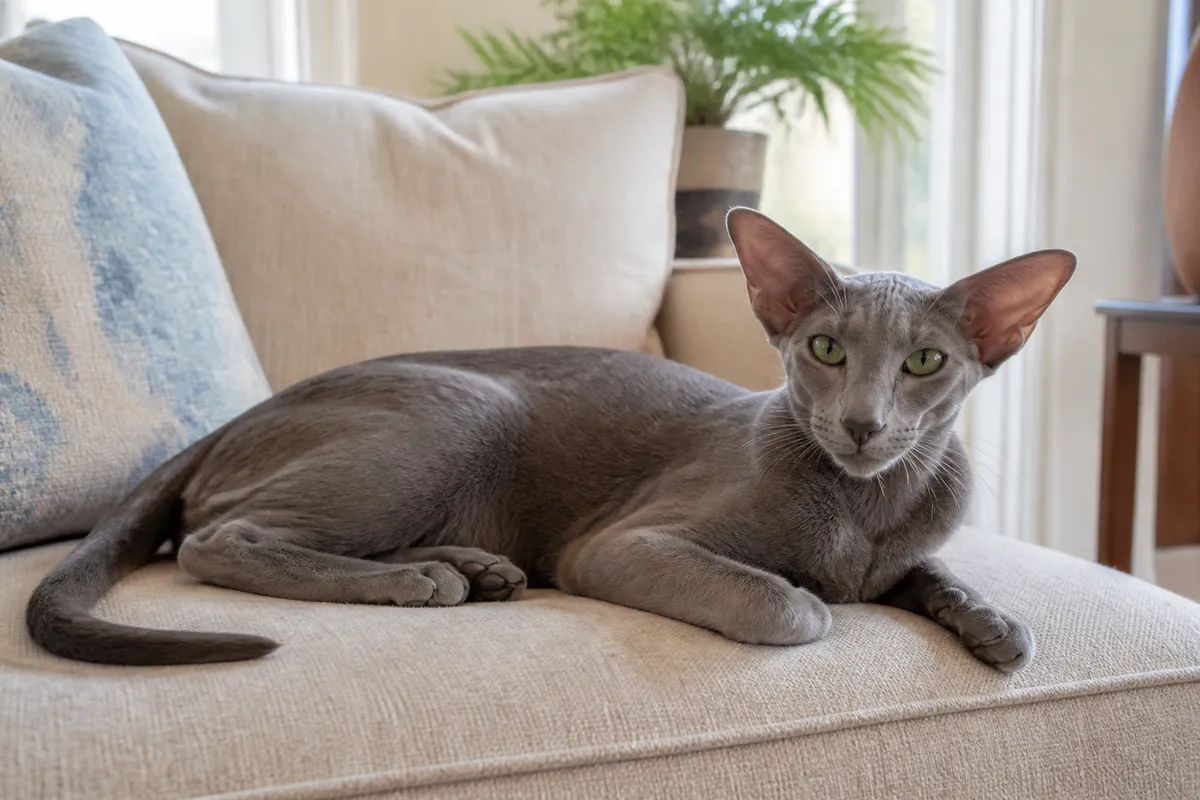
| Peterbald | St. Petersburg, Russia, 1994 (Don Sphynx x Oriental Shorthair) | Dominant hair-losing gene | Slim, elegant, long head, huge ears, whip tail; affectionate, curious, chatty |
| Minskin | Boston, late 1990s (Sphynx-based short-legged cross) | Sphynx type plus short legs | Small, short-legged, with light fur on the points; very rare |
| Bambino | US, Sphynx x Munchkin crosses | Sphynx type plus short legs | Short-legged hairless cat; not accepted by most major registries |
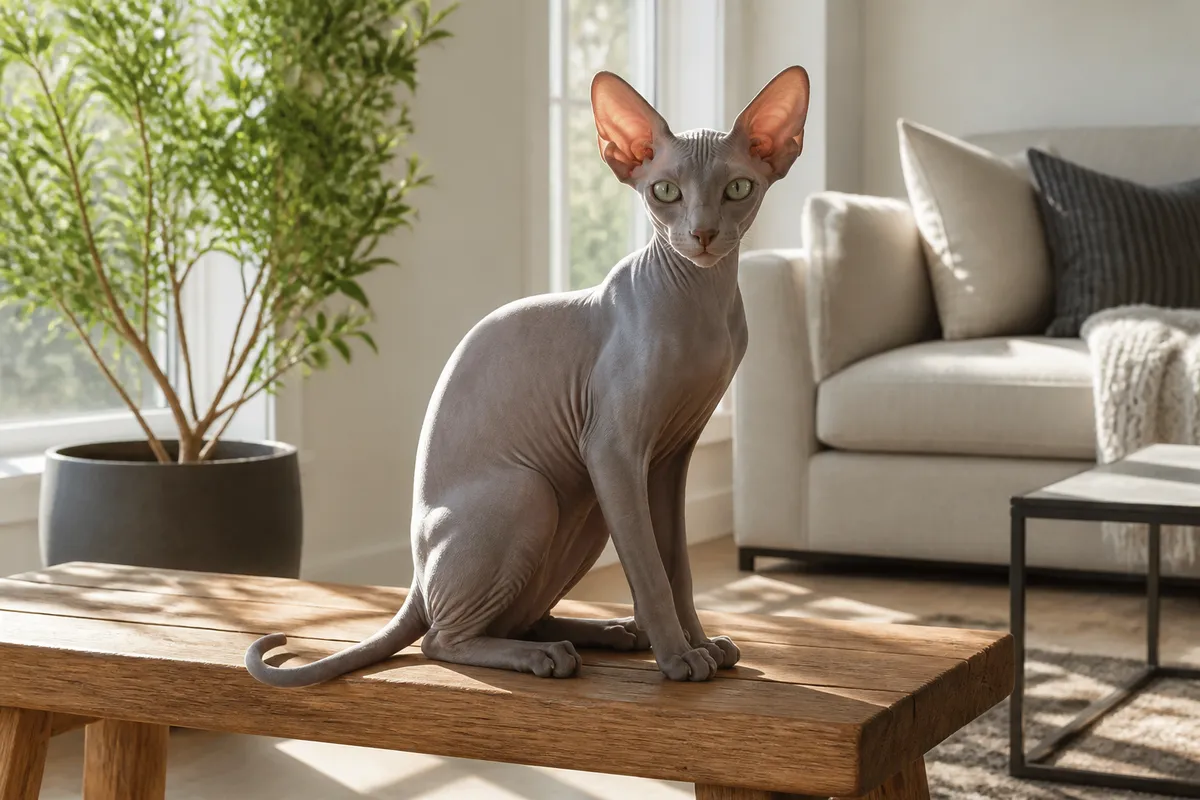
Peterbald cat: the elegant Russian
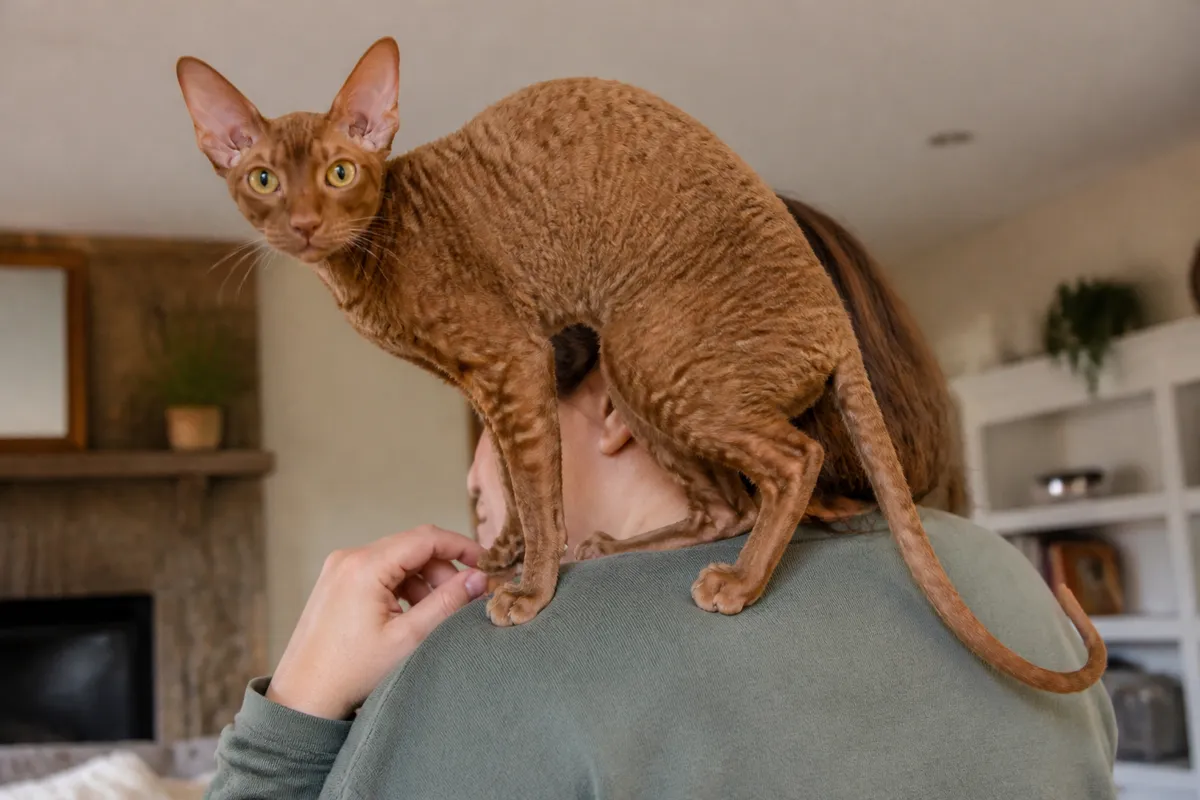
The Peterbald was created in St. Petersburg in 1994 from a cross between a Don Sphynx and an Oriental Shorthair, which explains its long, slim, Oriental-style body, narrow head, almond eyes and big ears. FIFe, the European federation, recognized it in 2012.
Peterbald kittens can be born bald, flocked (a fine peach-fuzz), brush-coated (wiry, patchy hair) or straight-coated. All but the straight-coated cats may lose their hair over time, so a buyer should know that a fuzzy kitten may end up bald, or may not. In temperament, Peterbalds are affectionate, smart, energetic and moderately vocal, and they usually follow their people around.
Don Sphynx (Donskoy): the wrinkled one
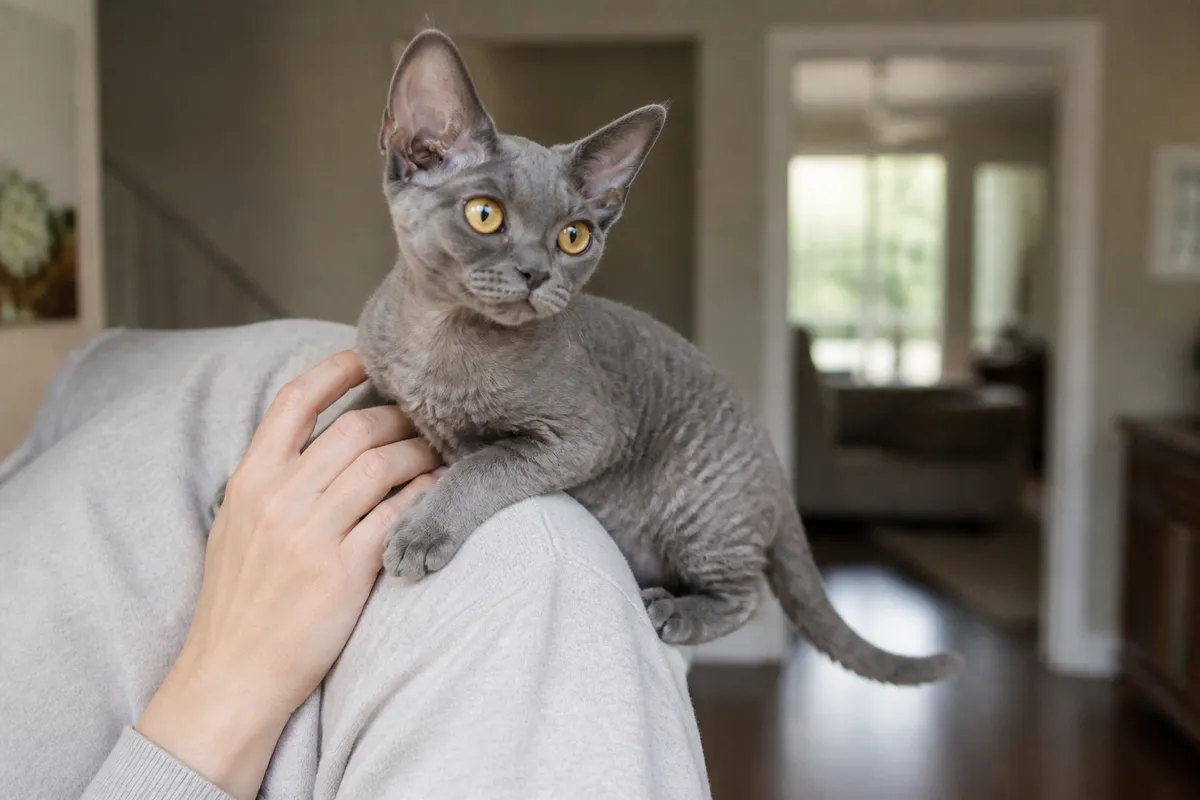
The Donskoy is a medium-sized, solid, muscular cat with elastic, heavily wrinkled skin, especially on the muzzle, between the ears and around the shoulders. It has a wedge-shaped head, slanted almond eyes and long toes that breeders call monkey fingers. The breed has four coat types, and all but one usually end in hairlessness.
Donskoys are described as curious, gentle, affectionate and active. Like the Sphynx, they're very social and dislike being left alone.
Minskin and Bambino: short legs, no coat
The Minskin and Bambino combine hairlessness with the short-leg trait of the Munchkin. They're rare, newer creations, and most major registries don't grant them full recognition. The short-leg trait has its own guide on cats with short legs.
International Cat Care lists both hairlessness and short legs among the traits it considers problematic to breed for, because they can compromise a cat's welfare. Stacking both in one cat is exactly the combination welfare groups worry about most, so be very cautious with breeders who market these cats as cute novelties.
What owning a naked cat really involves
Hairless doesn't mean low-maintenance. Without fur to absorb skin oil, the oil builds up on the skin and leaves greasy marks on furniture and bedding, so most hairless cats need a bath about once a week plus regular ear cleaning, since wax and dirt collect in those big ears. Skin folds and nail beds need wiping too.
Temperature is the other daily concern. No coat means no insulation, so a hairless cat needs a warm home, heated or cozy beds and blankets to burrow in, and often a soft sweater in winter. Kittens are prone to respiratory infections. The skin can also sunburn, so keep these cats indoors or supervised and limit long sunbathing sessions at the window.
Many hairless cats also eat more than you'd expect, because they burn energy to stay warm. Ask your vet for a feeding plan rather than guessing.
- Weekly bath with a mild cat shampoo, then dry right away
- Weekly ear cleaning and frequent paw checks
- A warm home, blankets, cozy beds and possibly a sweater
- Indoor life or supervised outdoor time, with sun limits
- Regular vet checks including the heart, skin and teeth
- Washing their bedding and your throws often
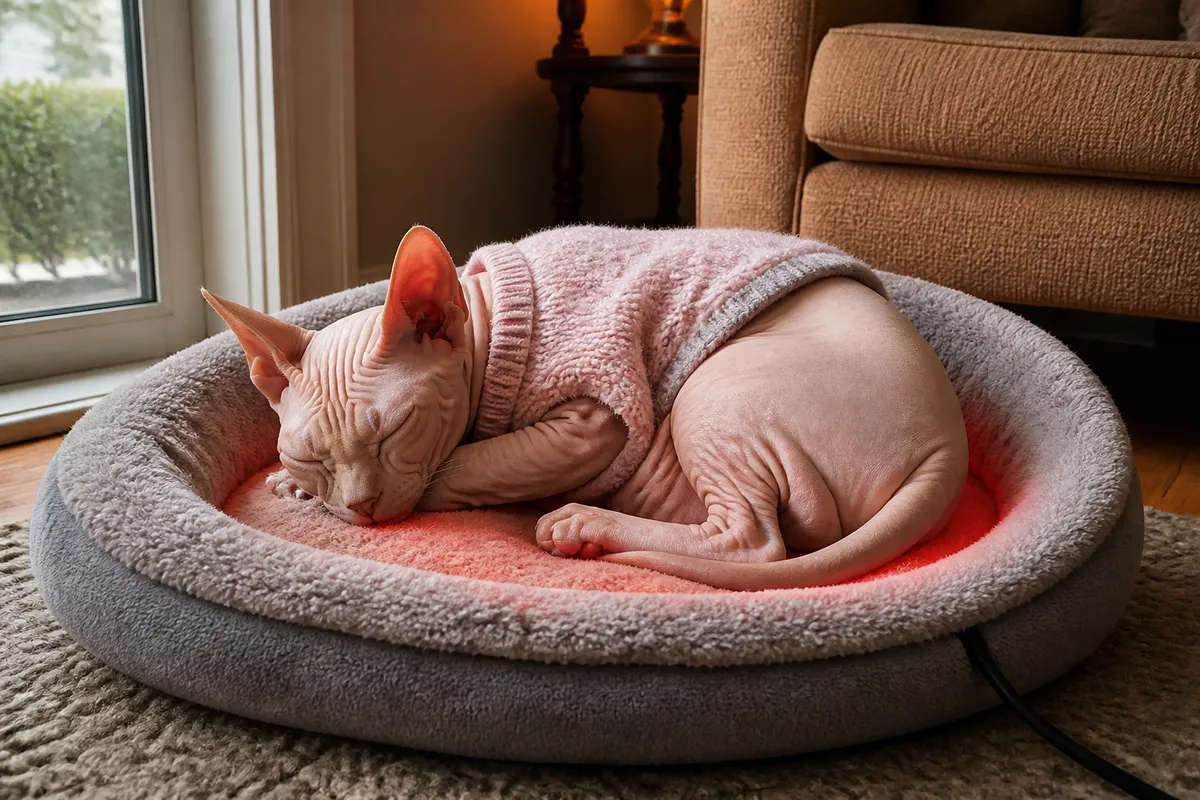
Fat hairless cat or just a Sphynx belly?
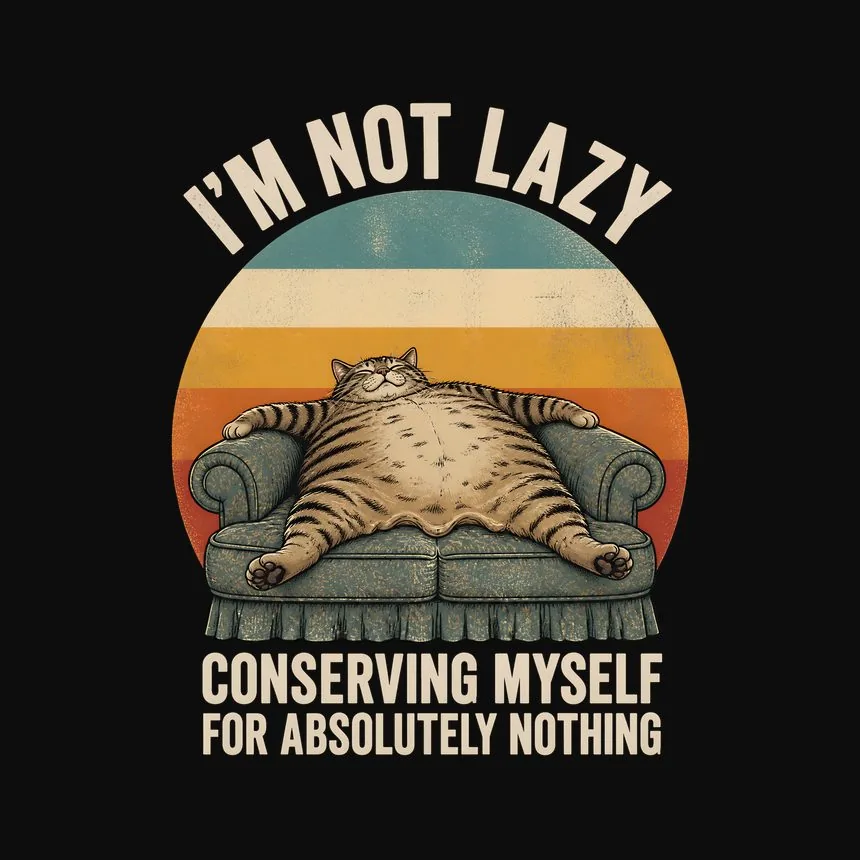
Viral photos of a "fat hairless cat" are often just a Sphynx being a Sphynx: the breed standard calls for a full, rounded belly, and wrinkled skin exaggerates every curve. That said, hairless cats can and do become overweight. Feel along the ribs and spine; if you can't feel them easily, or the cat is getting heavier on the scale, talk to your vet about portions.
Health, allergies and the welfare debate
Hairless breeds share several health concerns. International Cat Care lists skin problems such as yeast overgrowth, ear infections, eye problems, a heart disease (hypertrophic cardiomyopathy) strongly suspected to be inherited in the Sphynx, and a short average life expectancy for the breed in one large study. The organization's position is blunt: for a cat, a coat is essential, and hairless cats shouldn't be bred.
On allergies, a hairless cat is not a fix. The main allergen comes from saliva and skin glands, not the hair itself, so many allergic people still react. Some tolerate a freshly bathed cat better, but there's no guarantee.
If you still want a hairless cat, consider adopting an adult from a breed rescue, ask any breeder for heart screening results, and expect real time and money for skin, heart and dental care.
Hairless cats for sale: what to check
Prices vary widely by breed, breeder and region, and there's no official figure. Because hairless kittens are popular online, scams are common: follow the CFA's advice to avoid sellers with many kittens at once, kittens offered at six to eight weeks, big nonrefundable deposits or pressure to ship. Kittens should go home at 12 weeks at the very least, ideally 16, and you should see the kitten and mother live before paying.
Frequently asked questions
What is the most common hairless cat?
In the US, the Sphynx by far. The Peterbald and Donskoy are rarer Russian breeds, and short-legged hairless crosses like the Minskin and Bambino are rarer still.
Are hairless cats hypoallergenic?
No. The main cat allergen comes from saliva and skin glands, not fur, so hairless cats still produce it. Some allergic people react less to a freshly bathed cat, but it's not guaranteed.
What is a Peterbald cat?
A Russian breed created in 1994 from a Don Sphynx and an Oriental Shorthair. It's slim and elegant with big ears and may be born bald, fuzzy, brush-coated or with a normal coat.
Is a Don Sphynx the same as a Sphynx?
No. The Don Sphynx, or Donskoy, comes from Russia and has a dominant hair-losing gene, while the Canadian Sphynx has a recessive hairless gene. They look similar but are genetically unrelated.
Do hairless cats get cold?
Yes. Without fur they lose heat quickly and seek out warm spots and people. Keep the home warm and provide blankets, cozy beds and, if the cat accepts it, a sweater.
Do hairless cats need baths?
Yes, usually about once a week. Skin oil builds up without fur to absorb it, which can cause greasy skin, odor and skin problems if baths are skipped.
Sources
- Sphynx breed profile, Cat Fanciers' Association
- Peterbald, Federation Internationale Feline (FIFe)
- Don Sphynx, Federation Internationale Feline (FIFe)
- Sphynx, International Cat Care
- Inherited disorders in cats, International Cat Care
- Sphynx, VCA Animal Hospitals
Last reviewed: November 2026