Cornish Rex Cat: Curly Coat, Greyhound Body and a Need for Warmth
Cat Breeds 5 min read reviewed November 2026, 5 sources
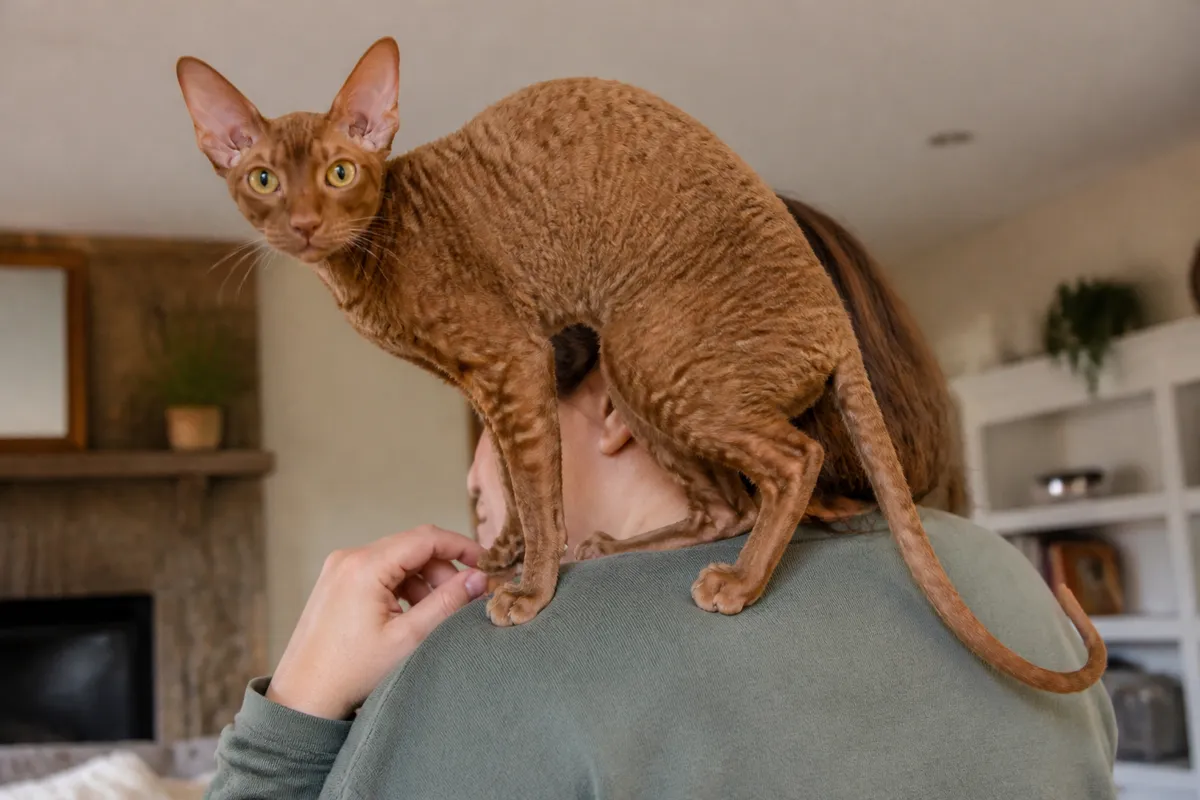
The Cornish Rex is a slim, long-legged cat with a short coat of tight, velvety waves and no guard hairs at all, which makes it feel like suede and leaves it chilly in a cool room. It's playful, people-obsessed and athletic, a heat-seeking clown that's happiest wrapped around your neck.
Where the Cornish Rex cat comes from
In 1950, a curly-coated cream male kitten named Kallibunker was born on Nina Ennismore's farm in Cornwall, England, according to the CFA. She named the look after the curly-coated Rex rabbit. Breeding Kallibunker back to his mother produced more curly kittens, and later crosses with Burmese, Siamese and British Shorthairs showed the gene is recessive: a kitten needs two copies to have the coat.
A California breeder bought a pair from Ennismore in 1956 to establish the breed in the US. The CFA accepted the Cornish Rex for registration in 1962 and granted championship status two years later. VCA calls it the oldest of the rex breeds, ahead of the Devon Rex and Selkirk Rex.
The curly coat and the greyhound body
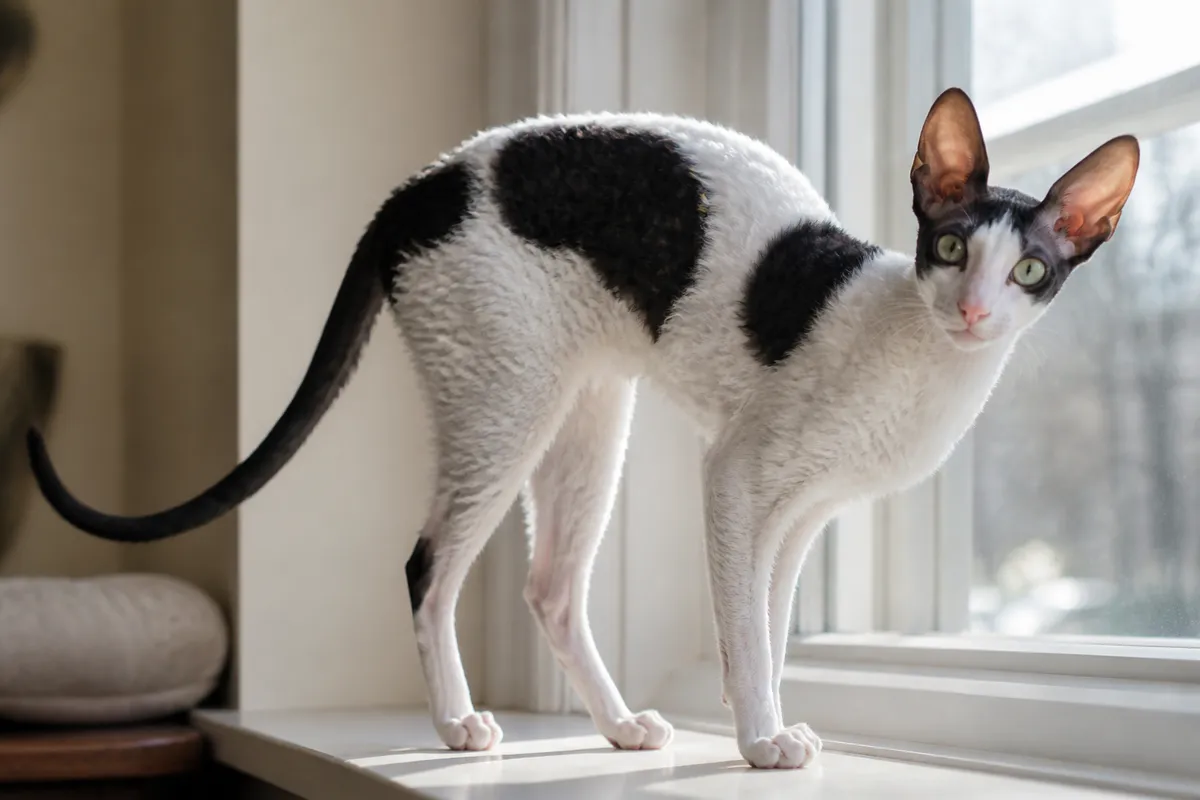
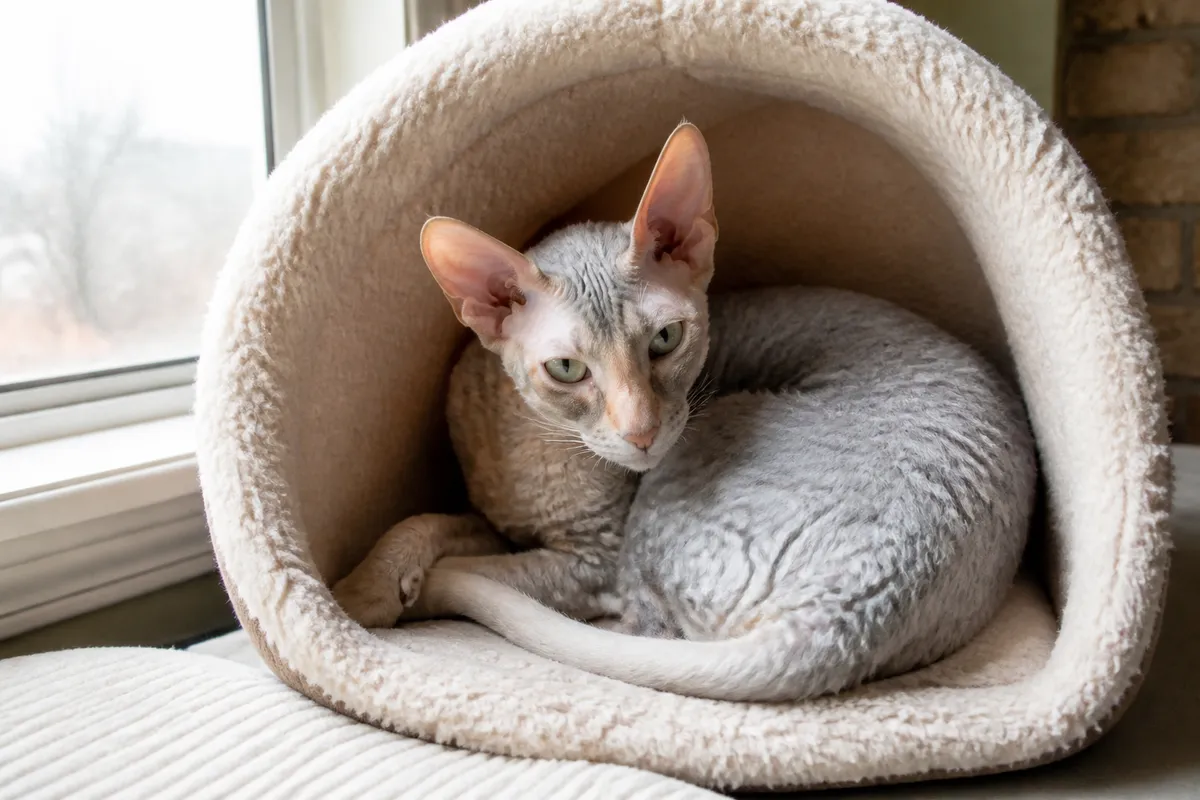
Most cats have three hair types: guard hairs, awn hairs and soft down. The Cornish Rex has no guard hairs, the coarse outer layer, which is why its coat is so short, silky and close-lying, in tight marcel waves. The CFA standard gives the coat 40 of 100 points, so it's the defining feature. Even the whiskers curl. VCA notes the coat comes in more than 40 colors and patterns.
The body looks built for sprinting: a small to medium frame, a tucked-up waist, an arched back and very long, slender legs on fine bones. Add an egg-shaped head, large high-set ears and a Roman nose, and you get the breed's elegant, slightly alien look. VCA lists adults at about 6 to 8 pounds.
| Trait | Details |
|---|---|
| Origin | Cornwall, England, 1950 |
| CFA status | Registration 1962, championship 1964 |
| Weight | About 6 to 8 pounds |
| Lifespan | About 15 to 20 years |
| Coat | Short, tight waves, no guard hairs, low shedding |
| Build | Slender, arched back, very long legs |
| Temperament | Active, affectionate, playful, attention-loving |
| Special needs | Warmth, sun protection, regular ear cleaning |
Cornish Rex personality
CFA describes the Cornish Rex as active, alert, intelligent, adaptable and adventurous, and very attached to its people; owners call them Velcro kitties for a reason. VCA adds that they keep kitten-like energy into adulthood, love being picked up, and are almost too helpful around the house.
They're playful with children and dogs, and they love fetch, high perches and anything that moves. They talk, but CFA says they're not loud or excessively vocal. They also have a large appetite and will happily try foods most cats ignore, so guard the butter.
A Cornish Rex alone all day is a bored Cornish Rex. If you're out a lot, a second playful cat is often a better solution than more toys.
Warmth needs: why the Cornish Rex gets cold
With no guard hairs, the coat insulates poorly. CFA notes the breed is easily chilled in cold weather and suggests a sweater, and VCA says it often seeks out a safe heat source. In practice, that means your cat will find the sunbeam, the laptop, the top of the fridge and the inside of your bathrobe.
The thin coat also offers little sun protection, and CFA warns that a Cornish Rex can get sunburned. Indoors behind glass is usually fine, but keep that in mind for catios or balcony time.
- Offer a heated or self-warming bed and a fleece blanket
- Keep beds away from drafty doors and windows
- Only use cat-safe heating pads, never human heating pads on high
- Watch for sunburn on pale or thin-coated areas during outdoor time
- A snug cat sweater can help in cold homes, if your cat accepts it
Grooming and care
No regular combing needed, says CFA, and shedding is low. A soft hand or a chamois cloth is all the coat really asks for. But this isn't a zero-care cat: VCA says the breed benefits from regular baths, and the thin coat dries quickly. CFA recommends a thorough towel dry and warns against blow dryers.
Bath tips for a cat with no insulation: warm the bathroom first, have two towels ready, use a gentle cat shampoo, rinse thoroughly and let your cat finish drying on a warm bed, not on a cold tile floor. Keep baths short and calm, and stop if your cat panics. The cat bath article walks through the routine step by step.
Ears are the other job. CFA notes they can build up wax faster than in other breeds and should be cleaned often. Trim the claws monthly, per VCA, and brush teeth regularly. And because this cat eats with enthusiasm, weigh it now and then.
Health and allergies
CFA describes the breed as sturdy and vigorous with no known inherited health issues, and VCA gives a lifespan of about 15 to 20 years. As with any cat, regular checkups, dental care and a healthy weight matter more than anything.
Low shedding doesn't make the Cornish Rex hypoallergenic. VCA calls that a popular myth, because the allergens come from saliva and skin. The hypoallergenic cats article explains how to test your reaction before you commit.
When choosing a breeder, use the CFA checklist: visit the home, meet at least one parent, and ask about health guarantees and the return policy.
German Rex: the Cornish Rex's Berlin cousin
The German Rex traces back to a black curly-coated cat that Dr. Rose Scheuer-Karpin noticed in the garden of a Berlin hospital in summer 1951, according to FIFe. Hospital staff said they had known the cat since 1947. She named her Lammchen (little lamb), and every German Rex today descends from her. FIFe has recognized the breed since 1982.
Like the Cornish, the German Rex has a short, wavy, silky coat without guard hairs, but it's built differently: a medium-sized, more rounded cat with well-developed cheeks and medium-length legs instead of the Cornish's greyhound frame. Breeding results suggested the same gene as the Cornish Rex, although a 2006 history noted that DNA confirmation was still missing.
The German Rex is very rare. That same history reports that by 1999 only two fertile females were known worldwide before a breeder-led revival. It's not recognized by CFA, so if you want one in the US, expect a long search.
Who the Cornish Rex suits
A great match for active, affectionate homes, people who are around a lot, families with gentle kids, and anyone who wants a cat that participates in life.
Not a good match if you want a calm, independent cat, keep your home cold, or travel constantly. And if you dislike being supervised in the kitchen, this breed will test you daily.
Frequently asked questions
Are Cornish Rex cats hypoallergenic?
No. They shed very little, but VCA calls the hypoallergenic claim a myth. The main allergens come from skin glands and saliva, not from hair.
Why does my Cornish Rex feel warm to the touch?
With no guard hairs, there's less coat between your hand and the skin, so you feel the cat's normal body heat directly. Cats run warmer than people, and the thin coat just makes it obvious.
What is the difference between Cornish Rex and Devon Rex?
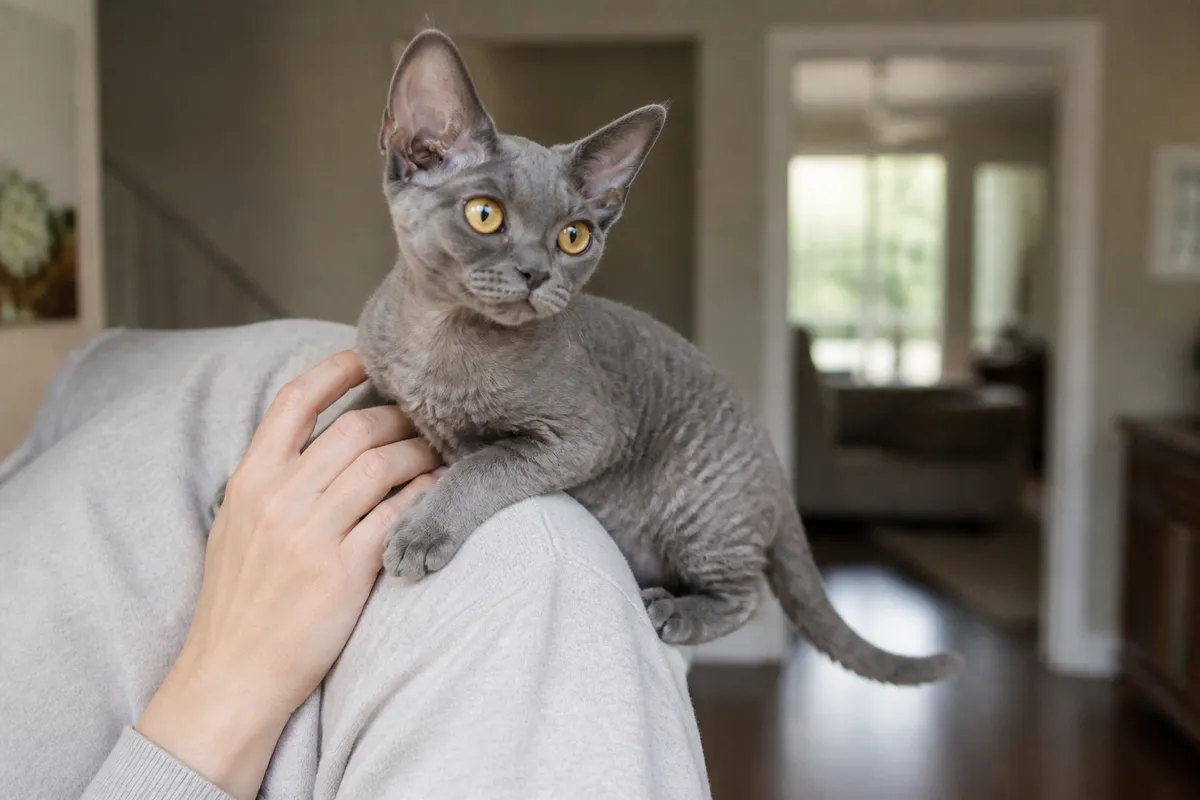
They come from different mutations. The Cornish has no guard hairs, tight marcel waves, an egg-shaped head and high-set ears, while the Devon has sparse guard hairs, looser waves, a pixie face and low-set ears.
Do Cornish Rex cats need baths?
Often, yes. Skin oils build up on the sparse coat, so VCA says the breed benefits from regular baths. Use a gentle cat shampoo, towel dry well and keep the cat warm afterward.
Is the German Rex the same as the Cornish Rex?
No, but they're related in look and probably in genetics. The German Rex comes from a Berlin cat found in 1951 and has a rounder, medium-sized body. It's rare and recognized by FIFe, not by CFA.
How long do Cornish Rex cats live?
VCA gives a lifespan of about 15 to 20 years. CFA reports no known inherited health problems in the breed.
Sources
- Cornish Rex breed profile, The Cat Fanciers' Association
- Cornish Rex, VCA Animal Hospitals
- German Rex, FIFe
- The revival of the German Rex, Pawpeds
- Finding the Purr-fect Pedigreed Kitten, The Cat Fanciers' Association
Last reviewed: November 2026