Calico Cat: Why They're Almost Always Female (and the Rare Males)
Coat Colors & Patterns 5 min read reviewed November 2026, 5 sources
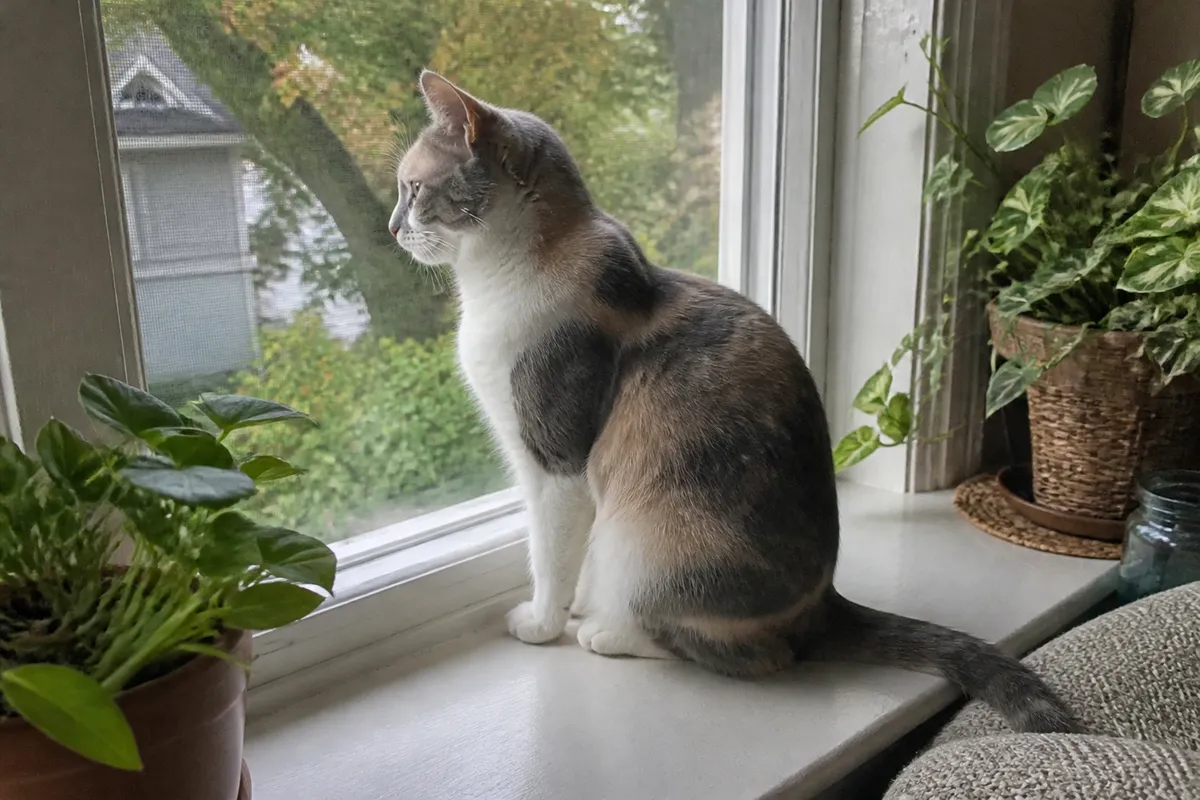
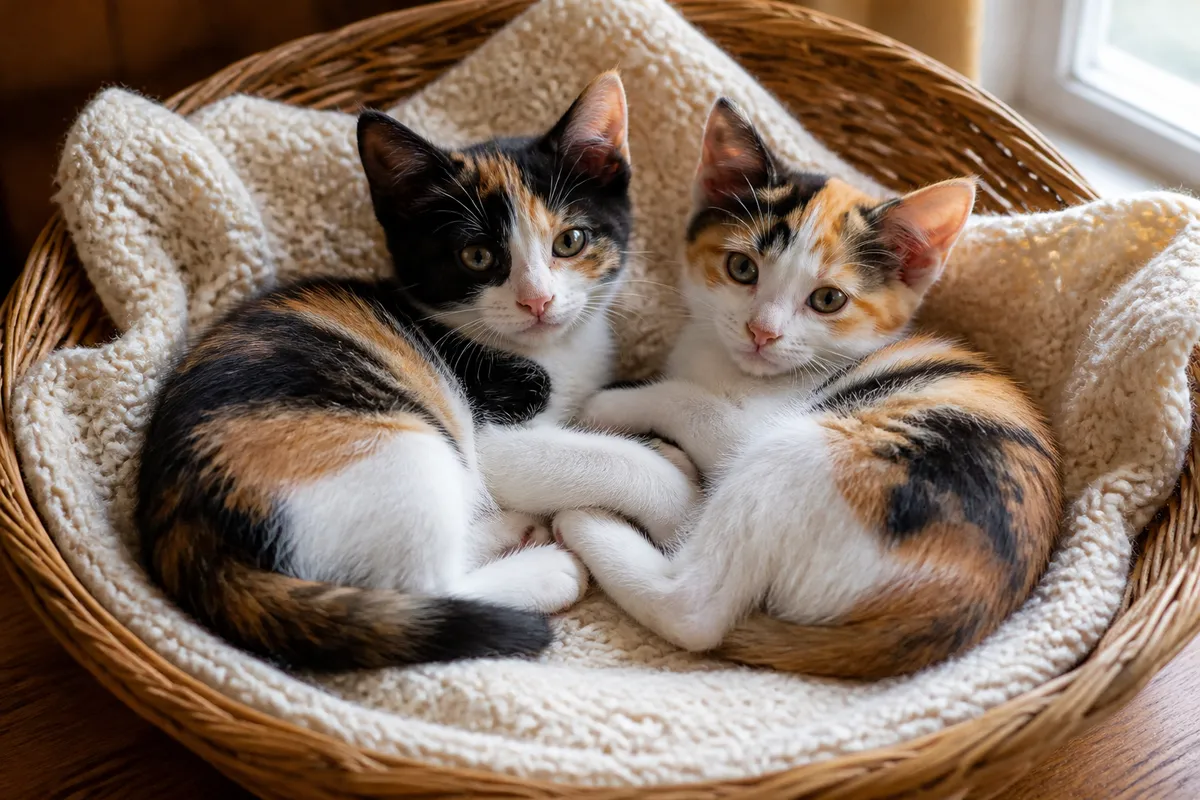
A calico cat is a cat of any breed with a three-color coat of white plus distinct patches of red and black (or their lighter versions), and nearly every calico is female because the orange color gene sits on the X chromosome. Male calicos exist, but they're rare, usually carry an extra X chromosome and are almost always sterile.
What is a calico cat?
Calico describes a coat pattern, not a breed. The Maryland State Archives, which keeps the record for Maryland's official state cat, says calico "is not a breed of cat, but an unusual coloring occurring across many breeds, including Domestic Short-hair, Persian, and Manx."
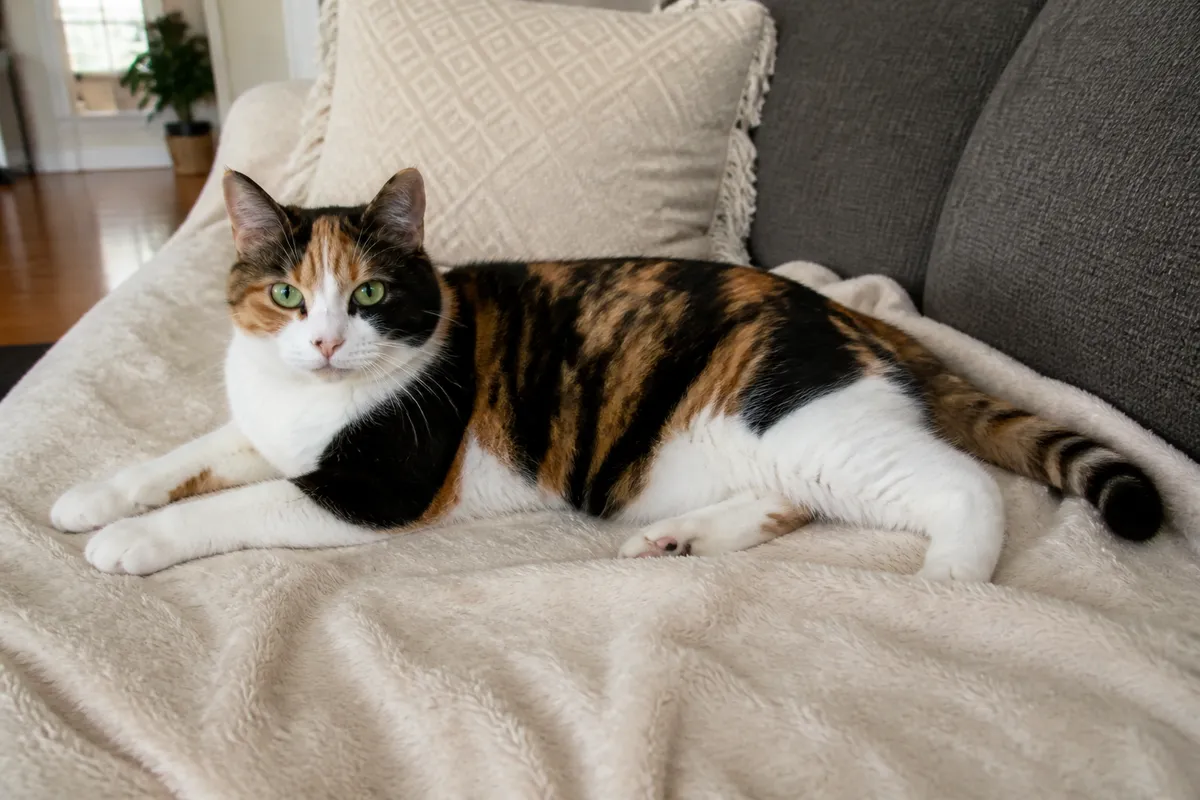
To count as a true calico, a cat needs three colors in clearly separated patches: white; red or cream; and black or one of its lighter variants such as blue, chocolate or lilac. The amount of white varies a lot. Some calicos are mostly white with a few colored islands, others are mostly colored with a white bib, belly and paws.
Cat registries describe the same thing in their own words. The Cat Fanciers' Association (CFA) standard for Persians, for example, defines a calico as "a tri-color cat of black, red and white" with clear, unbrindled patches.
| Variation | Colors | Notes |
|---|---|---|
| Classic calico | White, red (orange), black | The most familiar version |
| Dilute calico | White, cream, blue (gray) | Caused by the dilution gene, which softens every color |
| Chocolate or lilac calico | White, red or cream, chocolate or lilac | Less common, seen mainly in pedigreed cats |
| Calico tabby (caliby) | White plus patches that show tabby stripes | Some breed standards allow tabby striping in the color patches |
Calico or not? Telling it apart from similar coats
The quickest test is to look for big, clean areas of white. A tortoiseshell has the same black and orange colors but mixed or brindled together, usually with little or no white. The Maryland State Archives puts it simply: in a calico the three colors sit in distinct patches, "not mixed as in a tortoiseshell cat."
A cat with only two colors, such as orange and white or black and white, isn't a calico either, however patchy it looks. Those are bicolor cats, and they can be male or female.
Why are calico cats almost always female?
It comes down to where the orange gene lives. Scientists have known for decades that orange in cats is sex-linked. In 2025, two research teams from Stanford University and Kyushu University published matching results in Current Biology: a small deletion on the X chromosome boosts the activity of a gene called ARHGAP36 in pigment cells, which shifts them to orange.
A female has two X chromosomes. If one carries the orange variant and the other doesn't, each patch of skin randomly switches off one of the two X chromosomes early in development. Patches that keep the orange X grow orange fur, patches that keep the other X grow black (or another color). Scientific American describes exactly this process, called X-inactivation, as the source of the patchwork coat. The white comes from a separate white spotting gene.
A typical male has one X and one Y. With just one X, he is either orange or not orange everywhere, so he can't produce the two-color patchwork. That's the whole reason nearly every calico you meet is a she.
- Orange or non-orange: decided by the X chromosome
- Two different X chromosomes (female): patches of orange and black
- One X chromosome (typical male): all orange or no orange
- White patches: a separate white spotting gene
Male calico cats: how rare are they?
Very rare. Veterinarian Marty Becker, writing for Vetstreet, cites a University of Missouri College of Veterinary Medicine study that found only about one in 3,000 calico cats is male.
Almost all of these males have three sex chromosomes instead of two: XXY. The two X chromosomes allow the calico patchwork, the Y makes them male. The same chromosome pattern in people is called Klinefelter syndrome, and vets use the term Klinefelter males for these cats. Dr. Becker notes they are usually sterile, so the idea of breeding a male calico for profit doesn't work.
If you think you have a male calico, the best next step is simply a normal vet visit. Your vet can confirm sex, and a chromosome test is possible if you're curious. Neutering is still recommended like for any male cat that isn't part of a breeding program.
Calico kittens: can you breed for them?
Not reliably. Calico kittens are most often born to one orange parent and one black (or other non-orange) parent, which gives a daughter one orange X and one non-orange X. But even then, whether she ends up calico, tortoiseshell or something else depends on the white spotting gene and on chance. The Maryland State Archives notes that producing calico kittens through selective breeding is nearly impossible because of how unpredictably the genes behave as the kitten develops.
That randomness is also why no two calicos look alike. The patch pattern is set during development, so even sisters from the same litter end up with completely different patch maps. Your calico's pattern is hers alone.
If you're looking for calico kittens, check local shelters and rescues. Calico is a common pattern in domestic shorthairs, and kitten season brings plenty of them.
Calico personality: is "catitude" real?
Many owners swear their calico is sassier than other cats. There's one study people point to. UC Davis veterinary behaviorist Elizabeth Stelow and colleagues surveyed more than 1,200 cat owners, and as Veterinary Practice News reported, owners described calico and tortoiseshell cats as more likely to hiss, chase, bite, swat or scratch during interactions with people.
Keep it in perspective. The study relied on owner reports, and the researchers never observed the cats. Dr. Stelow herself said the findings should not discourage anyone from adopting these cats and that most of them make lovely pets. A calico's temperament still depends mostly on her genes, early handling and life experience, not her patches.
Calico cat breeds and fun facts
Because calico is a pattern, it shows up wherever the genes allow it. You'll find calicos among domestic shorthairs and longhairs, and in many pedigreed breeds whose standards accept parti-color and white coats, such as Persians, Maine Coons and Manx.
The calico even has official status. Effective October 1, 2001, Maryland made the calico cat its state cat, because its orange, black and white match the Baltimore oriole and the Baltimore Checkerspot butterfly.
- Calico is a pattern, not a breed
- Almost all calicos are female
- Male calicos are roughly one in 3,000 and usually sterile
- Dilute calicos wear the softer version: cream, blue and white
- Maryland's state cat is the calico
Frequently asked questions
Are all calico cats female?
Almost all of them. The calico pattern needs two different X chromosomes, which females have. Males are only calico in the rare case that they carry an extra X chromosome (XXY).
How rare is a male calico cat?
Very rare. A University of Missouri study cited by veterinarian Marty Becker found about one male in every 3,000 calico cats. These males are usually sterile.
Is a calico cat a breed?
No. Calico is a coat pattern that appears in many breeds and in mixed-breed cats. The Maryland State Archives lists the Domestic Shorthair, Persian and Manx as examples.
What is a dilute calico?
A dilute calico carries the dilution gene, which lightens all colors. Instead of orange and black, the patches are cream and blue-gray, still combined with white.
Can two calico cats have calico kittens?
Two calico parents aren't possible in the usual sense, because nearly all calicos are female. Calico daughters typically come from one orange and one non-orange parent, but even then only some female kittens turn out calico.
Do calico cats have more attitude?
Some owners think so, and a UC Davis owner survey linked calico and tortoiseshell coats to more reported hissing and swatting. The study relied on owner opinions, and the researchers stressed that most calicos are lovely pets.
Sources
- Maryland State Cat: Calico Cat, Maryland State Archives
- Can Calico Cats Be Male?, Vetstreet (Dr. Marty Becker)
- This Strange Mutation Explains the Mystifying Color of Orange Cats, Scientific American
- Veterinarians Study Cat Coat Patterns, Discover Attitude in Certain Cats, Veterinary Practice News
- Persian breed standard, The Cat Fanciers' Association
Last reviewed: November 2026