Norwegian Forest Cat: Temperament, Coat Care and Maine Coon Differences
Cat Breeds 5 min read reviewed November 2026, 5 sources
The Norwegian Forest Cat is a big, sturdy longhair from Scandinavia with a water-resistant double coat, a triangular face and a calm, friendly but independent personality. It's easier to groom than it looks for most of the year, sheds heavily in spring, loves to climb and is often confused with the Maine Coon, though the two differ in head shape, size and temperament.
Where the Norwegian Forest Cat comes from
In Norway the breed is called the skogkatt, the forest cat. Norse legend has giant forest cats pulling the chariot of the goddess Freya, and the real cats spent centuries as farm cats and mousers in a harsh northern climate, which shaped their thick coat and strong build. Some breed historians suggest Vikings may have carried them on their ships.
Crossbreeding with shorthaired farm cats nearly erased the type in the 20th century. A Norwegian breed club formed in the mid-1970s to preserve it, and King Olaf named it Norway's official cat. The first breeding pair arrived in the US in 1979, and the Cat Fanciers' Association granted championship status in 1993.
Size and looks
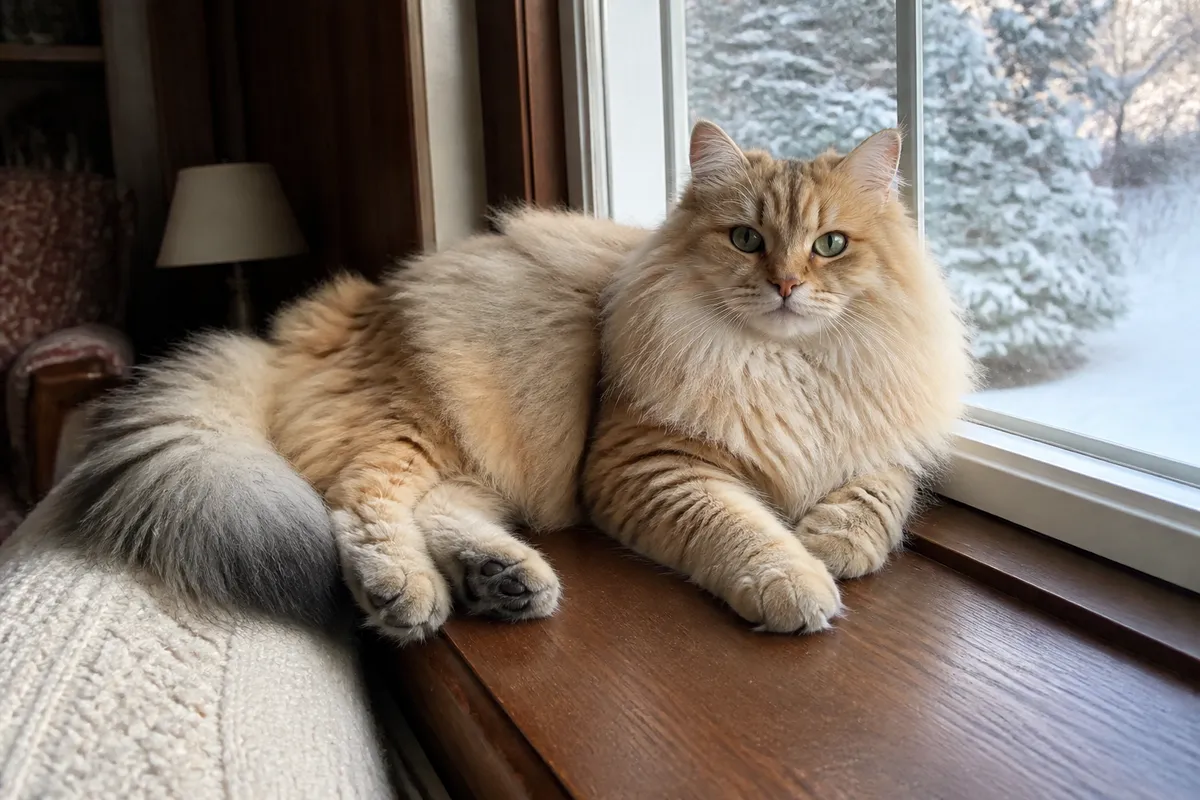
Norwegian Forest Cats are large and powerful. Adult males typically weigh about 12 to 16 pounds and females about 9 to 12, with some males heavier. They grow slowly and may not reach full size until around five years old.
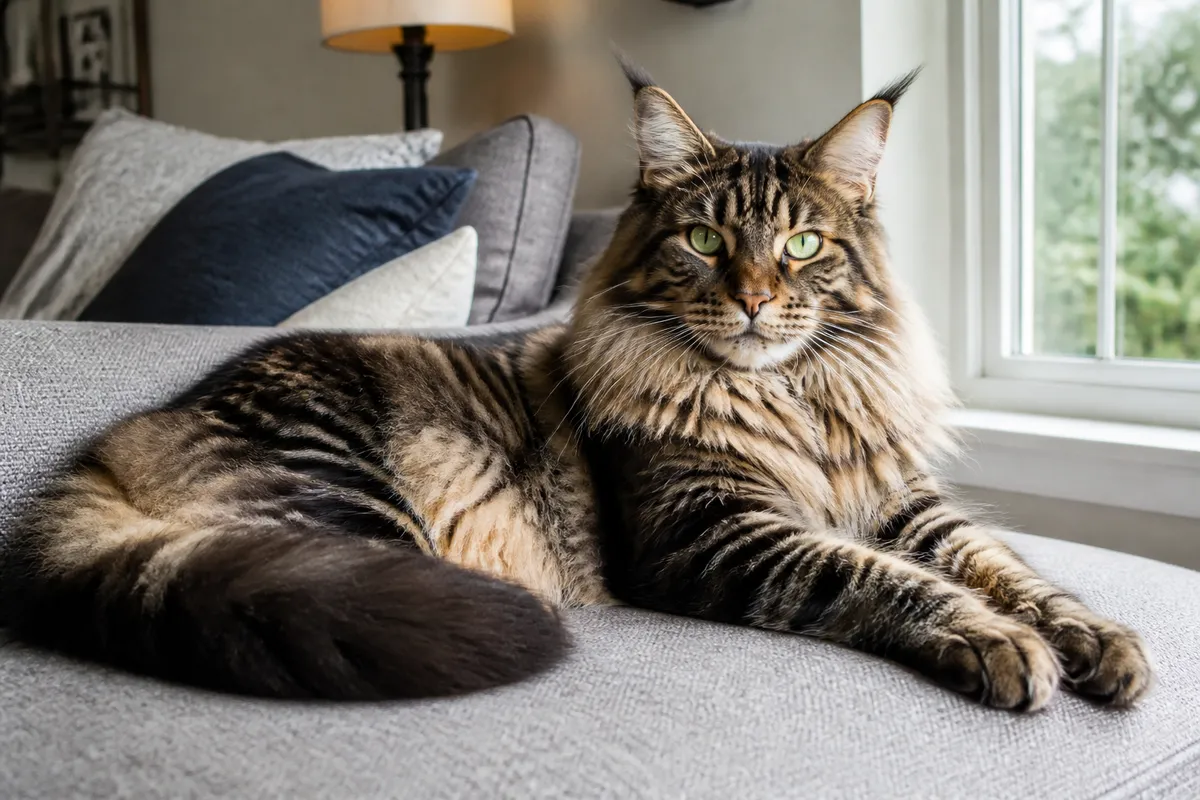
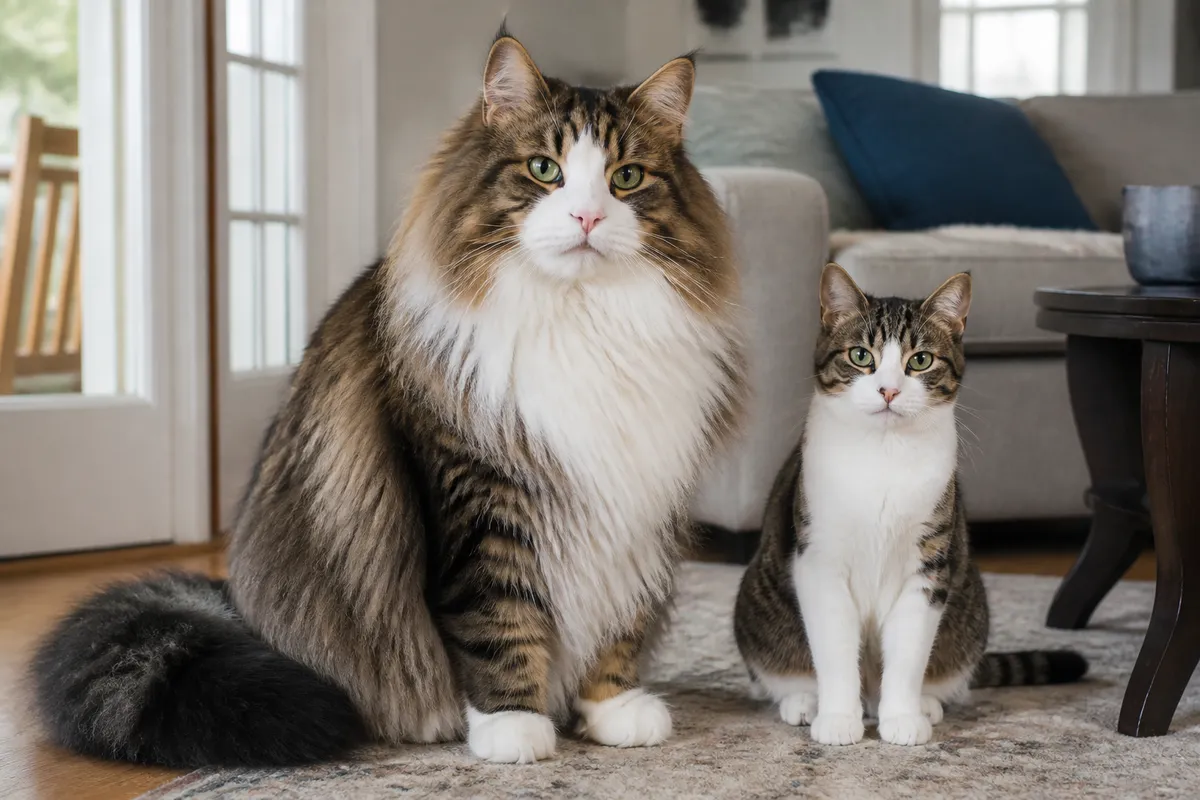
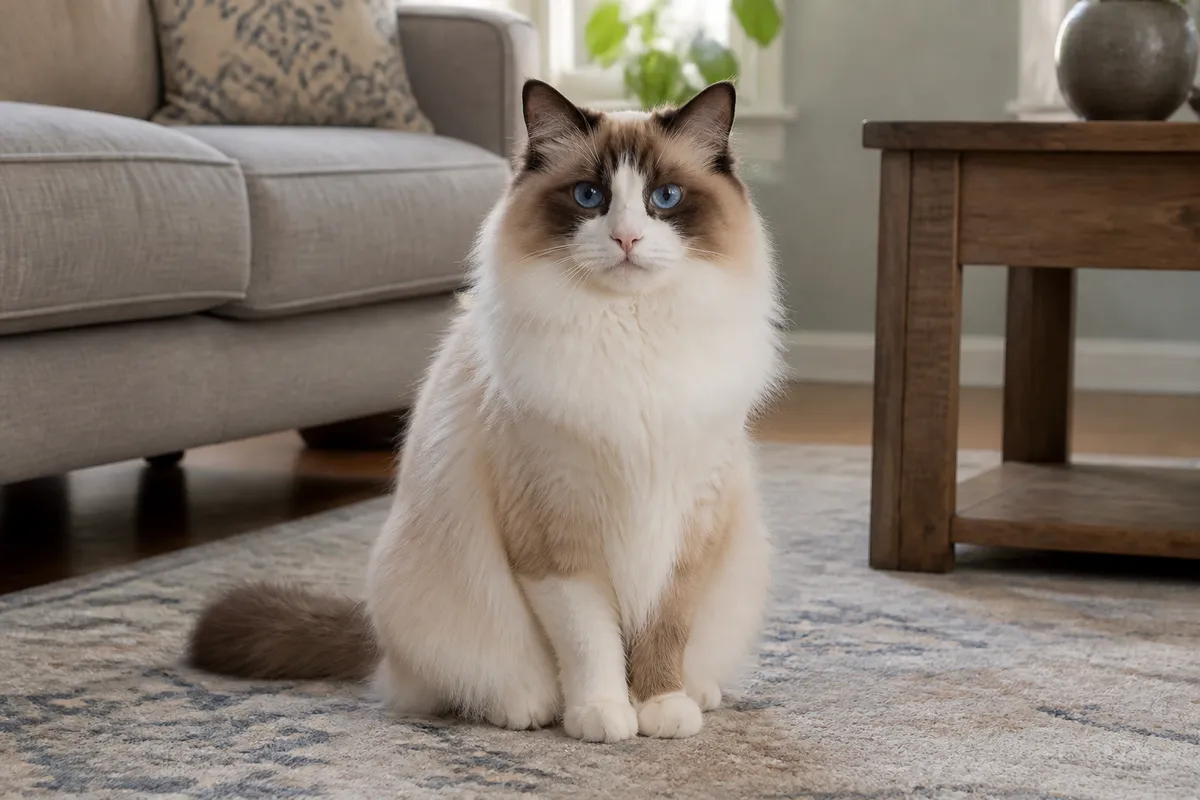
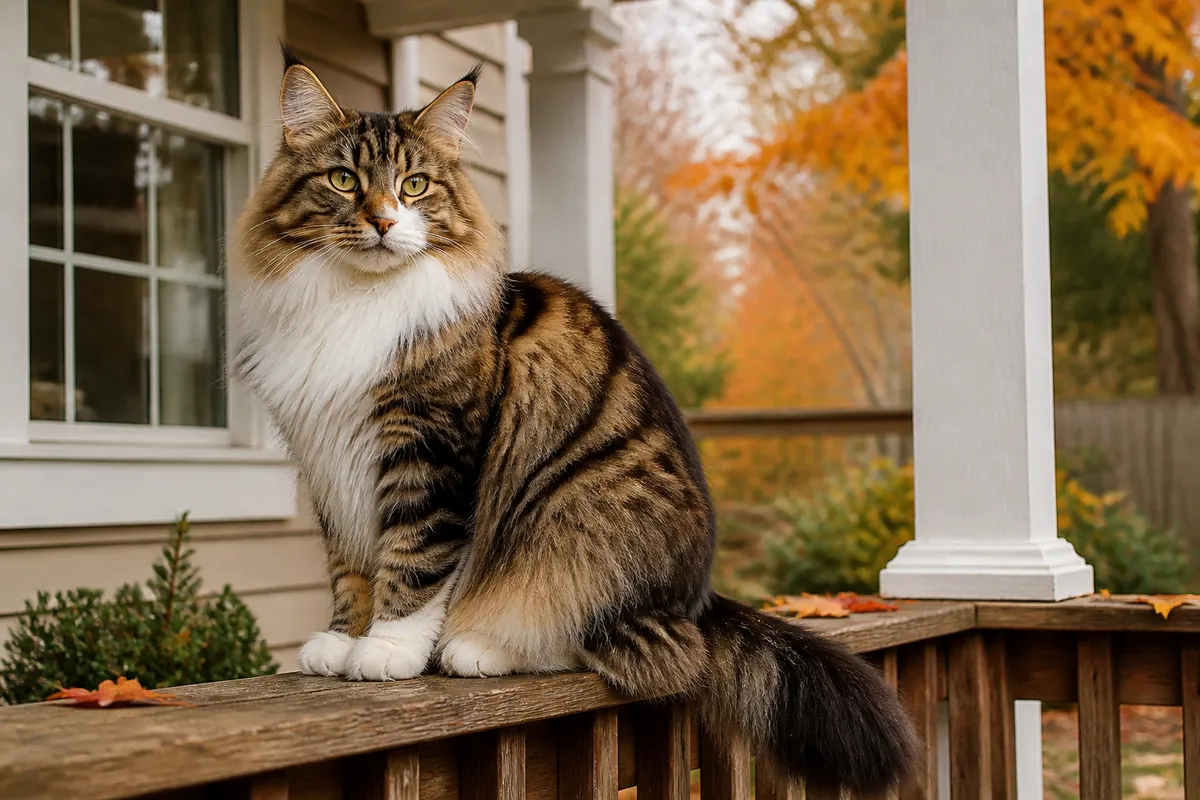
The head forms a triangle with a straight profile from brow to nose tip, set off by almond-shaped eyes and heavily furnished, often tufted ears. Almost every color and pattern is accepted, from black and white bicolors to silver tabbies and calicos; eyes are green, gold, green-gold or copper, and white cats may have blue or odd eyes.
Norwegian Forest Cat vs. Maine Coon: how to tell them apart
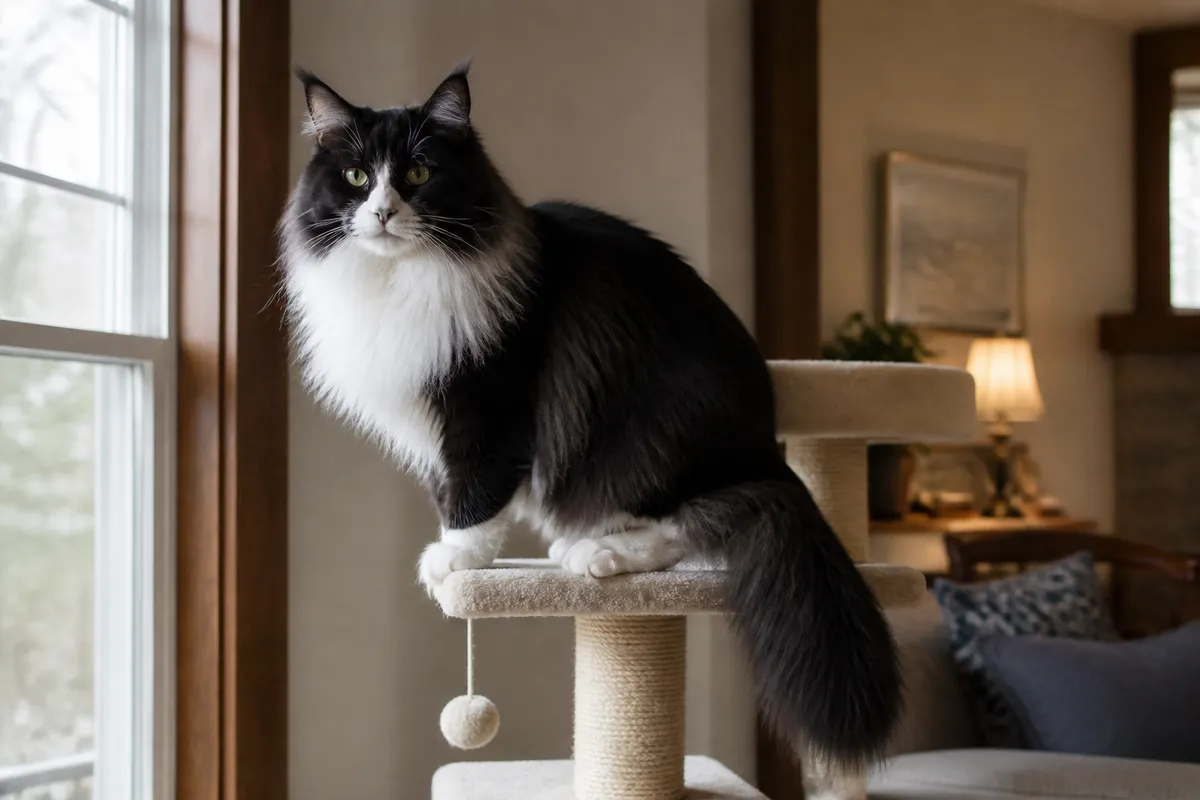
Both are big, shaggy, outdoorsy-looking breeds from cold climates, and both are friendly family cats, so the confusion is understandable. The quickest giveaway is the face: a Norwegian has a triangular head with a perfectly straight nose line, while a Maine Coon has a longer head with a more square, boxy muzzle.
Temperament differs a bit too. Maine Coons tend to be more people-following and outgoing, while Norwegians are affectionate on their own terms and a little more independent. Both love to climb, but Norwegians are especially devoted to heights.
| Feature | Norwegian Forest Cat | Maine Coon |
|---|---|---|
| Origin | Norway, centuries-old farm and forest cat | New England, documented since the 1850s |
| Typical male weight | About 12 to 16 lb | Often 20 lb or more |
| Full size | Around 5 years | Around 3 to 4 years |
| Head | Equilateral triangle, straight profile | Longer head, square muzzle |
| Coat | Dense undercoat, glossy water-resistant topcoat, fuller in winter | Shaggy, silky, longer on belly and britches |
| Personality | Friendly, calm, more independent | Very social, follows its people |
Temperament: friendly, calm and independent
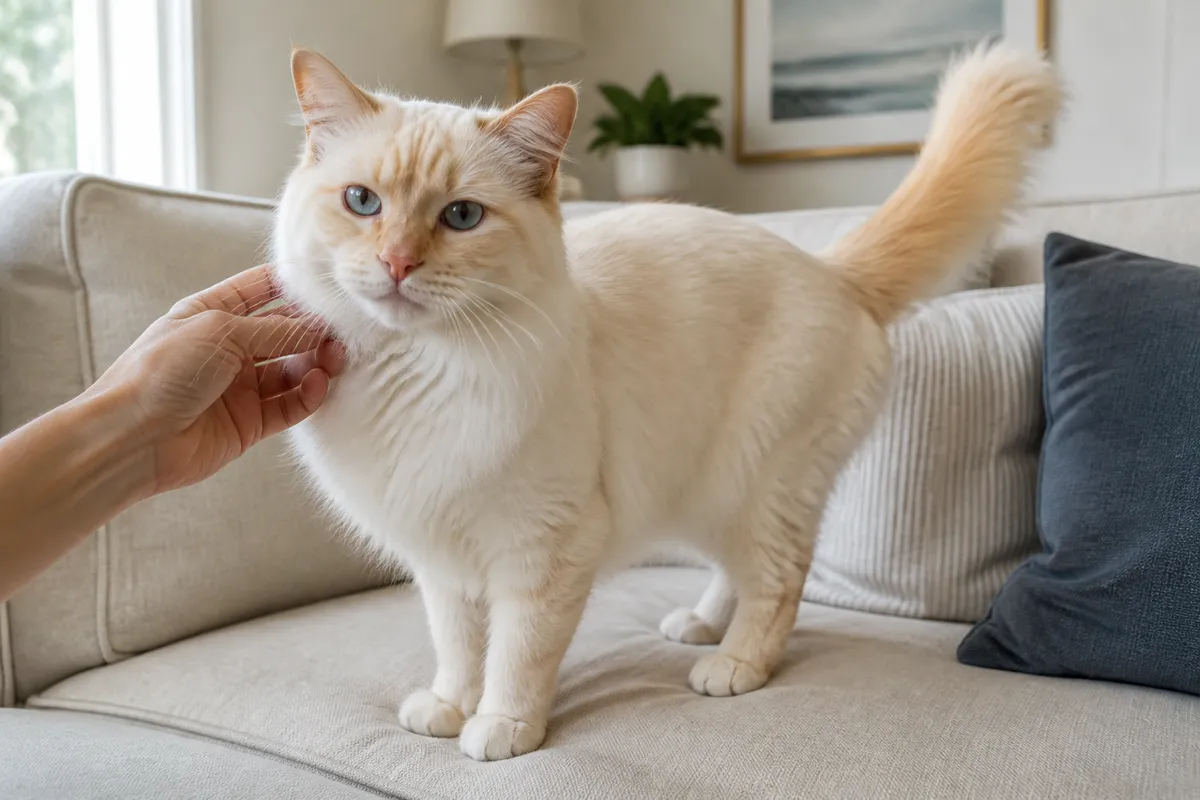
Norwegians are intelligent, adaptable and affectionate without being clingy. They like being part of household activity and will take lap time when they decide it's lap time. Left alone too long, they do start seeking company, so they're not completely self-sufficient.
They're moderately active, with bursts of play and hunting-style stalking, and they're fairly quiet, communicating with soft purrs and bird-like chirps. They usually get along well with children, other cats and dogs. Give them tall, sturdy cat trees: a Norwegian without a high perch will find one, possibly the top of your fridge.
Coat care and grooming
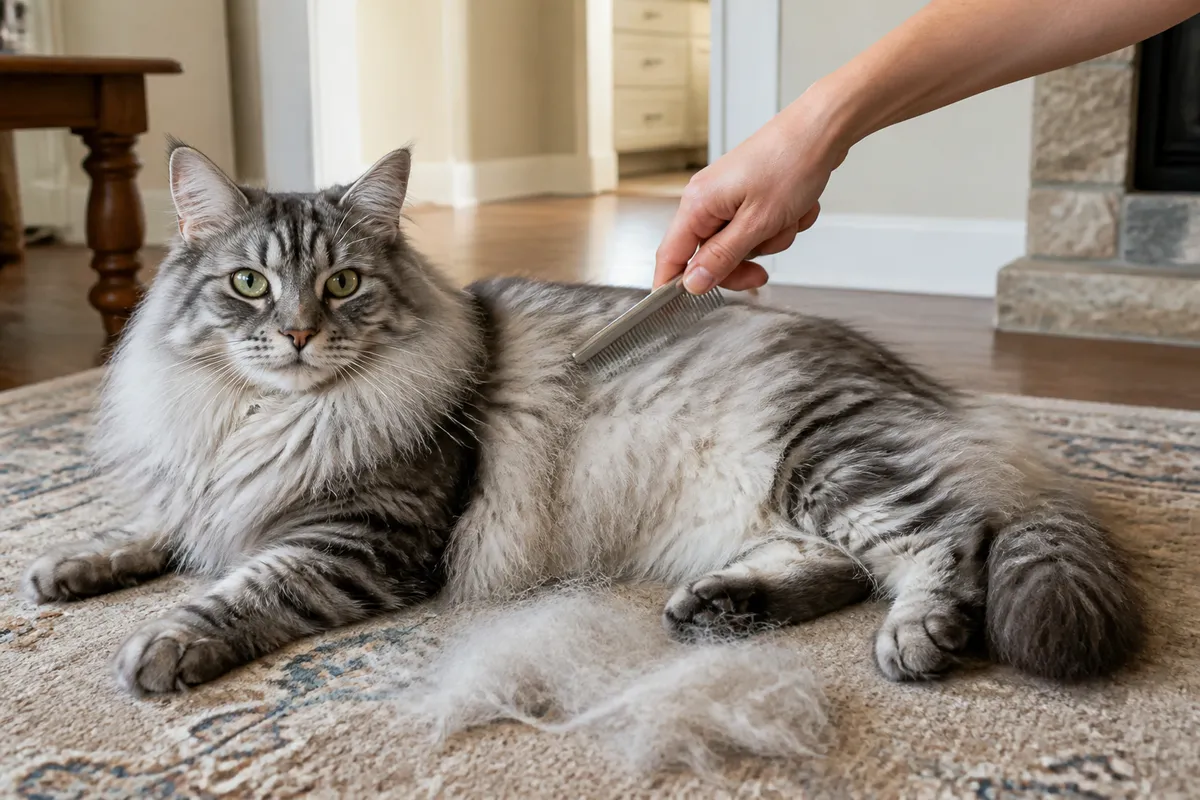
The coat has a dense woolly undercoat under long, glossy guard hairs that shed water. It resists tangles better than many longhairs, so combing with a stainless-steel comb at least twice a week is usually enough most of the year.
Spring is the exception. Norwegians drop their heavy winter undercoat, and you'll be combing daily for a few weeks and finding tufts everywhere. Bathing is rarely needed and takes patience, since the water-resistant coat is slow to get wet and slow to dry; ask the breeder which products they use.
- Most of the year: comb twice a week, focusing on the ruff, armpits and britches
- Spring molt: comb daily until the undercoat is out
- Monthly: trim nails and check ears
- Rarely: baths, only when truly needed
Living with a forest cat indoors
Despite the wild-woods image, a Norwegian adapts well to indoor life, which is what most US vets recommend. The trick is to give its climbing and hunting instincts somewhere to go. Think vertically: a floor-to-ceiling cat tree with a wide top platform, wall shelves leading to a window, and a sturdy scratching post tall enough for a big cat to stretch out fully.
Hunting-style play matters more than you'd expect from such a laid-back cat. Two short sessions a day with a wand toy, ending with a small meal or treat, satisfy the stalk-chase-pounce sequence and help keep weight in check. If you want to give fresh air, a catio or a window box is safer than free roaming, and Norwegians are often relaxed enough to accept a harness with patient training.
Big cat, big gear: choose an extra-large litter box with low entry and high sides, since a 15-pound cat crowds a standard box fast.
Health problems in the breed
Norwegian Forest Cats are generally sturdy, but two inherited conditions are known, and responsible breeders test for both.
- Glycogen storage disease type IV (GSD IV): an inherited, recessive metabolic disease. Affected kittens usually die at or shortly after birth, and the few who survive develop muscle and heart problems. A DNA test sorts cats into normal, carrier or affected, so careful breeders never pair two carriers.
- Hypertrophic cardiomyopathy (HCM): heart muscle thickening, which has occurred in the breed. Breeding cats should be screened by heart ultrasound.
- Weight gain: a big, calm indoor cat can easily get heavy, so measure meals.
Norwegian Forest Cat for sale: price and breeders
Norwegian Forest Cats are less common in the US than Maine Coons, so you may need to join a waitlist or look beyond your state. Prices vary by breeder, region, color and pet versus breeding rights; there's no official figure. A good price includes GSD IV results for the parents, heart screening, vaccinations, socialization and a written contract.
Follow the CFA's scam checklist: no kittens sold at six to eight weeks, no large nonrefundable deposits, no pressure to ship without meeting, and kittens going home at 12 weeks at the very least, ideally 16. Adult Norwegians and lookalike domestic longhairs also appear in rescues and shelters.
Who the Norwegian Forest Cat suits
It's a great choice for families, multi-pet homes and people who want a big, gentle, low-drama cat that's affectionate without being needy. It's less ideal if you dislike cat hair (spring will test you), have no room for tall climbing furniture or want a cat that's glued to your lap all day.
Frequently asked questions
How much is a Norwegian Forest Cat?
Prices depend on the breeder, region, color and whether you buy a pet or a breeding cat, and there's no official price. Health testing for GSD IV and heart screening are part of what you pay for with a responsible breeder.
Is a Norwegian Forest Cat bigger than a Maine Coon?
Usually not. Both are large, but Maine Coon males often reach 20 pounds or more, while Norwegian males typically weigh about 12 to 16 pounds.
Do Norwegian Forest Cats shed a lot?
Moderately most of the year and heavily in spring, when they lose their winter undercoat. Daily combing during the spring molt keeps it manageable.
Are Norwegian Forest Cats good indoor cats?
Yes, as long as they have climbing space and daily play. Tall cat trees and window perches are a must.
How can I tell if my cat is a Norwegian Forest Cat?
Only registration papers prove it. A triangular head with a straight profile, a thick double coat and tufted ears are typical, but many domestic longhairs look similar.
Are Norwegian Forest Cats affectionate?
Yes, but on their own terms. They enjoy company and lap time without being clingy, and they're known to be gentle with kids and other pets.
Sources
- Norwegian Forest Cat breed profile, Cat Fanciers' Association
- Norwegian Forest Cat, VCA Animal Hospitals
- Glycogen Storage Disease (GSD IV) genetic test, Langford Vets, University of Bristol
- Maine Coon breed profile, Cat Fanciers' Association
- Could This Kitten Be A Scam?, Cat Fanciers' Association
Last reviewed: November 2026