Ragdoll Cat: Temperament, Colors, Health and Finding a Kitten
Cat Breeds 5 min read reviewed November 2026, 4 sources
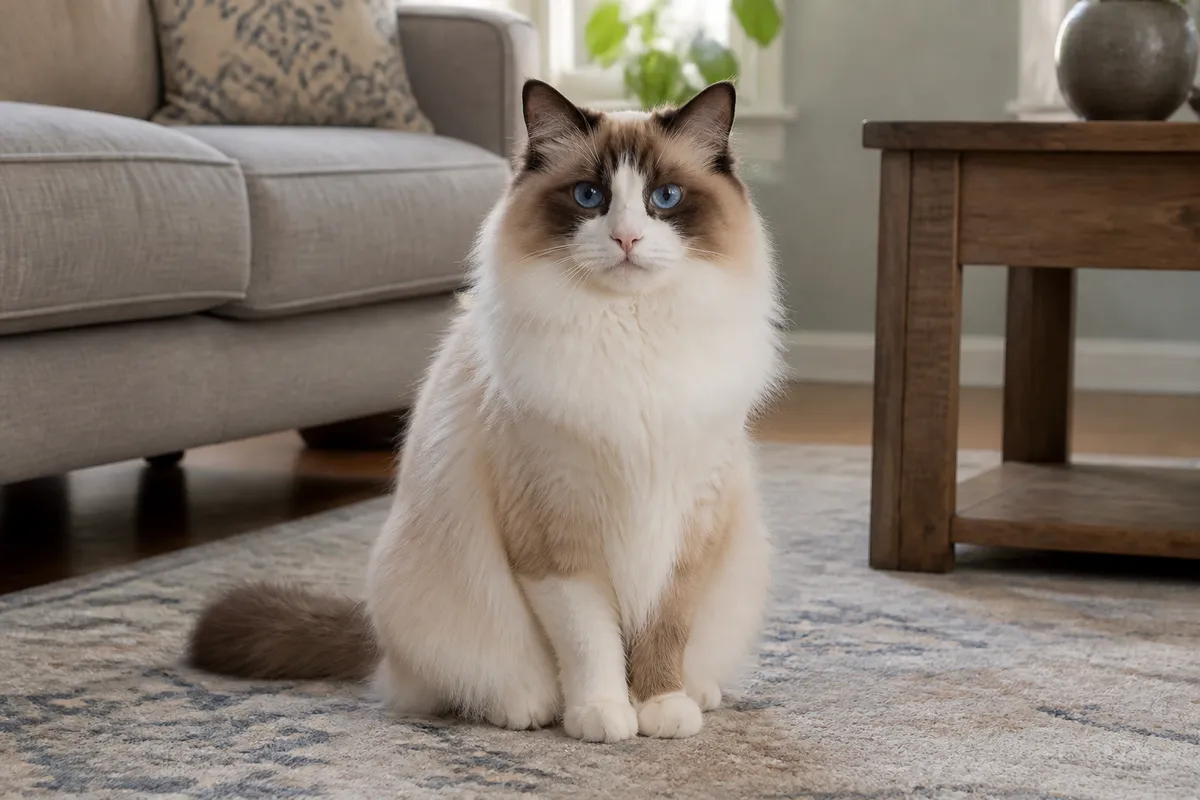
The Ragdoll cat is a large, blue-eyed, pointed longhair known for being calm, affectionate and happy to follow you around the house. It's one of the easiest-going breeds to live with, but it's big, slow to mature, prone to gaining weight and carries a known heart-disease gene, so the breeder you choose matters a lot.
Where the Ragdoll comes from
The Ragdoll was developed in the 1960s by Ann Baker, a breeder in Riverside, California, from carefully selected domestic longhairs. The foundation cat, Josephine, was a white longhair carrying the colorpoint gene.
The name comes from Baker's claim that Josephine's kittens went limp when picked up. Some Ragdolls do relax beautifully in your arms, but many modern Ragdolls don't flop, so don't buy one expecting a living beanbag. The Cat Fanciers' Association accepted the breed for registration in 1993 and for championship status in 2000.
Size and looks
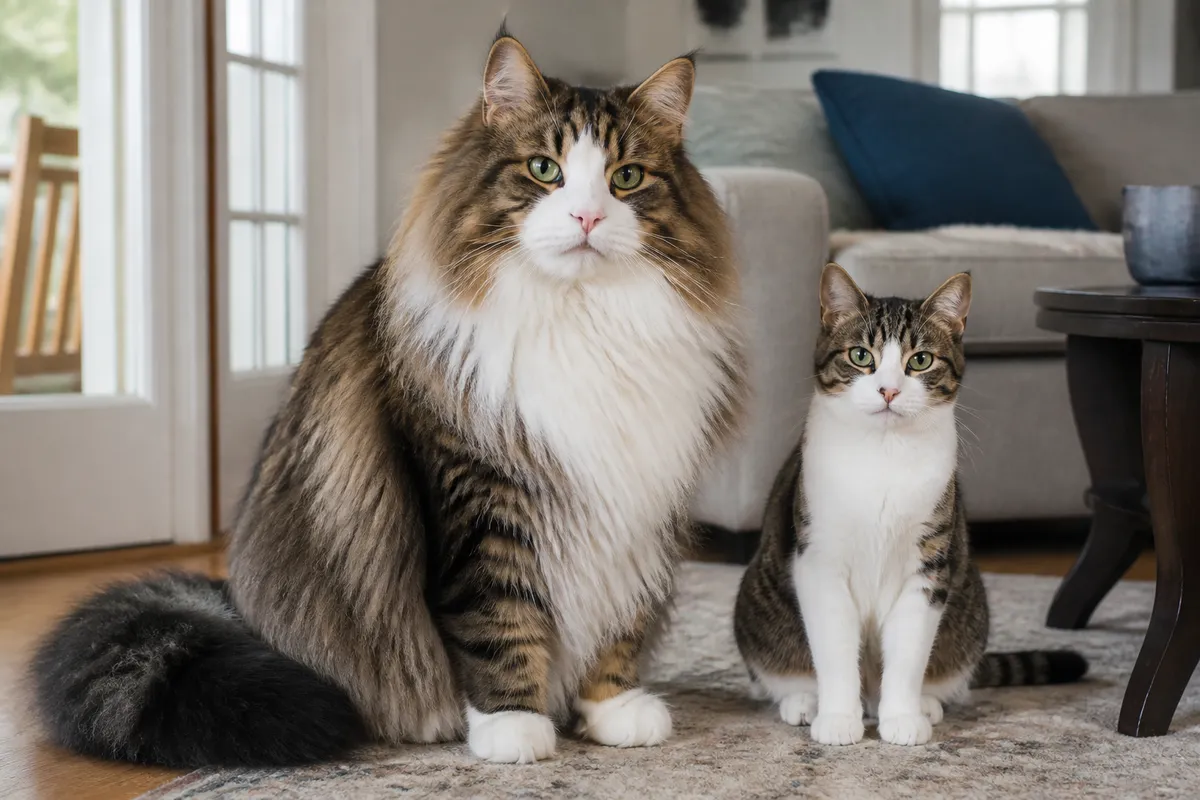
Ragdolls are among the larger breeds, with a broad chest, long muscular body and sturdy bones. Mature males often weigh 20 pounds or more; females are usually smaller. They grow slowly: full coat color takes about two to three years and full size about four.
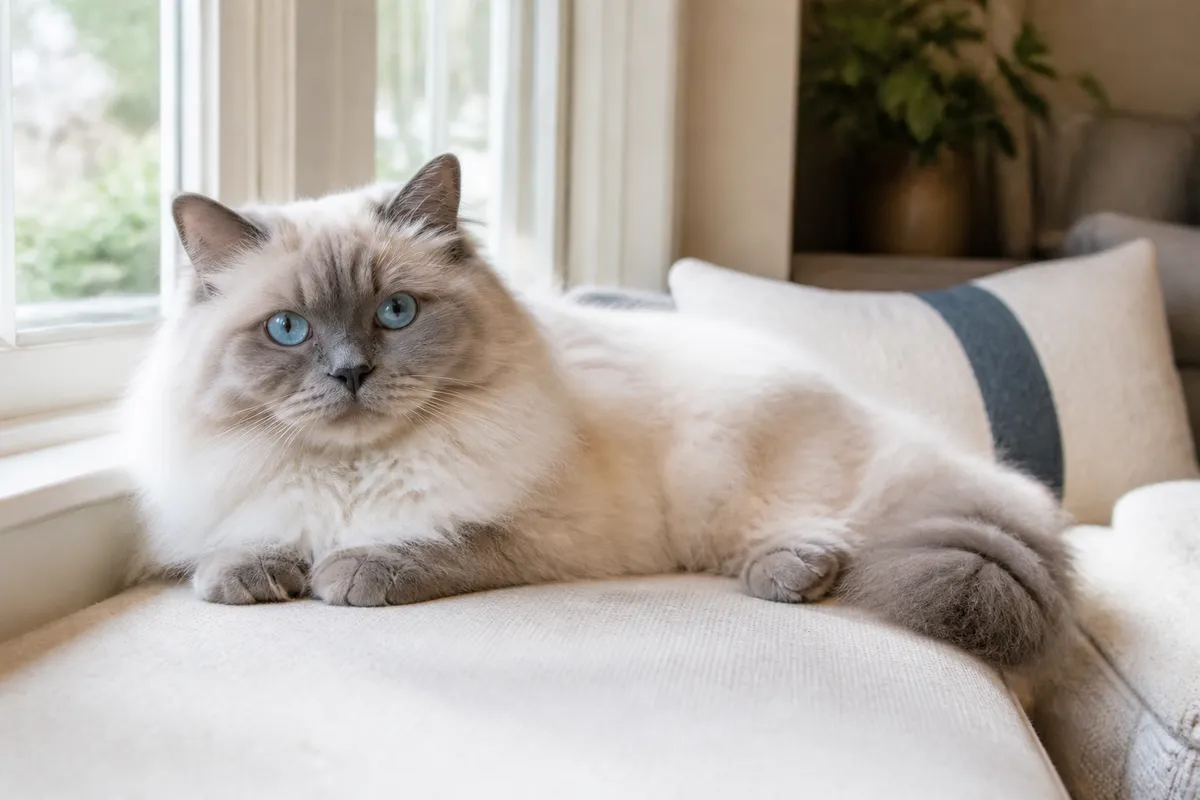
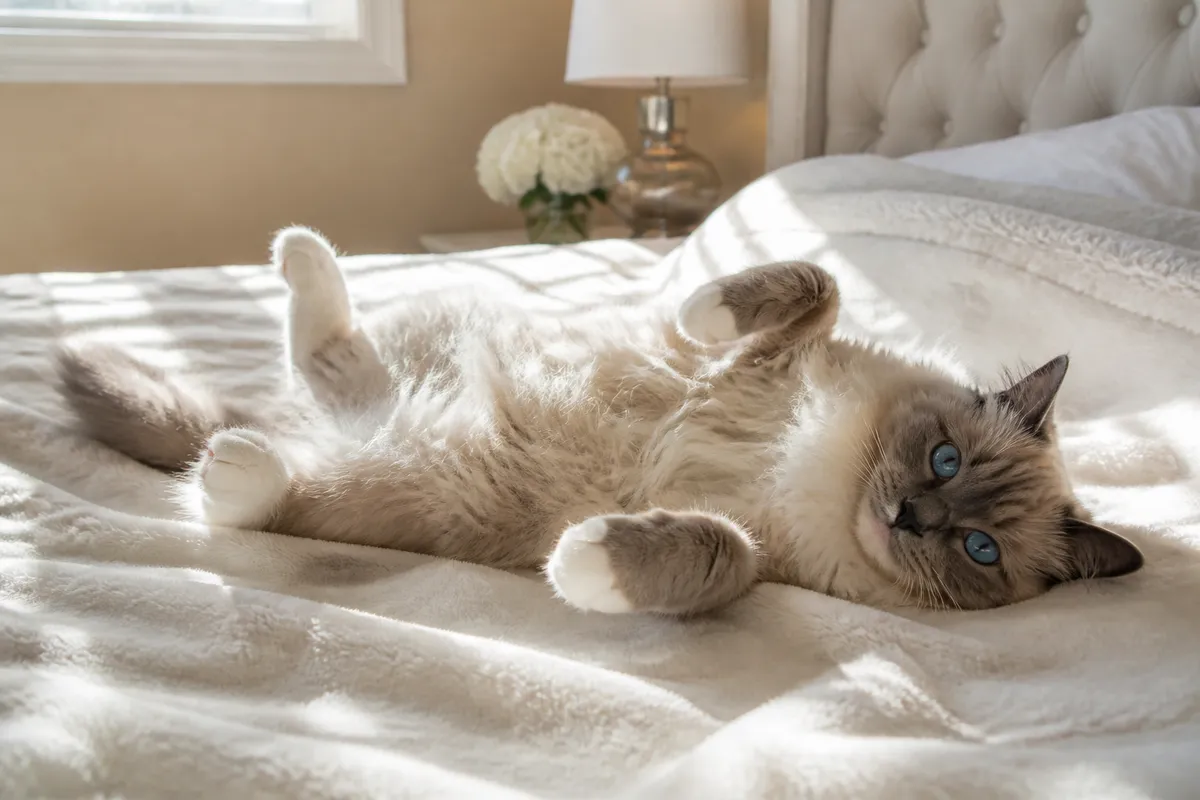
Every Ragdoll is pointed, which means the ears, face mask, legs and tail are darker than the body, and every Ragdoll has large, vivid blue eyes. The silky, semi-long coat has little woolly undercoat, which is why it resists mats better than many longhairs.
People often confuse Ragdolls with Birmans and Himalayans, which are also pointed with blue eyes. The Birman is smaller with pure white gloves on all four feet, and the Himalayan has the flat face and dense coat of a Persian, so it needs far more grooming.
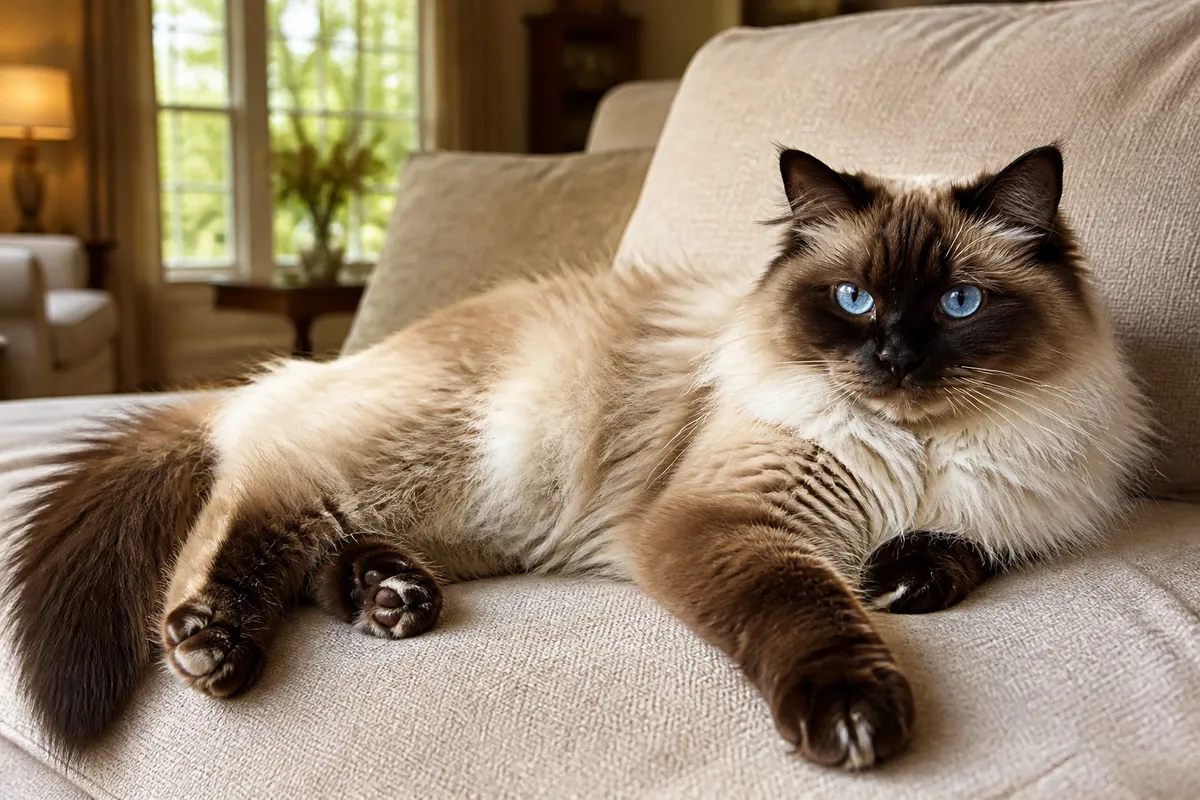
Ragdoll colors and patterns: seal point, blue point, flame point and more
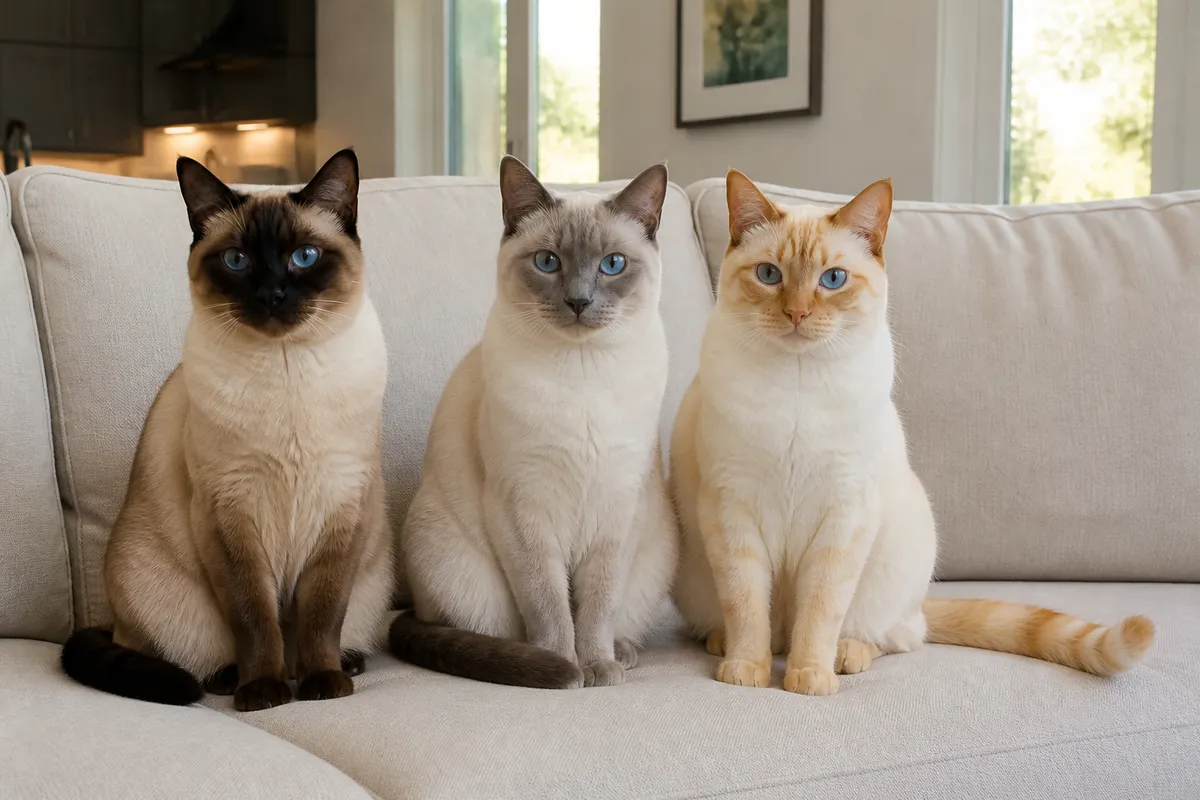
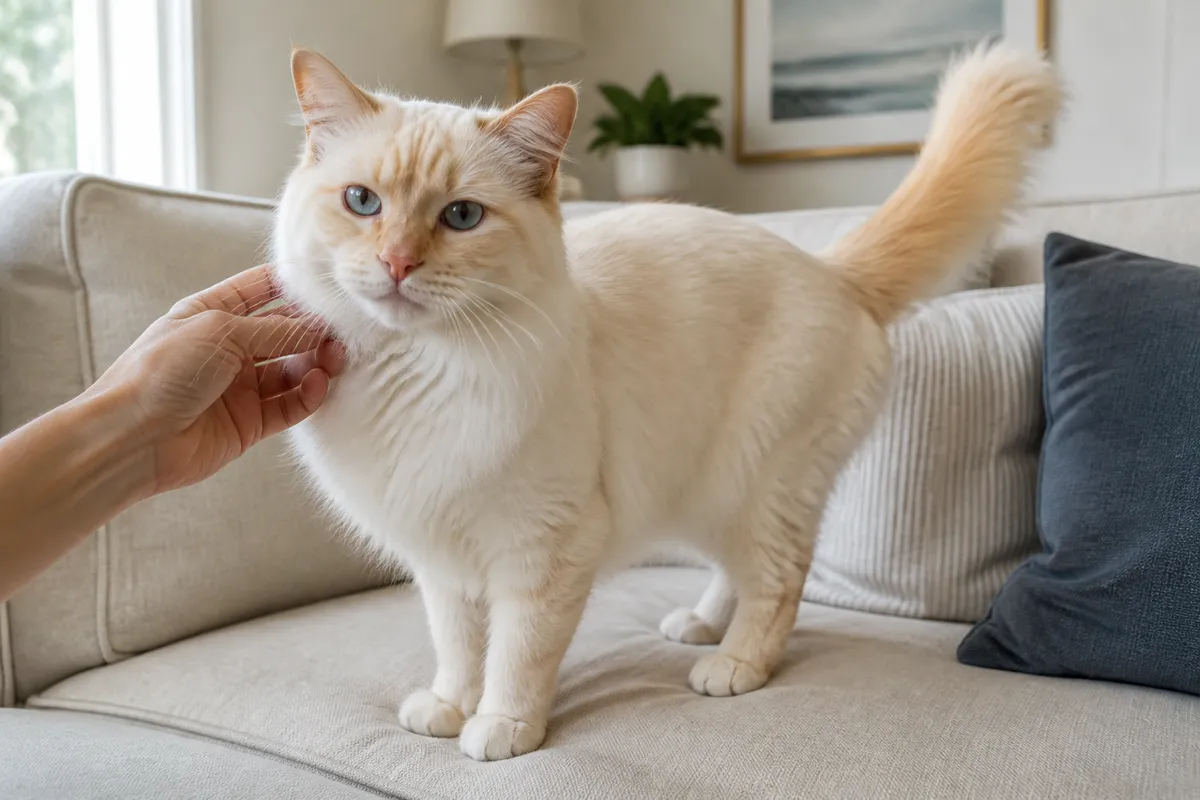
Ragdolls come in six point colors: seal (dark brown), blue (gray), chocolate, lilac (pale pinkish gray), red (often called flame point) and cream. Each color can be solid, lynx (tabby striping on the points) or tortie. On top of the color comes one of four patterns.
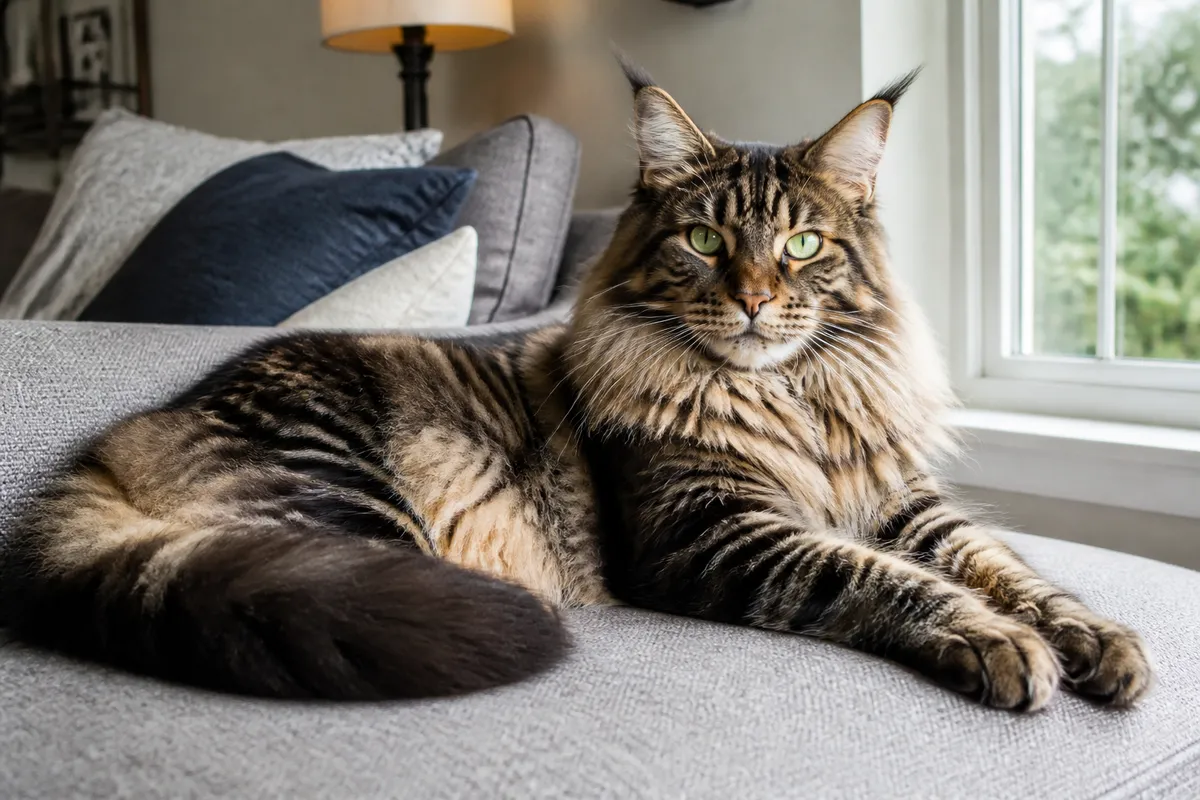
What about a black Ragdoll cat? By breed standard it doesn't exist: all Ragdolls carry the colorpoint gene and have blue eyes. A solid black, fluffy, "Ragdoll" kitten is a Ragdoll mix or a domestic longhair, which can be a lovely pet, just not a purebred Ragdoll, and shouldn't cost like one.
| Pattern | What it looks like |
|---|---|
| Colorpoint | Darker points with clear borders, no white |
| Mitted | White front mittens, white back legs up to the hocks, white chin and a white belly stripe |
| Bicolor | White inverted V on the face, white chest, belly and legs |
| Van | Color only on ears, mask and tail; body mostly white |
Ragdoll personality: calm, gentle and people-focused
Ragdolls are calm, docile and affectionate without being demanding. Many follow their people from room to room, greet them at the door and sleep in their beds. They're playful in a relaxed way, and some learn to fetch or come when called.
They're rarely talkative; a soft mew now and then is typical. They usually do well with respectful children and other pets, but their gentle nature means they're not great at standing up for themselves, so introduce them carefully to pushy cats or boisterous dogs.
Because they're so trusting, Ragdolls are best kept as indoor cats, with a catio or supervised outdoor time if you want to give them fresh air.
Grooming and care
Grooming is easier than the coat suggests. Combing once or twice a week with a steel comb removes loose hair and catches tangles, with extra sessions during seasonal shedding in spring and fall. Check behind the ears and under the front legs, where small knots like to form.
Ragdolls love food and gain weight easily, so measure meals instead of free-feeding and keep play in the daily routine. Their size calls for a large litter box and a sturdy cat tree that won't wobble under a 20-pound climber.
Beyond the coat, the routine is standard cat care: trim the claws every few weeks, check ears and teeth, and offer daily play with a wand toy. Ragdolls aren't high-energy, but a short play session morning and evening keeps them fit and stops the slow slide into a couch-potato physique. Ask your breeder which bathing products they use if you ever need to bathe one.
Ragdoll health: HCM and other concerns
Ragdolls are generally healthy, but hypertrophic cardiomyopathy (HCM), a thickening of the heart muscle, is the big one to know. Ragdolls have their own breed-specific gene variant, MYBPC3 R820W. Cats with two copies are at high risk of developing severe HCM, sometimes at a young age.
The American College of Veterinary Internal Medicine recommends DNA-testing Ragdolls intended for breeding, and says cats with two copies shouldn't be bred. A negative test isn't a guarantee: Ragdolls without the variant have still developed HCM, so regular heart ultrasounds (echocardiograms) of breeding cats are recommended too.
As a pet owner, ask for both: the parents' DNA results and their recent echocardiogram reports. Then keep your own Ragdoll lean and make sure your vet listens to its heart at every annual exam.
Ragdoll kittens for sale: price and choosing a breeder
There's no official Ragdoll price, and it varies a lot by region, breeder, pattern and whether the kitten is sold as a pet or for breeding. With a reputable breeder, the price reflects health-tested parents, vaccinations, vet checks and weeks of socialization. Ask exactly what's included, and be suspicious of any "purebred" Ragdoll that costs far less than local breeders charge.
The Cat Fanciers' Association recommends that kittens go home at 16 weeks, or at least 12 weeks, after their first vaccinations and plenty of time with mom and littermates.
- Proof of HCM (R820W) DNA tests and echocardiograms for both parents
- Registration papers, a written contract and a health guarantee
- Vaccination and deworming records and a vet check
- The chance to meet the kitten and its mother, in person or by live video
- A small, clearly refundable deposit; never gift cards or wire transfers
- Red flags: many litters at once, kittens offered at 6 to 8 weeks, pressure to ship without meeting
Is a Ragdoll the right cat for you?
A Ragdoll suits families, first-time cat owners, apartment dwellers with room for a big cat, and anyone who wants an affectionate, quiet, easygoing companion. It's also a good pick for homes with gentle kids and other calm pets.
It's not ideal if you want an independent cat who doesn't care whether you're home, if you can't commit to weight control and annual heart checks, or if your other pets are rough players. Ragdolls also appear in rescues and shelters now and then, so check breed rescues before you buy.
Frequently asked questions
How much does a Ragdoll cat cost?
Prices vary widely by region, breeder and pattern, and there's no official figure. A reputable breeder includes health testing, vaccinations and socialization in the price. Unusually cheap "purebred" Ragdoll kittens online are often mixes or scams.
Do Ragdoll cats really go limp?
Some do, many don't. The name comes from the founder's claim about the first cats, but most modern Ragdolls are simply relaxed and tolerant of handling rather than truly floppy.
Is there a black Ragdoll cat?
Not as a purebred. All Ragdolls are pointed with blue eyes. A solid black fluffy cat sold as a Ragdoll is a mix or a domestic longhair.
What is a flame point Ragdoll?
It's a Ragdoll with red points: orange-red ears, mask and tail on a cream to white body. Breeders also call it red point.
Do Ragdolls shed a lot?
Moderately. Their coat has little undercoat, so they shed less than many longhairs, mostly in spring and fall. Weekly combing keeps it under control.
How long do Ragdoll cats live?
Like most cats, Ragdolls can live well into their teens with good care. Lifespan depends heavily on weight control, heart health and regular vet checks.
Sources
- Ragdoll breed profile, Cat Fanciers' Association
- ACVIM consensus statement guidelines for the classification, diagnosis, and management of cardiomyopathies in cats, Journal of Veterinary Internal Medicine via PubMed Central
- Good Things Come To Those Who Wait, Cat Fanciers' Association
- Could This Kitten Be A Scam?, Cat Fanciers' Association
Last reviewed: November 2026