Biggest Domestic Cat Breeds: A Realistic Size Ranking
Cat Breeds 5 min read reviewed November 2026, 6 sources
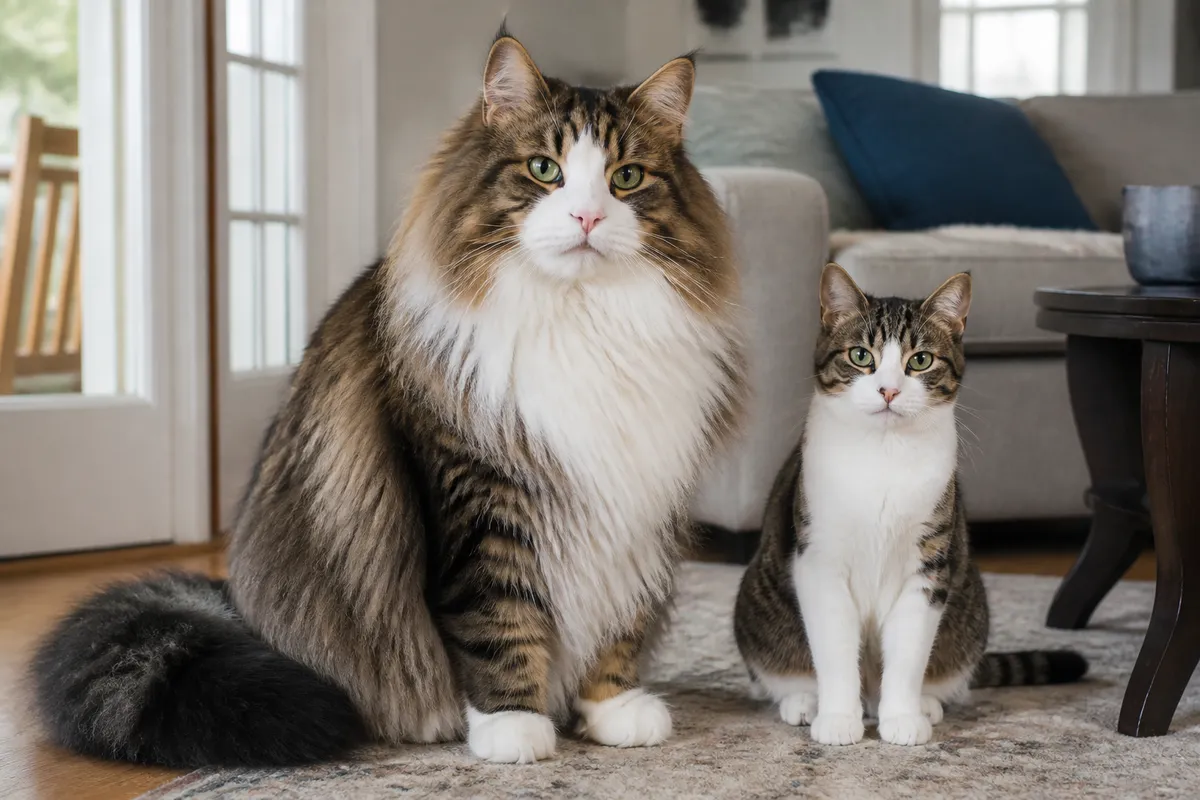
The biggest domestic cat breeds are the Maine Coon, Norwegian Forest Cat, Siberian, Ragdoll, Ragamuffin and Turkish Van, with large males typically weighing somewhere around 15 to 20 pounds or a bit more. Forget the viral photos of 40-pound giants: real big house cats are impressive, but they're mostly long, muscular and fluffy, not enormous.
The biggest domestic cat breeds, ranked
Rankings depend on whether you measure weight, length or sheer fluff, and on whether you look at males or females. This list uses the typical adult weight ranges published by VCA Animal Hospitals and the CFA. Males sit at the top of each range; females are usually several pounds lighter.
Keep in mind that a range is not a target. A healthy 12-pound female Maine Coon is just as correct as an 18-pound male, and a cat that's heavy because of fat isn't big, it's overweight.
Also remember that published ranges describe typical cats, not limits. Some individuals land above or below them, and a cat from a show line may differ from one bred as a pet. If size matters to you, ask a breeder what the adult males and females in their own lines weigh.
| Breed | Typical weight | Full size reached | Notes |
|---|---|---|---|
| Norwegian Forest Cat | About 12 to 22 lb | Up to 5 years | Bushy tail up to about 12 inches |
| Siberian | About 12 to 20 lb (fit males up to 25) | Up to 5 years | Slow to fill out |
| Maine Coon | About 8 to 20 lb (males up to 20) | About 4 years | Body can stretch up to about 40 inches |
| Ragdoll | About 15 to 20 lb | Up to 4 years | Males at the upper end |
| Ragamuffin | About 10 to 20 lb | Up to 4 years | Slow developer |
| Turkish Van | Mature males about 20 lb | Up to about 5 years | Heavy neck and shoulder muscles in males |
Maine Coon: the longest of the big domestic cats
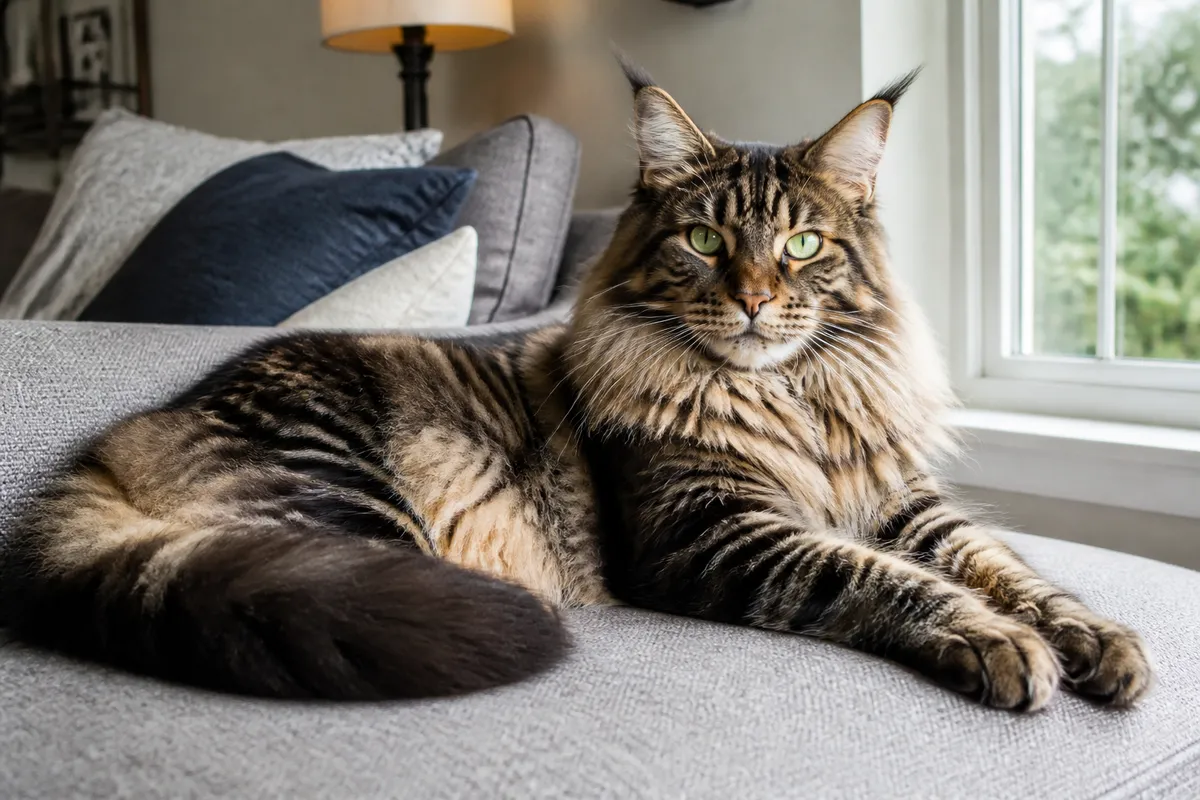
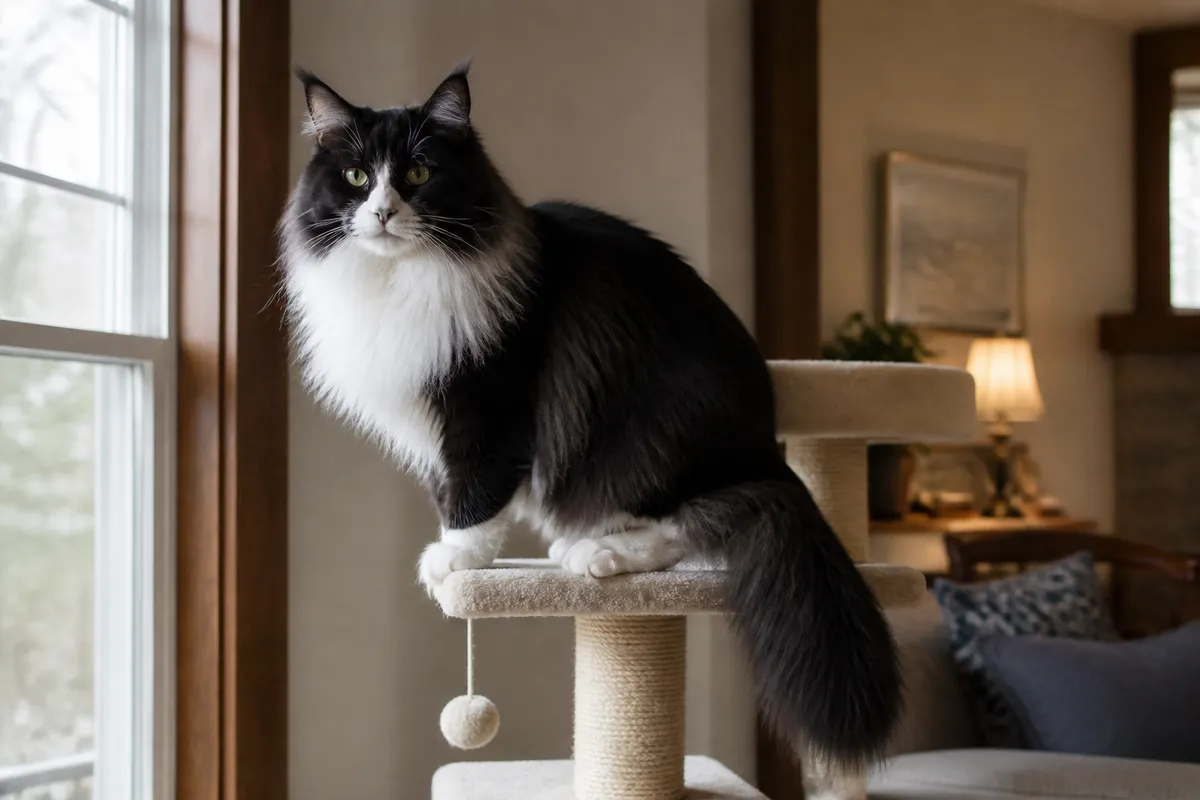
The Maine Coon is the breed most people picture when they think of large cats. VCA lists a range of about 8 to 20 pounds, with males weighing up to about 8 pounds more than females, and notes that the body can stretch up to 40 inches. It's also one of the slowest-growing breeds, reaching full maturity at around four years.
What makes a Maine Coon look so huge is the combination: long body, big bones, a shaggy coat, a ruff and a long, bushy tail. The Maine Coon article covers personality and care in detail.
Norwegian Forest Cat and Siberian: the heavyweights
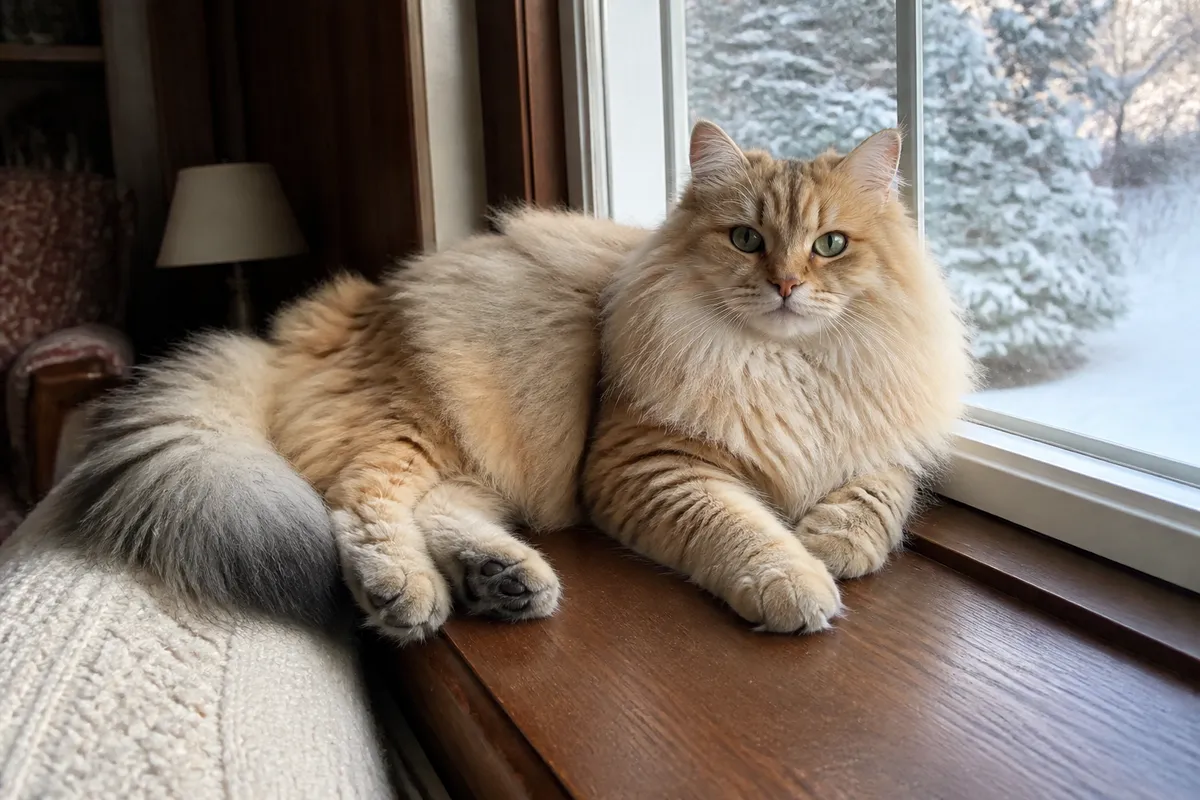
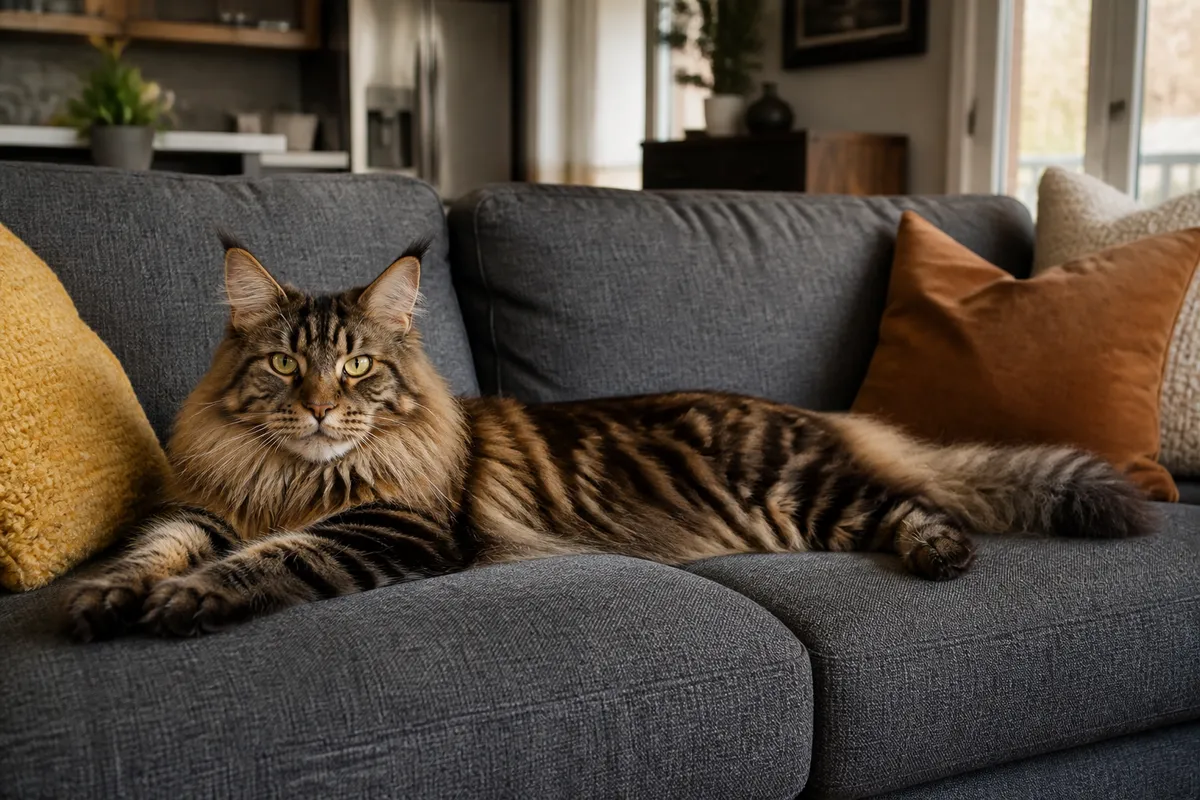
On paper, the Norwegian Forest Cat has the highest upper weight of the common breeds. VCA gives about 12 to 22 pounds, a bushy tail up to 12 inches long, and up to five years to reach full physical maturity. Under all that coat is a solid, muscular cat built for climbing.
The Siberian is right behind it. VCA lists 12 to 20 pounds and says healthy, fit males can reach up to 25 pounds, again taking up to five years to fill out. Both breeds look even bigger in winter, when the coat is at its fullest.
Ragdoll and Ragamuffin: big, soft and floppy
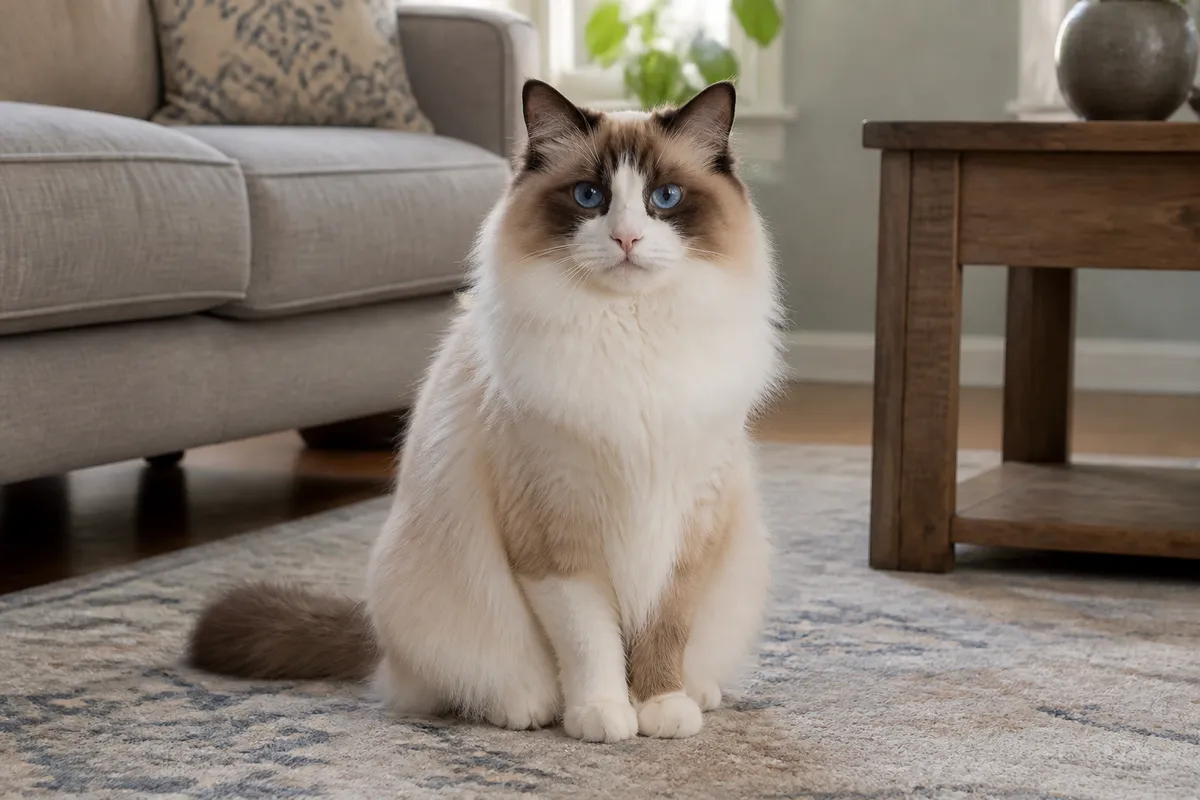
Ragdolls are heavy, long cats with a reputation for going limp when picked up. VCA lists 15 to 20 pounds, with males at the upper end, and up to four years to mature fully. Ragamuffins, their close relatives, come in at about 10 to 20 pounds according to VCA, and they're also slow developers.
If you want a large cat that's more lap than acrobat, these two are the classic choices. Both have their own articles if you want to compare temperaments.
Turkish Van and other large cats
The Turkish Van is less fluffy than the forest breeds but very muscular. CFA notes that mature males can weigh about 20 pounds, develop heavy muscles in the neck and shoulders, and keep growing until about age five.
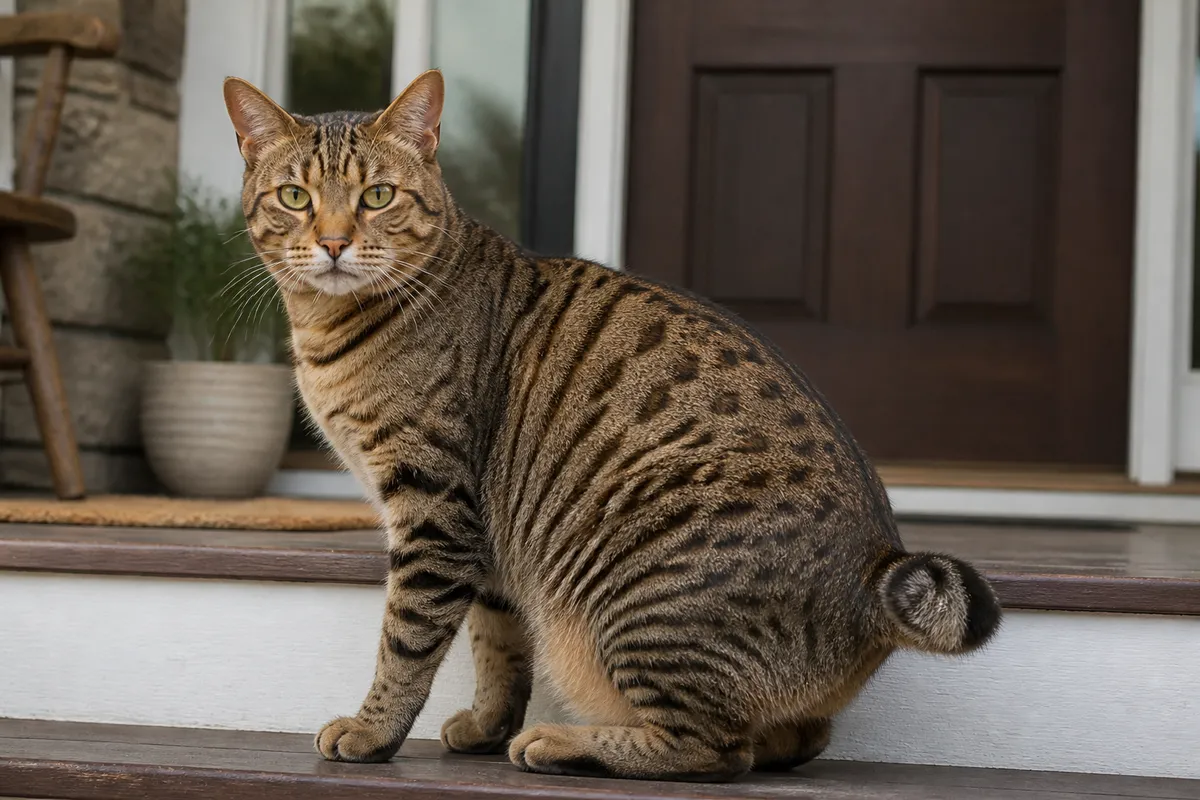
Several other breeds are solidly medium to large without reaching the top of the list, including the American Bobtail and the Chartreux. And plenty of big house cats are simply large domestic shorthairs or longhairs with no breed at all. Genetics, sex and neutering all play a role, and a big-boned mixed-breed tom can outweigh a petite purebred female.
If you're after the tallest or longest cat ever recorded, those are world-record territory, covered in the biggest cat in the world article.
Why big cats take so long to grow
Most cats look adult by their first birthday, but the large breeds keep developing for years. VCA gives up to four years for Maine Coons, Ragdolls and Ragamuffins and up to five for Norwegian Forest Cats and Siberians. A one-year-old Maine Coon may look gangly, all legs and ears, and fill out over the next few years.
That matters in practice. Don't judge a kitten's final size too early, don't try to speed up growth with extra food, and ask your vet when to switch from kitten to adult food for a slow-maturing breed.
How to measure your own cat: for weight, step on a bathroom scale holding your cat, then subtract your own weight. For length, wait until your cat is stretched out asleep and measure gently from the tip of the nose to the base of the tail, then separately to the tip of the tail. Write the numbers down every few months. It is the easiest way to see whether your kitten is still growing or simply getting rounder, and your vet will appreciate the record.
Living with large cats: what changes
Big cats need big gear, and standard pet store products are often too small. A 20-pound cat can tip a lightweight cat tree, won't fit comfortably in a small carrier and may struggle to turn around in a standard litter box. The cat tree for large cats article goes into the details.
The other priority is weight. A large frame can hide extra pounds, and obesity is just as harmful for big breeds as for small ones. Learn to check your cat's body condition: you should be able to feel the ribs under a light layer of padding and see a waist from above. Your vet can tell you the ideal weight for your individual cat.
- An extra-large litter box, or a storage bin with a cut-out entry
- A cat tree with a heavy base and wide platforms
- A carrier rated for the cat's adult weight, with a top opening
- A sturdy scratching post that doesn't wobble when your cat stretches full length
- Measured meals and regular weigh-ins
Which big cat breed is right for you?
Want the longest, most dramatic-looking giant? Look at the Maine Coon. Prefer a mellow lap cat? A Ragdoll or Ragamuffin. Love an outdoorsy, athletic look? Norwegian Forest Cat or Siberian.
Whichever you choose, budget for more food, more litter and larger equipment than a typical cat needs. And if size is what you love, check shelters too: big, fluffy mixed-breed cats are surprisingly common there.
Meet adult cats of the breed before you decide: photos never show how much space a 20-pound cat takes up on your bed.
Frequently asked questions
What is the biggest domestic cat breed?
By typical weight, the Norwegian Forest Cat, Siberian, Maine Coon and Ragdoll are the largest common breeds, with big males around 20 pounds. By length, the Maine Coon stands out, with bodies that can stretch up to about 40 inches.
What is the largest domestic cat breed by weight?
On VCA's published ranges, the Norwegian Forest Cat reaches up to about 22 pounds, and VCA notes fit Siberian males can reach up to 25 pounds. Individual cats vary a lot.
At what age is a Maine Coon fully grown?
VCA says Maine Coons reach full maturity at around four years. Norwegian Forest Cats and Siberians can take up to five years.
How do I know if my big cat is overweight?
Check body condition rather than the number on the scale. You should feel the ribs easily under light padding and see a waist from above. Ask your vet to score your cat at each checkup.
Are big house cats more expensive to keep?
Usually somewhat. They eat more, use more litter and need larger litter boxes, carriers and cat trees. Vet costs can also be higher when doses are weight-based.
Sources
- Maine Coon, VCA Animal Hospitals
- Norwegian Forest Cat, VCA Animal Hospitals
- Siberian, VCA Animal Hospitals
- Ragdoll, VCA Animal Hospitals
- Ragamuffin, VCA Animal Hospitals
- Turkish Van breed profile, The Cat Fanciers' Association
Last reviewed: November 2026