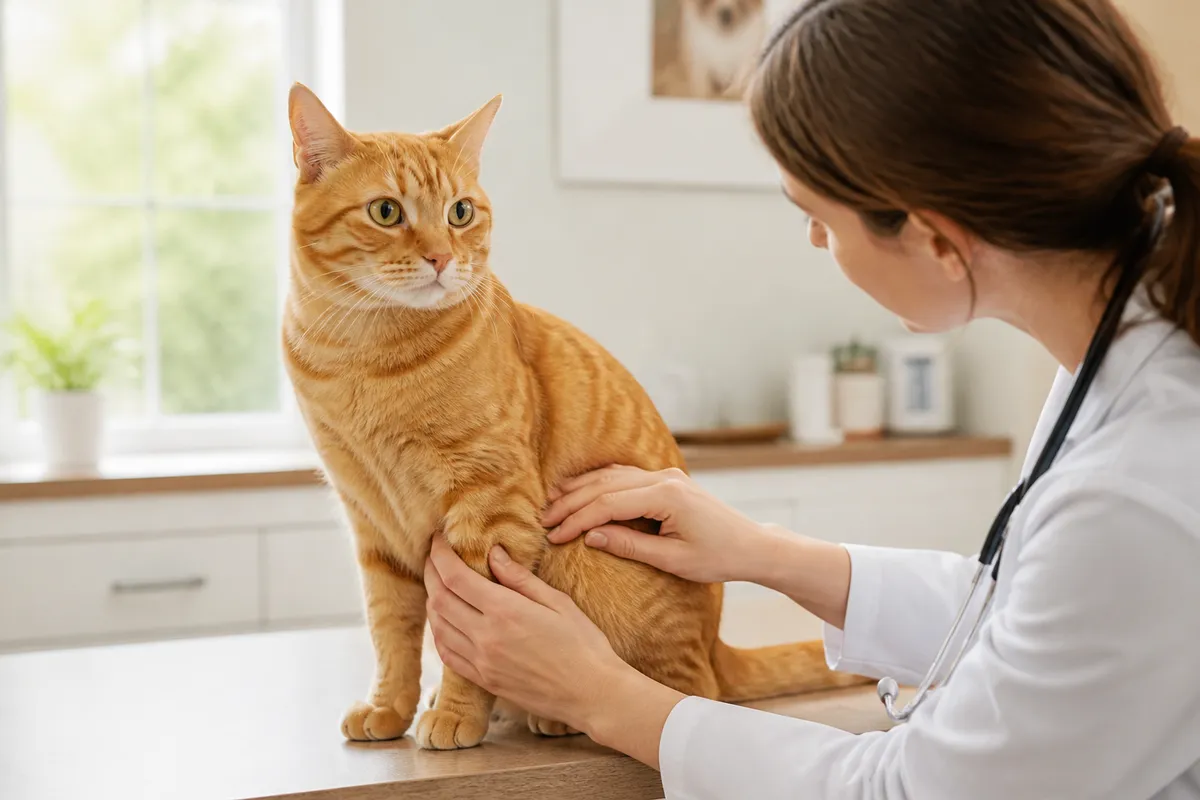
Cat Neuter and Spay Guide: Best Age, Surgery, Recovery and Costs
Health 7 min read reviewed November 2026, 4 sources
A cat neuter or spay is a routine surgery that prevents litters, and for most cats the best time is before five months of age, ideally before a female's first heat. Neutering removes a male cat's testicles; spaying removes a female's ovaries and usually the uterus. Most cats go home the same day or the next and recover within about two weeks. Here is what to expect, how to care for your cat afterward and how to find an affordable clinic.
Spay vs. neuter: what the surgery actually involves
Both procedures are done under general anesthesia, so your cat feels nothing during surgery. Your clinic will tell you when to stop food the night before. Many vets run pre-anesthetic bloodwork, and cats usually get pain medication before and after.
A cat neuter (castration) removes both testicles through small incisions in the scrotum. VCA Animal Hospitals notes that these incisions are usually not stitched and heal on their own. It is a quick procedure.
A cat spay (ovariohysterectomy) removes the ovaries and uterus through a small incision in the belly, just below the navel; some vets remove only the ovaries. Because it is abdominal surgery, the incision is closed in several layers, and skin stitches, if used, usually come out after 7 to 10 days.
| Neuter (male) | Spay (female) | |
|---|---|---|
| What is removed | Both testicles | Ovaries and usually the uterus |
| Incision | Small scrotal incisions, usually no stitches | Small belly incision closed in layers |
| Typical hospital stay | Often home the same day | Usually home within 12 to 24 hours |
| Activity restriction | Up to about two weeks or as your vet advises | Up to about two weeks or as your vet advises |
| Main benefits | Less spraying, roaming and fighting; no testicular cancer | No heat cycles or litters; no uterine infection; lower mammary cancer risk |
What is the best age to neuter or spay a cat?
The long-standing habit was to wait until about six months. Today, the Veterinary Task Force on Feline Sterilization recommends a simpler rule known as Fix by Five: spay or neuter cats not intended for breeding by five months of age. The ASPCA also recommends scheduling surgery before five months to help prevent urine spraying and pregnancy, and notes that healthy kittens as young as eight weeks can be spayed or neutered, which is common in shelters.
Why the rush? Cats can reach puberty surprisingly early. VCA notes that male puberty typically starts between 4 and 12 months, and many females come into heat for the first time around six or seven months, sometimes sooner. Task force members have pointed out that a female can become pregnant at 4 months, which surprises many owners.
Your vet will recommend the right timing for your cat's health and situation. Adult cats can be spayed or neutered at any age, and a female can even be spayed while she is in heat.
Health benefits of a cat spay or neuter
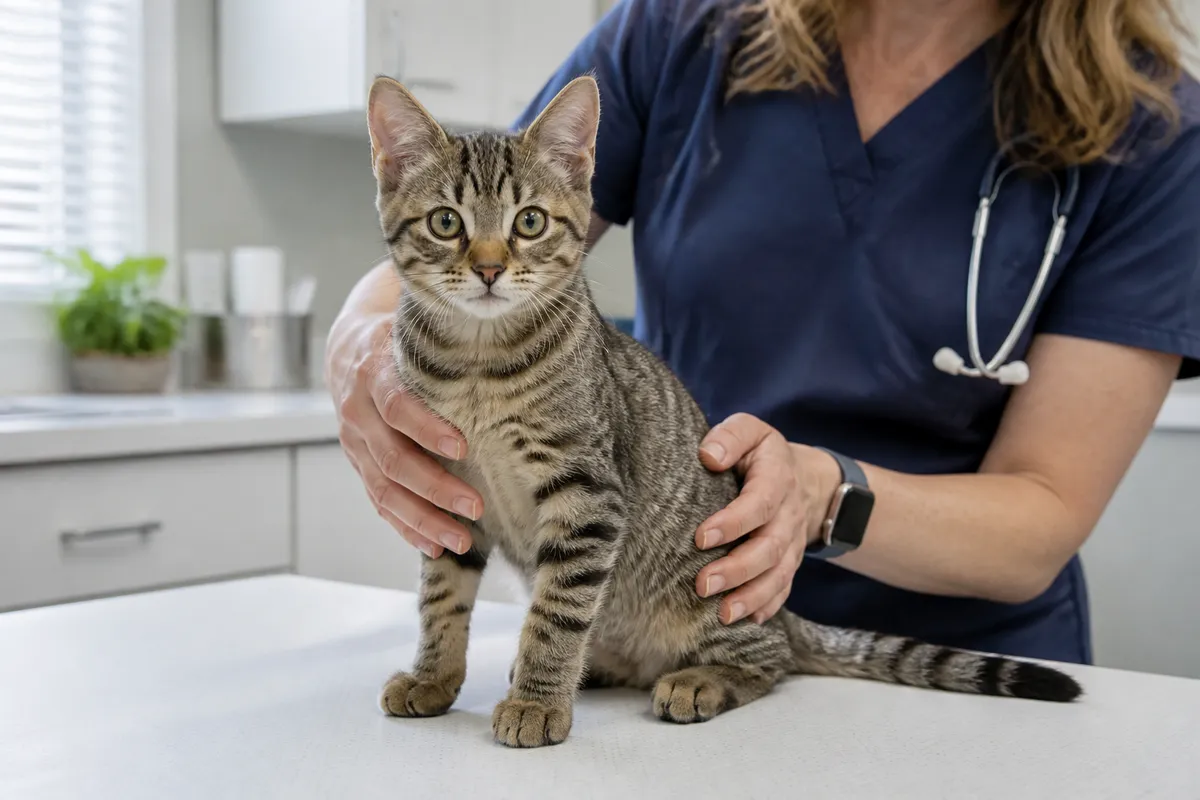
Beyond preventing kittens, sterilization has real health benefits. According to VCA, spaying removes the risk of ovarian and uterine cancers and prevents pyometra, a life-threatening infection of the uterus. It also lowers the risk of breast cancer, which the ASPCA says is cancerous in about 90 percent of cats who develop it. Spaying before the first heat offers the best protection.
For males, neutering prevents testicular cancer. Because intact males fight more over territory, they also face a higher risk of bite wounds, and VCA notes that FIV and FeLV, two incurable viral infections spread through bites, are more common in intact males. Less roaming also means fewer run-ins with cars and wildlife.
Behavior changes after a cat neuter or spay
Many owners schedule surgery because of behavior, and the changes are often welcome. Spayed females stop going into heat, which ends the loud yowling, rolling, restlessness and attempts to escape that come with each cycle. Neutered males are less likely to spray strongly scented urine indoors, roam at night or fight.
Timing matters. VCA notes that neutering is less likely to stop spraying and fighting the longer a male has been intact, because the behavior can become a habit. The ASPCA also points out that sterilization reduces hormone-driven behavior but does not fix every behavior problem.
What usually does not change is your cat's personality. A playful kitten stays playful and a cuddly cat stays cuddly.
How to prepare your cat for surgery day
A little planning makes the day calmer for everyone. Get your cat used to the carrier a week or two ahead by leaving it open in the living room with a soft towel and a few treats inside. On the morning of surgery, a cat who already trusts the carrier is far easier to load than one who sees it only before vet visits.
Follow the fasting instructions exactly. Your clinic will tell you when to remove food; water is often allowed until a set time. Fasting lowers the risk of vomiting and aspiration under anesthesia, so do not slip in a snack out of guilt.
Set up the recovery room the day before: a quiet space with a bed, water, a litter box and no high shelves to jump onto. Write down the clinic's phone number and the after-hours emergency clinic, and ask at drop-off what time to call and which signs mean you should come back.
- Carrier ready, lined with a towel that smells like home
- Fasting time noted and food put away (watch for stolen snacks from other pets)
- Recovery room prepared before you leave
- Questions written down: pain medication, cone, stitches, recheck date

Recovery: how to care for your cat at home
Most cats are groggy the evening after surgery and back to their usual selves within a day or two, even if their incision is still healing. Follow your vet's discharge instructions exactly, especially for pain medication and when to offer food.
The ASPCA recommends these basics:
- Keep your cat in a quiet indoor room, away from other pets and kids, for the first days
- Limit running and jumping for up to two weeks, or as long as your vet advises
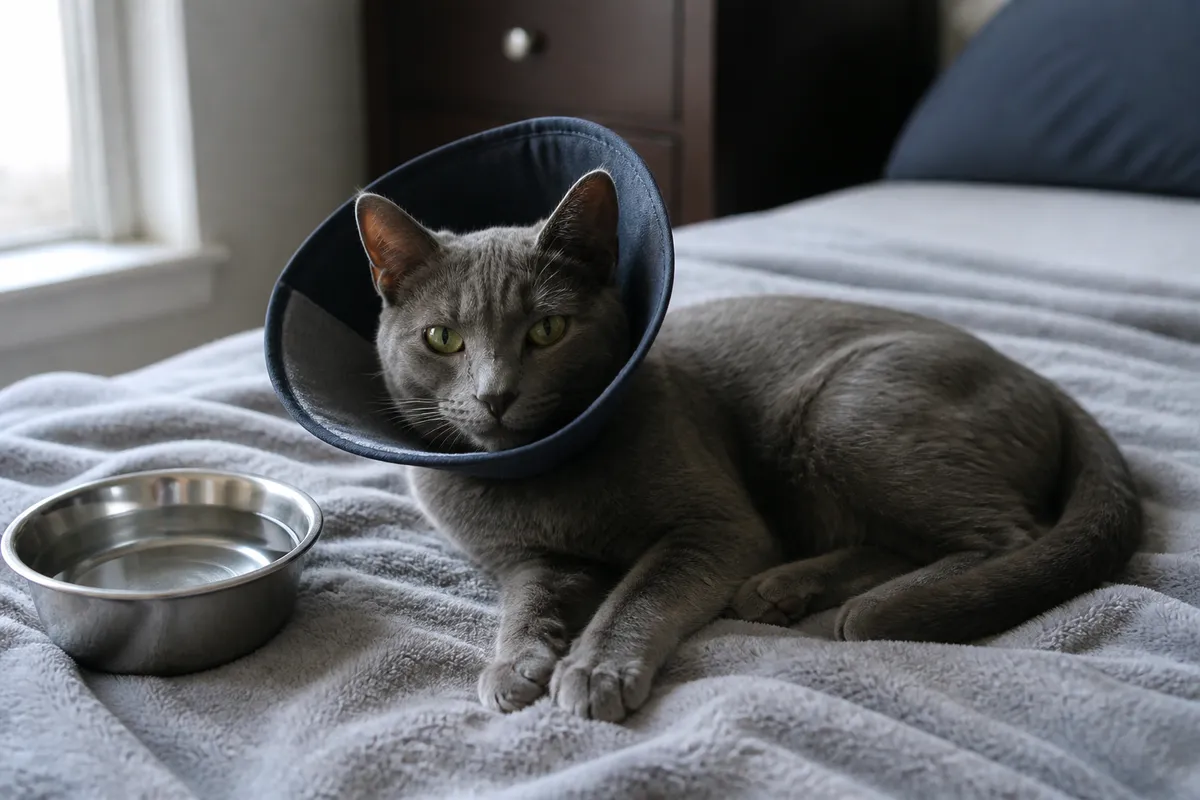
- Use a well-fitted cone (Elizabethan collar) or recovery suit if your cat licks the incision
- Check the incision daily: slight pinkness is normal, swelling, discharge or an opening is not
- No baths for at least ten days
- Give only the medicine your vet prescribed; human pain relievers like acetaminophen (Tylenol) or ibuprofen are toxic to cats
Risks and side effects
Complications are rare. As with any anesthesia, there is a small risk of serious reactions, which modern drugs and monitoring keep very low. Other possible problems include infection at the incision, swelling or, rarely, bleeding. That is why the pre-surgery exam and fasting instructions matter: if your cat is sneezing, vomiting or has diarrhea before the appointment, call the clinic, because surgery may be postponed.
The most common long-term side effect is weight gain. VCA explains that sterilization lowers metabolism and activity, so a cat eating the same amount as before can slowly put on pounds. The ASPCA stresses that the surgery itself does not cause weight gain; overfeeding and too little exercise do. Ask your vet how much to feed after surgery and keep playtime going.
A harmless cosmetic quirk: in some cats, especially Siamese, the fur that grows back over the shaved area may come in darker and usually evens out after the next shed.
Cat spay and neuter cost and low-cost options
Costs vary a lot by clinic and region, and spays usually cost more than neuters because they involve abdominal surgery. Prices also depend on what is included: exam, bloodwork, pain medication, the cone and follow-up visits. Ask for a written estimate and what it covers before booking.
If cost is a hurdle, there are good options. Many shelters, humane societies and nonprofit clinics offer low-cost spay and neuter surgery, and some cities run voucher programs or mobile clinics. Alley Cat Allies keeps a directory of low-cost veterinary care, and your local shelter usually knows the nearest affordable option. Cats adopted from shelters are often already sterilized, which is included in the adoption fee.
Even at full price, the ASPCA notes that surgery costs far less than caring for a litter, and it avoids the cost of treating problems like pyometra or bite abscesses later.
Myths about spaying and neutering cats
A few common beliefs keep owners from scheduling surgery. Here is what the evidence says.
- A female should have one litter first: no, spaying before the first heat gives the best protection against mammary cancer
- Indoor cats do not need it: an indoor female still goes into heat, and an intact indoor male often sprays
- Neutering makes cats lazy and fat: calories and play decide weight, not the surgery alone
- My cat will be sad or less of a cat: cats do not have feelings about their reproductive organs, only about missed dinners
Frequently asked questions
How long does it take a cat to recover from being neutered?
Most male cats are back to normal within a day or two, and the small incisions usually heal within about a week. Keep activity calm and check the area daily. Call your vet about swelling, discharge or if he stops eating.
How long does cat spay recovery take?
Plan on about two weeks of limited running and jumping while the belly incision heals. Skin stitches, if used, usually come out after 7 to 10 days. Many cats act normal much sooner, which is why a cone and a quiet room help.
Can a cat be spayed while in heat?
Yes. VCA notes that a cat in heat can be spayed. Blood flow to the reproductive tract is higher, which may slightly increase bleeding risk, so your vet will decide whether to operate now or wait.
Will neutering stop my cat from spraying?
Often, especially when done before the habit forms. Neutered males are much less likely to spray, but the longer a cat has been intact, the more likely the behavior persists. Clean marked spots with an enzyme cleaner and talk to your vet if it continues.
Do cats gain weight after being spayed or neutered?
They can, because their metabolism slows. The surgery itself is not the cause; eating the same amount with lower energy needs is. Ask your vet how much to feed afterward and keep daily play sessions.
Is it too late to neuter an older cat?
Usually not. Adult and even senior cats can be spayed or neutered after a health check. Your vet may recommend bloodwork first to make sure anesthesia is safe.
Sources
- Spay/Neuter Your Pet, ASPCA
- Spaying in Cats, VCA Animal Hospitals
- Neutering in Cats, VCA Animal Hospitals
- When to spay/neuter cats? Vet consensus says fix by five months, Veterinary Practice News
Last reviewed: November 2026
This guide does not replace an exam by a veterinarian. If you are unsure, call your vet.