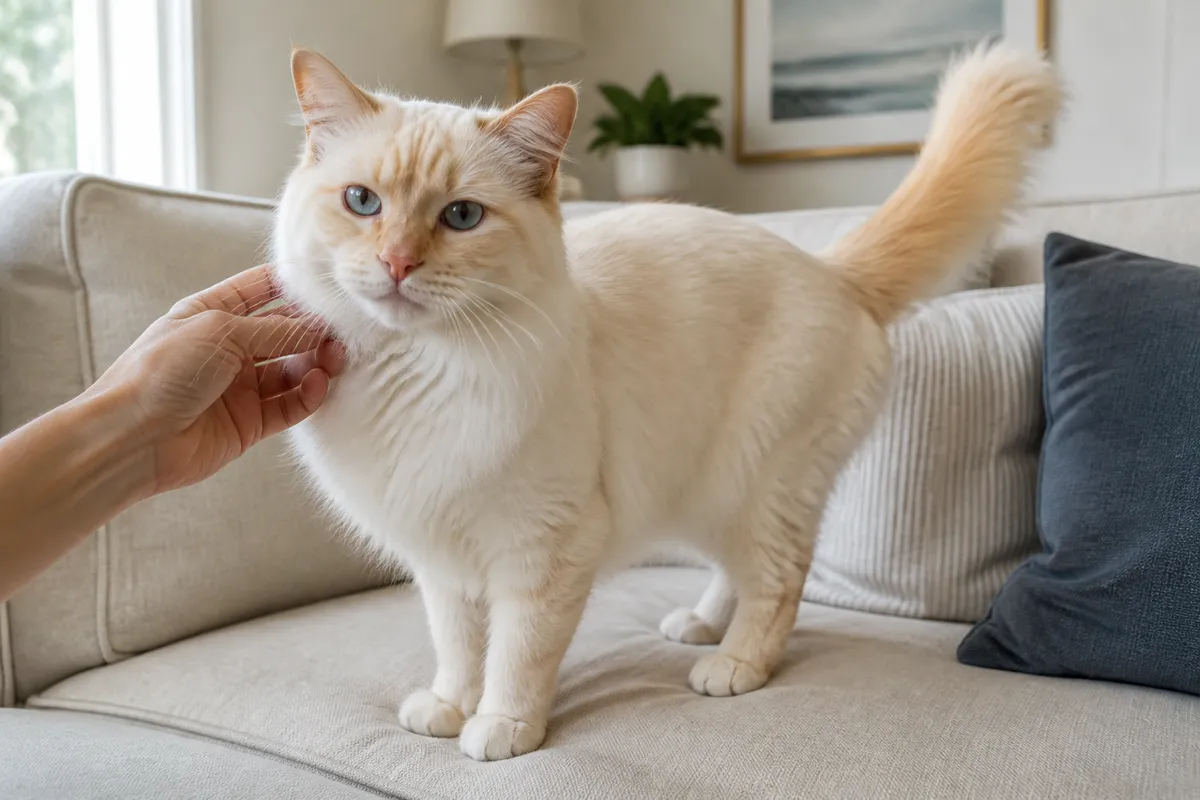
Types of Cats: Breeds Grouped by Size, Coat and Personality
Cat Breeds 5 min read reviewed November 2026, 6 sources
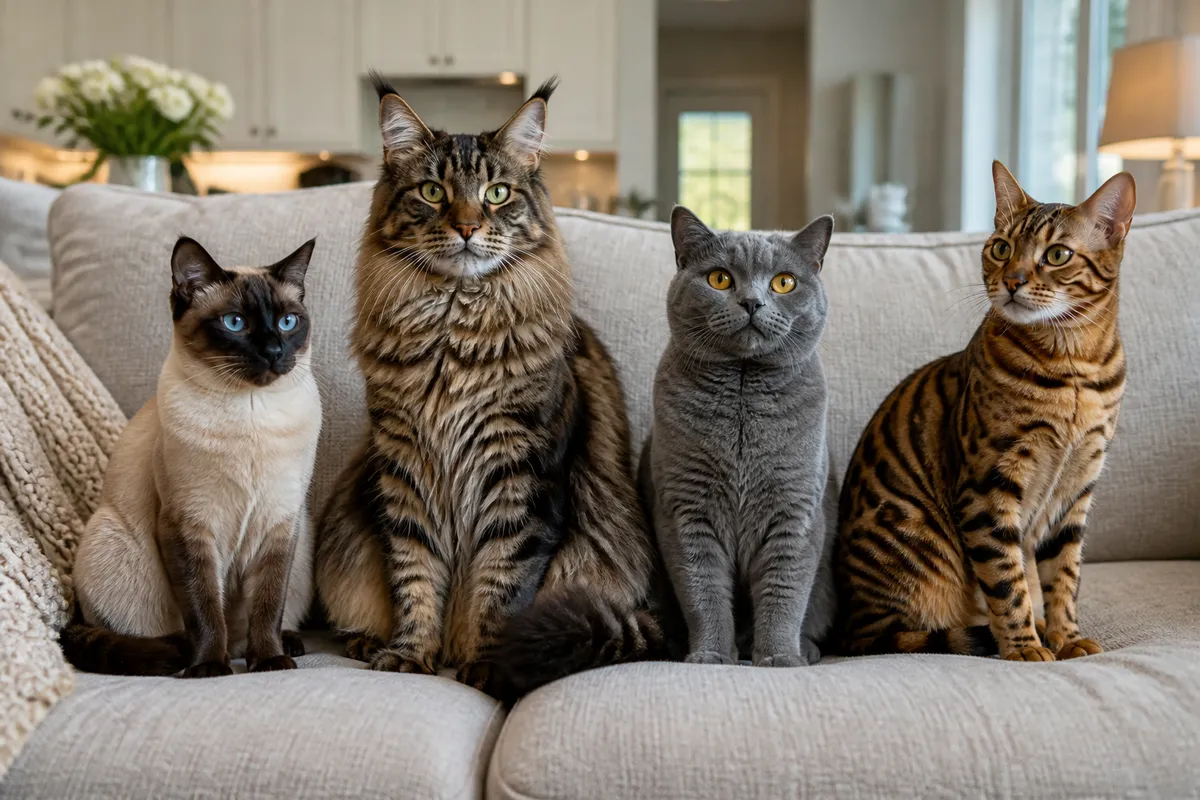
The main types of cats are mixed-breed domestic cats (short, medium or long coat), which make up most pet cats in the US, and pedigreed breeds, which are usually grouped by size, coat type and temperament. Knowing those groups helps you narrow down which kind of cat fits your home, from big gentle longhairs to chatty, athletic shorthairs and hairless breeds.
Domestic cats vs. pedigreed breeds
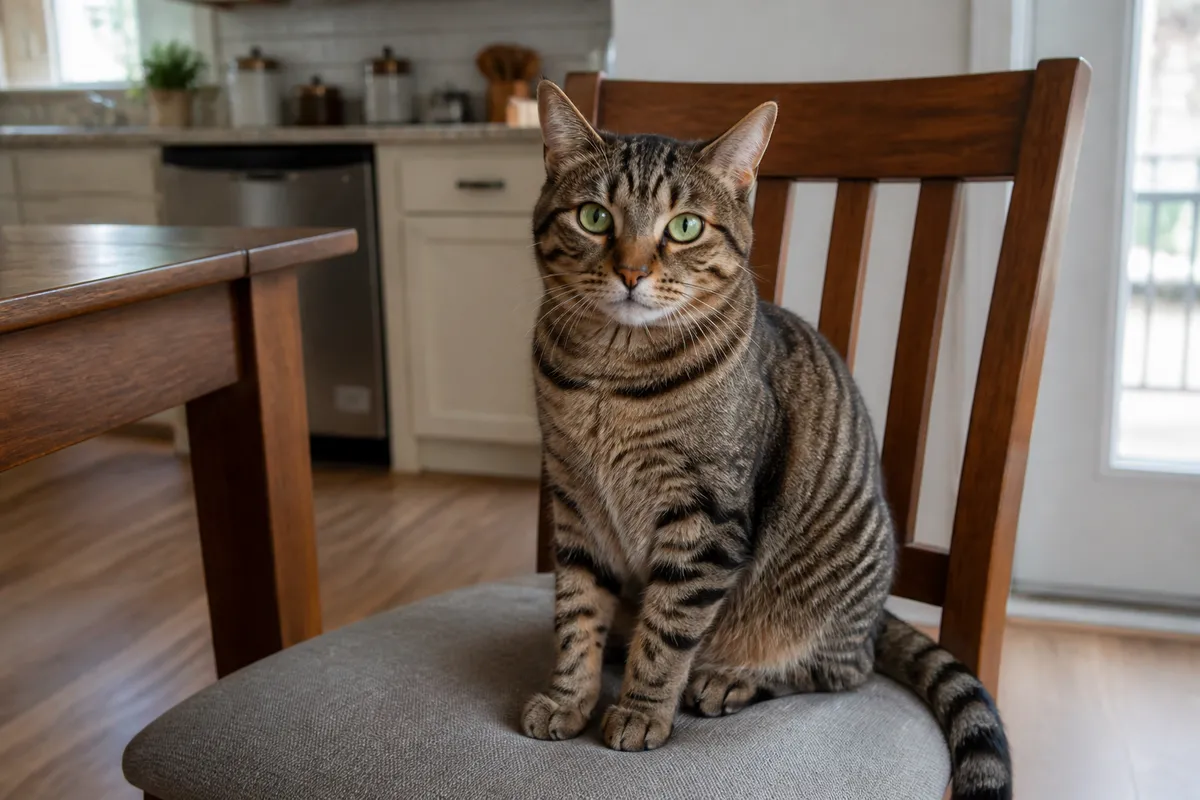
Most cats in American homes aren't a breed at all. According to VCA Animal Hospitals, the domestic shorthair is the most popular cat in the United States, followed by domestic medium and longhair cats. These are mixed-breed cats grouped only by coat length, and they come in every color, pattern and personality.
Pedigreed breeds are cats with documented ancestry that meet a written breed standard from a registry such as the Cat Fanciers' Association (CFA) or The International Cat Association (TICA). Registries don't all recognize the same breeds, and new ones are added over time. A breed gives you a better prediction of adult size, coat and temperament; a domestic cat gives you a one-of-a-kind cat whose personality you can see before adopting.
Popular cat breeds compared
VCA lists the Siamese, Maine Coon, Persian, Ragdoll and American Shorthair as the most common purebred cats in the US. The table adds several other popular types so you can compare at a glance.
| Breed | Size | Coat | Energy | Personality in a word |
|---|---|---|---|---|
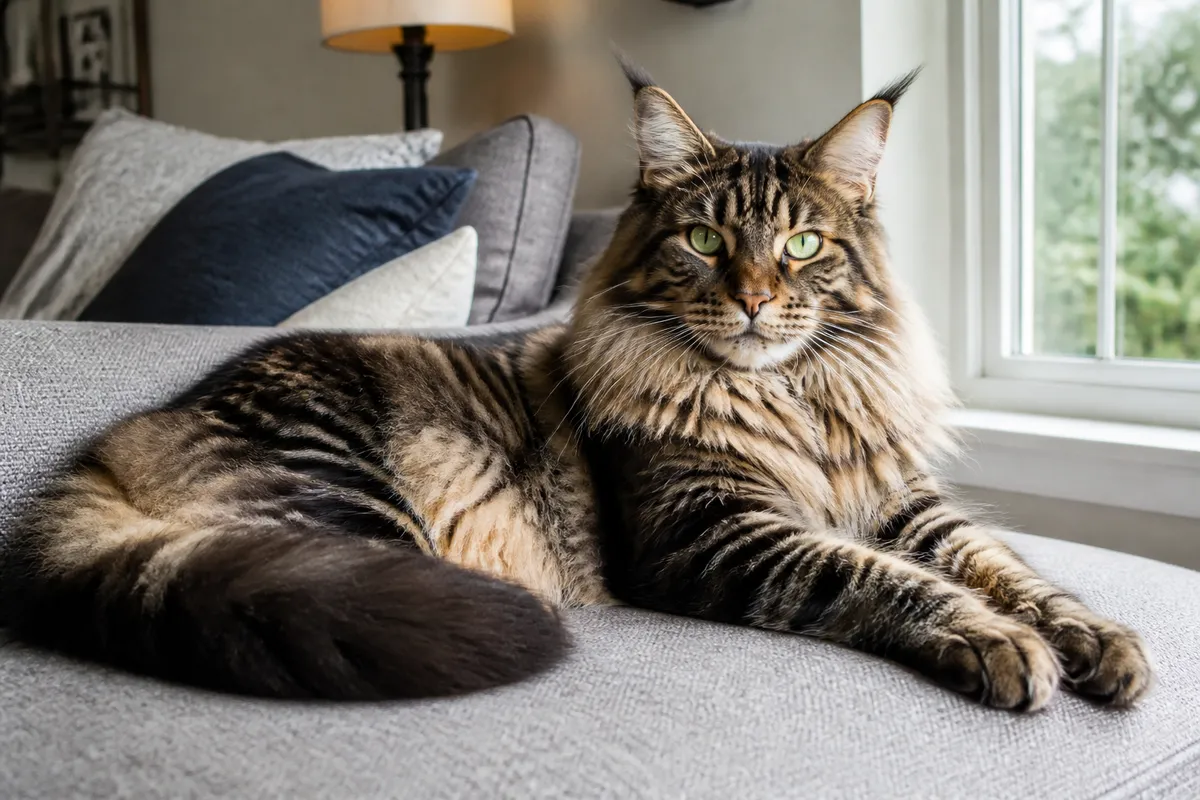
| Maine Coon | Very large (males often 20 lb+) | Long, shaggy | Moderate | Gentle giant |
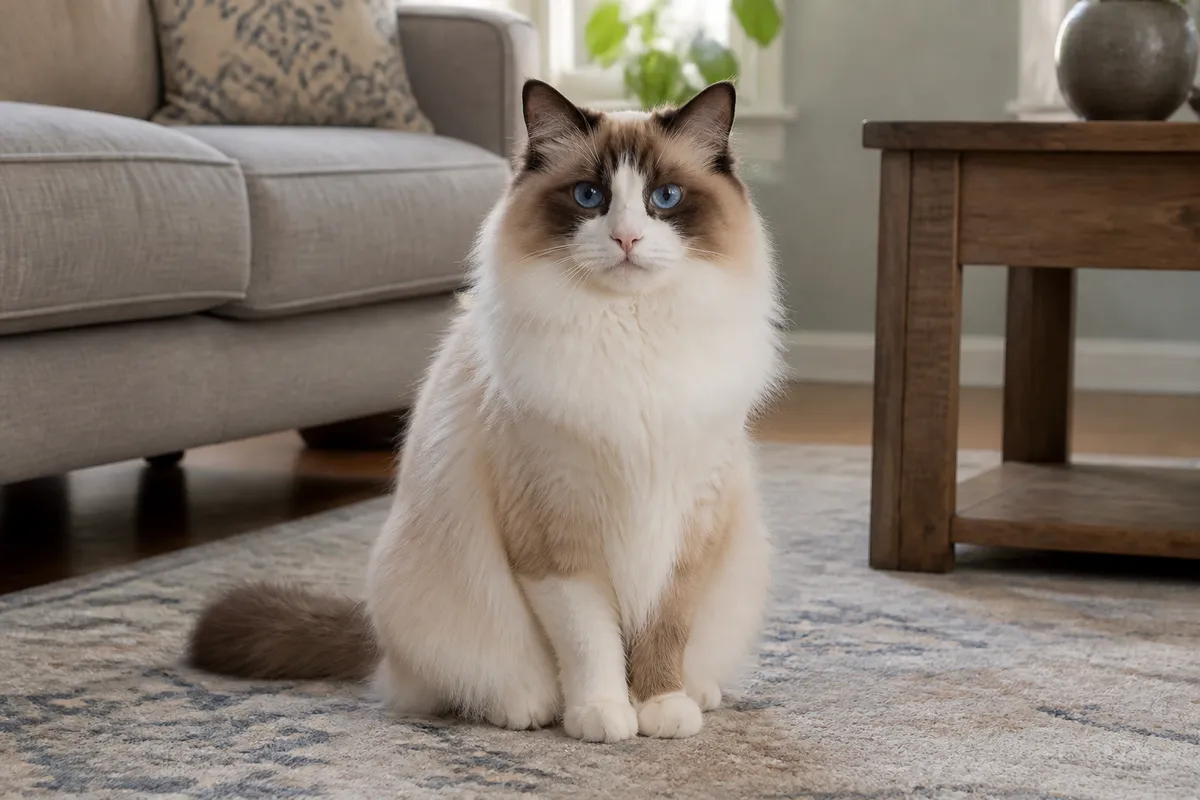
| Ragdoll | Large (males often 20 lb+) | Semi-long, silky | Low to moderate | Relaxed |
| Norwegian Forest Cat | Large (males about 12 to 16 lb) | Long double coat | Moderate | Independent |
| Siberian | Large (males about 12 to 18 lb) | Dense triple coat | Moderate | Dog-like |
| British Shorthair | Medium to large (males up to about 17 lb) | Short, very dense | Low | Calm |
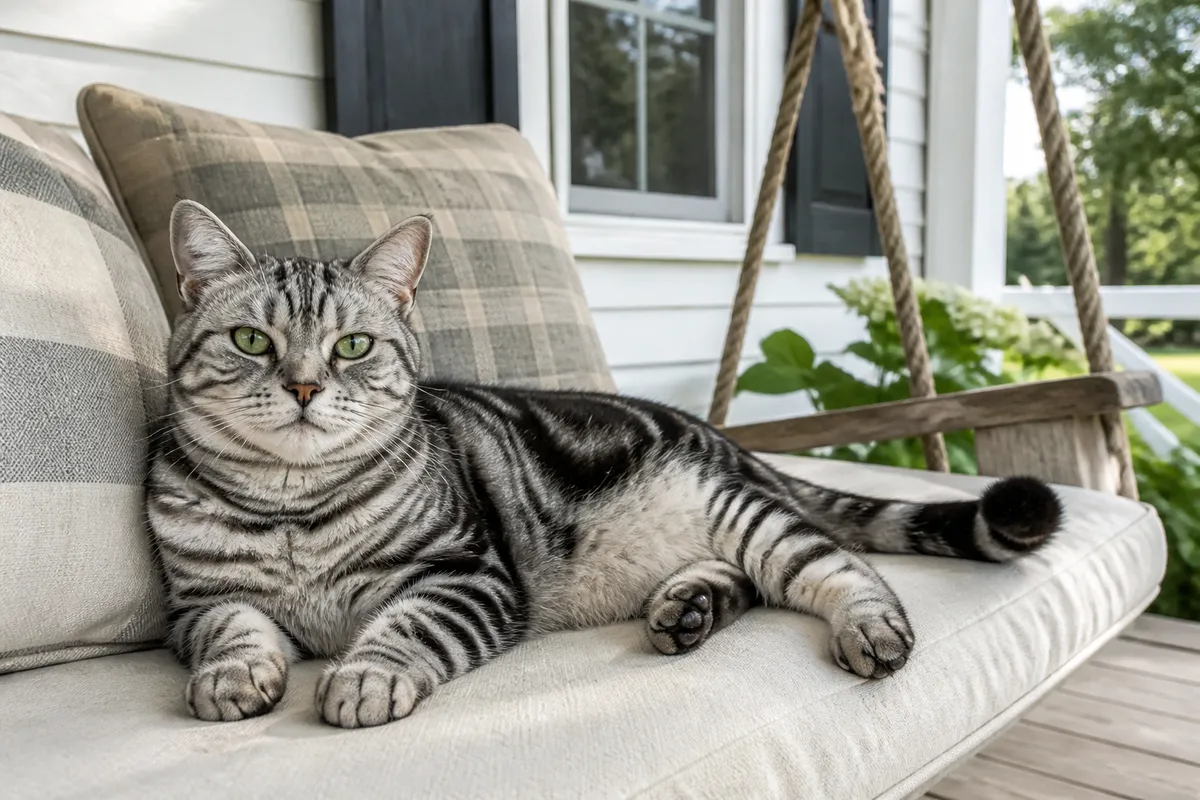
| American Shorthair | Medium to large (about 8 to 12 lb) | Short, thick | Moderate | Easygoing |
| Persian | Medium (about 7 to 12 lb) | Very long | Low | Placid |
| Siamese | Medium, slender (about 5 to 8 lb) | Short, fine | High | Talkative |
| Bengal | Medium to large (about 6 to 12 lb) | Short, spotted | Very high | Athletic |
| Sphynx | Medium (about 8 to 10 lb) | Hairless | High | Velcro |
Big, gentle cat breeds
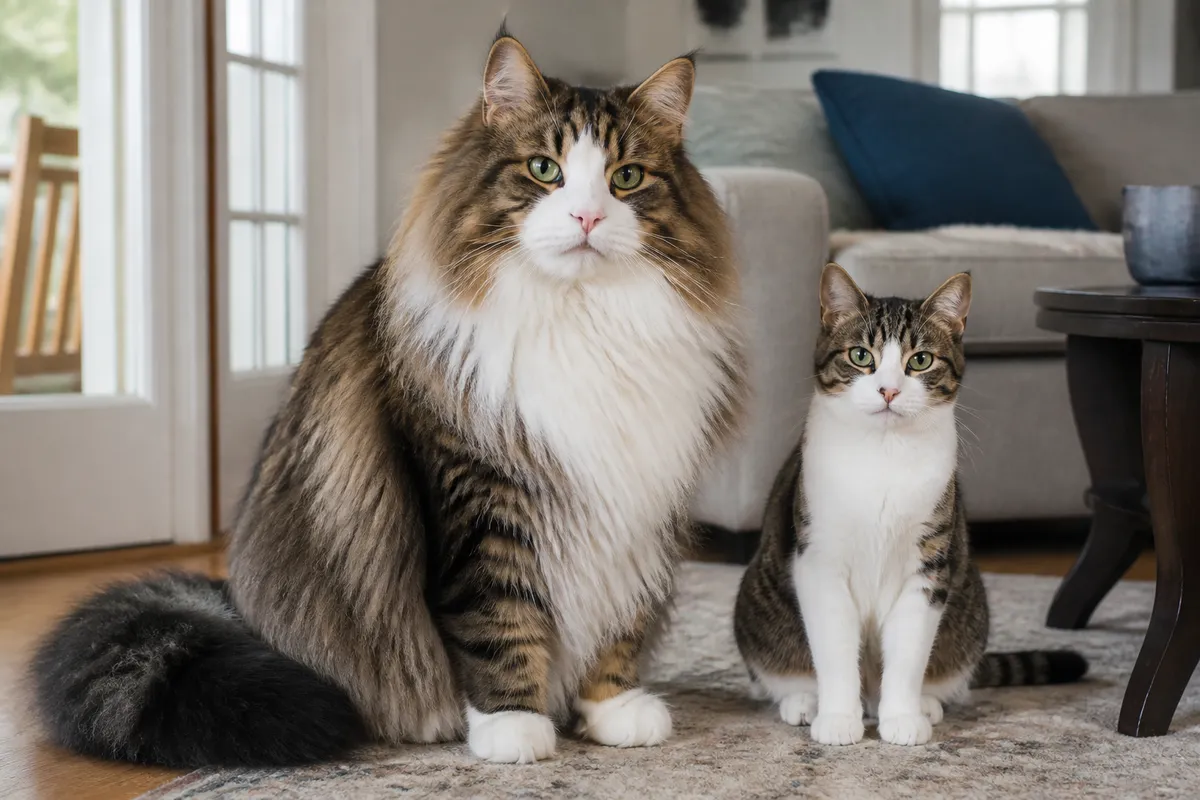
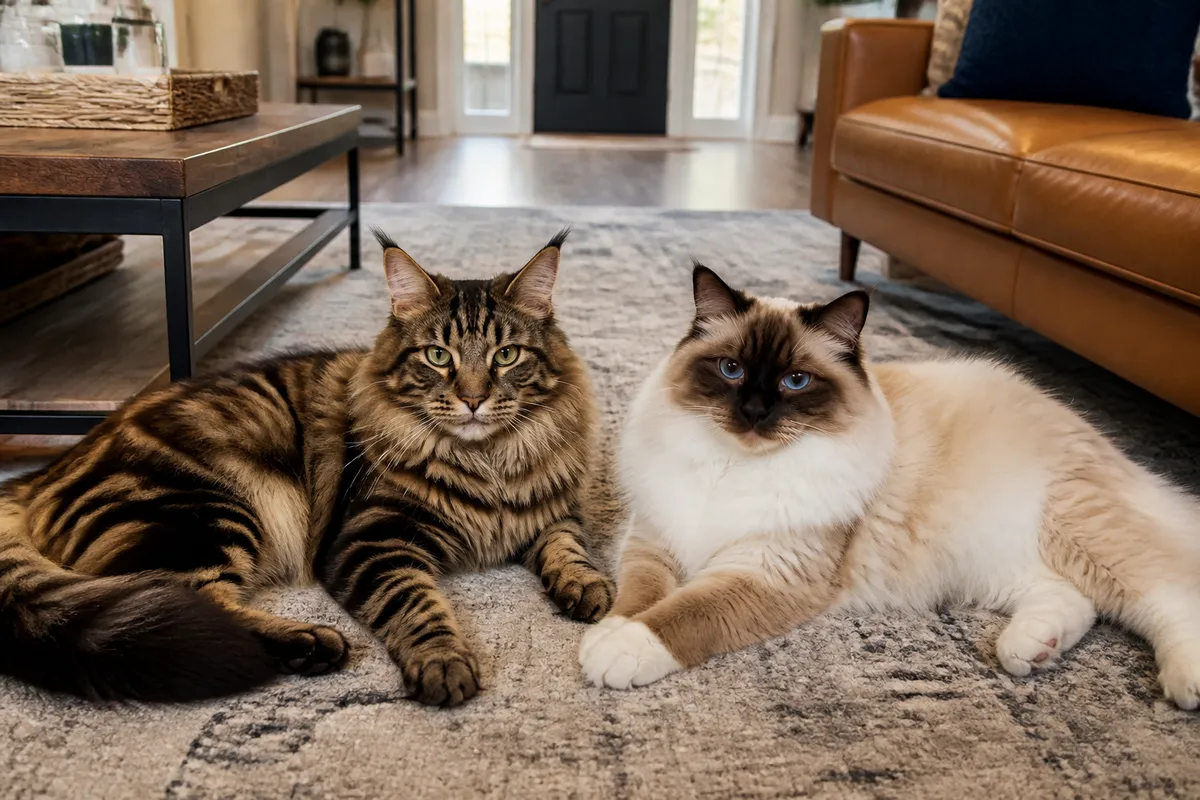
If you want a large, laid-back cat, the classic choices are the Maine Coon, Ragdoll, Norwegian Forest Cat and Siberian. All four are slow to mature, often taking three to five years to reach full size, and all are known for being friendly with families and other pets.
They need bigger gear: an extra-large litter box, a sturdy, floor-anchored cat tree and a scratching post tall enough for a long stretch. Plan for a bigger food bill, too. The guide to the biggest domestic cat breeds goes deeper on size.
Small and slender cat breeds
At the other end of the scale are fine-boned, lightweight breeds. The Siamese and its relatives such as the Oriental Shorthair are slender and long, and the Singapura is one of the smallest breeds. Small doesn't mean calm: many of these cats are energetic, curious and vocal. The guide to small cat breeds covers them in detail.
Types of cats by coat: longhair, shorthair, curly and hairless
Coat type affects your daily routine more than almost anything else, so it's worth deciding early how much grooming you're willing to do.
- Longhair, high maintenance: the Persian (and its pointed version, the Himalayan) needs daily combing and regular baths.
- Longhair, moderate: the Maine Coon, Norwegian Forest Cat, Siberian and Ragdoll have coats that resist matting better and need combing about one to three times a week, plus more during seasonal shedding.
- Shorthair, low maintenance: the British Shorthair, American Shorthair, Siamese and Bengal need roughly a weekly brush.
- Curly coats: rex breeds such as the Devon Rex, Cornish Rex, Selkirk Rex and LaPerm have wavy or curly fur.
- Hairless: the Sphynx, Peterbald and Donskoy need weekly baths, warmth and sun protection instead of brushing.
- Allergy note: no coat type is truly hypoallergenic, because the main allergen comes from saliva and skin glands.
Colors and patterns are not breeds
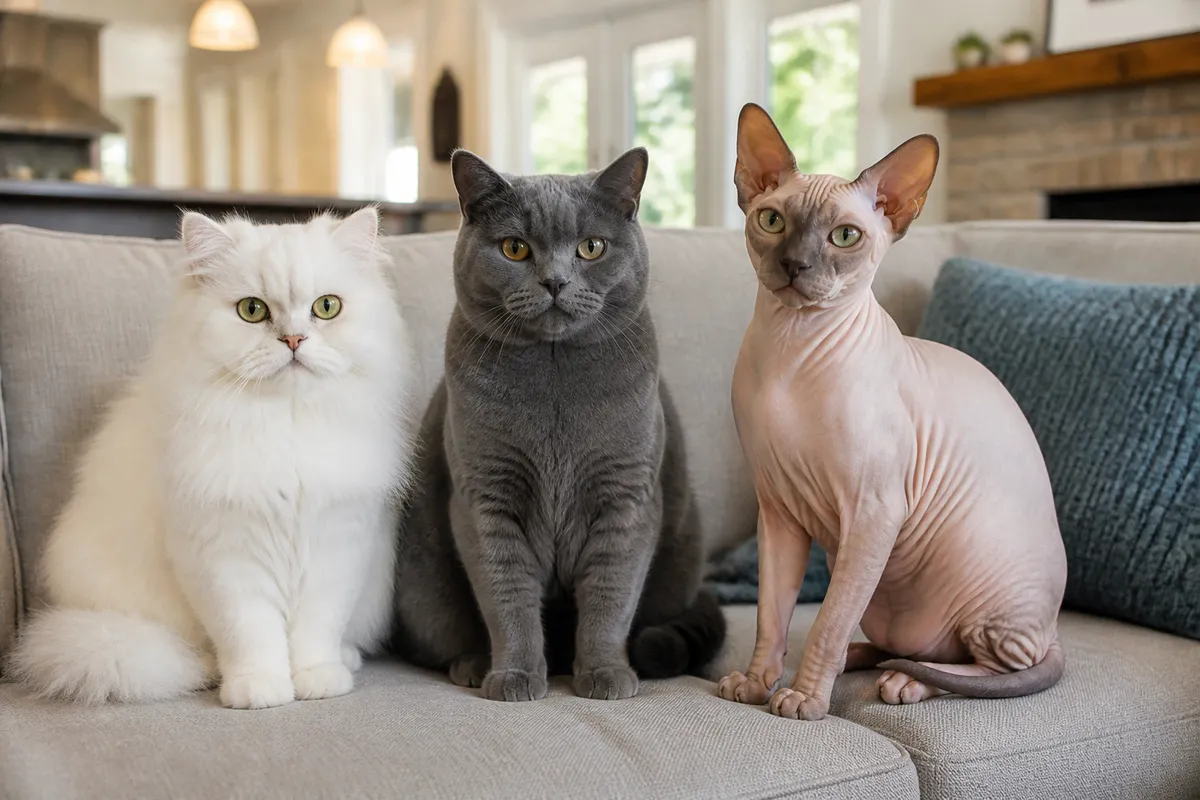
A common mix-up: tabby, calico, tortoiseshell, tuxedo, orange or black describe a cat's coat color or pattern, not its breed. A tabby can be a Maine Coon, an American Shorthair or a shelter domestic shorthair, and most breeds come in many colors. Each of the popular colors and patterns has its own guide.
The same goes for labels like "house cat," "tabby cat" or "tuxedo cat" on adoption listings. They tell you what the cat looks like. To learn what the cat is like, ask the shelter about energy level, how it handles being picked up and how it gets along with other animals and kids. Those answers predict daily life far better than a color or a breed name.
Kinds of cats by personality
Within every breed, cats are individuals, but breed tendencies are real enough to help you choose.
- Calm and quiet: British Shorthair, Persian, Ragdoll. Good for apartments, quieter homes and first-time owners.
- Social and chatty: Siamese and Sphynx. They want company most of the day and will tell you so.
- Active and athletic: Bengal, Abyssinian and other high-energy breeds. Best for owners who enjoy daily play and training.
- Friendly all-rounders: Maine Coon, American Shorthair, Siberian, Norwegian Forest Cat. Usually good with kids and other pets.
- Domestic mixed-breed cats: anything goes, which is why meeting an adult cat at a shelter tells you more than any breed label.
Unusual body types, and why they're debated
Some breeds are defined by a body feature: flat faces (Persian, Exotic Shorthair), folded ears (Scottish Fold), short legs (Munchkin and its crosses), missing or short tails (Manx, bobtails) or no coat at all. International Cat Care lists several of these traits, including flat faces, Scottish Fold cartilage disease, short legs and hairlessness, among inherited problems that can compromise welfare.
That doesn't mean every cat of these breeds is unhealthy, but it does mean you should ask breeders hard questions, choose moderate examples and budget for possible vet care. Each of these breeds has its own guide.
How to choose the right type of cat for you
Start with your life, not the photos. Ask yourself four questions, and the list of suitable types gets short quickly.
- Time: how many hours a day is someone home? Social breeds struggle alone.
- Grooming: will you comb a cat every day, every week or never?
- Space and noise: apartment with thin walls, or a house with room to climb?
- Budget: purchase price, plus gear, food, grooming and possible inherited health issues.
- Then meet adult cats of your shortlisted types, at a breeder's home or a shelter, before deciding.
Frequently asked questions
What are the main types of cats?
Broadly, mixed-breed domestic cats (shorthair, medium hair and longhair) and pedigreed breeds. Breeds are often grouped by size, coat type and temperament, for example large longhairs like the Maine Coon or slender, vocal shorthairs like the Siamese.
What is the most common type of cat in the US?
The domestic shorthair, a mixed-breed cat with a short coat. Among pedigreed cats, VCA names the Siamese, Maine Coon, Persian, Ragdoll and American Shorthair as the most common.
How many different types of cats are there?
It depends on the registry. CFA and TICA each recognize several dozen breeds, their lists differ, and new breeds are added over time.
What type of cat is best for a first-time owner?
Calm, adaptable cats such as the British Shorthair, American Shorthair or Ragdoll are often good starters, as is a friendly adult domestic cat from a shelter whose personality you already know.
How can I tell what breed my cat is?
Only papers from a registry prove a breed. Most cats that resemble a breed are domestic cats. DNA tests for cats can hint at ancestry, but a shelter cat is best described simply as a domestic shorthair or longhair.
What type of cat is best for apartments?
Quieter, moderately active types like the British Shorthair, Persian or Ragdoll usually adapt well. Very vocal or high-energy breeds can work too, but need more play and company.
Sources
- Character and quirks of the 5 most common cat breeds, VCA Animal Hospitals
- Maine Coon breed profile, Cat Fanciers' Association
- British Shorthair breed profile, Cat Fanciers' Association
- Siamese, VCA Animal Hospitals
- Inherited disorders in cats, International Cat Care
- Taming pet allergens: strategies to make furry cats less allergenic, PubMed Central
Last reviewed: November 2026