Himalayan Cat: The Pointed Persian's Looks, Grooming, Health and Price
Cat Breeds 5 min read reviewed November 2026, 5 sources
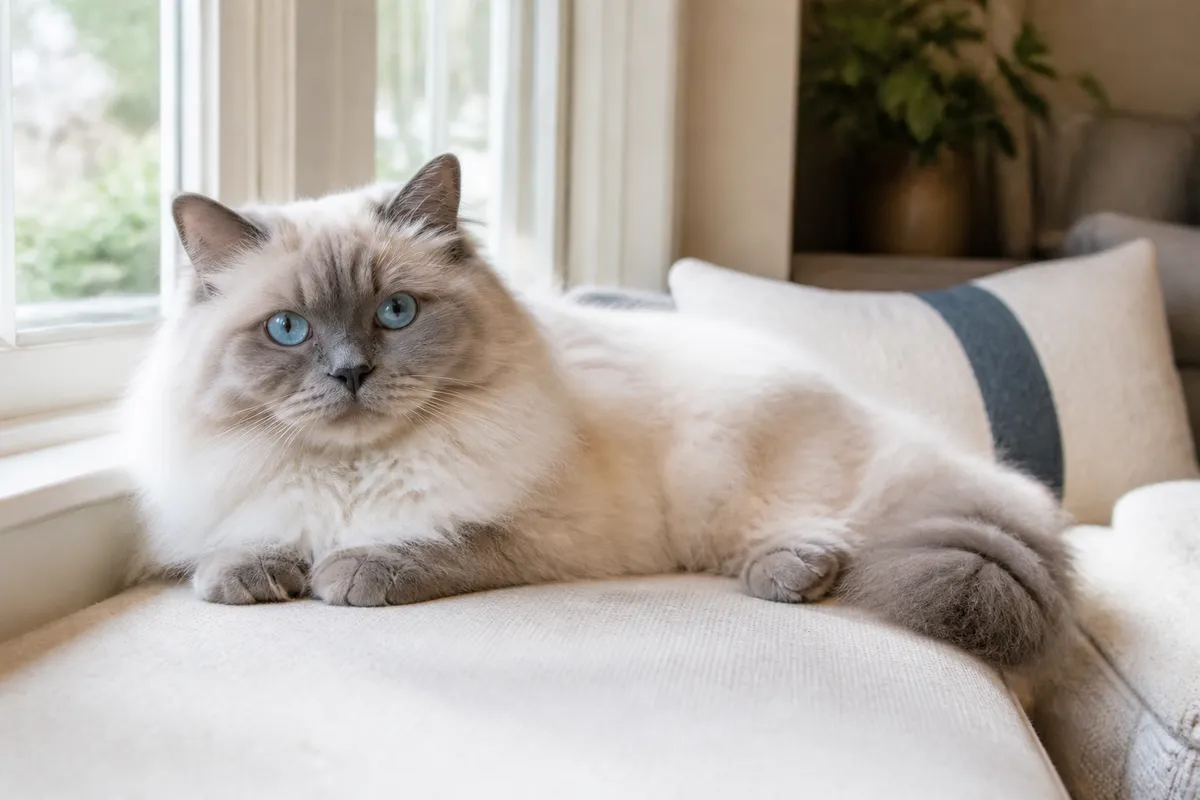
The Himalayan cat is a Persian with Siamese-style color points and deep blue eyes: a long, thick coat, a round face and a gentle, quiet nature. It's one of the sweetest lap companions you can find, but it comes with daily grooming and the health risks of a flat-faced breed, so go in with your eyes open.
Where the Himalayan comes from
Breeders wanted a longhaired cat with Siamese points, so they crossed Persians with Siamese. According to VCA, British breeder Brian Sterling-Webb spent about 10 years developing the look, which the UK's Governing Council of the Cat Fancy recognized in 1955. In 1957, California breeder Marguerita Goforth petitioned the CFA to recognize the Himalayan as a breed.
The first Himalayan earned a CFA grand championship in 1966. In 1984, CFA merged the Himalayan into the Persian breed as a separate color division, which is why you'll hear the cat called a himalayan persian cat or a colorpoint Persian. Some registries still treat it as its own breed.
Himalayan persian cat looks: points, blue eyes and lots of coat
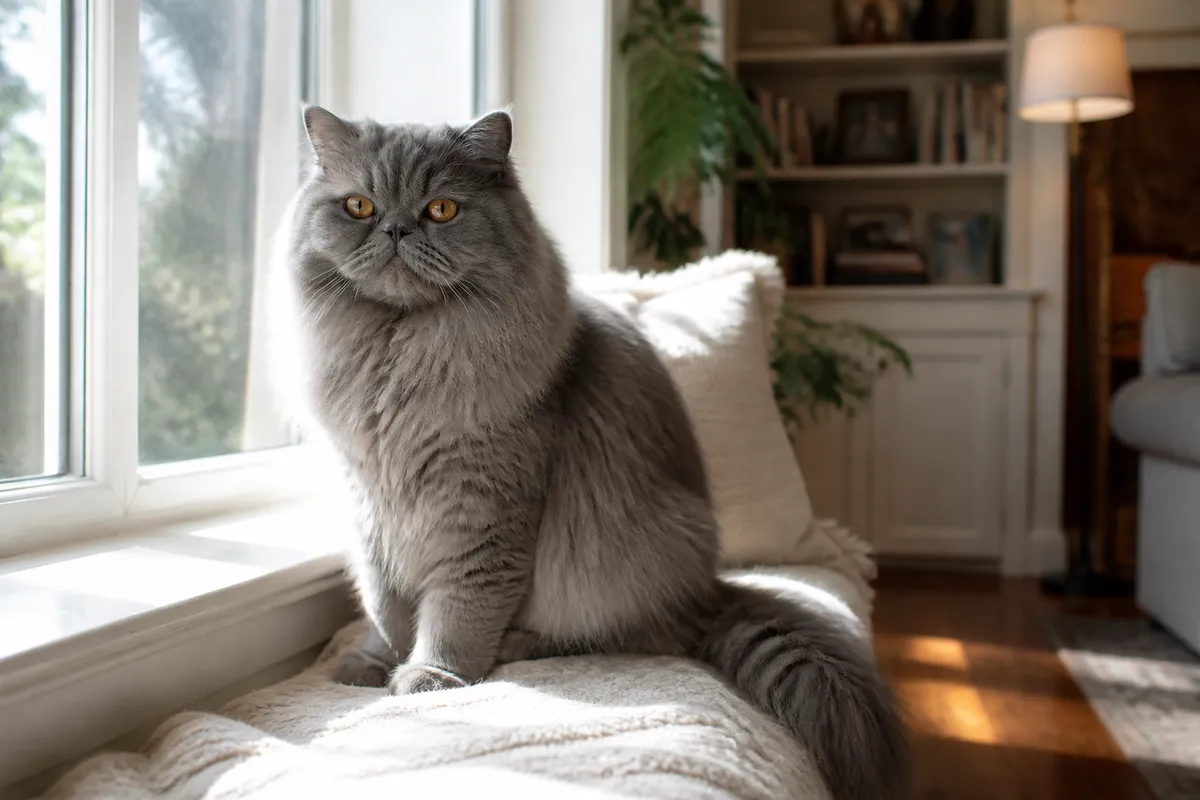
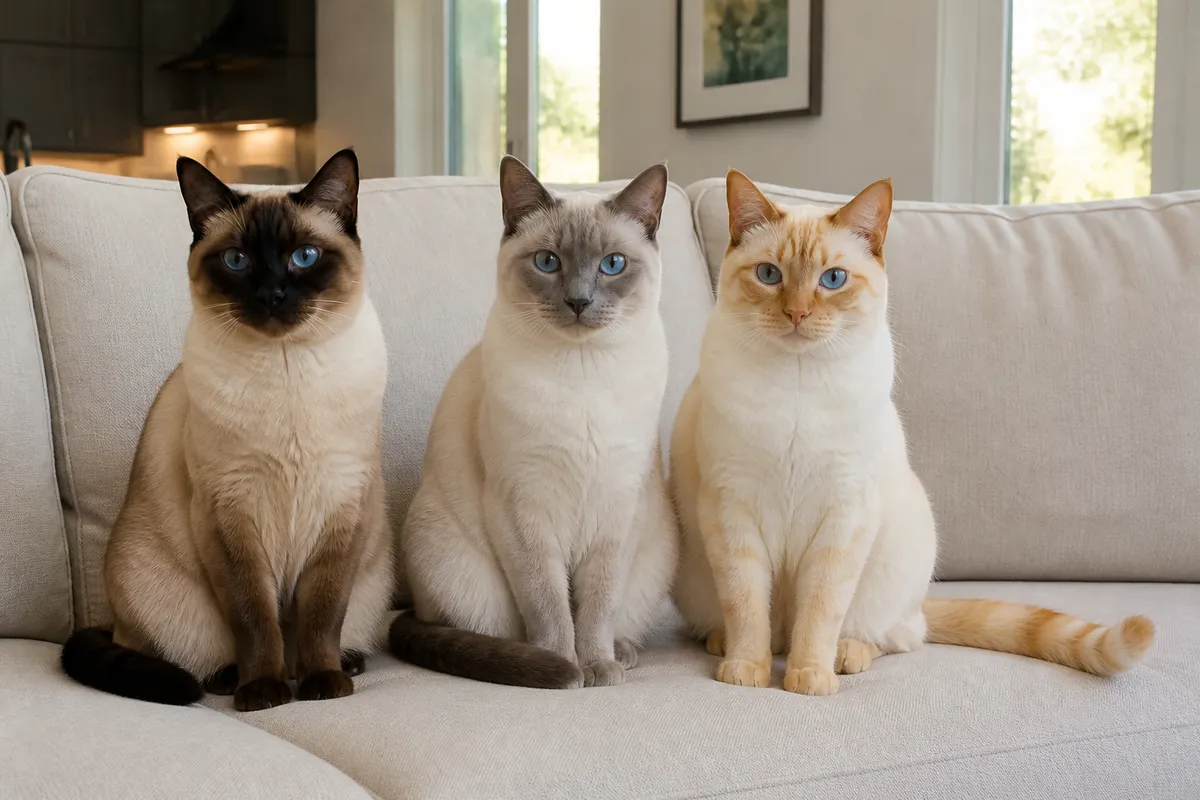
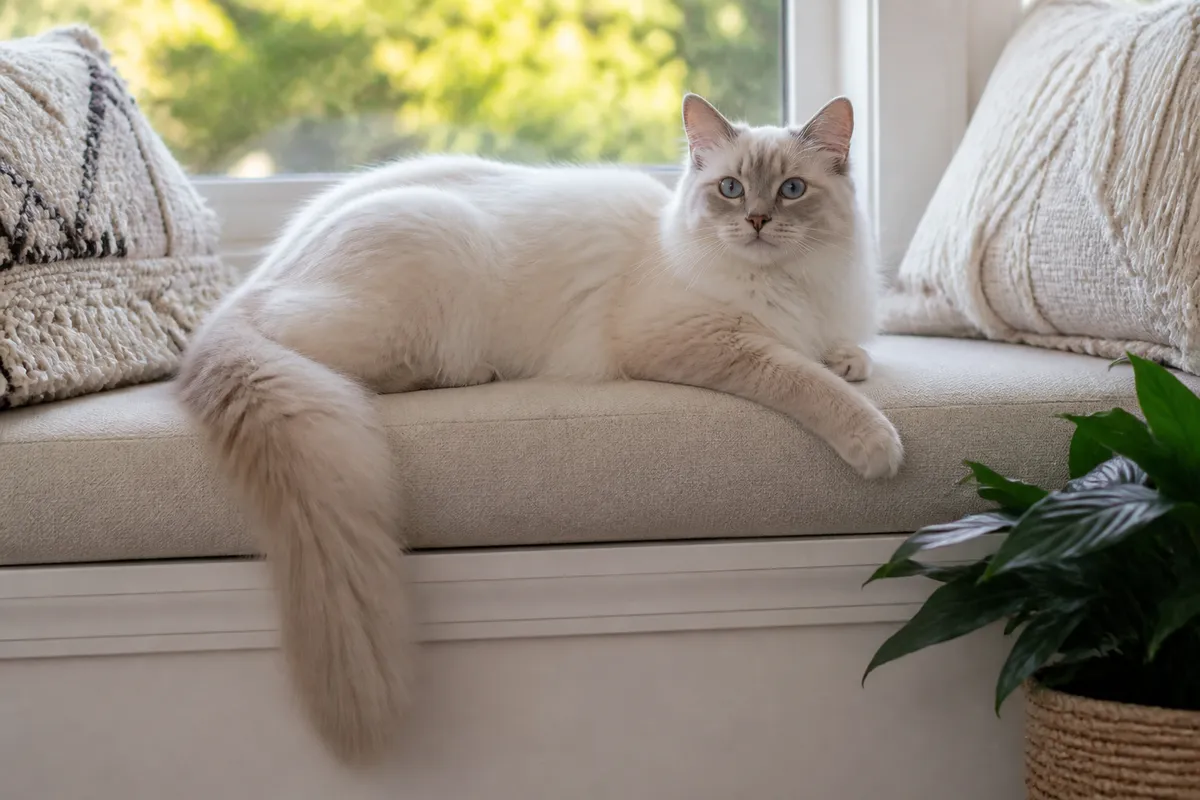
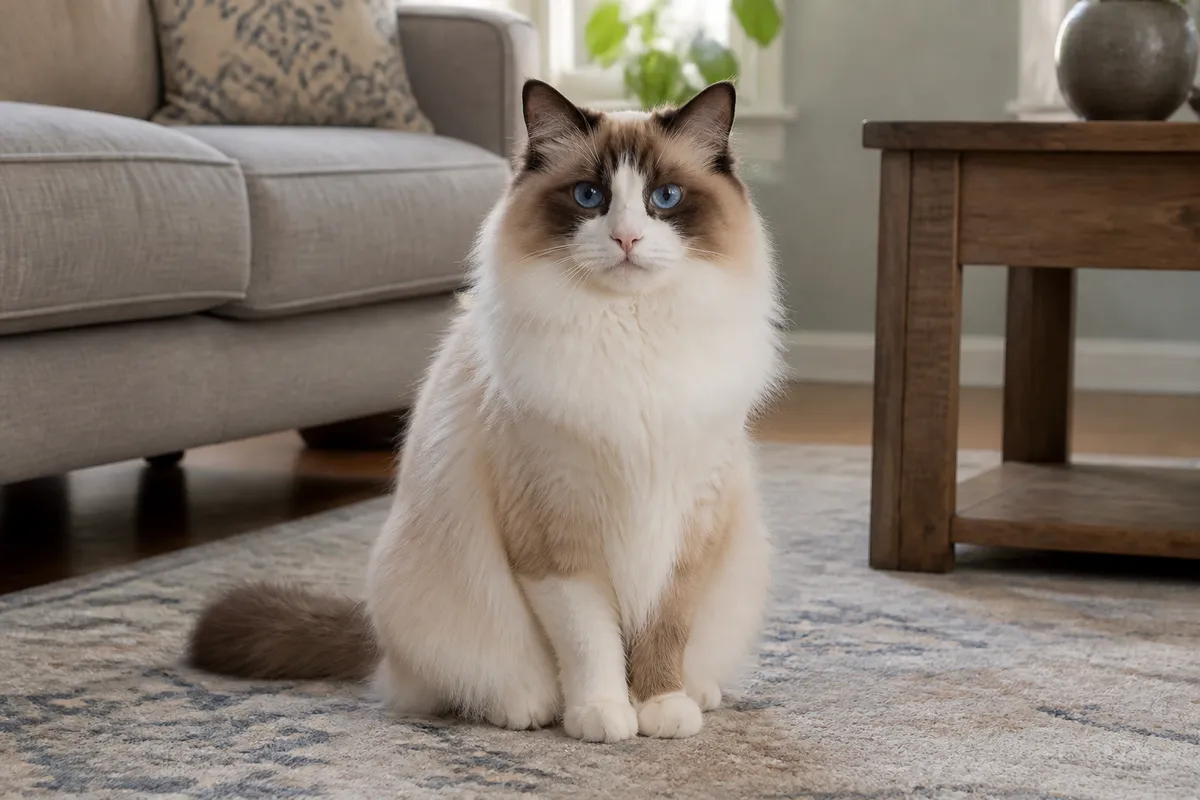
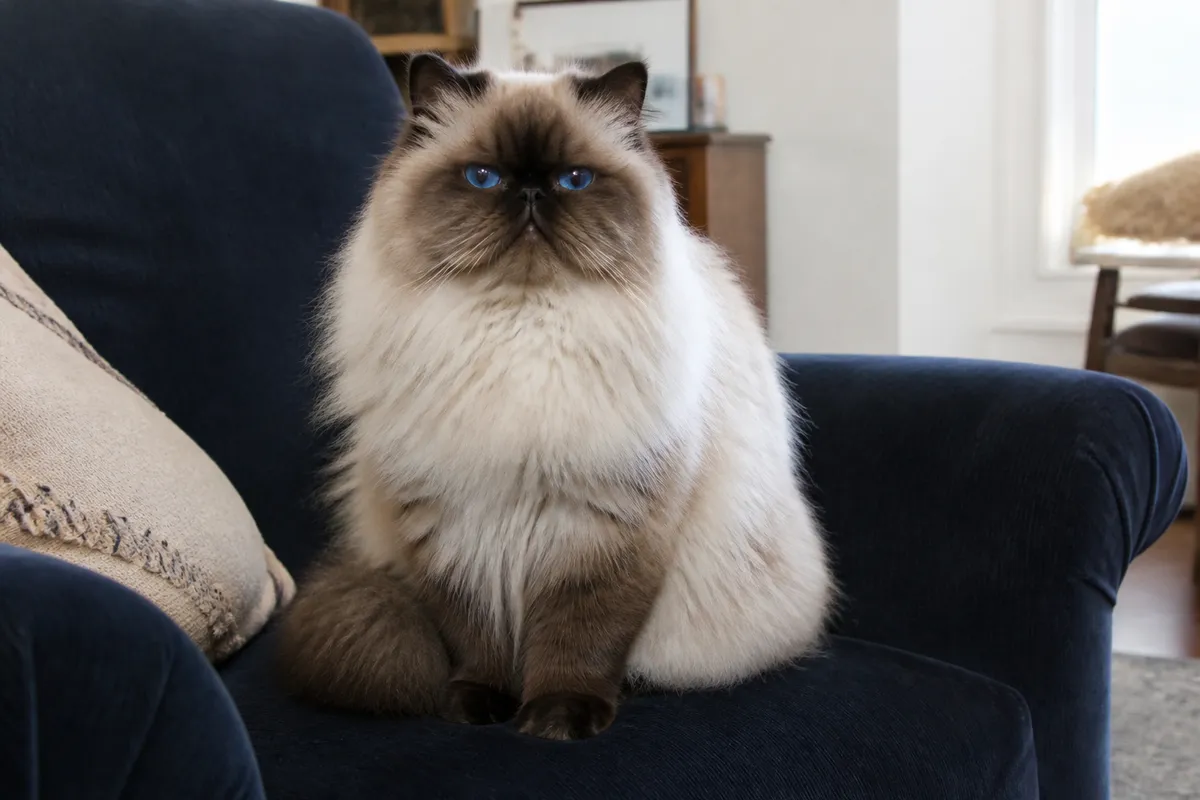
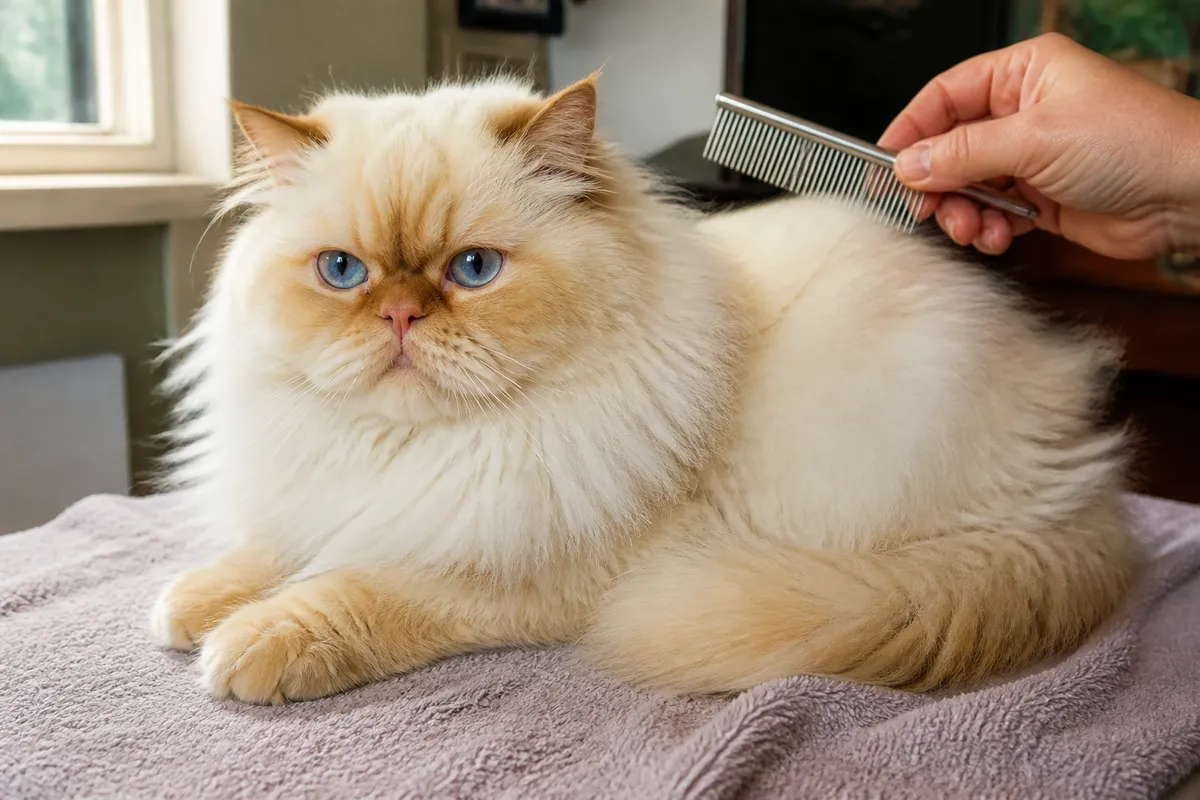
Everything about the Himalayan is Persian except the color pattern. The body is cobby and medium to large, the head round with small ears, and the coat long, thick and fine. The points (ears, face mask, legs, feet and tail) carry the color, while the body stays a lighter, clear shade. CFA requires deep vivid blue eyes in every color.
CFA's Himalayan division includes seal, chocolate, blue, lilac, flame (red), cream and tortie points, among others, plus a lynx (tabby) point pattern. VCA notes flame points and tortoiseshell points are popular looks and lists adults at about 9 to 12 pounds.
| Trait | Details |
|---|---|
| Ancestry | Persian crossed with Siamese |
| CFA status | Color division of the Persian breed since 1984 |
| Weight | About 9 to 12 pounds |
| Lifespan | About 15 to 18 years |
| Coat | Long, thick, fine; daily brushing needed |
| Eyes | Deep vivid blue |
| Temperament | Gentle, quiet, sweet, moderately active |
| Key health topics | Flat-face problems (breathing, eyes, teeth), PKD |
Temperament: calm, gentle and polite
VCA describes Himalayans as gentle, quiet and sweet-tempered, a little more active than Persians and much less so than Siamese. They're intelligent and polite with guests, their voice is soft and melodious rather than demanding, and they get along with other cats and dogs when introduced properly.
Don't expect a climber. VCA notes they prefer to keep four paws on the floor rather than leaping onto bookcases, so a low, wide cat tree or a comfy window seat suits them better than a ceiling-high tower.
They do best in calm homes. A Himalayan is happy to spend the afternoon next to you on the sofa, and a few gentle play sessions with a wand toy keep it fit.
Grooming: the real commitment
This is the part that decides whether a Himalayan is right for you. VCA recommends daily brushing to prevent tangles and mats, and a daily wipe of the face with a damp cloth to prevent tear staining. CFA says owning a Persian means a serious commitment to regular grooming, and also to regular vacuuming.
Use a steel comb with coarse and fine teeth, work through the coat down to the skin, and pay attention to the armpits, belly and the fluffy pants on the hind legs. CFA suggests occasional baths, always after a thorough combing and nail trim. If mats get ahead of you, a professional groomer can help, and some owners choose a short trim; the lion cut article explains that option.
Start daily grooming the week your kitten comes home, keep sessions short and end with a treat. A Himalayan that learns grooming is normal is much easier for the next 15 years.
- Comb daily, all the way to the skin
- Wipe eyes and face daily with a soft, damp cloth
- Check the hind end and keep it clean
- Trim nails every few weeks
- Budget for a professional groomer if you can't keep up
Health: flat faces and PKD
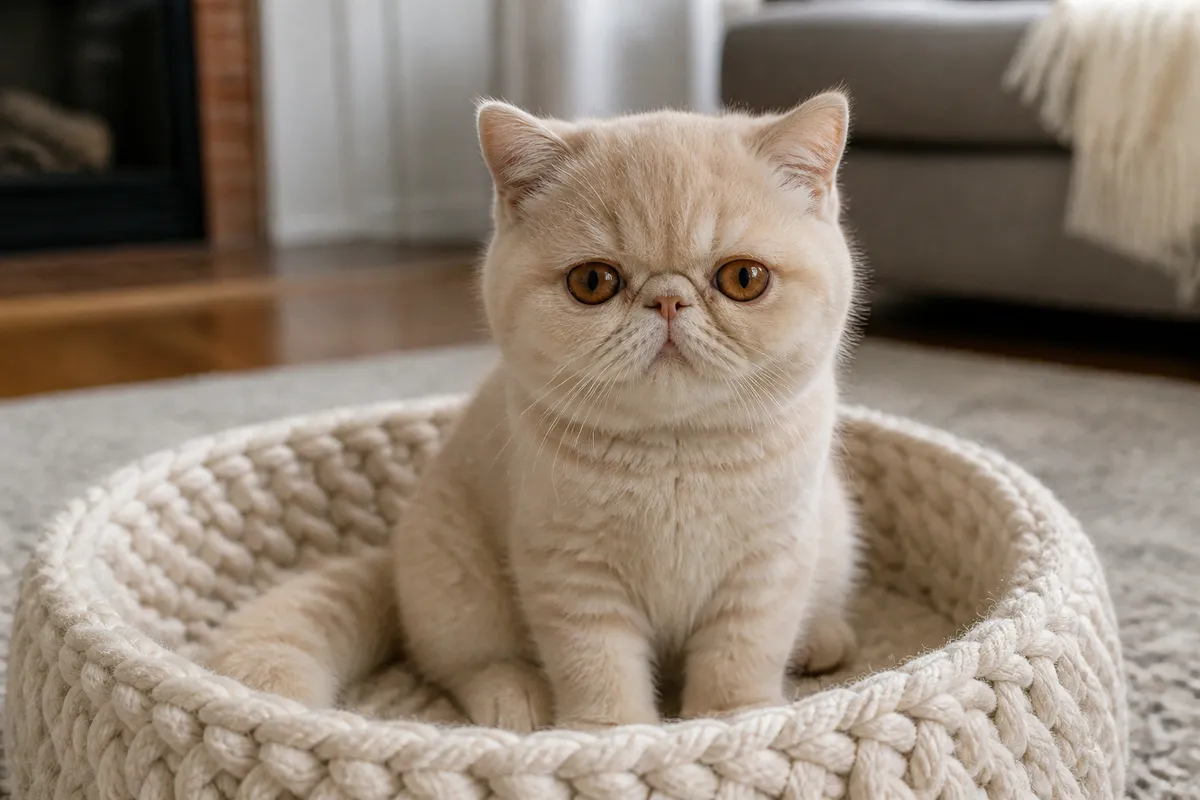
Because Himalayans are Persians, they share the Persian's health risks. International Cat Care explains that flat-faced (brachycephalic) cats commonly have breathing problems from narrow nostrils and airways, eye problems because the eyes are exposed and can't close fully, constant tear overflow that stains the face, dental malocclusion, and skin-fold infections. CFA notes that breeders have worked to remove cats with too-narrow nostrils from breeding programs.
Polycystic kidney disease (PKD) is the other big one. VCA says studies have found it in around one-third of Persian cats and that Himalayans are commonly affected too. It's inherited in a dominant way, so one affected parent can pass it on, and most cats show no signs until around seven years old. CFA reports it's now well controlled through genetic testing and not breeding affected cats.
When you choose a kitten, a moderate face with open nostrils is the healthier choice, and International Cat Care recommends asking the breeder for proof that the parents tested negative for PKD.
- Ask for PKD test results for both parents
- Look for open nostrils and quiet breathing, without snoring at rest
- Check that the eyes are clear, not constantly runny or red
- Plan at least yearly vet checkups, with kidney screening as your cat ages
Himalayan cat price and finding a responsible breeder
There's no reputable current price survey for Himalayan kittens. The CFA's general buying guide names about $300 to $1,500 for pedigreed kittens depending on breed and location. Prices go up with health testing, show quality and in-demand colors; they should also reflect what's included, such as vaccines, spay or neuter and a written health guarantee.
A low price can be expensive later. A kitten from untested parents, or with an extremely flat face, may need costly care for breathing, eyes or kidneys. Follow CFA's advice: visit the breeder's home, meet at least one parent and ask about the guarantee and return policy.
Persian and Himalayan rescues exist across the US, and adult Himalayans often need new homes when owners can't manage the grooming. An adult with a known health history can be a wonderful choice.
Who the Himalayan suits, and who it doesn't
A Himalayan is ideal for calm households, people who enjoy a daily grooming ritual, and anyone who wants a gentle lap cat rather than an acrobat.
It's a poor fit if you don't have 10 to 15 minutes a day for grooming, if long white hairs on dark clothes and sofas would drive you up the wall, or if you want a low-maintenance cat that mostly looks after itself. And it's not a good choice if you're hoping to save money on vet care.
Frequently asked questions
Is a Himalayan a Persian?
In CFA, yes. The Himalayan became a color division of the Persian breed in 1984, so it's a Persian with Siamese-style points and blue eyes. Some other registries list it as a separate breed.
Do Himalayan cats shed a lot?
Yes. The long, thick coat sheds steadily, and without daily brushing it tangles and mats. Expect to vacuum often.
Are Himalayan cats good for first-time owners?
Their calm temperament makes them easy to live with, but the daily grooming and health monitoring take commitment. A first-time owner who's ready for that can do well.
How long do Himalayan cats live?
VCA gives a lifespan of about 15 to 18 years. Choosing a kitten from PKD-tested parents with a moderate face, and keeping up with checkups, gives the best odds.
Why do Himalayan cats have tear stains?
Their flat faces often have narrow or bent tear ducts, so tears overflow onto the fur. A daily wipe with a damp cloth helps, and red, swollen or painful eyes need a vet.
How much does a Himalayan cat cost?
It depends on the breeder, health testing, quality and color. CFA's general guide names about $300 to $1,500 for pedigreed kittens. Always compare what's included, especially PKD testing.
Sources
- Himalayan, VCA Animal Hospitals
- Persian breed profile (Himalayan division), The Cat Fanciers' Association
- Persian cats and brachycephaly, International Cat Care
- Polycystic Kidney Disease in Cats, VCA Animal Hospitals
- Finding the Purr-fect Pedigreed Kitten, The Cat Fanciers' Association
Last reviewed: November 2026