Lynx Point Siamese and Every Other Point Color, Explained
Coat Colors & Patterns 5 min read reviewed November 2026, 5 sources
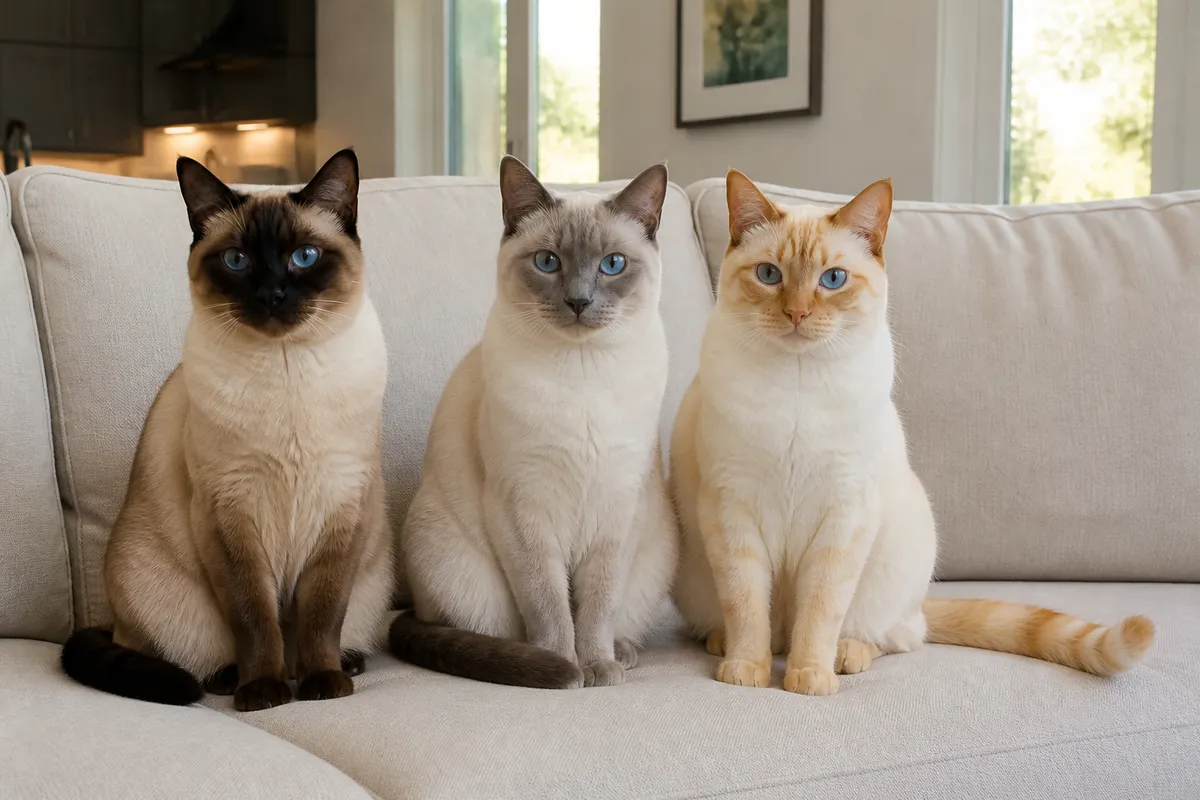
A lynx point Siamese is a pointed cat whose darker face, ears, legs and tail show tabby stripes instead of solid color, and it's one of more than a dozen point colors seen in Siamese-type cats. The four traditional colors are seal, chocolate, blue and lilac; red (flame), cream, tortie and lynx points were added later. All of them share one quirk: the color depends on skin temperature.
Why Siamese cats have points
The pointed pattern comes from a change in the tyrosinase gene (TYR), which makes an enzyme the body needs to produce melanin. The UC Davis Veterinary Genetics Laboratory explains that this Siamese variant makes pigment production temperature-sensitive, so color is restricted to the points and the eyes are blue.
In practice, the enzyme works poorly at normal body temperature and better on cooler skin. North Carolina DNA Day, a university outreach program, notes that the mutated enzyme works best at about room temperature, while a cat's body runs at about 101 to 102 degrees Fahrenheit. The ears, nose, paws and tail are the coolest parts of the body, so that's where pigment builds up.
This also explains why pointed kittens start out almost white. National Geographic describes how kittens develop in the uniformly warm womb and only begin to color in at the extremities after birth, as those areas cool.
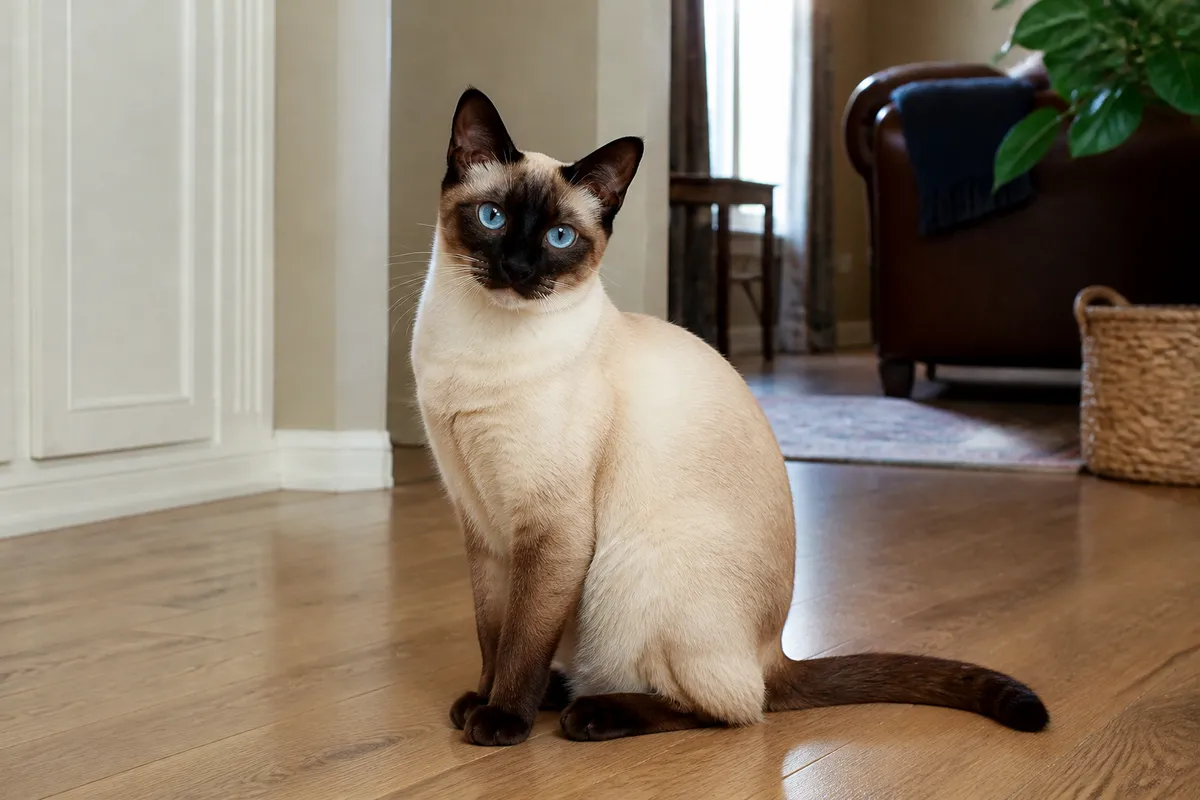
The four traditional colors: seal, chocolate, blue and lilac point Siamese
In the Cat Fanciers' Association (CFA), a Siamese comes in exactly four colors. Seal points were the original and are still the most popular. The CFA recognized blue point in 1934, chocolate point in 1952 and lilac point in 1955.
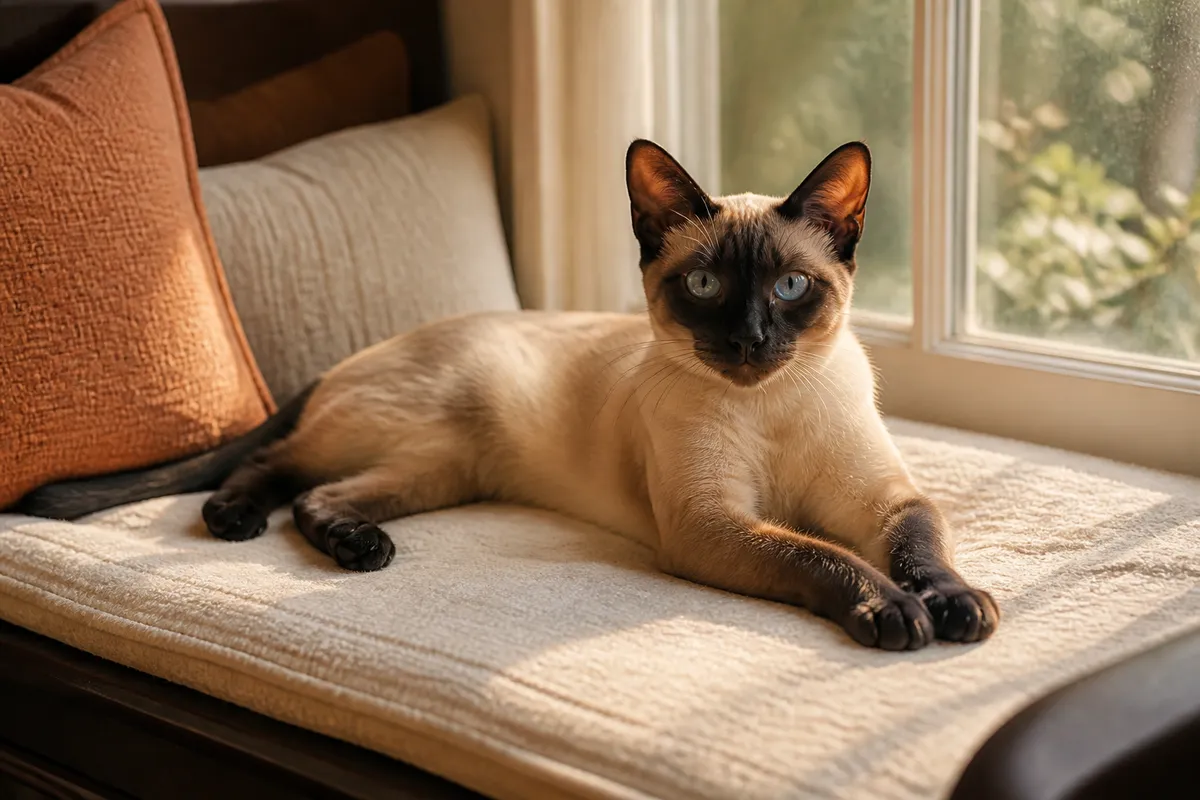
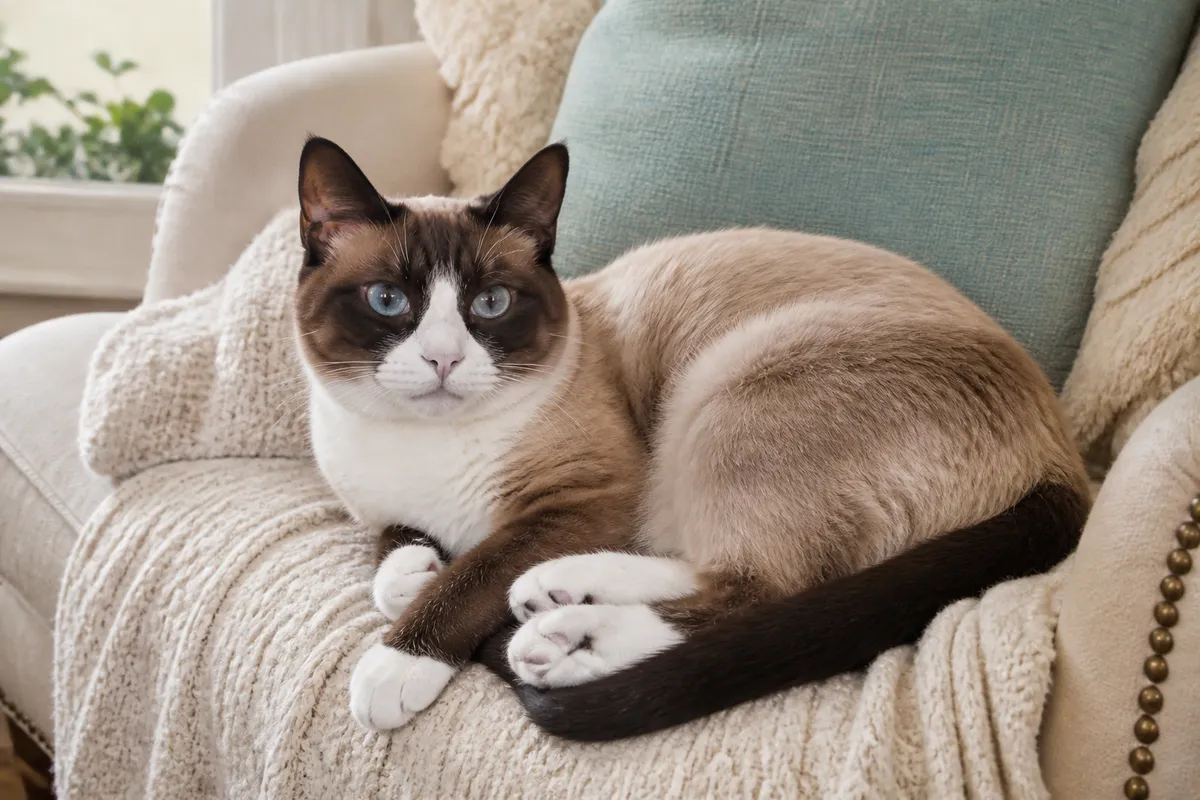
The easiest way to tell them apart is to compare the points with the nose leather and paw pads, which follow the point color. Seal point is the classic "seal point cat" most people picture. Chocolate and lilac are the warmer and paler cousins, and blue point is the cool-toned gray version.
| Point color | Body | Points | Nose and paw pads |
|---|---|---|---|
| Seal point | Pale fawn to cream, warm in tone | Deep seal brown | Same color as points |
| Chocolate point | Ivory, no shading | Milk-chocolate, warm in tone | Cinnamon-pink |
| Blue point | Bluish white, cold in tone | Deep blue (gray) | Slate |
| Lilac point | Glacial white | Frosty gray with a pinkish tone | Lavender-pink |
| Red (flame) point | Clear white | Bright apricot to deep red | Flesh or coral pink |
| Cream point | Clear white | Pale buff cream to light pinkish cream | Flesh to coral pink |
| Lynx point (any color) | Matches base color, may show ghost striping | Tabby bars in the point color | Pink edged in point color preferred |
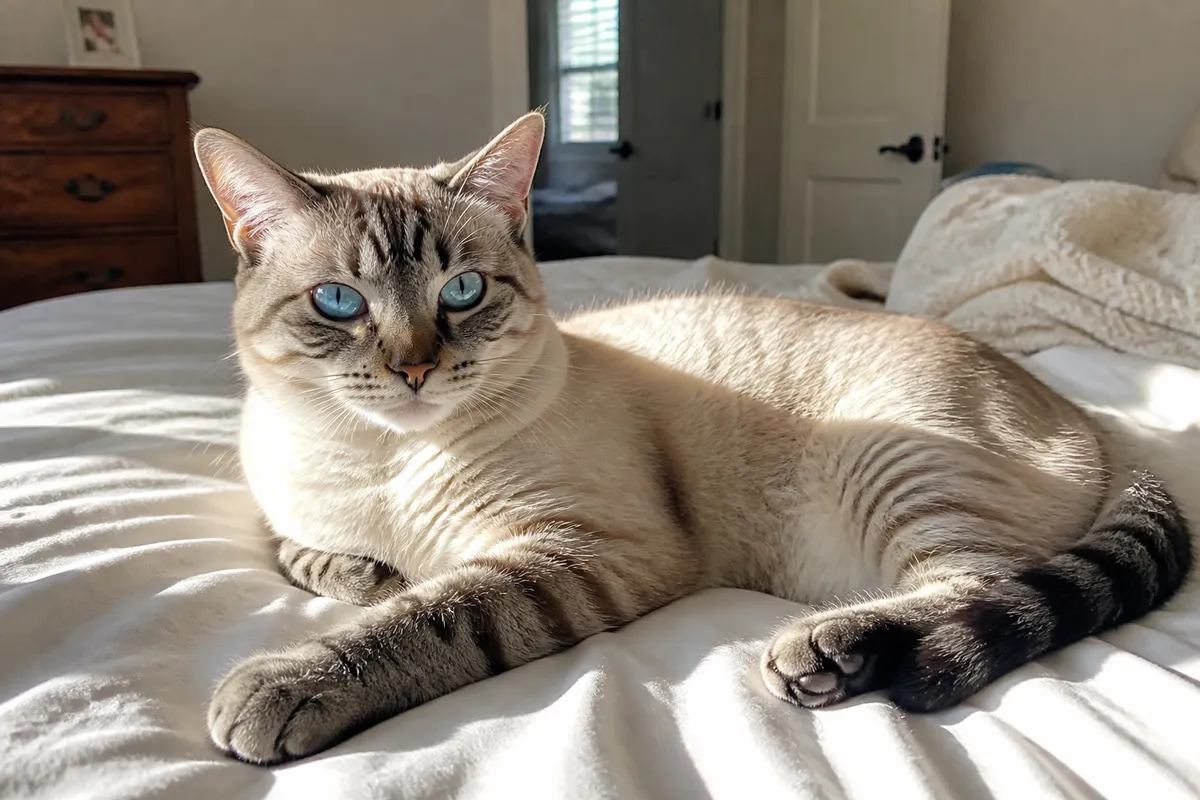
Lynx point Siamese: the tabby-striped version
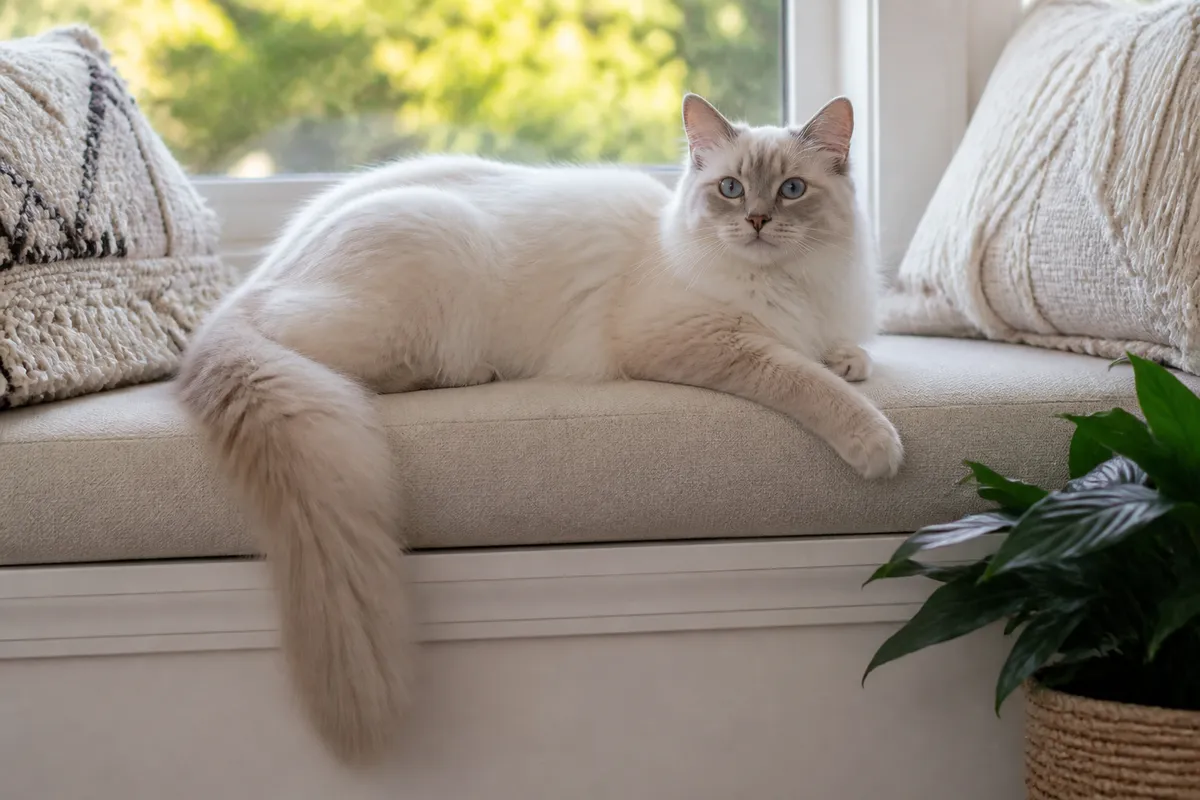
A lynx point is a pointed cat that also carries the tabby pattern. Instead of solid dark points, you see distinct bars of color separated by lighter background on the legs and tail, a striped face, and ears with a paler "thumbprint" in the center. The CFA notes that the tabby markings around the eyes can make lynx points look like they're wearing eyeliner.
According to the CFA, lynx points started in England as "tabby points" and were renamed lynx points when they crossed the Atlantic. Any point color can come in a lynx version: seal lynx, chocolate lynx, blue lynx, lilac lynx, red lynx and cream lynx, plus mixed tortie-lynx versions.
One naming wrinkle: because lynx points aren't one of the four traditional Siamese colors, the CFA registers them as Colorpoint Shorthairs, a breed structurally identical to the Siamese. In everyday life, most owners simply say lynx point Siamese, and the cat won't mind.
Flame point and red point Siamese
Flame point is the popular name for a red point: a white body with points ranging from bright apricot to deep red. The CFA explains that in the mid-1950s, a few breeders mixed the red (orange) gene into the four traditional Siamese colors. Red, cream and tortie points were accepted for registration in the late 1950s and reached championship status in 1964, under the breed name Colorpoint Shorthair.
Because red is the orange gene, the same genetics that make most orange cats male apply here. A female who inherits red on only one X chromosome becomes a tortie point, with points mottled in red or cream. Cream point is the diluted version of red point, with pale buff to pinkish-cream points.
- Red (flame) point: white body, apricot to deep red points
- Cream point: white body, pale cream points
- Seal-tortie, chocolate-tortie, blue-cream and lilac-cream points: points mottled with red or cream
- Red lynx and cream lynx: tabby-striped versions
Why points darken with age and in the cold
Because the enzyme responds to temperature, a pointed cat's coat is never quite finished. The CFA says Siamese and Colorpoint Shorthairs generally darken with age, and that a cat may become darker if it isn't living in a comfortably warm environment.
Scientists confirmed the temperature effect long ago. North Carolina DNA Day describes experiments from the 1930s in which Siamese cats kept in cold rooms grew noticeably darker coats. When researchers shaved a patch and kept it warm under a bandage, the hair grew back lighter. National Geographic notes the reverse happens after surgery: a shaved area can regrow darker because that skin stays cooler while the hair grows back.
So don't panic if your cat's shaved belly comes back with a dark patch after a vet procedure. It usually evens out again as the coat goes through its next cycle.
How to identify your cat's point color
Kitten points can take a while to fill in, so the final color is easiest to judge once the coat matures. Compare in daylight near a window, because warm indoor bulbs can make a lilac look chocolate or a blue look seal. These checks help in the meantime.
- Check the nose leather and paw pads: dark seal brown points to seal, cinnamon-pink to chocolate, slate to blue, lavender-pink to lilac, coral pink to red or cream
- Compare body tone: warm fawn or ivory suggests seal or chocolate, cool bluish or glacial white suggests blue or lilac
- Look for stripes: barred legs, a ringed tail and ear thumbprints mean lynx point
- Look for mottling: random red or cream patches in the points mean tortie point, and the cat is almost certainly female
- Look at the eyes: pointed Siamese-type cats have blue eyes
Points beyond the Siamese
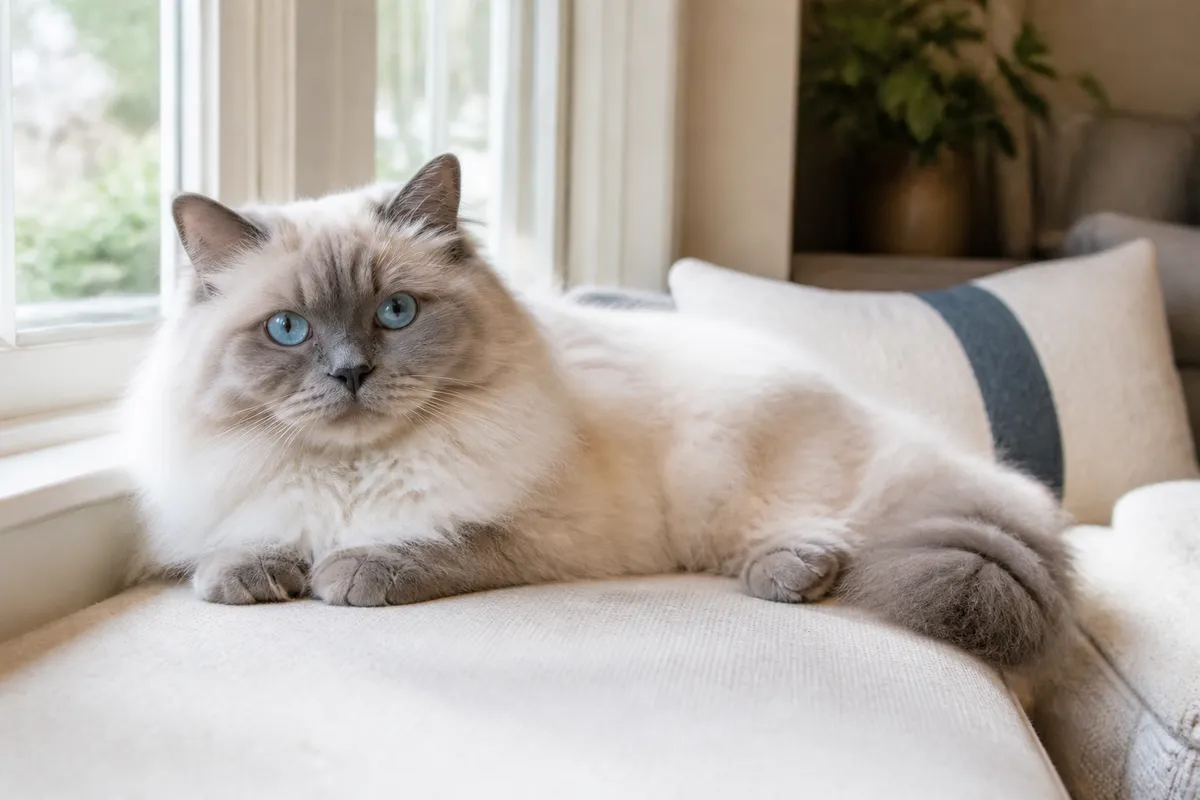
The pointed pattern isn't exclusive to Siamese. Himalayans, Ragdolls, Birmans, Balinese and other breeds also come in pointed colors, and each has its own guide. Domestic cats of mixed ancestry can be pointed too, if they inherit two copies of the Siamese variant.
There's also a close relative of the Siamese gene. The UC Davis Veterinary Genetics Laboratory explains that the Burmese variant of the same gene darkens the points less dramatically, and that a cat with one Burmese and one Siamese copy shows an in-between look called mink. If you're unsure what you have, a coat color DNA panel can tell you.
Frequently asked questions
What is a lynx point Siamese?
A lynx point Siamese is a pointed cat with tabby markings in its points: striped legs, a ringed tail, a striped face and paler thumbprints on the backs of the ears. The CFA registers these cats as Colorpoint Shorthairs, but most owners call them Siamese.
What is the difference between a seal point and a lynx point?
A seal point has solid deep brown points. A seal lynx point has the same brown color, but arranged in tabby stripes with lighter background in between.
Is a flame point Siamese a real Siamese?
In the CFA, red or flame points are a separate breed called the Colorpoint Shorthair, created in the 1950s by adding the red gene to Siamese lines. The body type and personality match the Siamese closely.
Why is my Siamese getting darker?
Siamese generally darken with age, and cooler temperatures make more pigment form. A cat living in a cool home or spending time outdoors in winter may darken more.
Are Siamese kittens born white?
Yes, they're born almost white because the womb is uniformly warm. The points start to color in after birth, beginning at the coolest parts of the body like the ears, nose and tail.
What is the rarest Siamese point color?
Among the four traditional colors, lilac point was the last to be recognized by the CFA, in 1955. Rarity today varies a lot by region and breeder, so ask breeders near you what they actually produce.
Sources
- Colorpoint Restriction, UC Davis Veterinary Genetics Laboratory
- Siamese breed profile and standard, The Cat Fanciers' Association
- Colorpoint Shorthair breed profile and standard, The Cat Fanciers' Association
- How Siamese cats change their colors, National Geographic
- Temperature-dependent coloring in Siamese cats, North Carolina DNA Day
Last reviewed: November 2026