Persian Cat: The Honest Guide to Grooming, Health, Colors and Price
Cat Breeds 5 min read reviewed November 2026, 4 sources
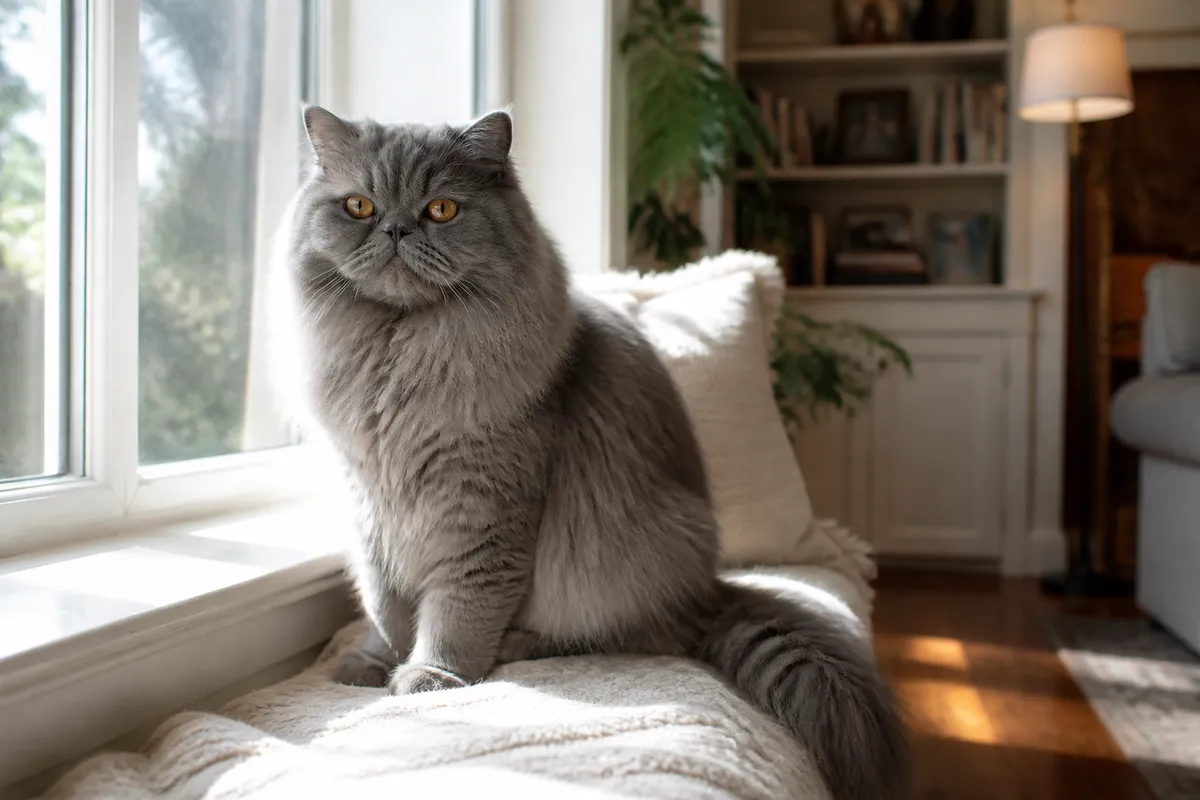
The Persian cat is the long-coated, round-faced aristocrat of the cat world: calm, sweet, devoted and happiest on a soft cushion. It's also one of the most demanding breeds to care for, with a coat that mats without daily combing and a flat face that can cause breathing, eye and dental problems, so choosing a health-focused breeder matters more than color.
Where the Persian comes from
The breed is named after its presumed homeland, Persia (today's Iran), although how it reached Europe isn't certain. In 1626 the Italian traveler Pietro della Valle brought a longhaired cat back to Italy, and European breeders later combined such cats with Turkish Angoras to create a sturdy, short-nosed cat with a dense, silky coat.
Persians dominated the early cat shows and were one of the founding breeds of the Cat Fanciers' Association in 1906. Over the following decades, show breeding pushed the face flatter and flatter, which is the root of many of the breed's health problems today.
What a Persian looks like
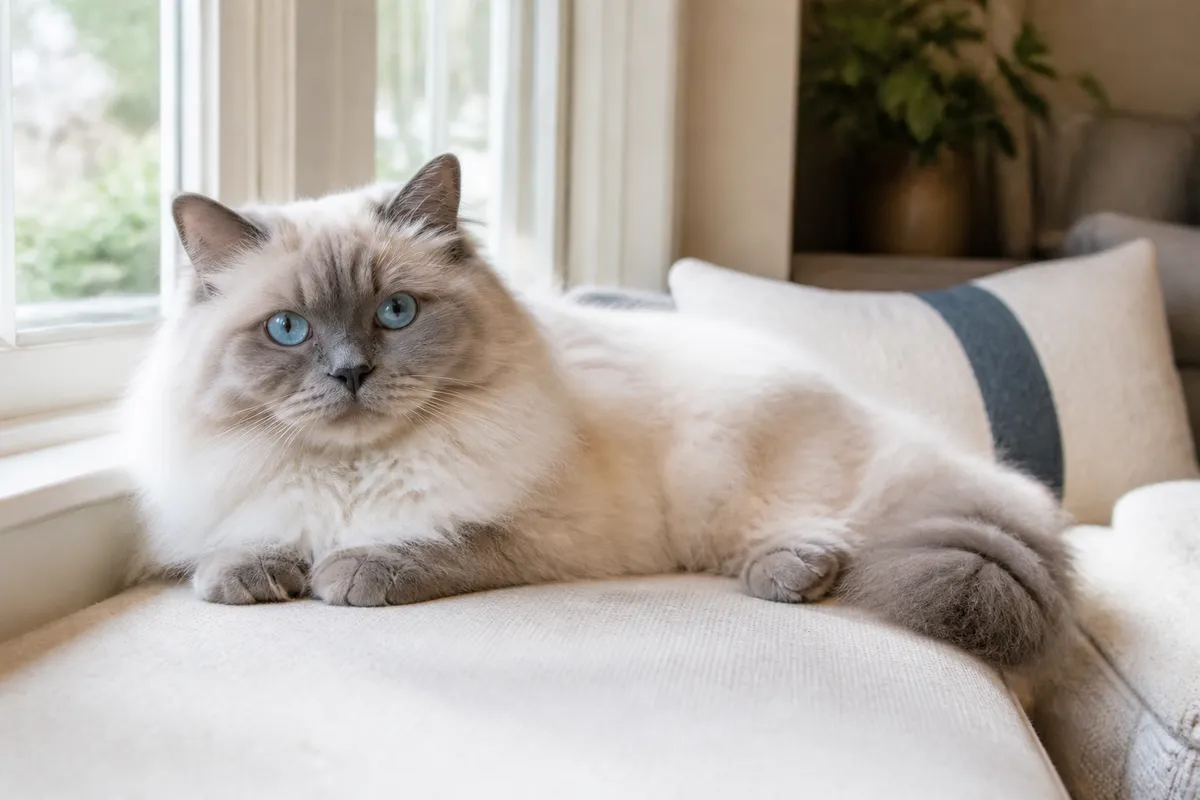
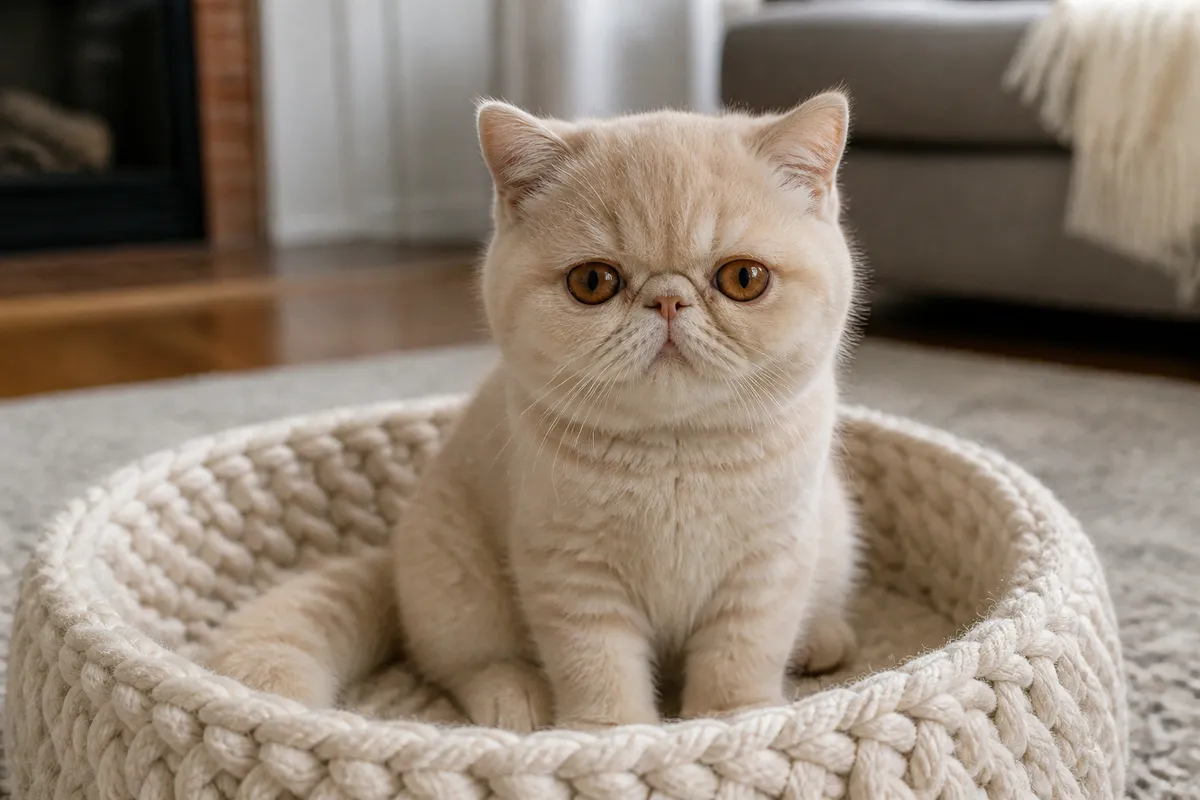
Everything about a Persian is round: a broad head, large round eyes set wide apart, small rounded ears, a short snub nose and a cobby body on short, heavy-boned legs. The long, thick coat stands off the body and forms a full ruff around the neck. Adults usually weigh about 7 to 12 pounds.
How flat the face is varies a lot between lines. Some breeders favor an extreme, "peke-face" look, while others breed a more moderate face with a visible nose, sometimes marketed as "doll face." For a pet, open nostrils and clear, dry eyes matter far more than show points.
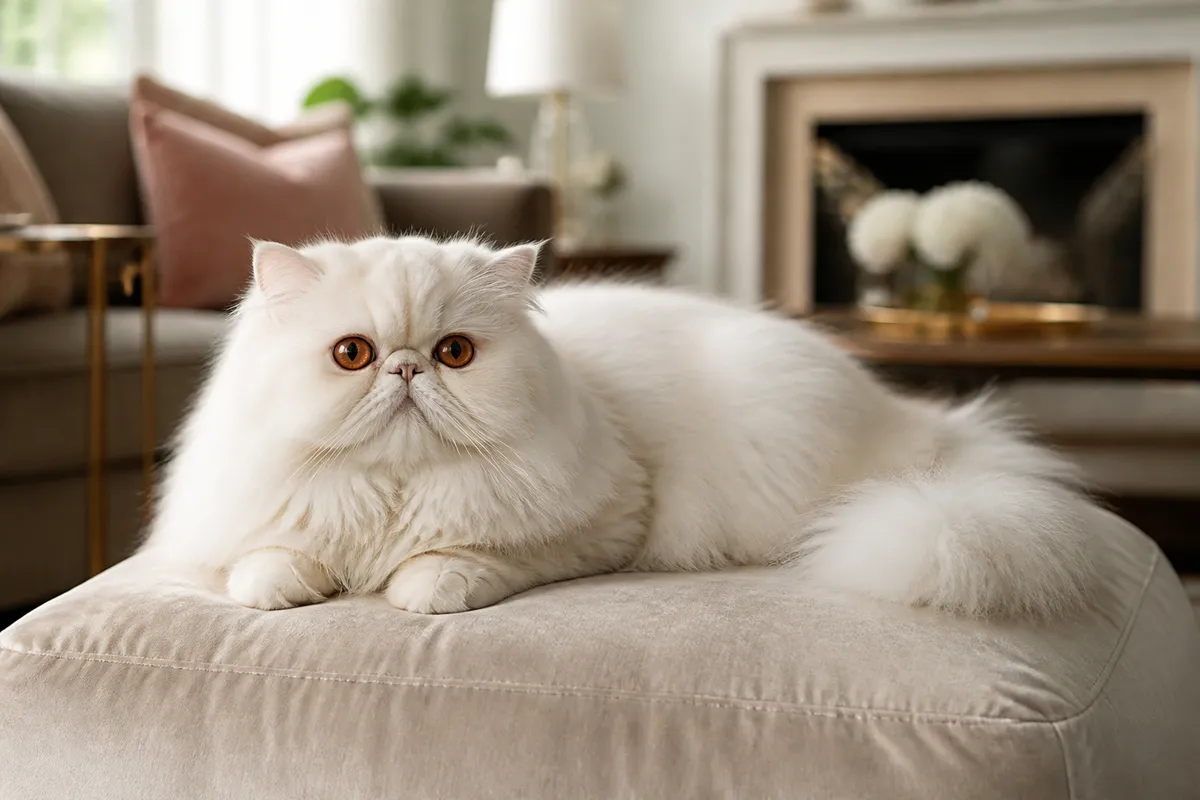
Persian colors: white, black, gray and the chinchilla cat
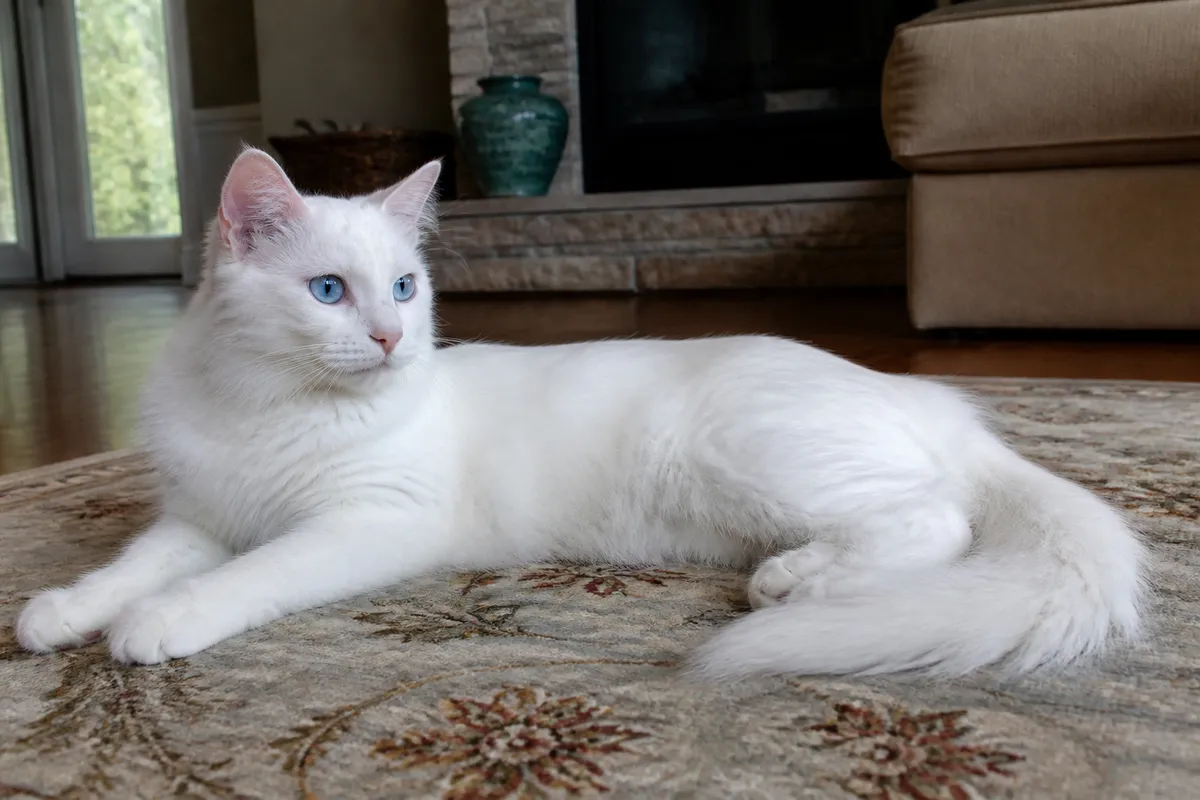
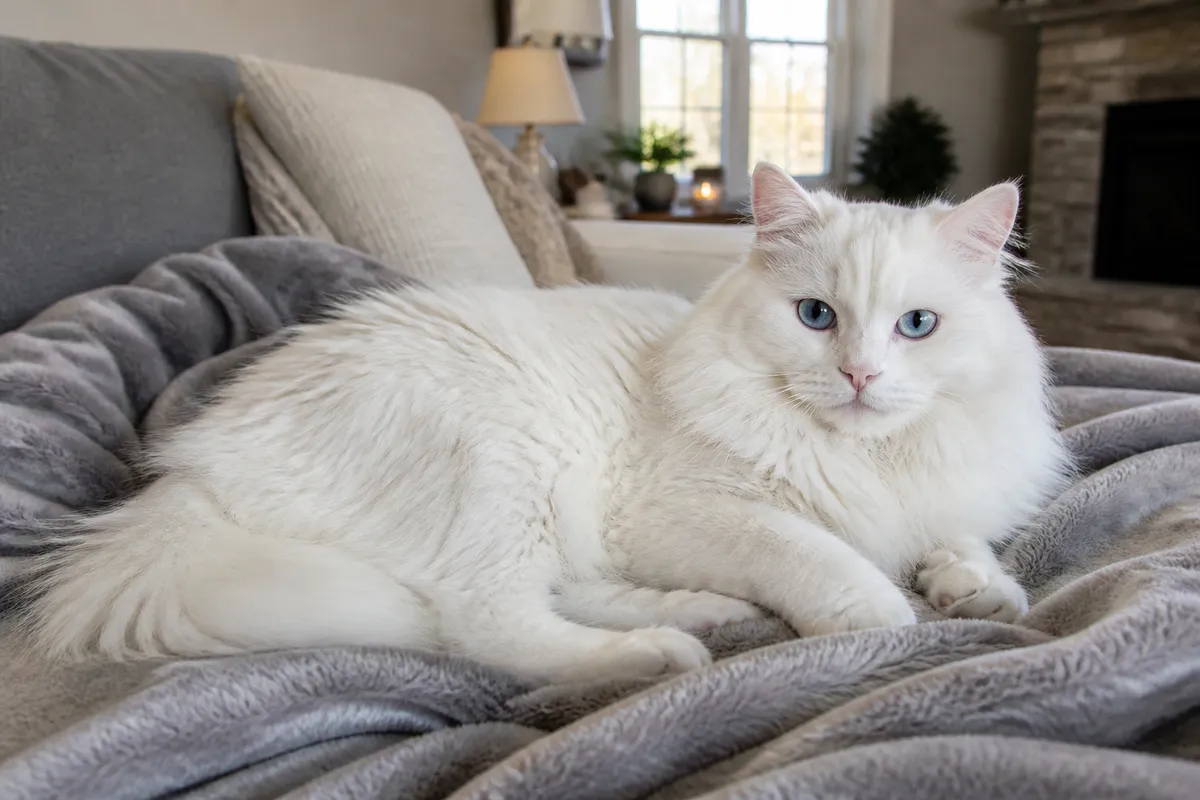
The CFA groups Persian colors into seven divisions, from solids to tabbies and calicos. A white Persian is the classic image, often with blue, copper or odd-colored eyes; blue-eyed Persians are prone to deafness, so ask about hearing. What most people call a gray Persian is a "blue" in breeder language, and a black Persian should be a dense, solid black from root to tip.
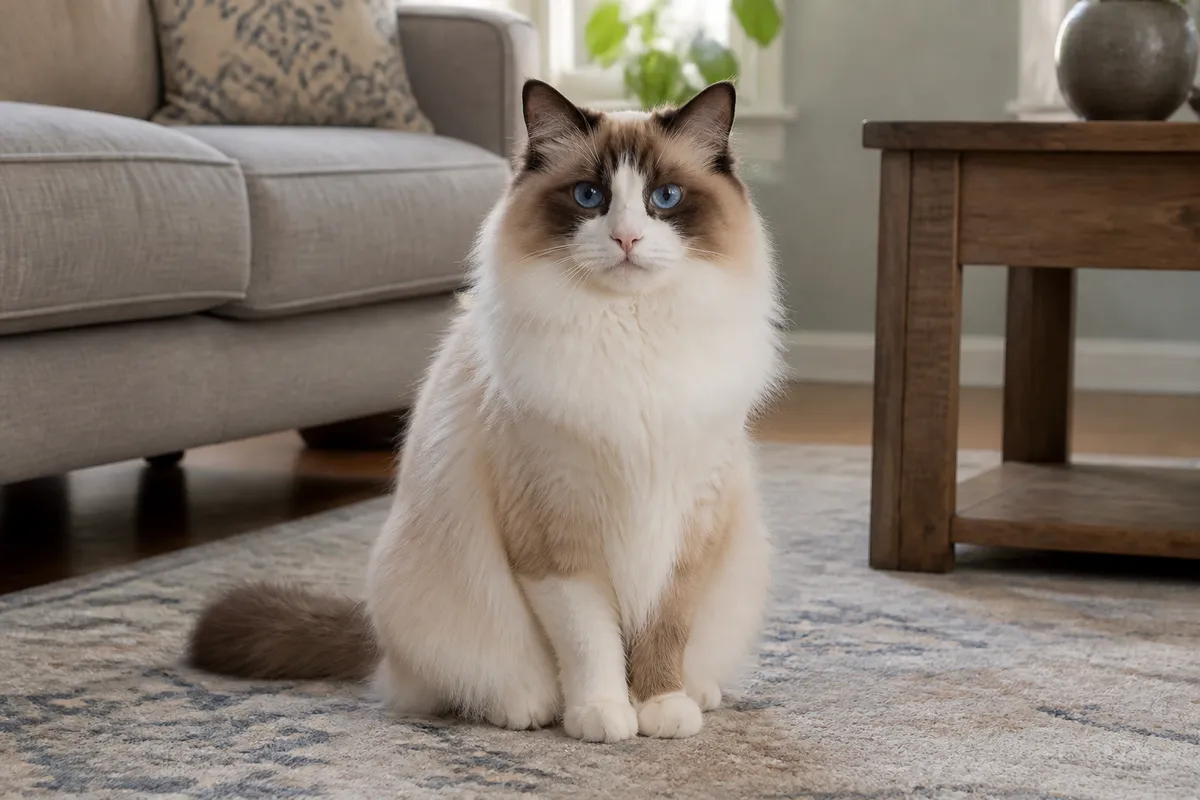
The "chinchilla cat" is a Persian color, not a separate breed: a white coat whose hair tips are dusted with black, giving a sparkling silver look, paired with green or blue-green eyes. Pointed Persians with blue eyes are known as Himalayans, which have their own guide.
| Division | Examples |
|---|---|
| Solid | White, black, blue (gray), red, cream, chocolate, lilac |
| Silver and golden | Chinchilla silver, shaded silver, chinchilla golden, shaded golden |
| Shaded and smoke | Shell and shaded cameo, smoke colors with a white undercoat |
| Tabby | Classic and mackerel tabby in silver, brown, red, blue, cream and more |
| Parti-color | Tortoiseshell, blue-cream, chocolate tortoiseshell, lilac-cream |
| Calico and bicolor | Calico, dilute calico, colors with white |
| Himalayan | Pointed colors with deep blue eyes |
Persian personality
Persians are sweet, affectionate, calm and devoted to their people. They're playful in short bursts but generally placid, prefer floors and laps to the top of the bookshelf and rarely climb curtains. Their voice is quiet and soft.
They thrive in calm homes with predictable routines and don't love surprises, noisy parties or rough handling. That makes them lovely for quiet adults and seniors, and less suited to chaotic households with young kids or boisterous dogs.
Persian grooming: the daily commitment
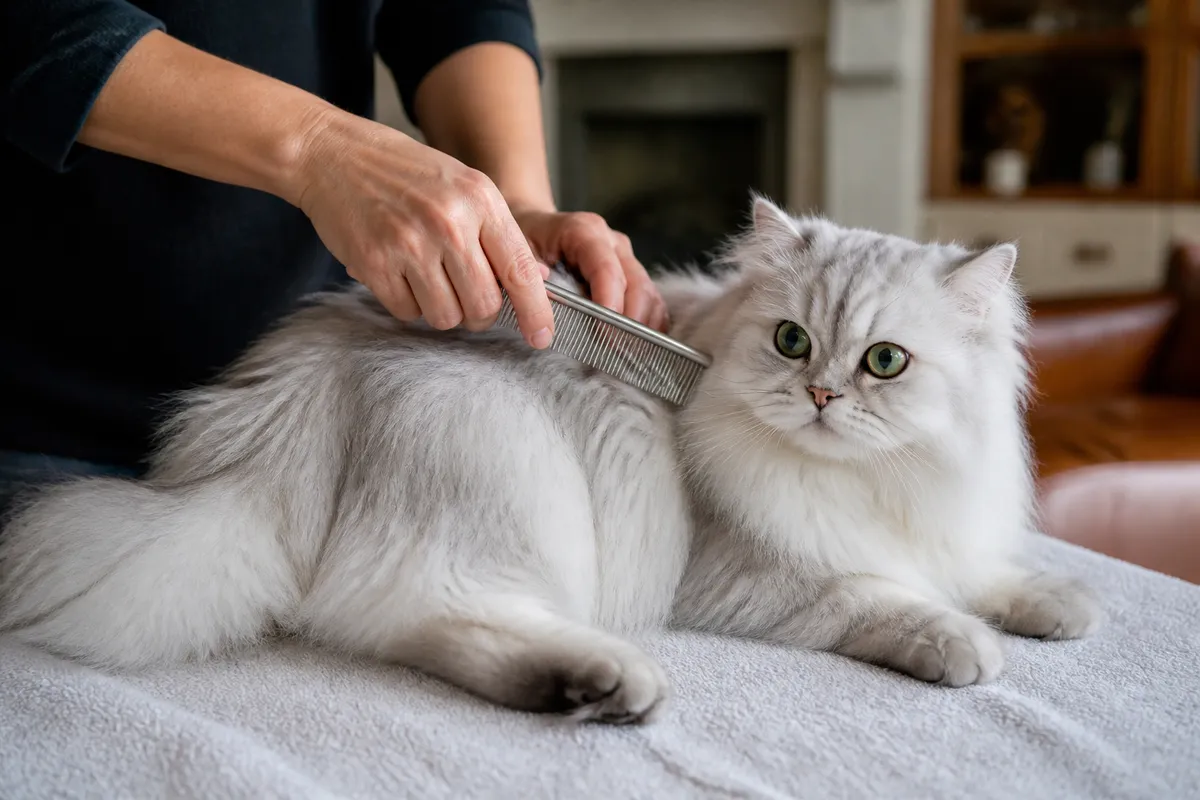
This is the part to take seriously. A Persian's coat tangles and mats quickly, and many owners can't keep it mat-free with occasional brushing. Plan on combing every day with a steel comb, down to the skin, plus regular baths (often monthly) followed by thorough drying and combing. Many owners book a professional groomer every few weeks.
The face needs daily attention too. Tears overflow because of the flat face, so wipe the eye corners and the fold beside the nose with a soft, damp cloth. The area under the tail can collect feces in the long hair and needs regular checks and trimming.
Start grooming routines in kittenhood. A Persian who accepts the comb happily is a gift to everyone involved.
- Daily: comb the whole coat, wipe the eyes and nose folds
- Weekly: check the rear end, trim the hair there if needed, trim nails
- Monthly: bath, then dry and comb completely
- As needed: professional grooming, or a sanitary or lion cut if the coat gets out of hand
Flat-face health problems and PKD
The flat (brachycephalic) face that makes Persians so recognizable comes with real health costs. International Cat Care lists several problems that are common in the breed, and a good breeder will talk about all of them openly.
- Breathing: narrow nostrils, narrow nasal passages and a long soft palate can make breathing hard, a condition called brachycephalic obstructive airway syndrome.
- Eyes: large, protruding eyes may not close fully, which exposes the cornea and contributes to painful eye conditions.
- Tears: deformed tear ducts cause constant runny eyes, staining and sometimes sore, damp skin.
- Teeth: crowded, misaligned teeth can lead to dental disease and trouble eating and grooming.
- Skin folds: deep facial folds can trap moisture and lead to skin infections.
- Polycystic kidney disease (PKD): inherited kidney cysts that once affected over a third of Persians. DNA testing has brought it under much better control, so ask for proof of negative tests for both parents.
Persian kittens for sale: price and breeder checks
Persian kitten prices vary by color, face type, show or pet quality, breeder and region, and there's no official figure. A cheap price often means skipped PKD testing or a kitten taken from its mother too young.
Ask to meet the parents and watch how they breathe at rest. Noisy breathing, constant eye discharge or a nose you can't see are warning signs. The CFA recommends kittens go home at 12 weeks at the very least, ideally 16, and warns against sellers with many litters, very young kittens, large nonrefundable deposits or pressure to ship.
- Negative PKD DNA tests for both parents
- Parents with open nostrils, quiet breathing and clean eyes
- Vaccination and vet records and a written health guarantee
- A visit in person or a live video call with the kitten and mother
- Breed rescues and shelters: Persians are often surrendered when owners can't keep up with grooming
Who a Persian suits, and who it doesn't
A Persian suits calm households, people who are home a lot and enjoy a grooming ritual, and owners who want a gentle, low-energy companion. It's a poor fit if you don't have time to comb a cat every day, if your budget can't absorb grooming and possible eye, dental or breathing care, or if your household is loud and busy. If you love the face but not the coat, the Exotic Shorthair is the short-haired version.
Frequently asked questions
How much does a Persian cat cost?
Prices vary widely by color, face type, breeder and region, and there's no official figure. Health testing for PKD and good early care add cost. A very cheap Persian is a reason to ask more questions, not fewer.
What is a chinchilla cat?
In the cat world, "chinchilla" is a Persian color: a white coat with black-tipped hairs that look silver, plus green or blue-green eyes. There's also a golden version with warm cream tones.
Do Persian cats need to be groomed every day?
Yes, in practice. Their long, dense coat mats quickly, and their eyes need daily wiping. Many owners add regular baths and professional grooming.
Are Persian cats healthy?
Many live long lives, but the breed has known problems: breathing difficulties, eye and tear issues and dental crowding from the flat face, and inherited kidney disease (PKD). Choosing a breeder who tests for PKD and favors a less extreme face makes a big difference.
Are white Persian cats deaf?
Not all, but blue-eyed white Persians are more prone to deafness. Ask the breeder whether the kitten's hearing has been checked.
Are Persian cats good with kids?
They can be gentle with calm, respectful kids, but they dislike noise, chaos and rough handling. They're usually happiest in quieter homes.
Sources
- Persian breed profile, Cat Fanciers' Association
- Persian, VCA Animal Hospitals
- Persian cats and brachycephaly, International Cat Care
- Could This Kitten Be A Scam?, Cat Fanciers' Association
Last reviewed: November 2026