Angora Cat: The Turkish Angora, Its History and Temperament
Cat Breeds 5 min read reviewed November 2026, 5 sources
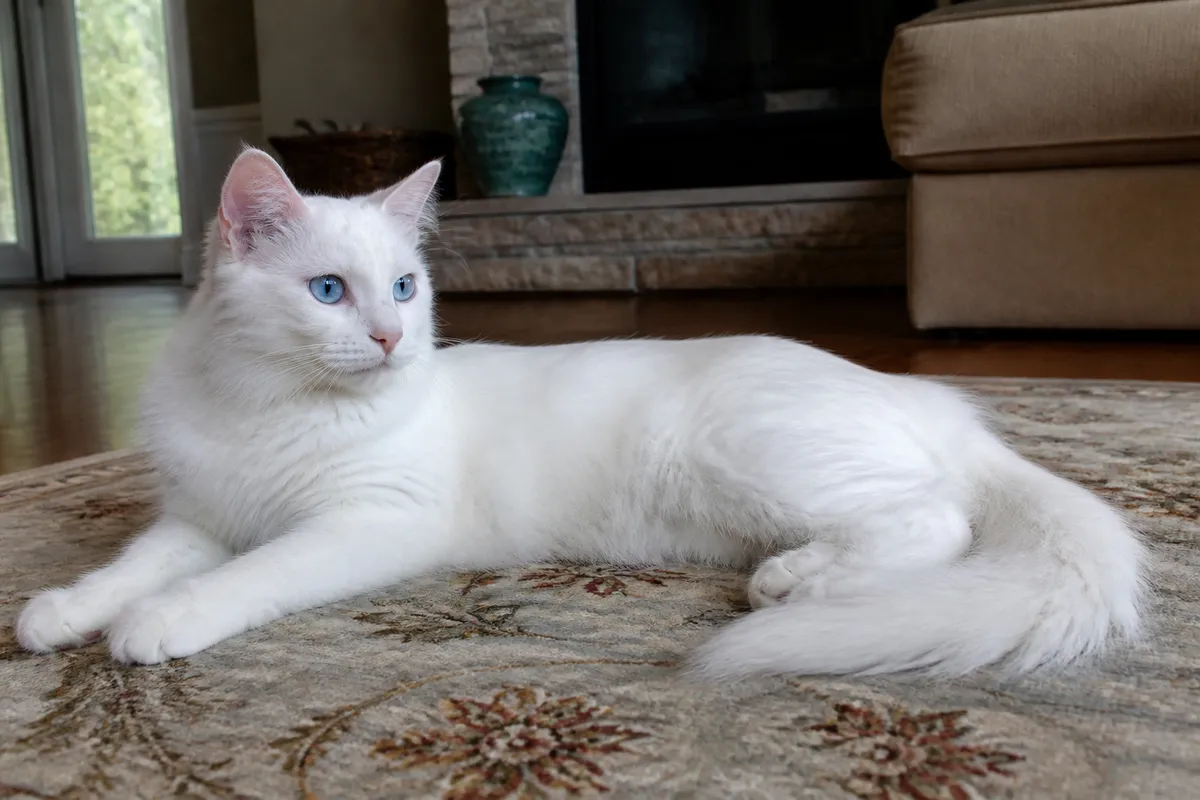
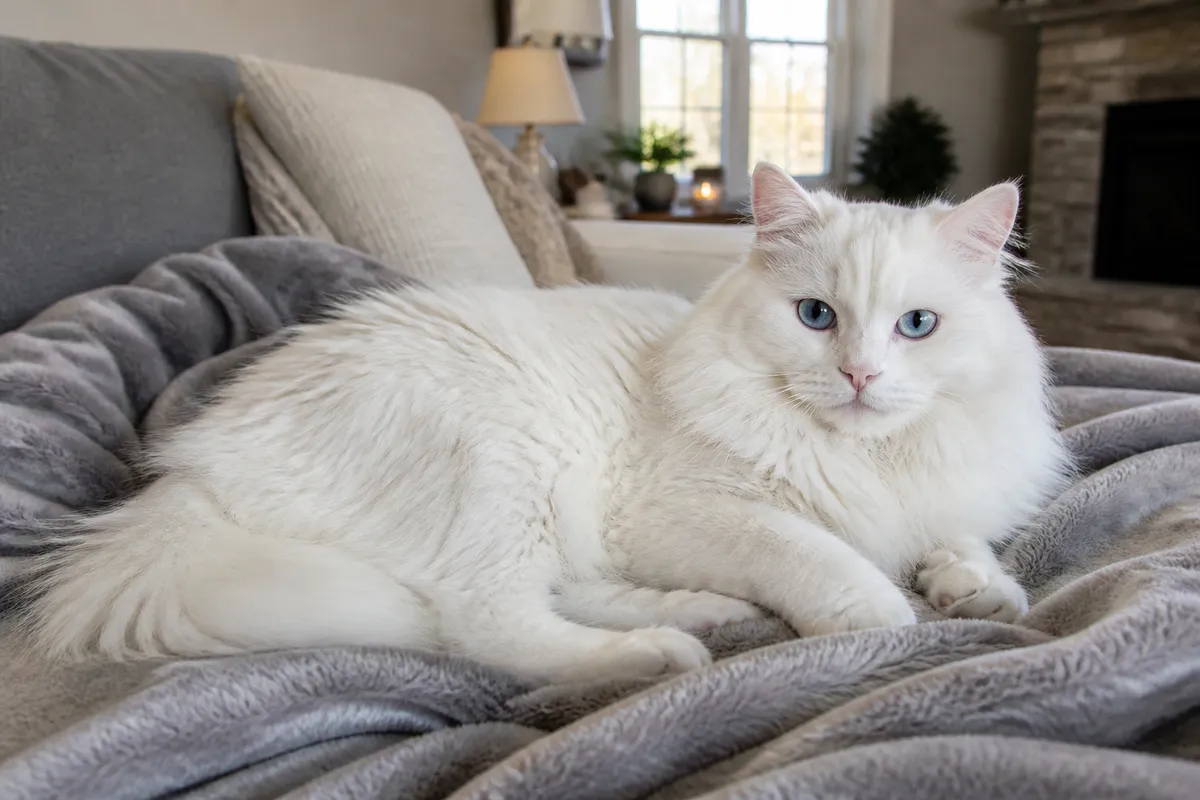
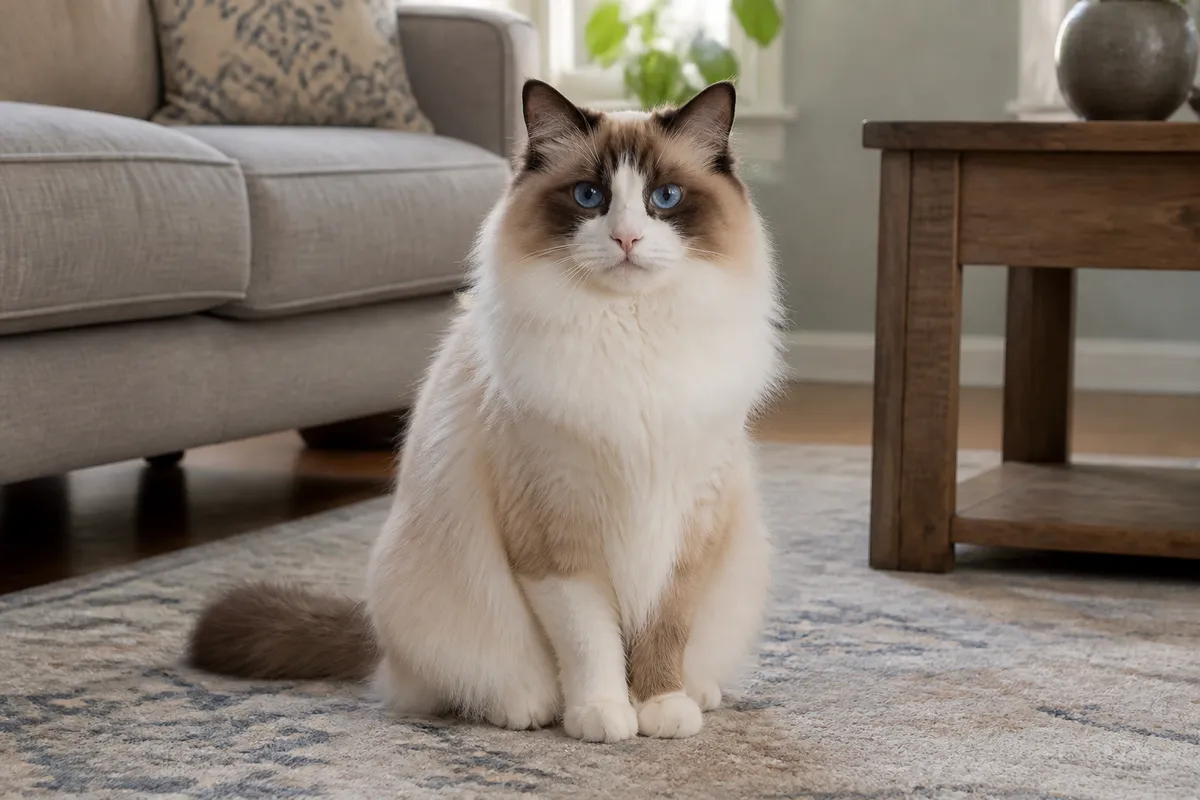
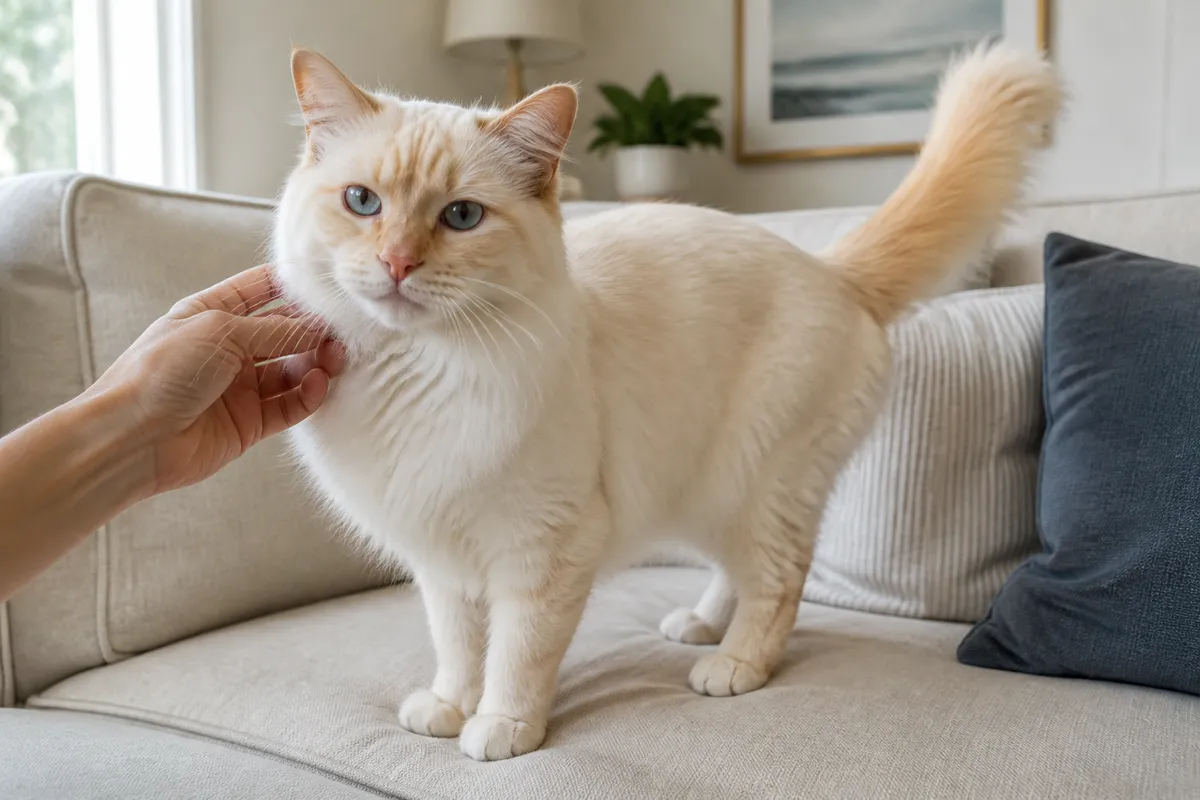
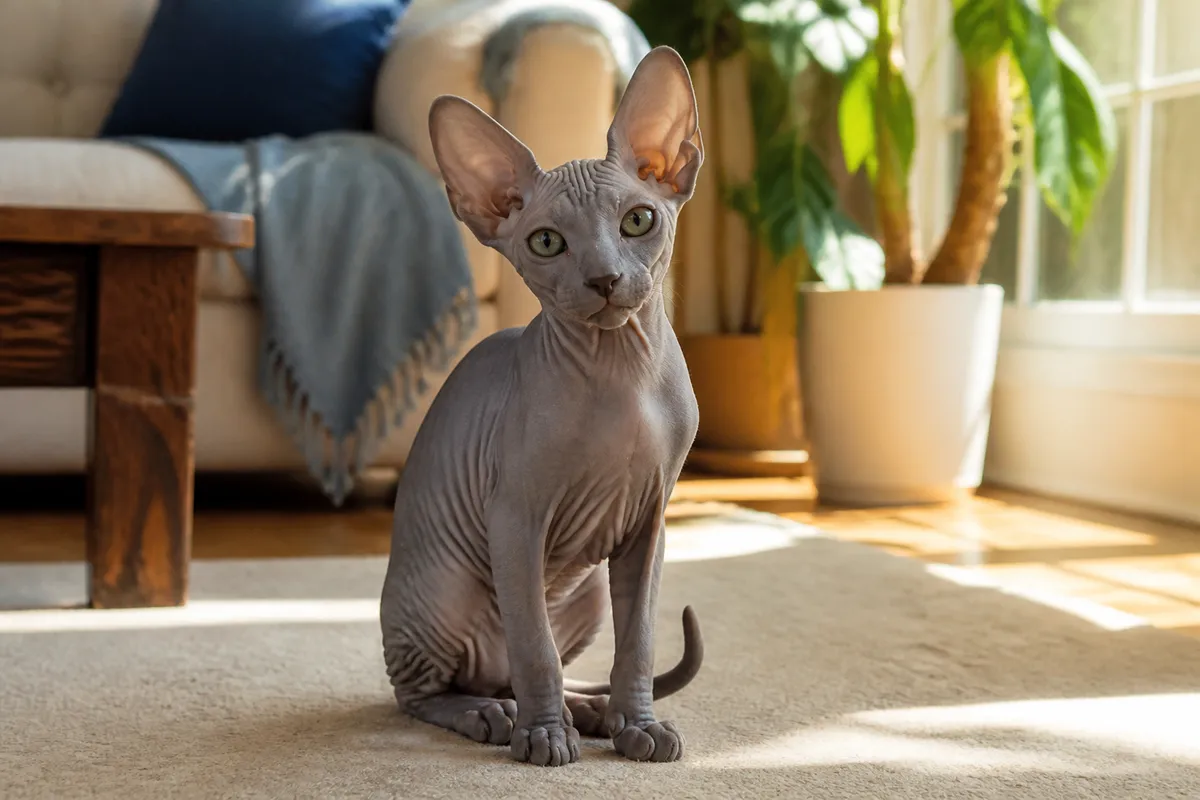
An Angora cat is, in almost every case, a Turkish Angora: an elegant, fine-boned cat from central Turkey with a silky single coat and a plumed tail, often but not always white. It's clever, busy and very people-oriented, and it shares only its name with the fluffy Angora rabbit.
Angora cat, Angora rabbit, Angora sweater: what's the connection?
Angora was the name of the Turkish city of Ankara until 1930, according to Dictionary.com. Several long-haired animals took their name from the region: the Angora goat (whose fiber is mohair), the Angora rabbit (whose soft fur is spun into angora yarn) and the Angora cat.
So an angora sweater has nothing to do with cats, and a cat breeder selling Angora kittens means the Turkish Angora breed. If you're searching for an angora cat because you saw a fluffy white cat online, it might also be a Persian, a domestic longhair or a mix. Only a cat with registered parents is a Turkish Angora.
History of the Turkish Angora
The CFA calls the Turkish Angora the oldest known longhair breed, with written history going back to the 1600s, when longhaired cats were brought from the Middle East to Europe. VCA notes that Turkish sultans gave these cats as gifts to European nobility.
The breed nearly vanished. In England, Angoras were crossed so heavily with Persians that the original type almost disappeared, says CFA. Turkey started preservation programs in its zoos (VCA says the Ankara Zoo program has run since 1917; CFA describes zoo programs in the 1930s), and for a long time only white cats were considered authentic.
Turkish Angoras reached the United States in the 1950s or 1960s depending on the source (CFA says 1954, VCA says 1963), and CFA granted championship status in 1972. At first, only white cats were accepted. Today, the breed comes in nearly every color.
What a Turkish Angora looks like
Think ballerina. The body is small to medium, long, slender and fine-boned, with long legs (the hind legs longer than the front) and a full, tapering tail with a silky plume. The ears are large, erect and set high. VCA lists adults at about 5 to 10 pounds, and females are typically smaller than males.
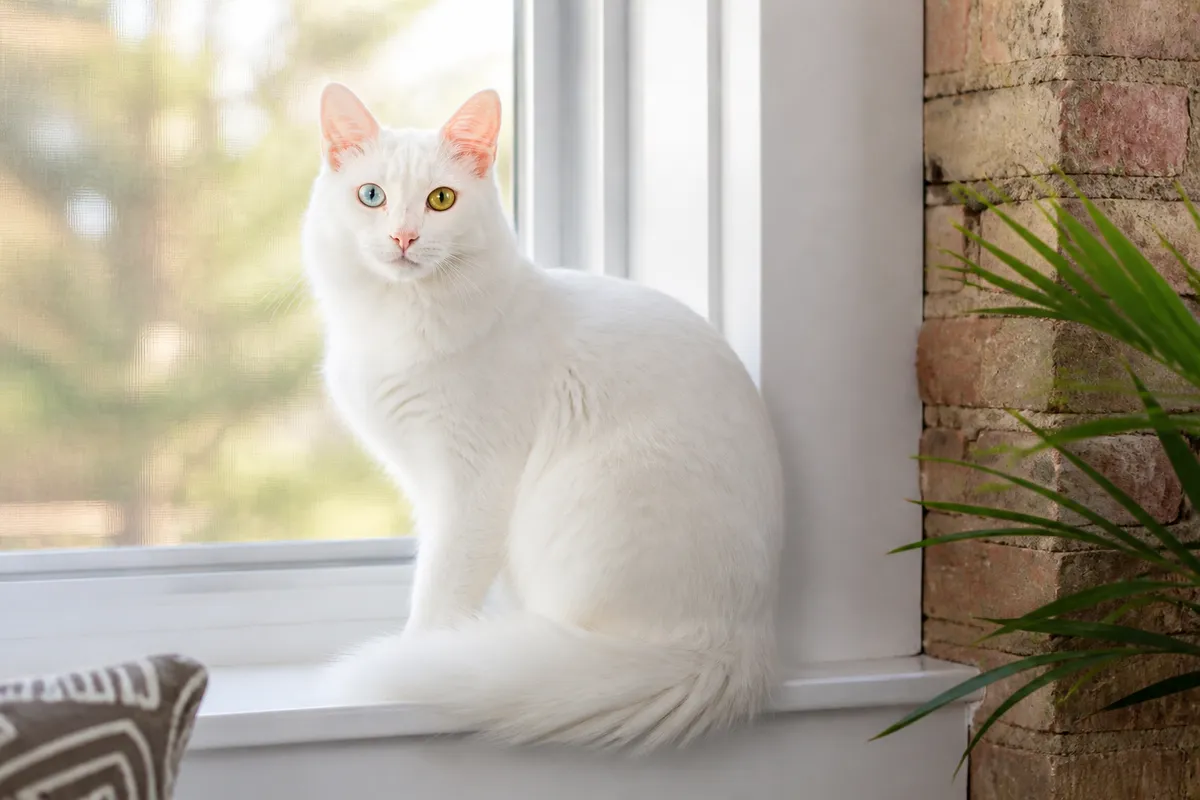
The coat is single, silky and soft, longer on the ruff and tail, and not prone to matting. Eyes are almond-shaped and can be blue, green, amber or copper, and odd eyes (one blue, one amber or green) are prized. White is classic, but CFA accepts nearly every color except chocolate, lilac and pointed patterns.
| Trait | Details |
|---|---|
| Origin | Central Turkey, Ankara region |
| CFA championship | 1972 |
| Weight | About 5 to 10 pounds |
| Lifespan | About 15 to 20 years |
| Coat | Silky, single coat, plumed tail, not prone to matting |
| Colors | Nearly all except chocolate, lilac and pointed; white is classic |
| Eyes | Blue, green, amber, copper or odd-eyed |
| Temperament | Busy, clever, affectionate, interactive |
Turkish Angora temperament
CFA describes the breed as busy and curious, intelligent, affectionate and interactive, often compared to dogs. Turkish Angoras tolerate handling well and suit families with young children. VCA adds that they're devoted, athletic, love learning tricks and commands, ride on shoulders, perch up high and get along with other pets, including dogs.
They're extroverts that greet newcomers, but VCA also notes they can be quick-tempered. This is a cat with opinions. It will rearrange your desk, supervise your cooking and expect to be consulted about household decisions.
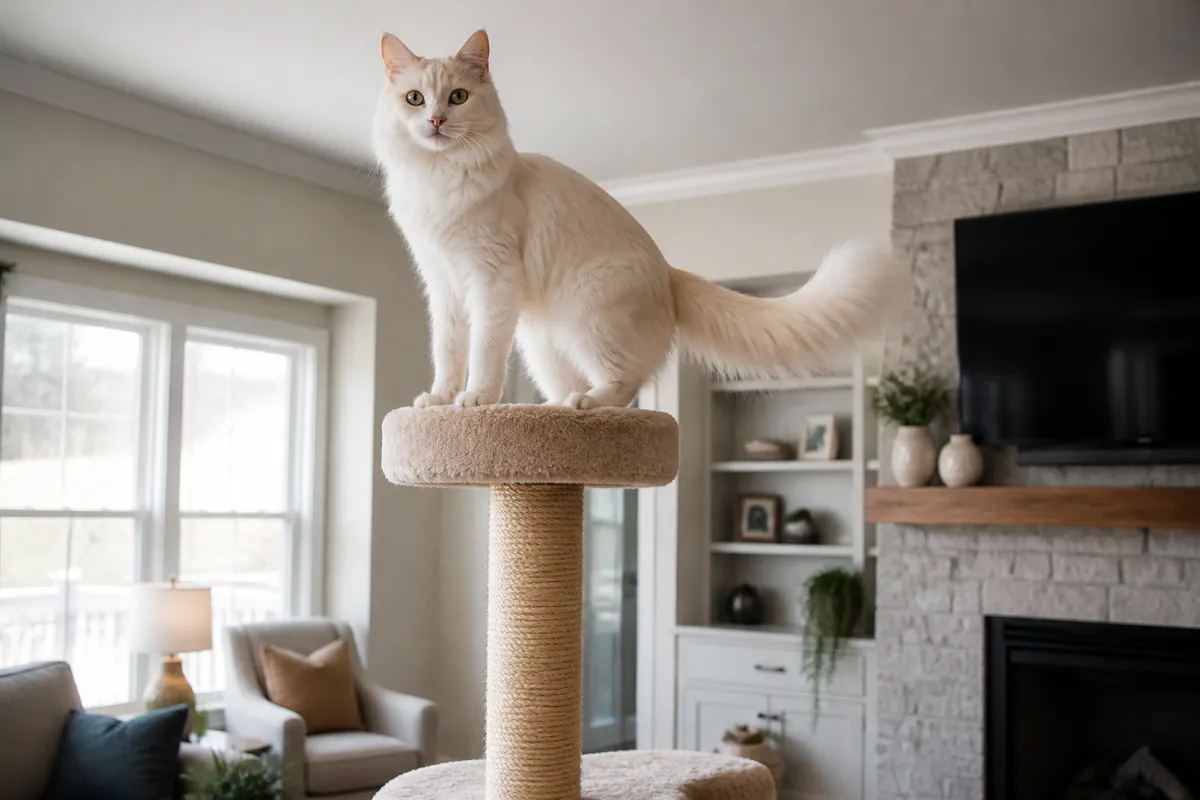
Give a Turkish Angora tall perches, daily interactive play and puzzle feeders. CFA notes many like water, so don't be surprised if yours investigates the faucet.
- Very active and athletic
- Learns tricks and routines quickly
- Social with people, kids and friendly pets
- Likes to be in charge
Care and grooming
Despite the long coat, grooming is easy. CFA suggests combing two or three times a month to control shedding in younger cats, more for seniors, and VCA recommends brushing once or twice a week with a fine-toothed comb or slicker brush, more often in summer to reduce hairballs. Because there's no woolly undercoat, mats are rare.
White coats show dirt, so an occasional bath helps keep them bright; CFA says most Turkish Angoras tolerate baths well. Add regular nail trims, tooth brushing and plenty of climbing space, and you've covered the basics.
Health: deafness in white cats
CFA says no specific health problems are known in the breed, and VCA gives a lifespan of about 15 to 20 years. The one well-known issue applies to white cats in general: they can be born deaf, especially if they have blue eyes. The Merck Veterinary Manual notes that congenital deafness is most common in white cats with blue eyes and that a BAER test can detect deafness in one or both ears.
CFA notes that breeding white cats to colored cats reduces the risk, and that some regions require BAER hearing tests for white kittens. If you choose a white or odd-eyed Angora, ask whether the kitten's hearing was tested. A deaf cat can live a full, happy life indoors, but you'll want to know so you can use visual signals and keep it safely inside.
- Ask for BAER results for white or blue-eyed kittens
- Approach a deaf cat from the front so you do not startle it
- Use hand signals, a flashlight blink or floor vibrations to call it
- Keep a deaf cat indoors or in a secure catio, since it cannot hear traffic or dogs
- Book regular checkups like any other cat
Turkish cat breeds: Angora vs. Van
When people search for a turkish cat, they usually mean one of two breeds. The Turkish Van, which has its own article, comes from the Lake Van region far from Ankara. CFA describes it as much sturdier and more muscular, with a white body and color mostly on the head and tail, likening the Van to an Olympic swimmer and the Angora to a ballerina.
If you want a lighter, more refined cat in nearly any color, look at the Angora. If you love the van pattern and a heavier build, read about the Van.
Who the Turkish Angora suits
A great fit for active households, families with kids, multi-pet homes and people who enjoy training a clever cat.
It also suits people who like a cat with a strong character: the Angora is affectionate, but on its own terms.
Less ideal if you want a calm lap cat, are away most of the day, or prefer a cat that lets you make the decisions. When looking for a kitten, follow CFA's advice: visit the breeder, meet at least one parent and ask about health guarantees and hearing tests.
Frequently asked questions
Is an Angora cat the same as a Turkish Angora?
Yes, in practice. The pedigreed breed is the Turkish Angora. Fluffy cats without papers are sometimes called angora cats, but they may be Persians, domestic longhairs or mixes.
Are Angora cats related to Angora rabbits?
No. They just share a name. Angora was the old name of Ankara, Turkey, and several long-haired animals, including a goat, a rabbit and the cat, were named after the region.
Are all Turkish Angoras white?
No. White is the classic color, and early on only white cats were accepted, but CFA now allows nearly every color except chocolate, lilac and pointed patterns.
Are white Turkish Angoras deaf?
Not all, but white cats, especially blue-eyed ones, have a higher risk of congenital deafness. Ask whether the kitten had a BAER hearing test.
Do Turkish Angoras shed a lot?
They shed moderately. The single coat doesn't mat easily, and brushing once or twice a week, more often in summer, keeps it under control.
What is the difference between a Turkish Angora and a Turkish Van?
The Angora is slender and fine-boned in nearly any color. The Van is much sturdier, with a mostly white body and color on the head and tail, and comes from a different region of Turkey.
Sources
- Turkish Angora breed profile, The Cat Fanciers' Association
- Turkish Angora, VCA Animal Hospitals
- Turkish Van breed profile, The Cat Fanciers' Association
- Congenital and Inherited Disorders of the Nervous System in Cats, Merck Veterinary Manual
- Angora (definition), Dictionary.com
Last reviewed: November 2026