Balinese Cat: The Long-Haired Siamese, Allergy Claims and Price
Cat Breeds 5 min read reviewed November 2026, 4 sources
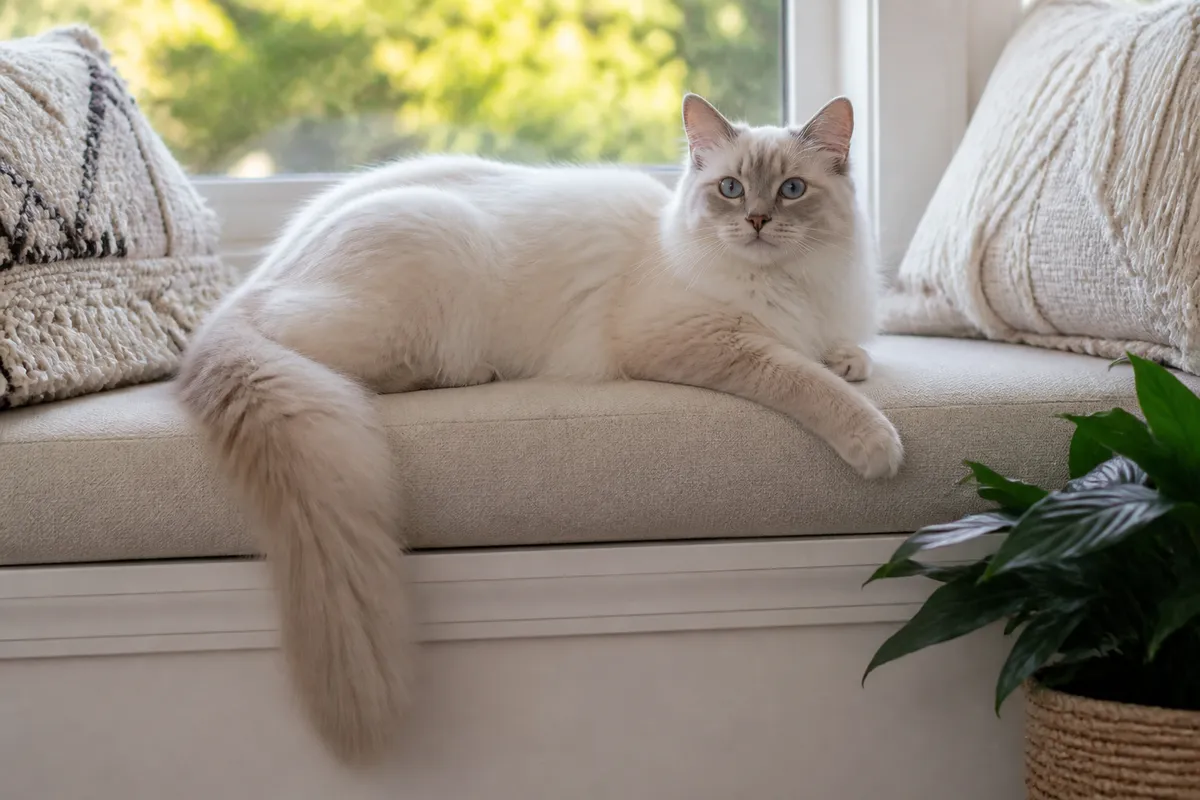
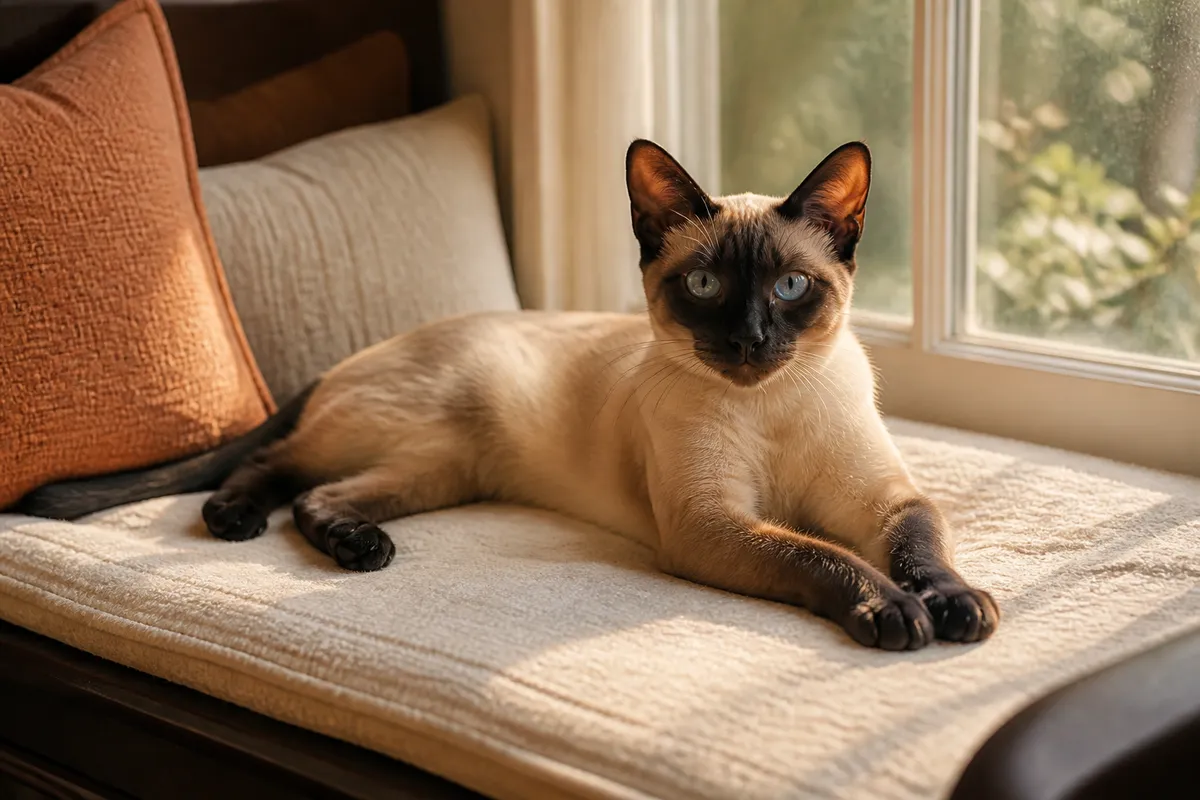
The Balinese cat is essentially a Siamese with a silky, medium-length coat and a plumed tail: same blue eyes, same pointed colors, same love of conversation, just a little softer in voice. It's affectionate and active, and its single coat is surprisingly easy to care for, though the popular hypoallergenic label deserves a skeptical look.
Where the Balinese comes from
Long hair is a recessive gene, so longhaired kittens occasionally popped up in Siamese litters as early as the 1900s, according to the CFA, and were quietly placed as pets. In the 1940s, two Siamese breeders, Helen Smith and Sylvia Holland, began developing them as a breed of their own.
The name has nothing to do with Bali itself. It was chosen because the cats' graceful movements reminded people of Balinese dancers. The CFA accepted the Balinese for championship competition in 1970, initially in the four traditional Siamese colors: seal, chocolate, blue and lilac.
Balinese vs. Javanese: same cat, different colors
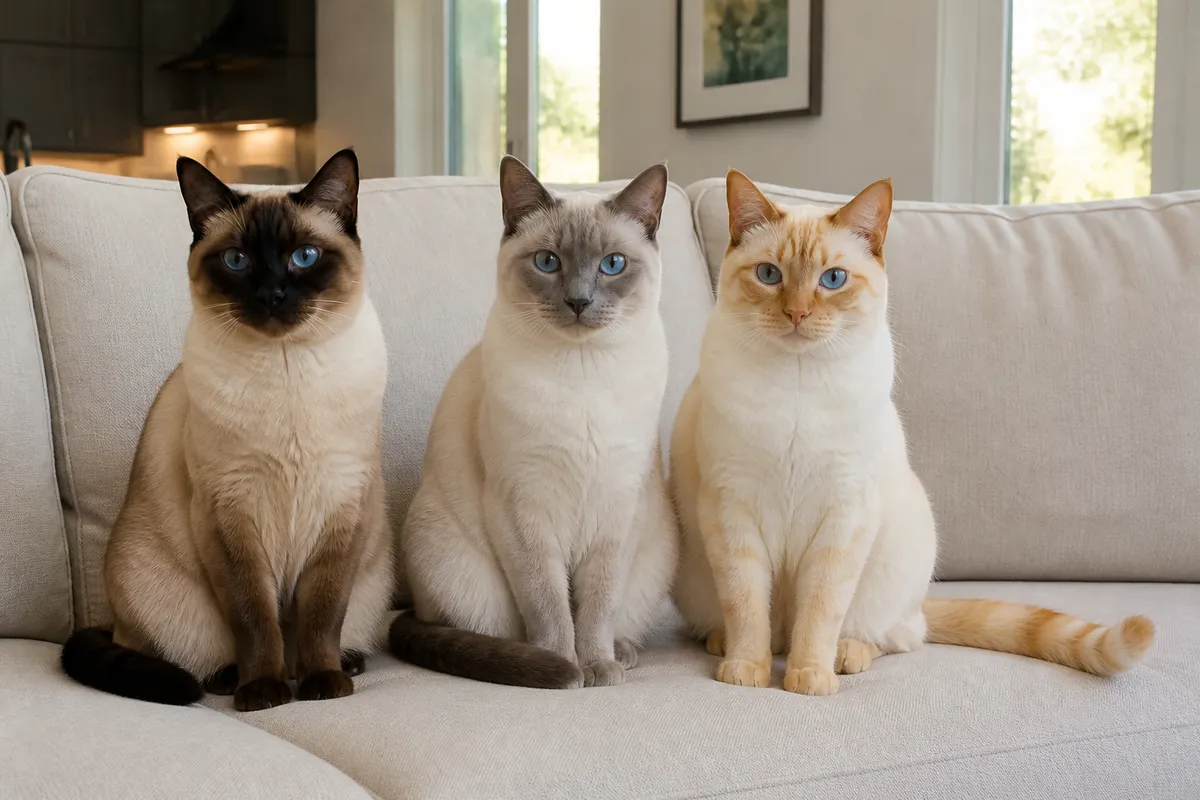
In 1979, CFA accepted Balinese in non-traditional colors such as lynx points and tortie points under a separate name, Javanese. In 2008, CFA breeders voted to merge the two, so since May 1, 2008 the Javanese has been a division of the Balinese breed.
So if a breeder offers a Javanese, you're looking at a Balinese in a less traditional color. Other registries handle the names differently, which is why you'll still see both terms.
| Trait | Details |
|---|---|
| Origin | United States, developed from Siamese from the 1940s |
| CFA championship | 1970 |
| Weight | About 5 to 8 pounds |
| Lifespan | About 15 to 20 years |
| Coat | Medium length, silky, single coat, plumed tail |
| Colors | Balinese division: seal, chocolate, blue, lilac points; Javanese division: other point colors, lynx and parti-color points |
| Eyes | Deep vivid blue |
| Voice | Talkative but softer than a Siamese |
Looks and the low-maintenance coat
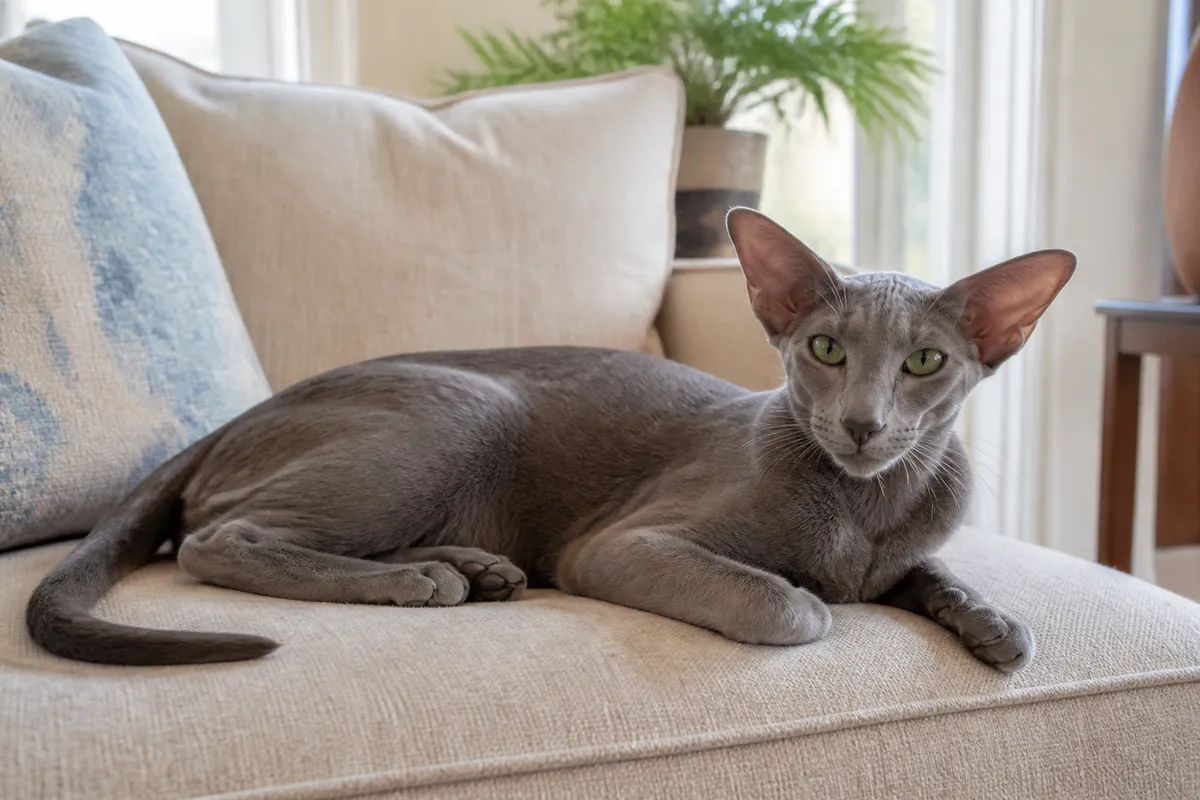
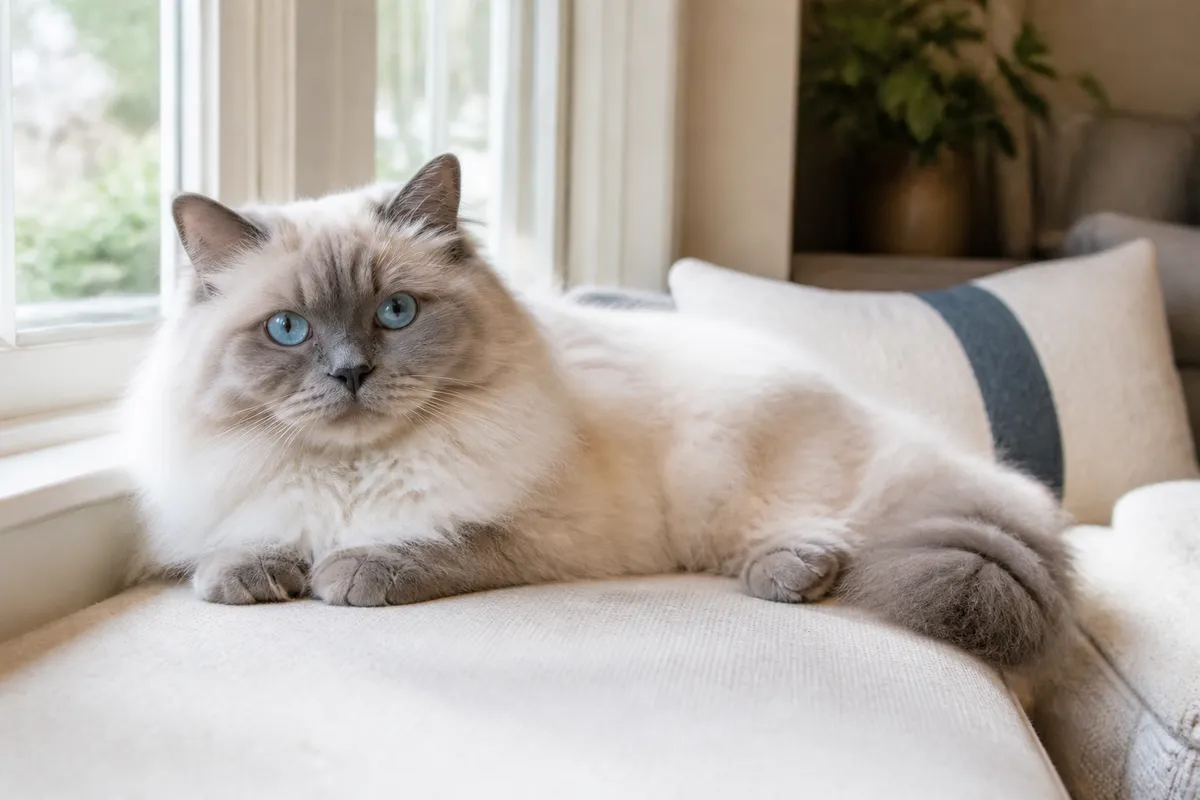
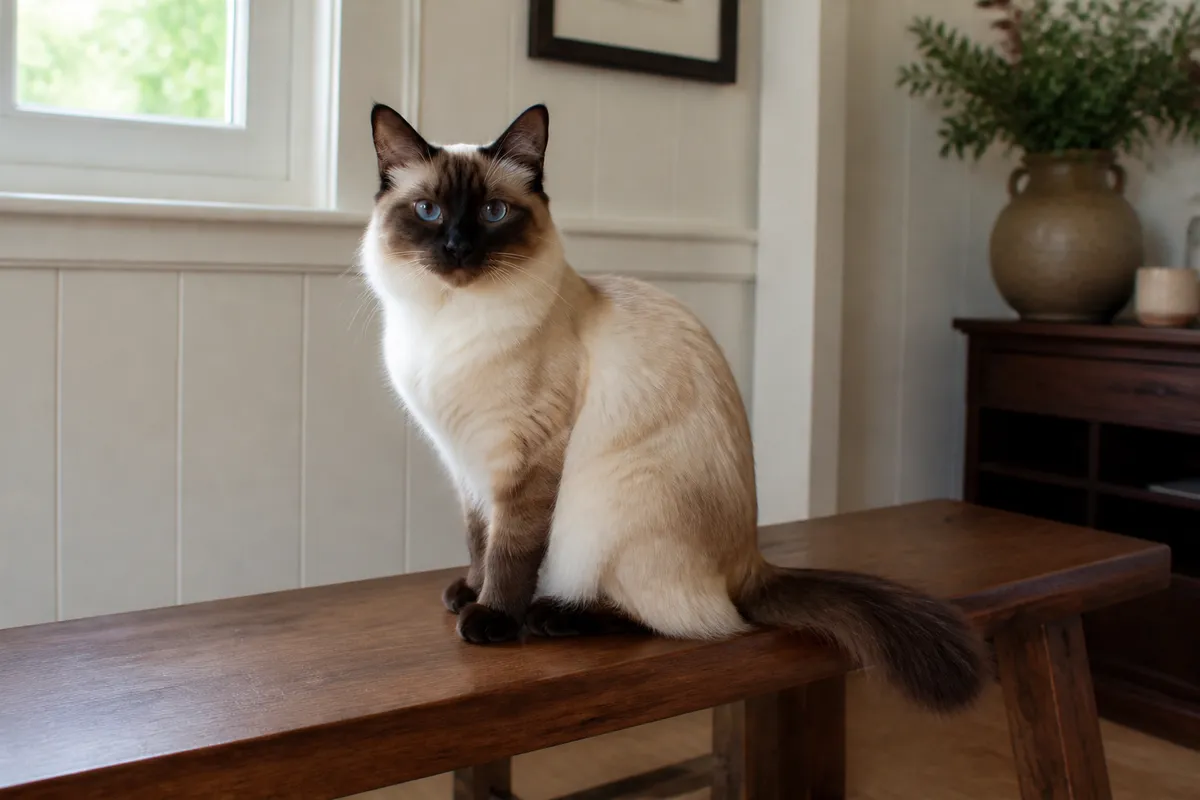
The body is long, lithe and muscular, Siamese style, with a wedge head, large ears and almond eyes in deep vivid blue. VCA lists adults at about 5 to 8 pounds. VCA also notes two looks: a traditional type, bigger with longer hair, and the contemporary type that resembles a modern Siamese and is the one show judges recognize.
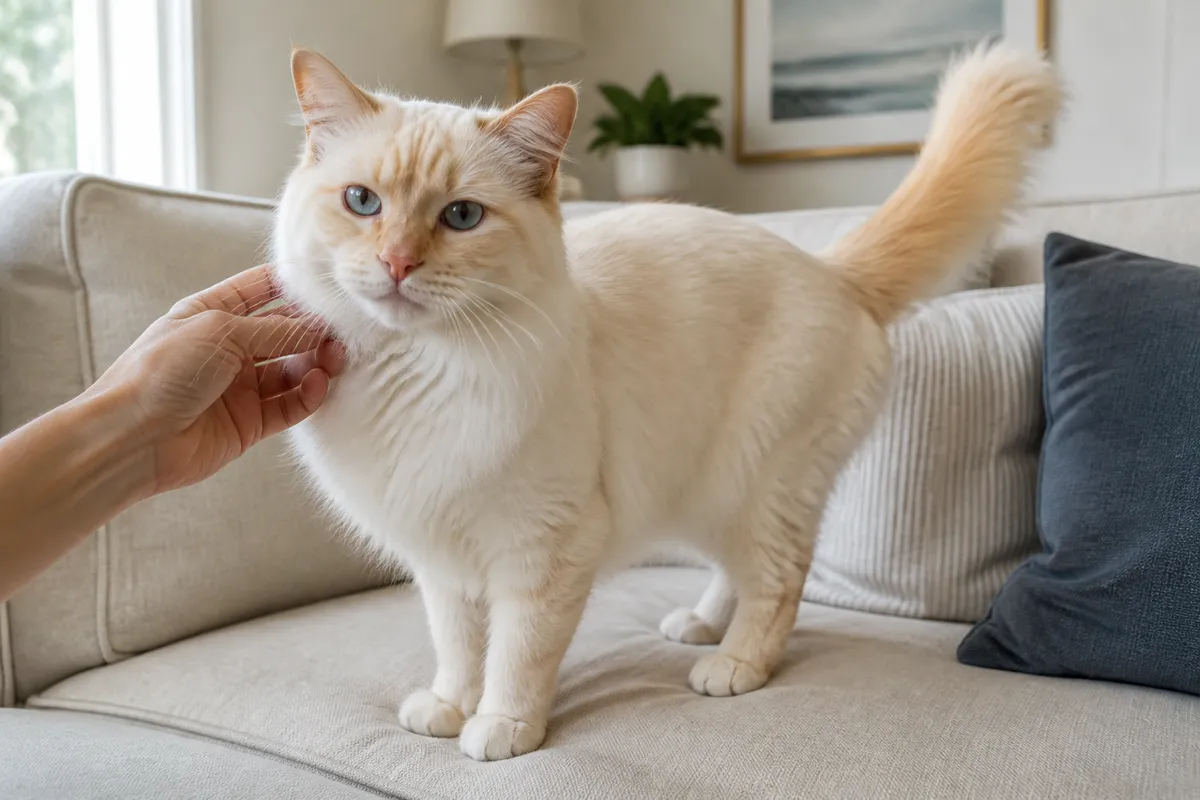
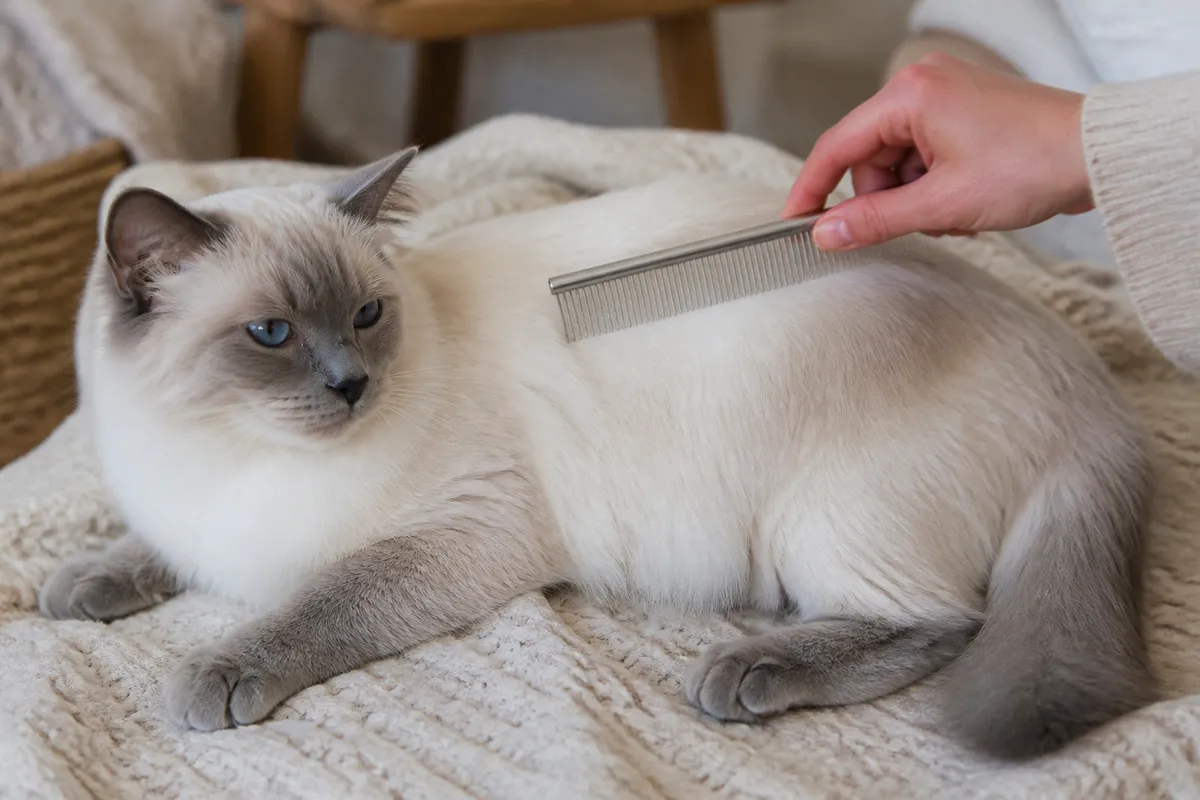
The coat is the surprise. CFA explains that Balinese are single-coated with no downy undercoat, so the medium-length, fine, silky hair lies close and isn't prone to matting. It's longest on the tail, which spreads like a plume. VCA calls the coat virtually maintenance-free.
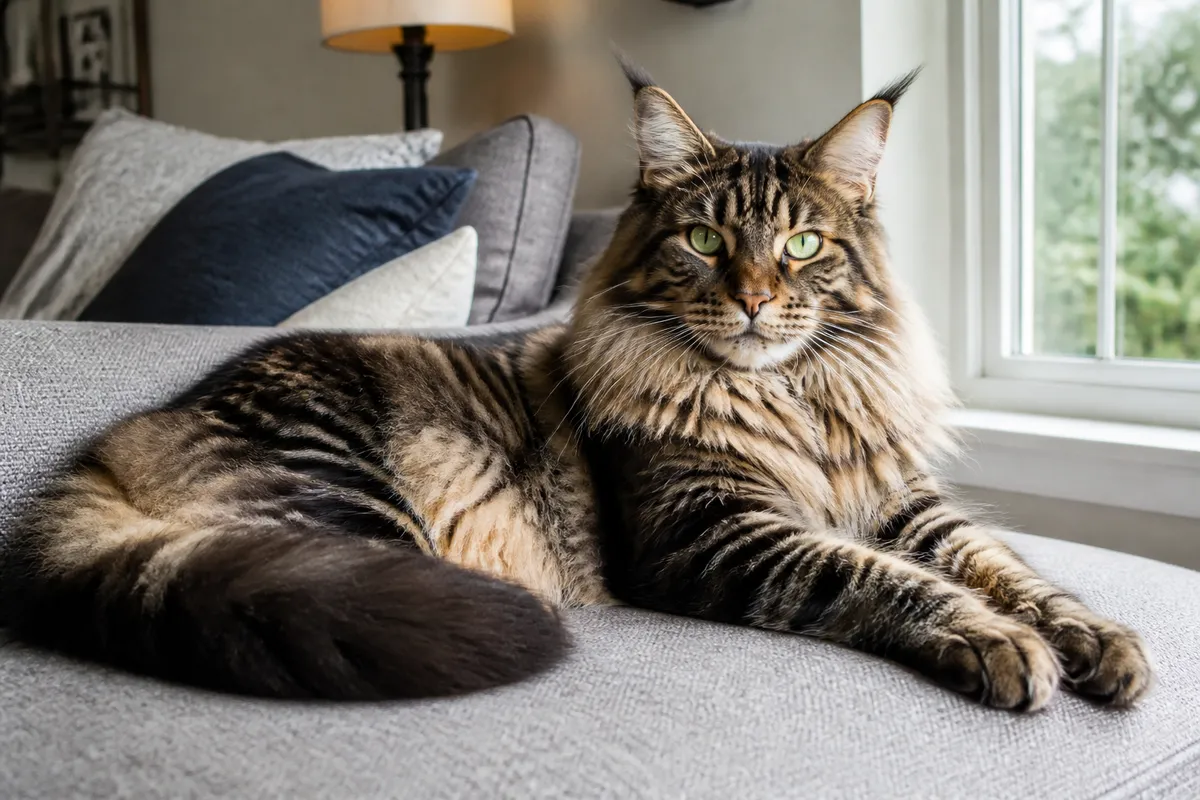
For buyers, the type matters more than you might think. A breeder working toward the show standard will produce the long, fine-boned contemporary look; a breeder of traditional cats aims for the bigger, longer-haired version that VCA compares to a Ragdoll in look. Neither is better as a pet, but ask to see the parents so you know which version will grow up in your living room.
Balinese personality
CFA describes Balinese as vocal, affectionate and active. They're generally less talkative than Siamese, with softer voices, but they are definitely not quiet. Expect a cat that answers back, greets you at the door and narrates its day.
They're playful, often enjoy fetch and are frequently fond of dogs. Because of their energy, CFA suggests they do best with older children. VCA describes them as adaptable and social, craving interaction without being overly demanding, a slightly toned-down Siamese.
Give them daily play, something to climb and company. A Balinese left alone all day may let the neighbors know.
Daily life with a Balinese is easiest when the cat has a routine it can count on: play before breakfast, a window to watch while you work, a puzzle feeder at lunchtime and a long evening play session. Cats this social also appreciate being included in ordinary chores. Letting it supervise laundry folding counts as enrichment, at least in the Balinese view.
- Social, people-focused and smart
- Learns tricks easily with positive reinforcement
- Gets along well with other pets
- Wants to be included, not just fed
Are Balinese cats hypoallergenic?
You'll often see the Balinese listed as hypoallergenic, usually because of its single coat or claims about lower allergen levels. Be careful. The American Academy of Allergy, Asthma and Immunology says all cats produce the main allergen Fel d 1 and that there are no truly hypoallergenic breeds, with wide variation between individual cats.
If you have allergies, test yourself with the specific cat, ideally over several visits, and talk to an allergist first. The hypoallergenic cats article explains how to do that safely.
Grooming and health
CFA recommends brushing or combing several times a month to control shedding, plus a bath with a gentle cat shampoo when the coat looks greasy. There's no need to blow-dry; let your cat air-dry somewhere warm.
Balinese are generally healthy, says CFA, but may inherit conditions from their Siamese ancestors. Some are minor, like crossed eyes or a kinked tail, while others need genetic or physical testing. Most breeders screen for genetic conditions; ask exactly which tests were done and see the results.
VCA gives a lifespan of about 15 to 20 years. Regular dental care, a healthy weight and yearly checkups help your cat reach the long end of that range.
Balinese cat for sale: price and responsible breeders
There's no reputable current price survey for Balinese kittens. The CFA's general buying guide names about $300 to $1,500 for pedigreed kittens depending on breed and location. What moves the price: health testing, pet or show quality, color (traditional or Javanese division), the breeder's region and what's included, like spay or neuter, vaccines and a written guarantee.
CFA advises visiting the breeder's home, seeing at least one parent and asking about the health guarantee and return policy. Reputable breeders don't sell through pet stores. Be cautious with sellers who advertise hypoallergenic kittens as a selling point or can't show you where the kittens are raised.
Rescue is worth checking too. Siamese-type cats, including longhaired ones, turn up in shelters and breed rescues, often as adults with known personalities.
- Ask which genetic tests the parents had
- Ask to meet the mother and see the kittens' living area
- Get the contract and health guarantee in writing
- Never take a kitten younger than 8 weeks
Who the Balinese suits
A Balinese is a great match if you love the Siamese personality but prefer a softer voice and a flowing coat, and if you have time for play and company every day.
It's a poor fit for a household that's empty most of the day, for anyone who wants a silent cat, or for people choosing it only because of the hypoallergenic label.
Before you decide, visit an adult Balinese for an afternoon. Ten minutes with a kitten tells you how cute it is; two hours with a grown cat tells you how much it talks.
Frequently asked questions
Is a Balinese just a long-haired Siamese?
Essentially, yes. The Balinese developed from longhaired kittens born to Siamese parents and shares the Siamese body, points and blue eyes, with a silky medium-length coat and plumed tail.
Do Balinese cats shed a lot?
Less than you'd expect for a longhair. The single coat has no downy undercoat, so it doesn't mat easily, and brushing several times a month is usually enough.
Are Balinese cats loud?
They're talkative, but CFA notes they're generally less vocal than Siamese, with softer voices. Expect conversation, not silence.
What is a Javanese cat?
In CFA, the Javanese is a division of the Balinese breed covering non-traditional point colors, such as lynx and tortie points. The two were merged into one breed in 2008.
How much does a Balinese cat cost?
Prices are set by individual breeders and vary with health testing, quality, color and region. CFA's general guide names about $300 to $1,500 for pedigreed kittens, so compare several breeders and what's included.
How big do Balinese cats get?
They're slender, medium-sized cats. VCA lists adults at about 5 to 8 pounds.
Sources
- Balinese breed profile, The Cat Fanciers' Association
- Balinese, VCA Animal Hospitals
- Management of cat and dog allergy, American Academy of Allergy, Asthma and Immunology
- Finding the Purr-fect Pedigreed Kitten, The Cat Fanciers' Association
Last reviewed: November 2026