Oriental Shorthair Cat: Personality, Colors, Care and Price
Cat Breeds 5 min read reviewed November 2026, 3 sources
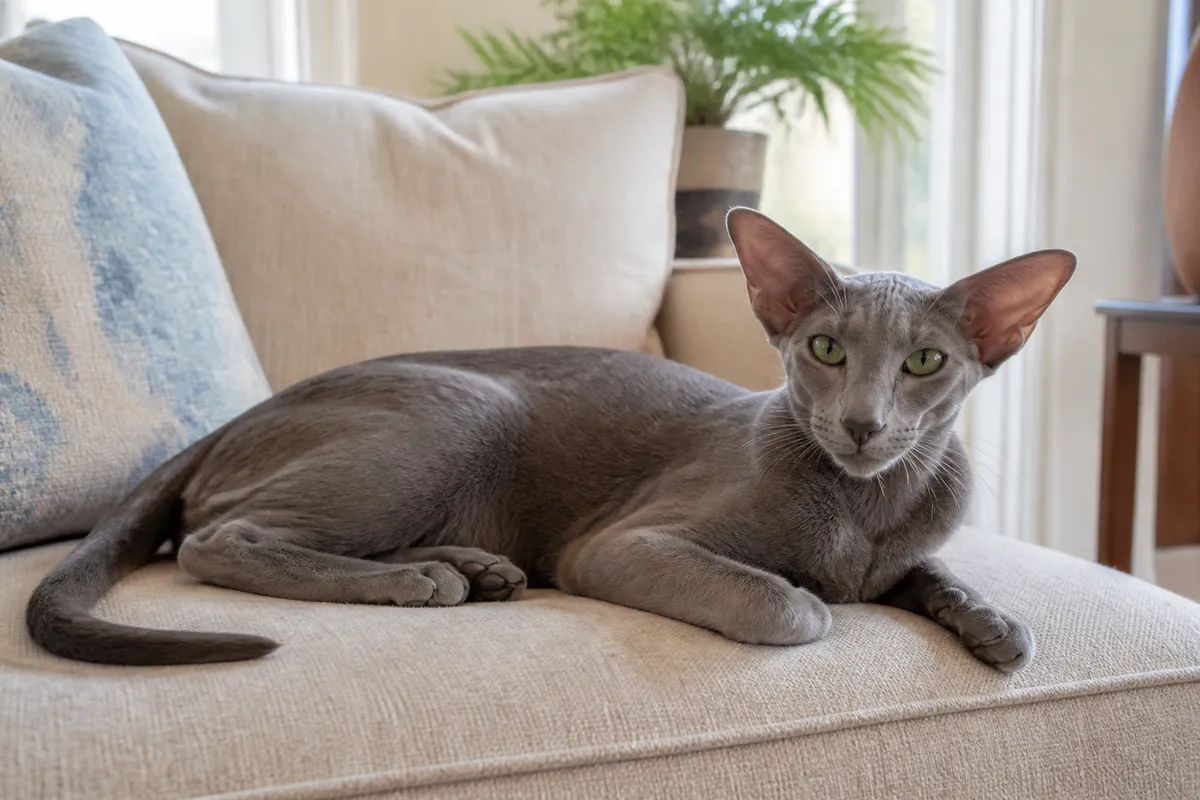
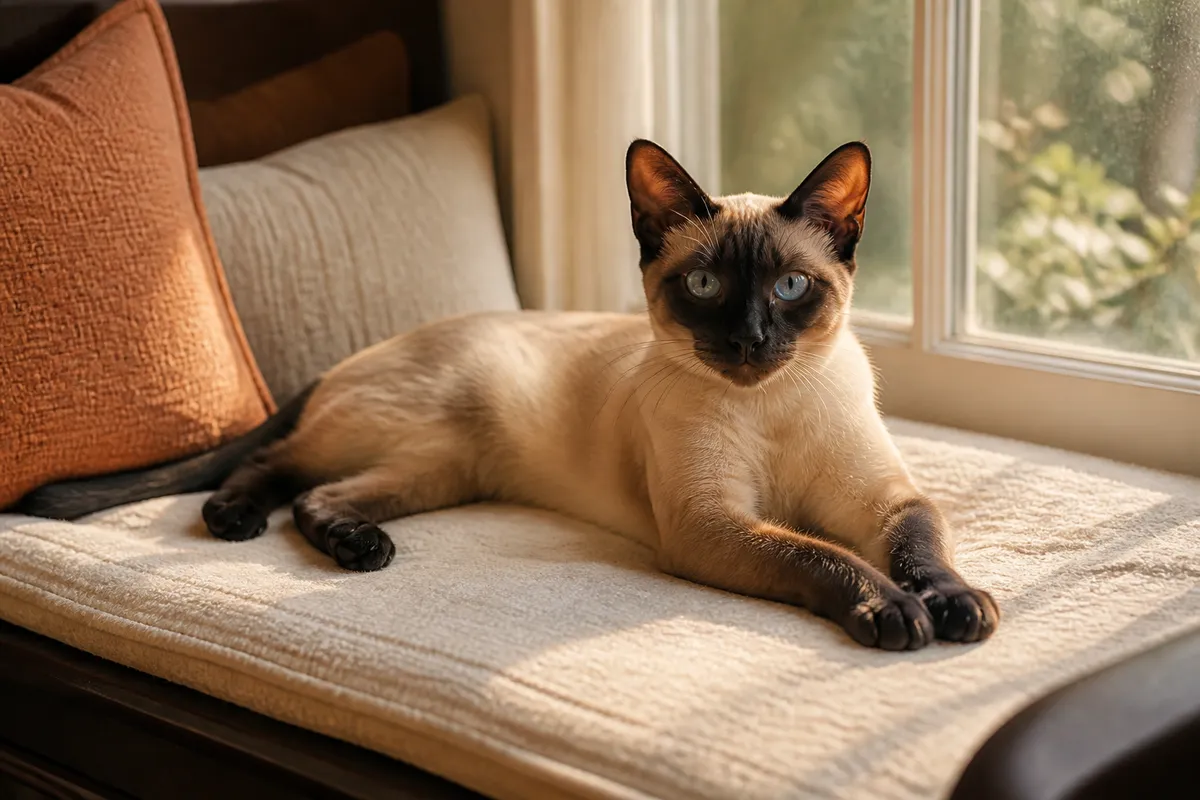
The Oriental Shorthair is basically a Siamese in a different outfit: the same sleek body, wedge head and huge ears, but in more than 150 colors and patterns instead of just points. It's a brilliant, chatty, deeply people-focused cat that wants to be part of everything you do, which makes it wonderful for the right home and exhausting for the wrong one.
Where the Oriental Shorthair cat comes from
Breeders in Europe began developing the Oriental in the 1950s by keeping the Siamese body type and dropping the rule that the color must sit only on the points. American breeders added more colors in the 1960s and 1970s, and a breed club called Oriental Shorthairs International pushed for recognition.
The Cat Fanciers' Association (CFA) accepted Oriental Shorthairs for registration in 1974 and gave them championship status in 1977. A longhaired version followed in 1988, and since then CFA simply calls the breed the Oriental, with a shorthair and a longhair division.
So if you're wondering whether oriental cats are just colored Siamese: genetically and in temperament, that's pretty close. The Siamese has its own article if you want to compare the two side by side.
What an Oriental Shorthair looks like
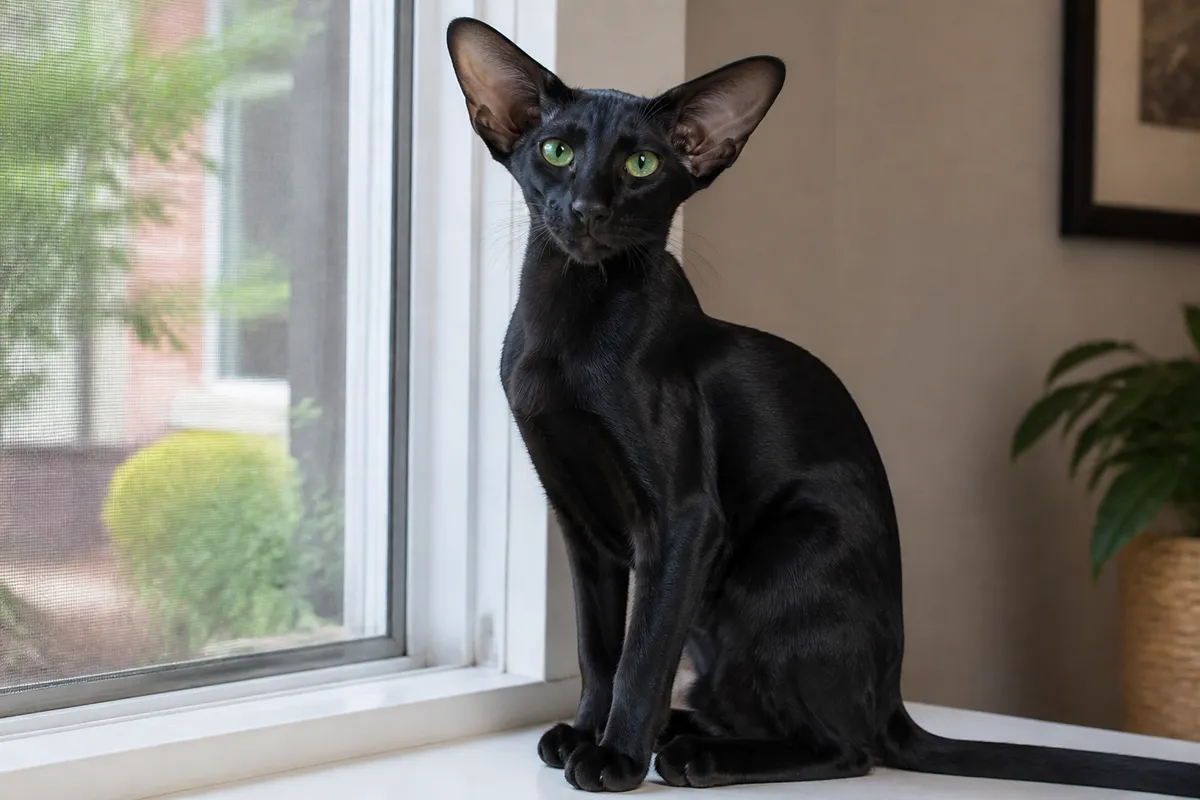
Think greyhound, not teddy bear. The body is long, tubular and fine-boned but firm with muscle. The head is a long wedge with very large, wide-based ears and almond-shaped eyes, and males may be a bit larger than females.
The coat is short, fine and close-lying. Where the Siamese is limited to points, the Oriental comes in solid colors, smokes, shadings, tabbies, bicolors and more. CFA counts over 150 possible colors and patterns, and more than 600 combinations once you add coat length.
| Trait | What to expect |
|---|---|
| Origin | Europe in the 1950s, expanded in the US in the 1960s and 1970s |
| CFA recognition | Registration 1974, championship 1977, longhairs added 1988 |
| Body | Long, slender, fine-boned, muscular |
| Coat | Short, fine, minimal shedding (longhair: silky, no downy undercoat) |
| Colors | Over 150 colors and patterns |
| Voice | Very vocal and talkative |
| Grooming | About once a week |
| Known inherited issues | Progressive retinal atrophy (testable), amyloidosis |
Oriental Shorthair personality: vocal, clever and a little needy
CFA describes Orientals as vocal, affectionate, active and people-centered, and says outright that they can be needy and may pine without enough attention. That's not marketing fluff. This cat wants to supervise your cooking, inspect your laptop and offer opinions on all of it, out loud.
They're very intelligent, which is great for clicker training, puzzle feeders and fetch, and less great when they figure out how to open cabinets. Expect a cat that follows you from room to room and complains when a door is closed.
Practical tip: if everyone in your home is gone ten hours a day, plan for company. Many breeders recommend a second active cat so the Oriental has someone to talk to while the staff is at work. The two cats article covers how to make that work.
- Talks a lot, with a loud, expressive voice
- Bonds strongly and dislikes being alone for long
- Needs daily interactive play and climbing space
- Learns tricks and routines quickly, including the ones you didn't teach
Care and grooming
The good news: the coat is about as easy as it gets. CFA recommends grooming about once a week, using a rubber curry brush on shorthairs and a fine steel comb on longhairs. Shedding is minimal.
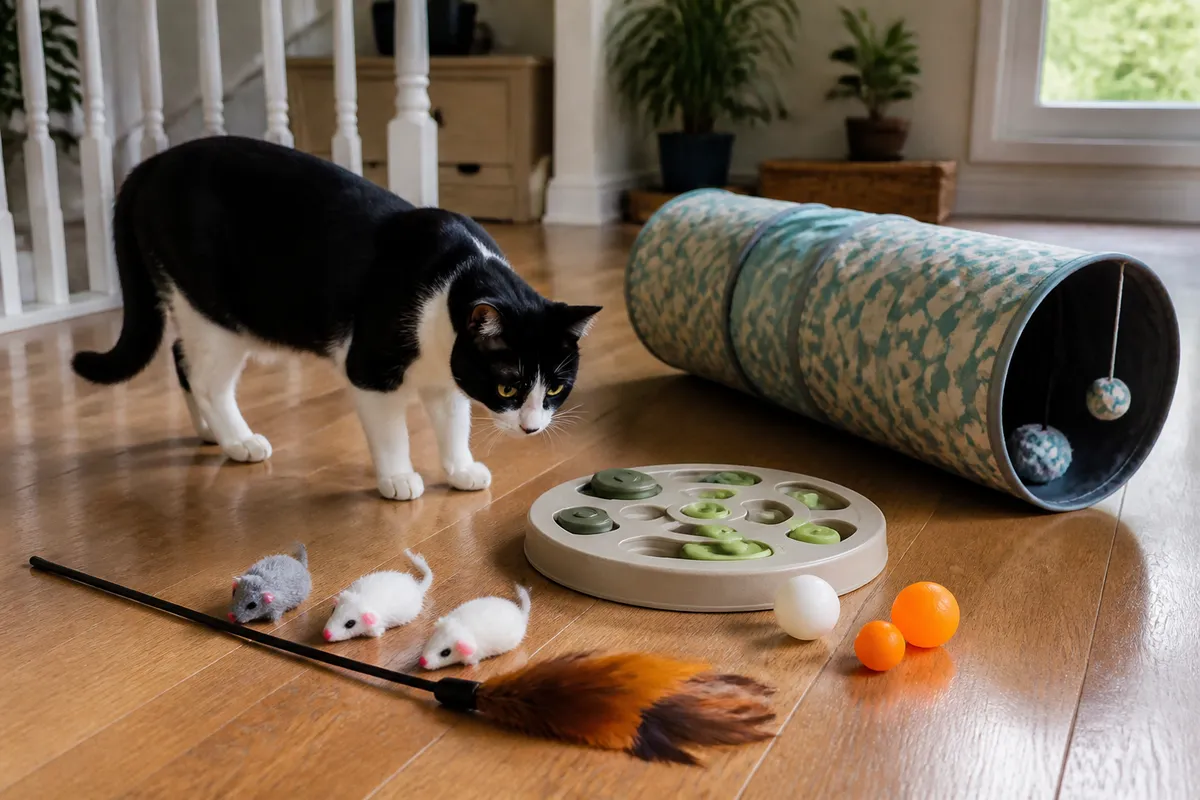
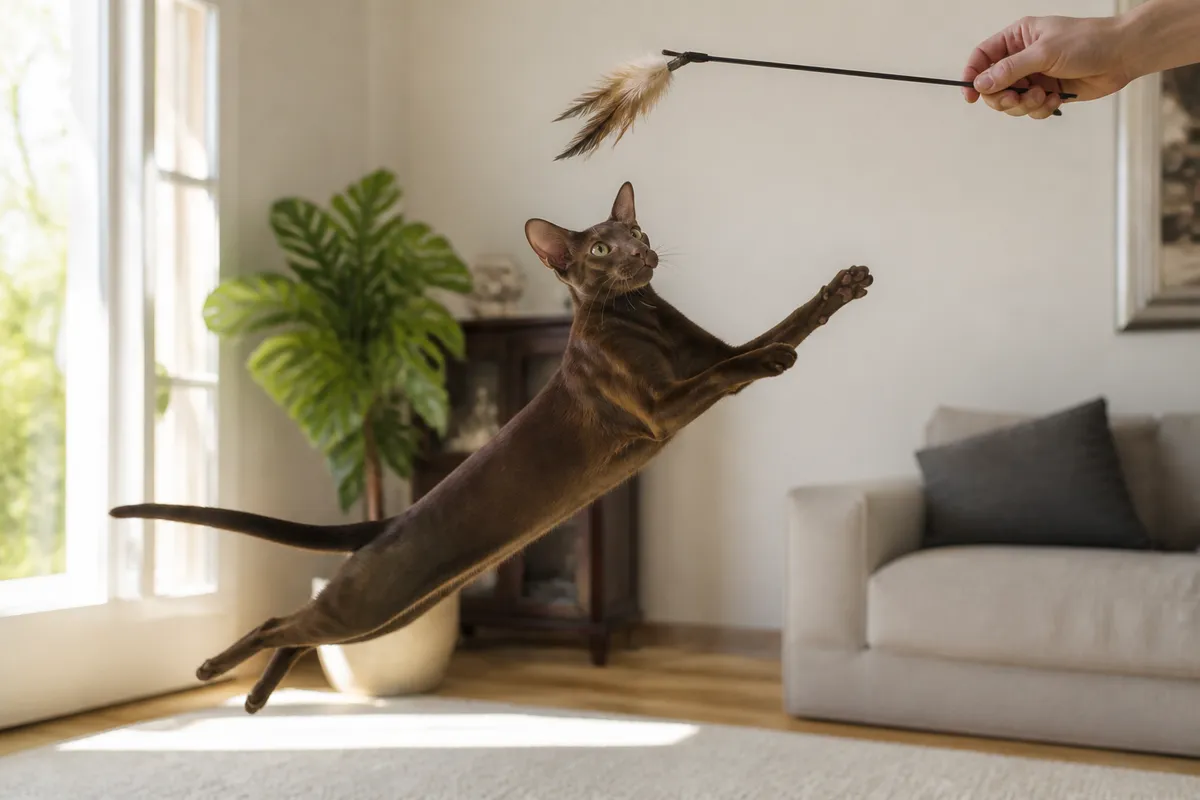
The real care load is mental and physical exercise. Give this cat vertical territory (a sturdy cat tree near a window works wonders), two or three short play sessions a day with a wand toy, and food puzzles so it has a job. A bored Oriental will invent its own job, and you won't like it.
Regular nail trims, ear checks and tooth brushing round out the routine. Because the body is slim, it's easy to see weight changes early, so weigh your cat now and then and ask your vet if it drifts.
Health: what to ask about
CFA names two inherited concerns. Progressive retinal atrophy (PRA) is caused by a recessive gene and can lead to blindness; a DNA test can detect it, and responsible breeders make sure carriers are only bred to non-carriers so no affected kittens are produced. Amyloidosis can affect the liver and other organs; it can be genetic or acquired, and research into genetic markers is ongoing.
Because Orientals share their roots with the Siamese, conditions International Cat Care lists for Siamese and related cats, such as asthma and crossed eyes, are also worth asking about.
Ask any breeder for the parents' PRA test results in writing, and schedule a vet check within the first days after your kitten comes home.
Oriental Shorthair price and finding an Oriental Shorthair kitten
There's no reputable current price survey for this breed. The CFA's general buying guide names about $300 to $1,500 for pedigreed kittens, depending on breed and region. What really drives the number is the breeder's health testing, show or pet quality, color, and whether the price includes spay or neuter, vaccines and a written health guarantee.
CFA advises visiting the breeder's home, meeting at least one parent, and asking about the health guarantee and return policy. Reputable breeders don't sell through pet stores, and they'll ask you just as many questions as you ask them.
Retired breeding cats and breed-specific rescues are worth a look too, and Siamese-type cats do turn up in shelters. Before you go shopping, the cat price article lays out what a cat really costs after the purchase.
- Ask for PRA test results on both parents
- Get the contract and health guarantee in writing
- Never take a kitten younger than 8 weeks (CFA notes kittens offered at shows are at least 4 months old)
- Walk away from anyone who won't let you see where the kittens live
Who the Oriental suits, and who should skip it
An Oriental is a great match if you want a cat that acts like a talkative best friend, you work from home or have another active cat, and you enjoy training and play.
Skip it if you want a quiet, independent cat, if you live in a thin-walled apartment with noise-sensitive neighbors, or if the cat would be alone most of the day. An under-stimulated Oriental is a loud and unhappy Oriental, and that's not a fair life for it.
- Good fit: home-office workers, multi-cat homes, people who like training
- Good fit: families with respectful older kids who will actually play
- Poor fit: owners who travel a lot or work long hours with no backup
- Poor fit: anyone hoping for a decorative cat that sleeps on the sofa all day
- Before you commit: spend an afternoon with an adult Oriental and listen to it for a while
Frequently asked questions
Is an Oriental Shorthair the same as a Siamese?
Not quite. They share the same body type and much of the same personality, but the Siamese is always pointed while the Oriental comes in solid colors, tabbies, smokes, bicolors and more. CFA treats them as separate breeds.
Are Oriental Shorthair cats loud?
Yes, usually. CFA describes them as vocal, and most owners say their Oriental talks back, greets them and comments on daily life. If you need a quiet cat, this isn't it.
Do Oriental Shorthairs shed a lot?
No. The short, fine coat sheds minimally and needs grooming only about once a week. That doesn't make them hypoallergenic, though, because the main allergens come from saliva and skin, not hair length.
Can an Oriental Shorthair kitten be left alone all day?
It's not ideal. Orientals bond strongly and can pine without attention. If you work long days, plan for a second playful cat, a midday visit or a lot of enrichment.
How much does an Oriental Shorthair cost?
Prices are set by individual breeders and vary with health testing, quality and region. CFA's general guide names about $300 to $1,500 for pedigreed kittens, so ask several breeders for current prices and what's included.
Sources
- Oriental breed profile, The Cat Fanciers' Association
- Finding the Purr-fect Pedigreed Kitten, The Cat Fanciers' Association
- Inherited disorders in cats, International Cat Care
Last reviewed: November 2026