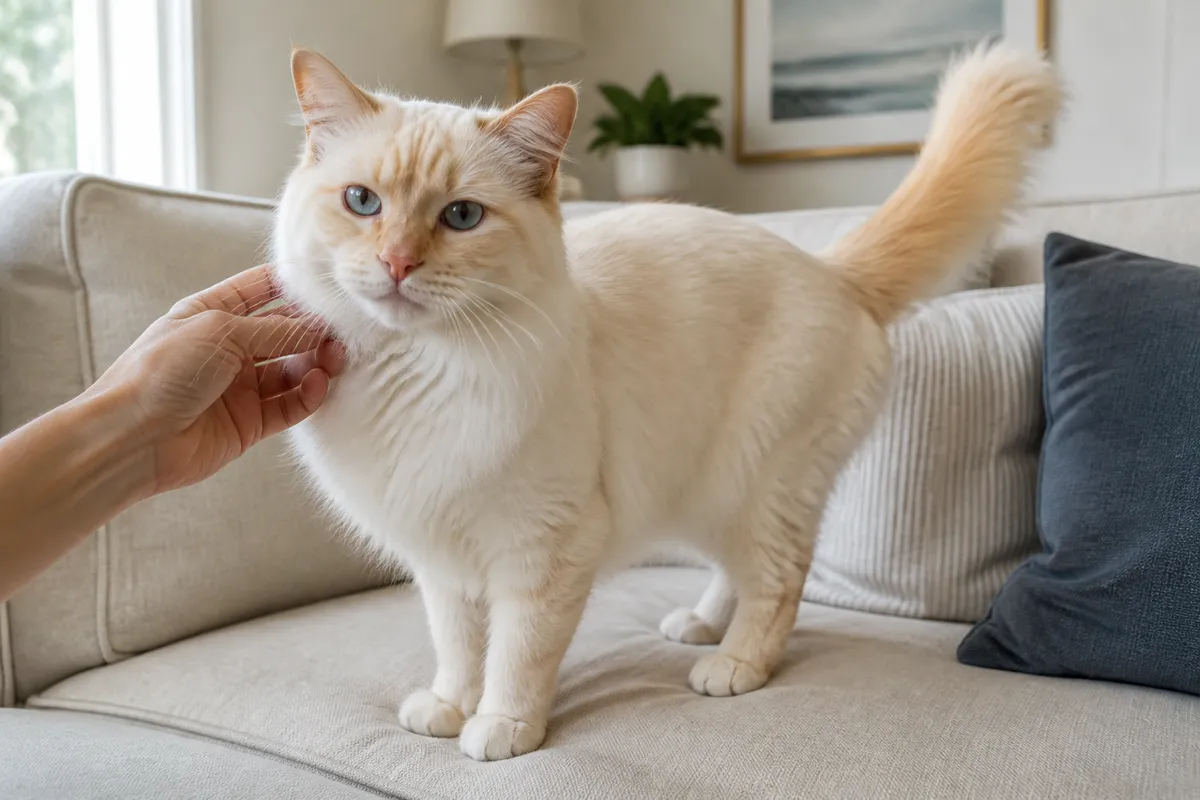
Snowshoe Cat: The White-Footed Siamese Cousin Explained
Cat Breeds 5 min read reviewed November 2026, 5 sources
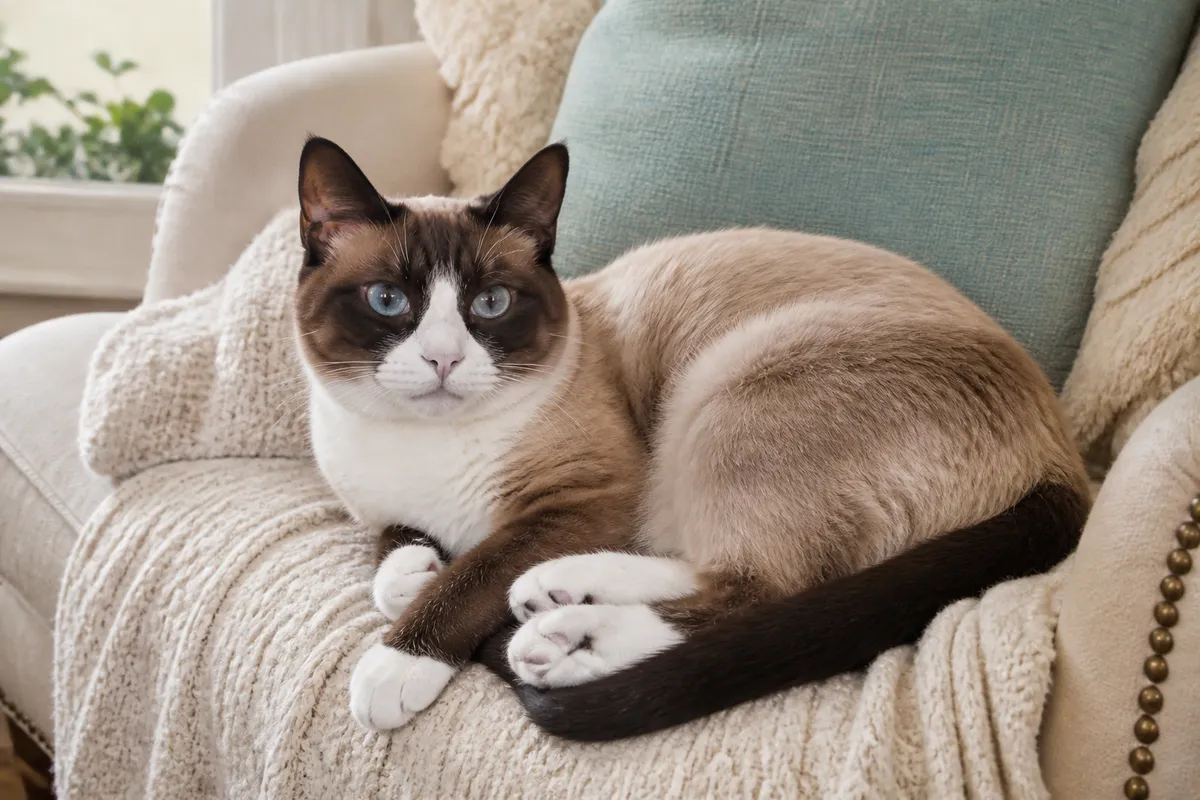
The Snowshoe cat is a pointed, blue-eyed shorthair with white feet and often a white inverted V on the face, created in the 1960s by crossing Siamese with bicolor shorthairs. It's sweet, sociable and soft-voiced, and it's still uncommon, so finding a well-marked one takes patience.
How the Snowshoe began
In the early 1960s, Siamese breeder Dorothy Hinds-Daugherty of Philadelphia found three kittens with white feet in a Siamese litter, according to both FIFe and the UK's Governing Council of the Cat Fancy (GCCF). She liked the look and set out to keep it, breeding seal point Siamese with bicolor American Shorthairs and then back to Siamese to restore the body and points.
The name is as simple as it sounds: the breed is named for its white feet. Recognition came slowly, with registries adding the breed over the following decades. FIFe, the large international federation, has recognized it since 2004.
Snowshoe Siamese? What the breed looks like
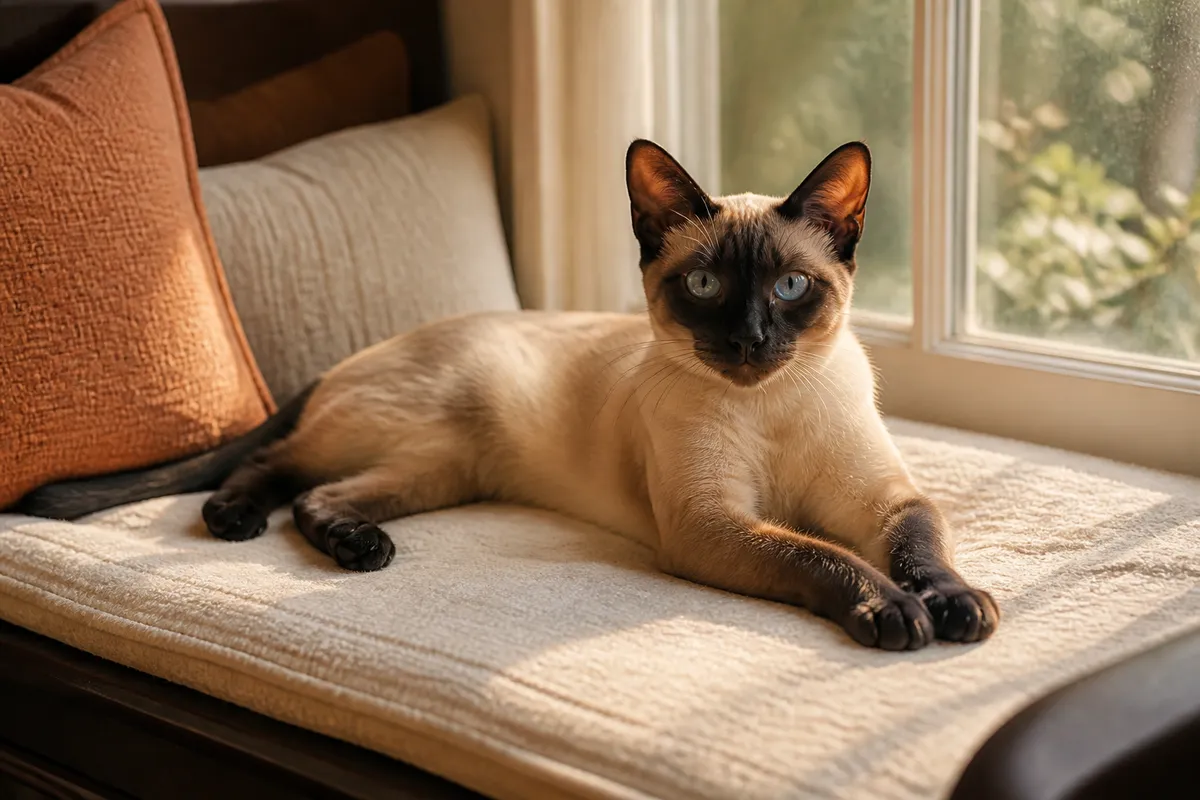
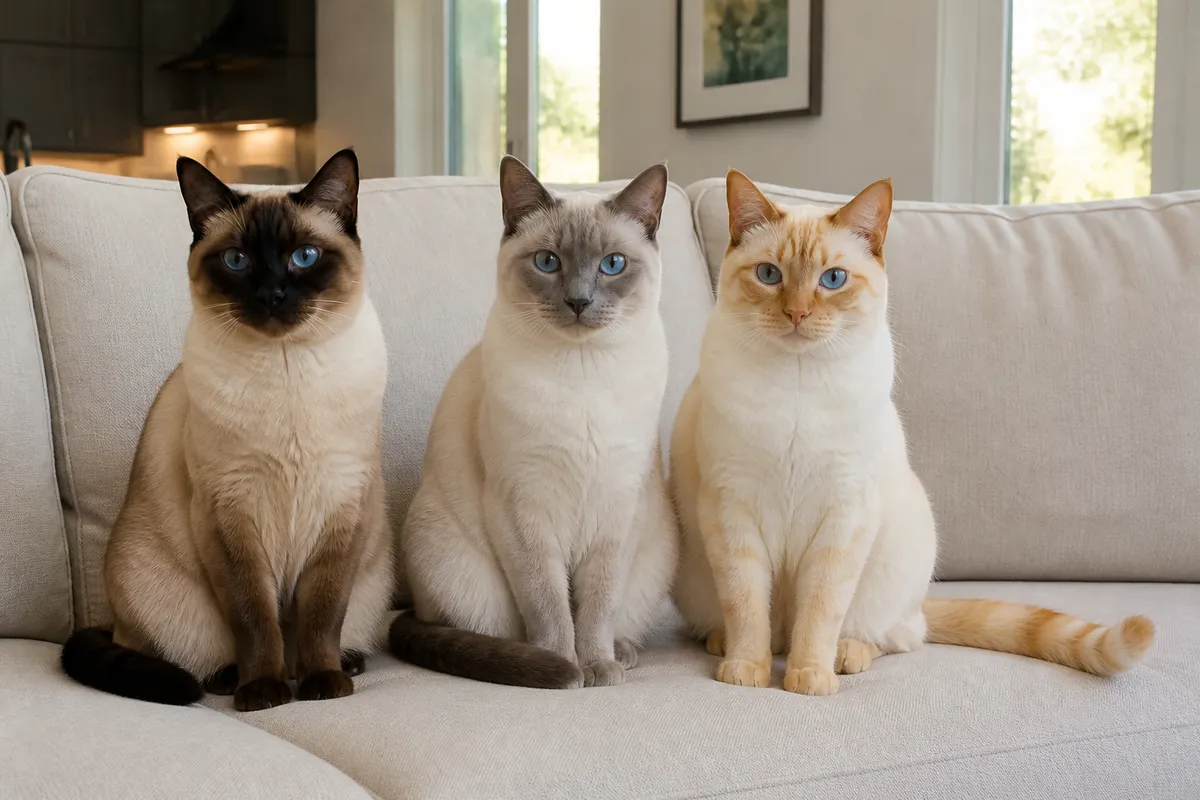
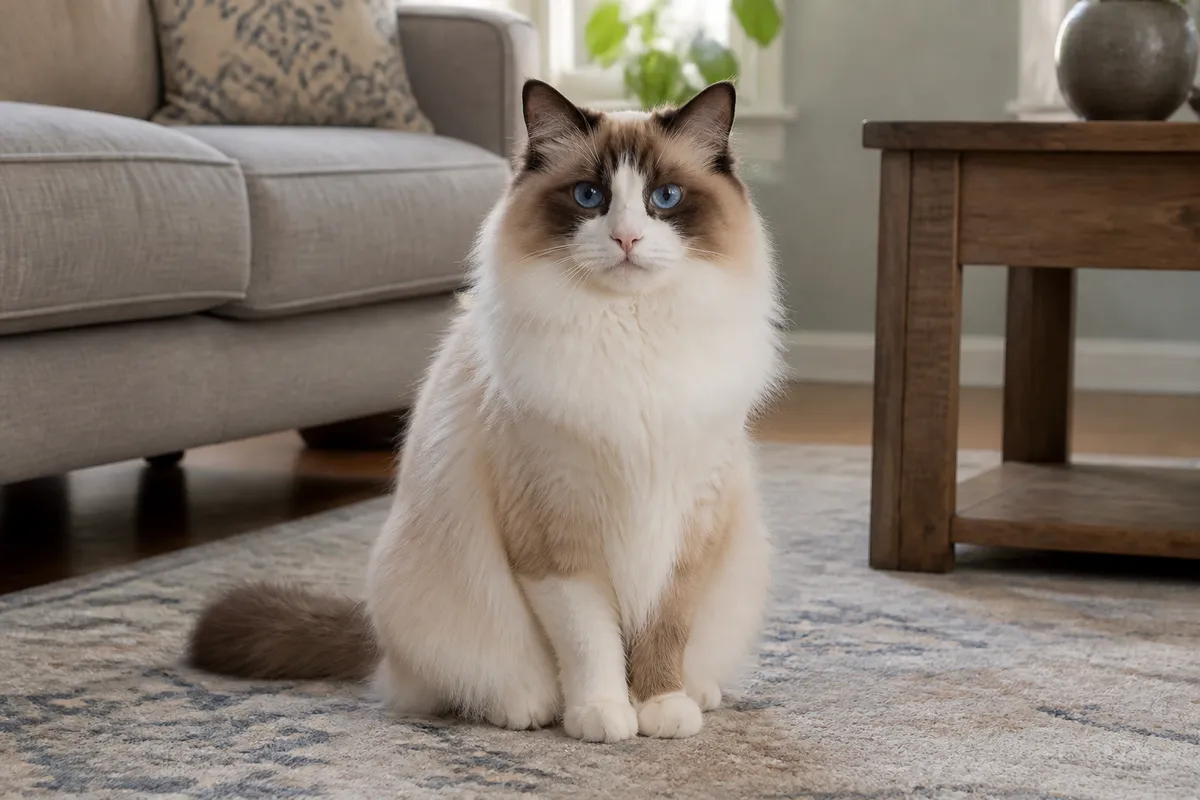
Many people call it a snowshoe Siamese, and the comparison is fair: the points (ears, mask, legs and tail) are darker than the body, and the eyes are always blue. But the Snowshoe is its own breed, and the white makes the difference. The FIFe standard prefers a white inverted V on the face plus white shoes on the feet.
The body sits between its ancestors. FIFe describes it as combining the heft of its shorthair side with the length of its Oriental side, a firm, muscular runner's build rather than a weightlifter's. GCCF lists males at about 9 to 12 pounds and females at about 7 to 10 pounds.
Here's a fun detail for new owners: GCCF notes Snowshoe kittens are born totally white. The points develop over the first weeks, and the body color keeps darkening gradually with age, so your kitten will look different at one year than at one month.
| Trait | Details |
|---|---|
| Origin | Philadelphia, USA, early 1960s |
| Ancestry | Siamese and bicolor American Shorthair |
| Weight | Males about 9 to 12 lb, females about 7 to 10 lb |
| Coat | Short, smooth, single-layer |
| Colors | Pointed, in Siamese colors including tabby and tortie points |
| White markings | White feet; inverted V on the face preferred |
| Eyes | Blue |
| Temperament | Affectionate, social, playful, soft-voiced talker |
Snowshoe patterns and colors
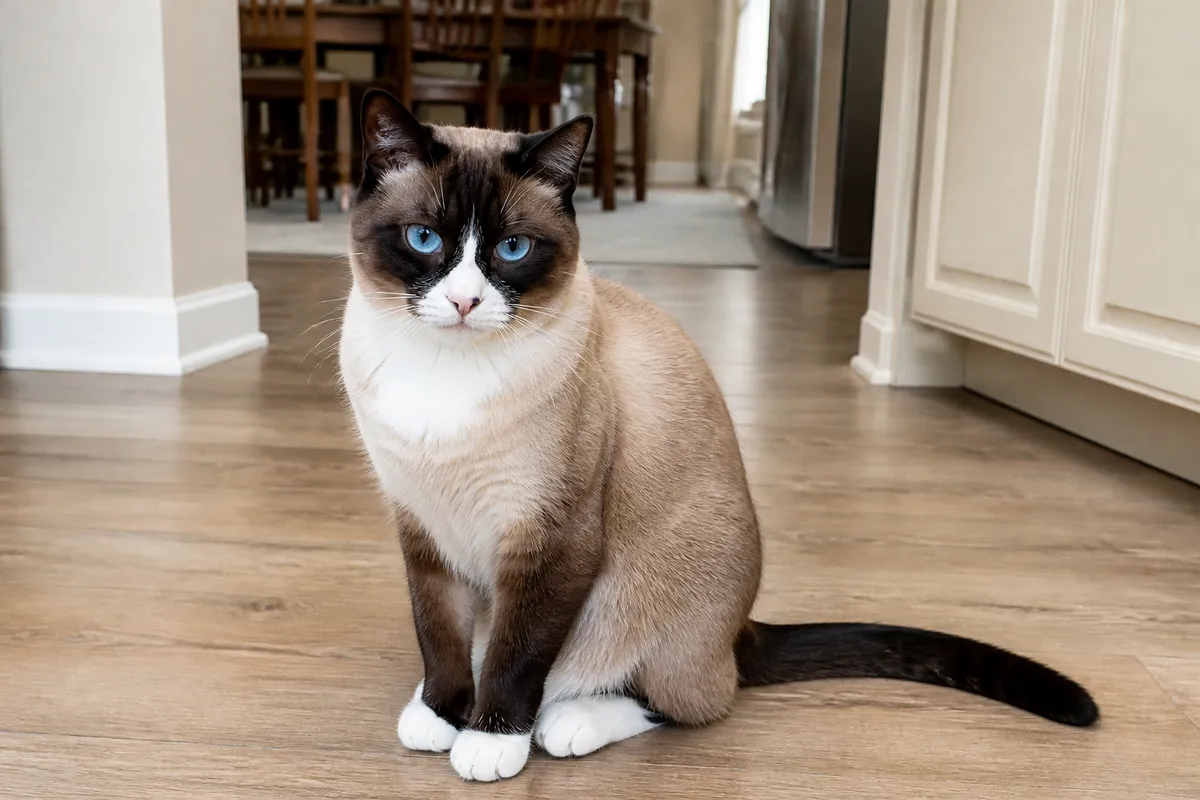
The Snowshoe is always pointed, and GCCF accepts all Siamese colors, including tabby (lynx) and tortie points.
The white is the tricky part. The amount and placement of white varies from cat to cat: some Snowshoes have neat white mittens and little else, others carry more white on the face, chest and legs. Breed standards describe an ideal, but a pet Snowshoe with uneven feet or a lopsided V is every bit as charming and just as much a Snowshoe.
Snowshoe cat personality
FIFe describes Snowshoes as affectionate, sweet-tempered, mellow, very social and devoted to their owners, and compatible with children and other pets. GCCF calls them intelligent and playful, notes that many learn fetch, and describes them as talkers with a soft voice, much quieter than a typical Siamese.
Many Snowshoes bond most strongly with one person, according to GCCF, while staying friendly with the rest of the household. They want company and interaction, so a home where someone is around, or a second friendly cat, suits them well.
Good ways to keep a Snowshoe busy: fetch with a soft toy, puzzle feeders, a window perch and short training sessions with treats.
- Social and people-oriented
- Usually good with kids, cats and dogs
- Talks, but softly
- Often attaches to one favorite human
Care and grooming
The short, single-layer coat is low maintenance. GCCF says it needs no special grooming, and most Snowshoes keep themselves tidy unless they're ill or stressed. A weekly once-over with a soft brush or rubber grooming mitt is plenty and doubles as bonding time.
Keep up with the basics: nail trims every few weeks, ear checks, tooth brushing and a stable weight. If your normally tidy Snowshoe stops grooming, that's worth a vet visit, since a change in grooming is often an early sign that something is off.
Because Snowshoes are social, enrichment is part of care too. Plan at least two short play sessions a day, a window perch with a view, and a tall scratching post. A Snowshoe that has company and a job is calm and content; one that is bored will follow you around and tell you about it.
Health
The Snowshoe has no long list of breed problems, but GCCF notes that polycystic kidney disease (PKD) has been reported in the breed. PKD is an inherited condition where cysts slowly form in the kidneys, and VCA notes that cysts are present from birth, usually cause no signs until middle age, and can be found early with an ultrasound. Because Siamese are part of the foundation, it's also reasonable to ask a breeder about conditions seen in Siamese lines, such as crossed eyes, which International Cat Care lists among Siamese-related traits.
Ask any breeder what health screening they do, and get the answer in writing. Your vet can check your kitten's eyes, heart and kidneys at the first visit.
- Ask whether the breeding cats were screened for PKD
- Ask about eye problems such as crossed eyes in the line
- Book a vet check within the first week after pickup
- Keep yearly checkups with blood and urine tests as your cat ages
How rare is the Snowshoe, and where to find one
GCCF classes the Snowshoe as a minority breed, and you'll notice it: few breeders work with it, and waitlists are common. Be patient, and be wary of sellers who claim any pointed cat with white feet is a Snowshoe. Without registered parents, it's simply a lovely mixed-breed cat.
That's not a bad thing. Shelters regularly have pointed cats with white paws, sometimes listed as Siamese mix, that share much of the look and often the sweet temperament. If papers don't matter to you, start there.
If you do go to a breeder, follow CFA's general advice for pedigreed kittens: visit the home, meet at least one parent, ask about health guarantees and the return policy, and never take a kitten younger than 8 weeks.
Who the Snowshoe suits
Great for families, multi-pet homes and people who want a Siamese look with a gentler voice and an easygoing nature.
Less suited to someone who's away all day without another pet, or to anyone set on a perfectly marked show cat on short notice.
- Good fit: households where someone is home much of the day
- Good fit: families with kids who play gently
- Good fit: homes with a friendly dog or another cat
- Poor fit: people who want a cat that ignores them
- Poor fit: anyone who needs a kitten next week
Frequently asked questions
Is a Snowshoe cat a Siamese?
No, but it's closely related. The Snowshoe was developed from Siamese and bicolor American Shorthairs, so it has Siamese points and blue eyes plus white feet and often a white V on the face.
Are Snowshoe kittens born white?
Yes. GCCF notes the kittens are born totally white, and the darker points develop over the first few weeks. The body color keeps darkening slowly as they mature.
Are Snowshoe cats vocal?
They do talk, but softly. GCCF describes them as talkers with a soft voice, which makes them much quieter than most Siamese.
Why are Snowshoe cats rare?
Few breeders work with the breed, and GCCF classes it as a minority breed. The white markings also vary a lot from kitten to kitten, so well-marked cats are uncommon.
How big do Snowshoe cats get?
They're medium-sized. GCCF lists males at about 9 to 12 pounds and females at about 7 to 10 pounds.
Do Snowshoe cats get along with dogs?
Usually, yes. FIFe describes the breed as compatible with children and other pets, and GCCF says they generally get along with cats and dogs. Introduce any new pet slowly, as you would with any cat.
Sources
- Snowshoe, FIFe
- Snowshoe breed information, Governing Council of the Cat Fancy
- Inherited disorders in cats, International Cat Care
- Polycystic Kidney Disease in Cats, VCA Animal Hospitals
- Finding the Purr-fect Pedigreed Kitten, The Cat Fanciers' Association
Last reviewed: November 2026