Outdoor Cat House: How to Choose, Insulate and Place a Winter Shelter
Gear Guides 7 min read reviewed November 2026, 4 sources
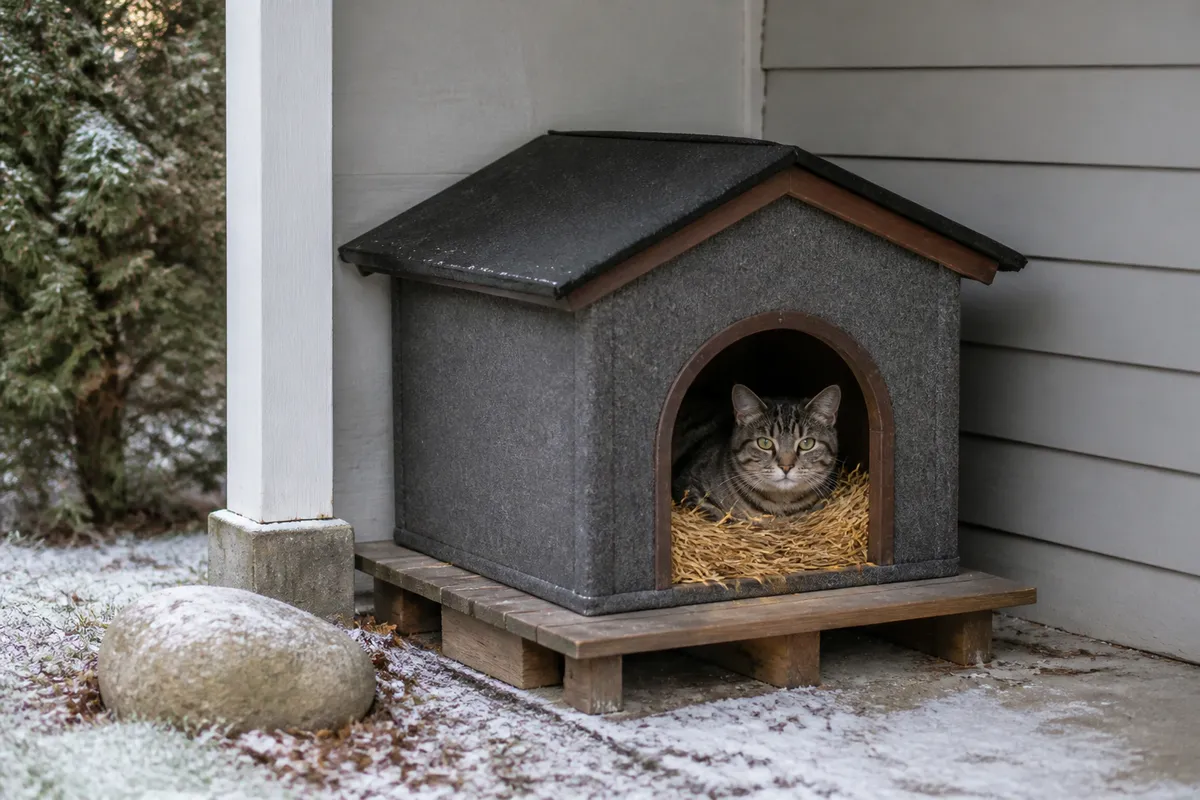
A good outdoor cat house is small, raised off the ground, windproof, and filled with loose straw, not blankets. That combination keeps a stray, feral or outdoor cat warm and dry through winter far better than a big, roomy box. Here is what to look for, how to insulate it, when a heated cat house makes sense, and how to get wary cats to actually move in.
What makes an outdoor cat house actually warm
Cats heat a shelter with their own bodies. That is why size matters more than looks: a compact space warms up quickly, while a large one loses heat as fast as the cat can produce it. Alley Cat Allies, the national advocacy group for community cats, recommends a shelter of roughly 2 by 3 feet and at least 18 inches high, and notes that bigger is not better because heat escapes quickly.
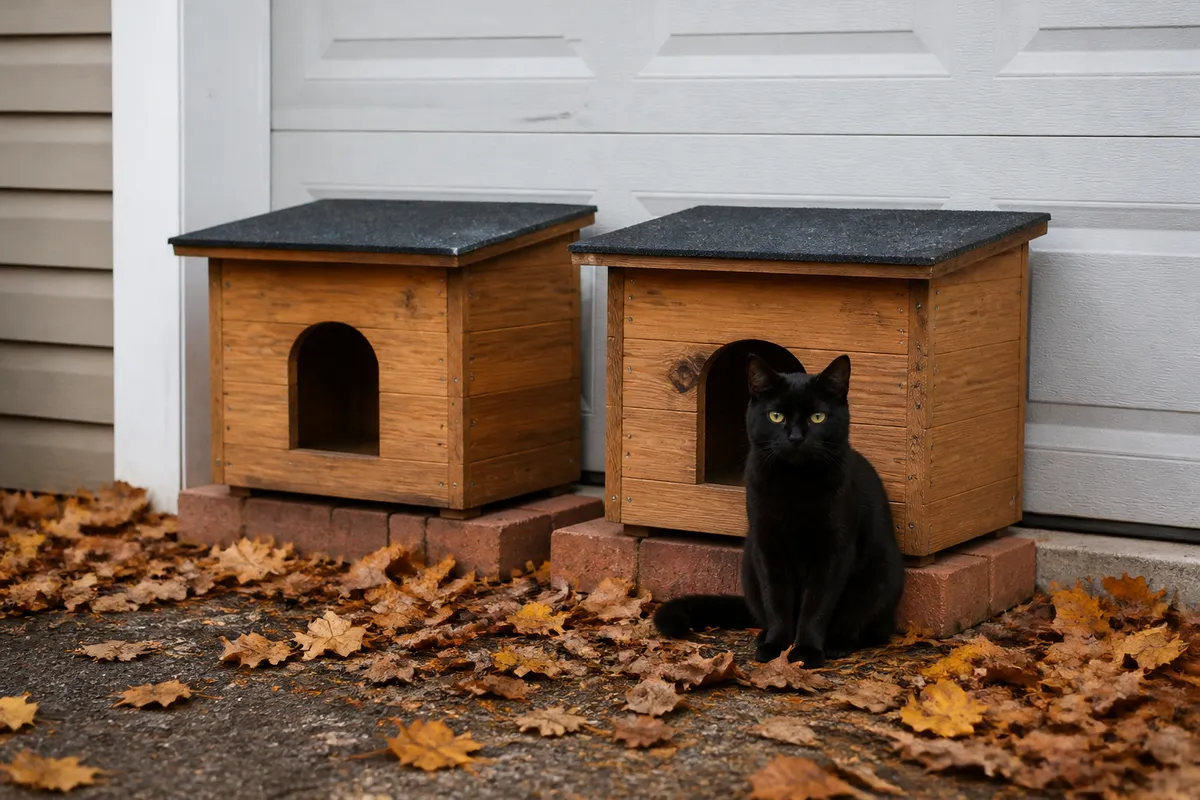
The second job is keeping weather out. A good shelter is waterproof and windproof, sits off the cold ground, and has a door just big enough for a cat. An opening of about 6 to 8 inches wide lets cats in while keeping larger animals out. A flap over the door or an L-shaped entry keeps wind, rain and snow from blowing straight inside.
Before you buy or build, check these basics:
- Compact interior: big enough for the cats you feed to huddle (three to five cats fit in the recommended size), not bigger
- Raised floor: on a pallet, bricks or built-in legs so cold and water do not seep up
- Small doorway: about 6 to 8 inches wide, ideally with a flap or offset entry
- Weatherproof shell: no leaks at the roof seam, no gaps at the base
- Easy access for you: a removable lid or roof makes refreshing the bedding simple
Types of outdoor cat houses compared
You can buy a ready-made outdoor cat house, convert something you already have, or build one. All of them work if they meet the basics above. The difference is mostly price, durability and how easy they are to clean.
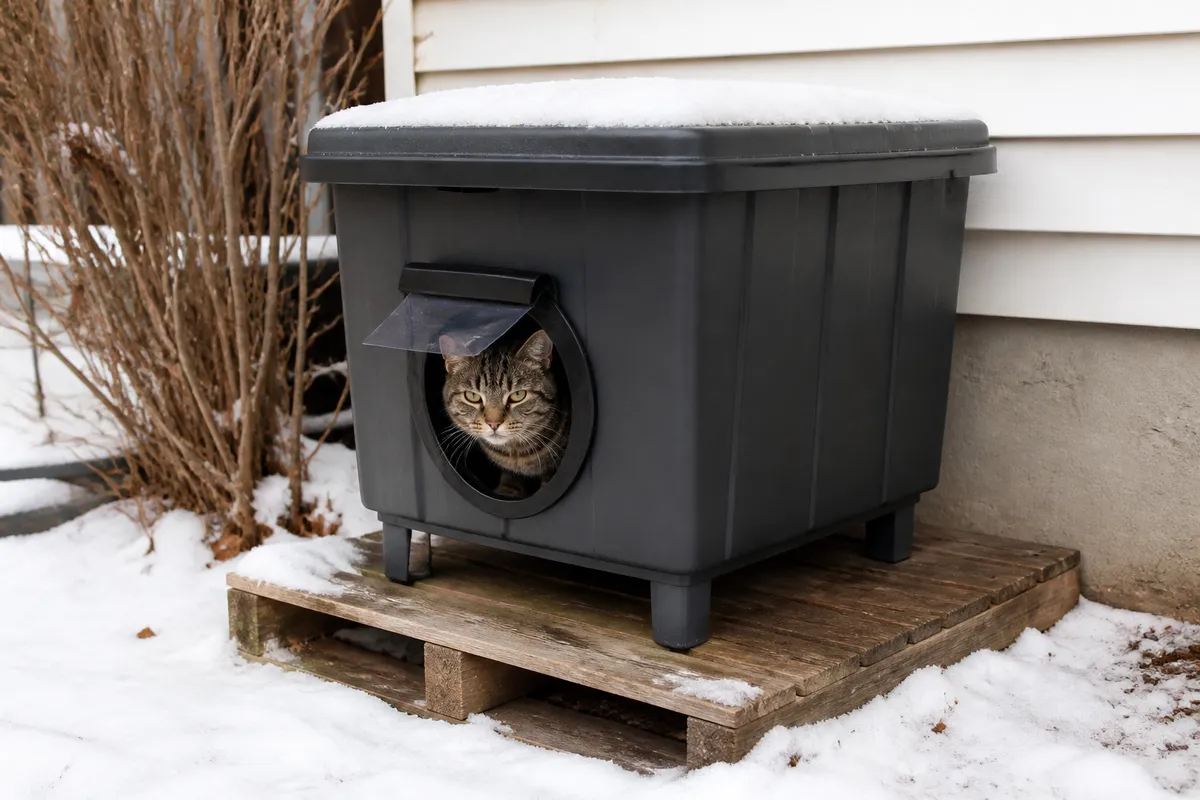
A popular DIY option is a large plastic storage bin with a foam cooler or rigid foam panels inside and a door cut into the side. Alley Cat Allies lists bins like these, scrap lumber and modified dog houses as workable shelters. If you adapt a dog house, add insulation and shrink the door, because a dog-sized opening lets the heat and the neighborhood raccoon in.
| Type | Pros | Watch out for |
|---|---|---|
| Insulated plastic or foam house (store-bought) | Light, waterproof, easy to wipe clean | Can blow away in storms; weigh it down |
| Wooden cat house | Sturdy, good natural insulation, looks tidy | Needs a waterproof roof and treatment against rot |
| DIY storage bin with foam lining | Cheap, quick to make, easy to replace | Cut the door cleanly; sharp plastic edges can scratch |
| Modified dog house | Often free or secondhand | Door and interior usually far too big; add insulation |
| Heated outdoor cat house | Extra warmth in hard freezes | Needs a safe outdoor power source and regular checks |
Straw, not hay or blankets: insulating an outdoor cat house for winter
This is the mistake almost everyone makes once. Blankets, towels and hay feel cozy to us, but they soak up moisture from the air and from damp paws. Once wet, they stay cold and can even freeze. Alley Cat Allies explains that hay holds moisture and can grow mold, while straw (the dry, hollow stalks left after a grain harvest) repels moisture, so cats can burrow into it and stay dry.
Fill the house loosely with straw to about a quarter or halfway up. Do not pack it tight, because cats like to dig a nest. Keep adding fresh straw through the season and swap it out completely when it looks matted or smells musty.
Straw and hay can look similar. Straw is usually yellow or golden, tough and lightweight, while hay is often greener and heavier. If you are not sure what you are buying at the farm or garden store, ask. A single bale fills several shelters, so splitting one with other cat caregivers is common.
Other things to keep out of a winter shelter: food and water bowls (spills soak the bedding) and anything that holds water, like pillows or old sleeping bags.
Do you need a heated cat house?
In most climates a small, well-insulated shelter full of straw is enough, especially when several cats share it. A heated cat house or heated pad can help in regions with long, hard freezes, for a single cat who sleeps alone, or for a senior or thin cat who struggles to stay warm.
If you go electric, choose a product built and safety-certified for outdoor pet use, plug it into a weather-protected outdoor outlet, and protect the cord from chewing and moisture. Check the cord and the heating element regularly, especially after storms. Never improvise with indoor heating pads, space heaters or heat lamps in a straw-filled box.
Heat does not replace the basics. A heated pad in a drafty, oversized house on wet ground still makes a cold house. Get the size, door and straw right first, then add heat only if you need it.
Where to put an outdoor cat house
Location decides whether cats use the shelter at all. Place it somewhere quiet, away from foot traffic, busy driveways and the dog next door. Face the door away from the prevailing wind or against a wall, and raise the house off the ground.
Camouflage helps. Dark paint, leaves or a bit of brush around the shelter make cats feel hidden and keep it from attracting attention. If the cats you care for are feral, privacy from passersby matters even more.
- Near where the cats already rest or eat, but not right next to the feeding station
- Raised on a pallet or bricks, with the door away from the wind
- Weighed down with bricks before big storms so it does not blow away
- Entrances shoveled clear after snowfall so cats are not trapped inside or out
- Out of reach of sprinklers, gutters and runoff
Food, water and winter safety around the shelter
Cats need more calories in the cold. Alley Cat Allies suggests larger portions in winter, wet food because it takes less energy to digest, and replacing food and water rather than letting leftovers freeze. Deep bowls freeze more slowly than wide, shallow ones, and a heated water bowl keeps water drinkable. A simple insulated feeding station that keeps bowls off the ground also helps.
Keep food a short distance from the shelter, not inside it, so spills do not soak the straw. Before a big storm, put out extra food and water in case you cannot get back for a day or two.
Winter also brings hazards for outdoor cats. Antifreeze is very attractive to cats and extremely toxic, so clean up spills right away. Skip salt and chemical ice melt near shelters, because cats lick it off their paws. Cats also crawl into warm engines, so knock on the hood and check between the tires before you start the car. If you think a cat licked antifreeze, call your vet or the ASPCA Animal Poison Control Center at (888) 426-4435 (a consultation fee may apply) right away.
Common outdoor cat house mistakes
Most shelters that sit empty fail for the same few reasons. Fixing them is usually quick.
- Too big: a roomy house never warms up; pick the smallest size that fits the cats
- Blankets or towels inside: they get wet and cold; use loose straw
- Door facing the wind or too wide: heat escapes and other animals move in
- Sitting directly on the ground: cold and moisture seep up through the floor
- Food inside the shelter: spills soak the bedding and attract wildlife
- Never checked: straw goes flat, roofs leak and doors get snowed in; look at it weekly in winter
How to get cats to use the outdoor cat house
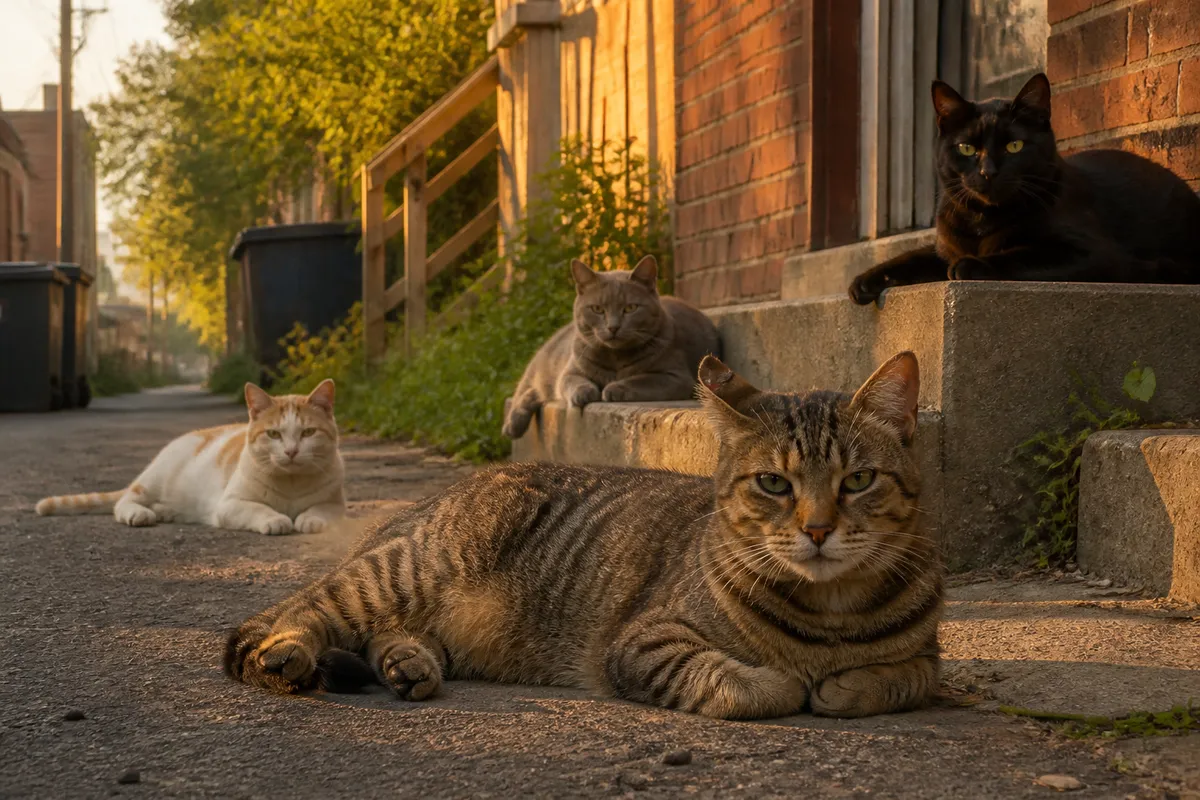
Cats, especially feral ones, distrust new objects. Give them time. Put the shelter where they already hang out, leave it alone for a few weeks, and resist the urge to check on it every hour like a nervous landlord.
If nobody moves in after a few weeks, move it closer to where the cats spend time while keeping it private. A sprinkle of catnip inside can help, and a second shelter nearby gives timid cats an option when a bolder cat claims the first one. Once one cat starts using it, others often follow.
Shelters work best as part of bigger care: regular food, fresh water and trap-neuter-return so the group stays stable and healthy. Our feral cat guide covers how that works and how to tell a lost pet from a community cat.
Frequently asked questions
What is the best bedding for an outdoor cat house in winter?
Loose straw is the standard recommendation. It repels moisture and lets cats burrow in, while blankets, towels and hay soak up moisture and turn cold. Fill the house about a quarter to halfway and refresh the straw through the season.
How big should an outdoor cat house be?
Smaller than most people expect. Alley Cat Allies recommends roughly 2 by 3 feet and at least 18 inches high, which fits a few cats huddling together. A larger space loses heat too fast for the cats to warm it.
Are heated cat houses safe?
They can be, if the product is designed and safety-certified for outdoor pet use, plugged into a protected outdoor outlet, and checked regularly for cord damage. Never use indoor heating pads, space heaters or heat lamps in an outdoor shelter.
How do I keep raccoons and other animals out of a cat shelter?
Keep the doorway small, about 6 to 8 inches wide, and never put food inside the shelter. Placing the feeding station a short distance away and taking food up after meals makes the area less attractive to wildlife.
How long does it take for a feral cat to use a new shelter?
Often a few days to a few weeks. Place it where the cats already spend time, leave it undisturbed, and if it stays empty after a few weeks, move it closer to their favorite spot. Catnip inside can help.
Should the door of an outdoor cat house face a certain way?
Face it away from the prevailing wind, or toward a wall with a small gap, so wind and snow do not blow straight in. A flap or an L-shaped entry adds extra protection.
Sources
- Providing Shelter, Alley Cat Allies
- Straw, not Hay, for Outdoor Cat Shelters, Alley Cat Allies
- Top 10 Winter Weather Tips for Community Cats, Alley Cat Allies
- Outdoor Cat Cold Weather Tips, Alley Cat Allies
Last reviewed: November 2026