Litter Boxes: Size, Covered vs. Open, How Many and Where to Put Them
Gear Guides 6 min read reviewed November 2026, 4 sources
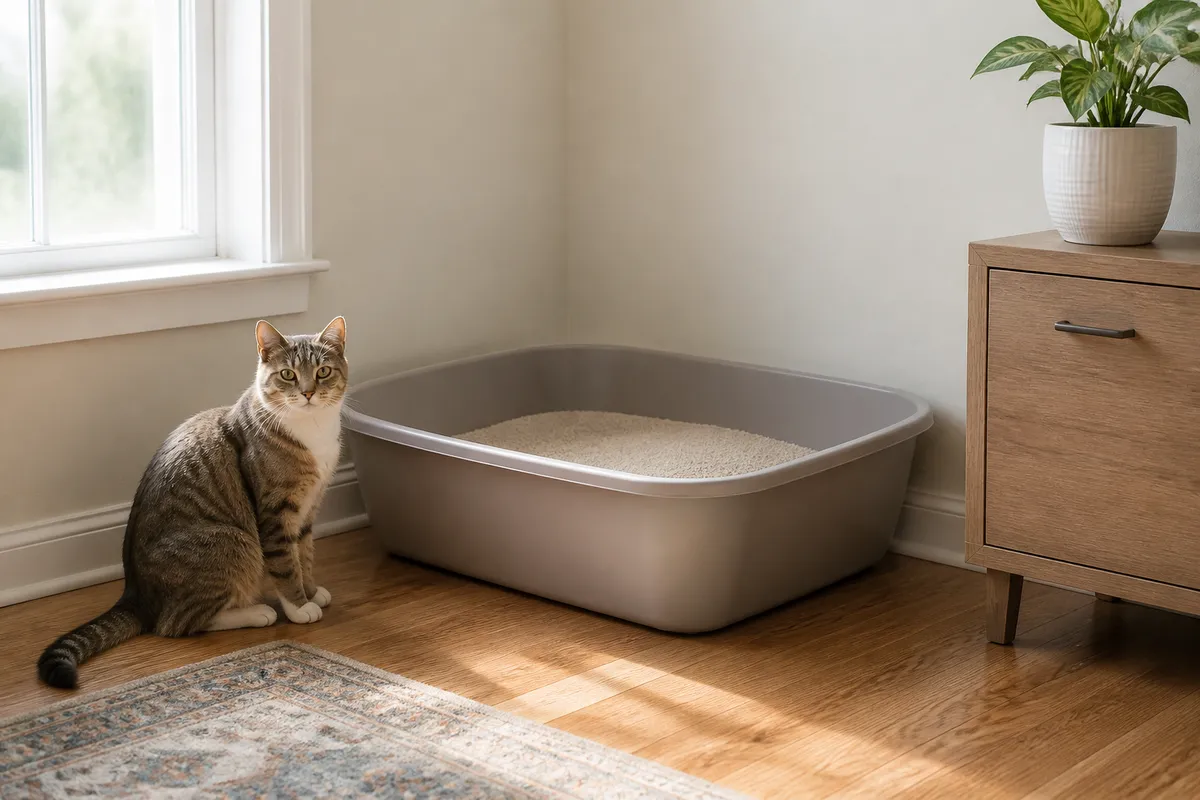
Good litter boxes are bigger than most store-bought ones, kept spotlessly clean, placed somewhere quiet, and there should be one more box than you have cats. Whether the box is covered matters less than people think, as long as it's roomy and scooped every day.
What size should a litter box be?
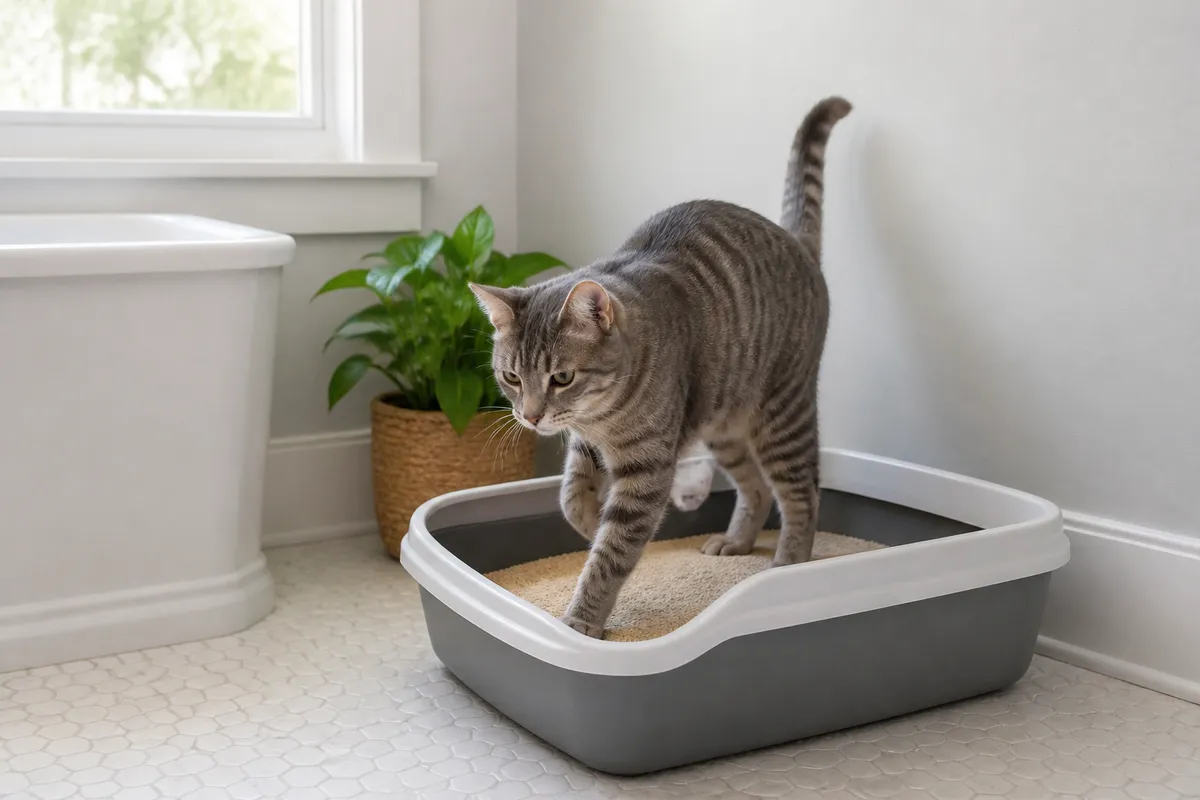
Bigger is better. The American Association of Feline Practitioners (AAFP) and the International Society of Feline Medicine (ISFM) say many commercial litter boxes are too small, and recommend a box 1.5 times the length of your cat, measured from the nose to the base of the tail. For an average adult cat, that's often bigger than anything labeled "litter box" on the shelf.
International Cat Care (iCatCare) adds that rectangular boxes give more room than corner, triangle or oval shapes, and that cats prefer a box that lets them move around, dig and turn comfortably.
If you can't find a large enough cat litter box, think outside the pet aisle. The AAFP suggests concrete mixing trays or storage containers as suitable alternatives. Older cats need a low entry, and the AAFP notes you can cut down one side of a container, as long as you check for sharp edges.
- Measure your cat from nose to base of tail
- Multiply by 1.5 for the minimum box length
- Choose rectangular over corner or round shapes
- Low entry for kittens, seniors and cats with arthritis
Covered vs. open litter boxes: what cats prefer
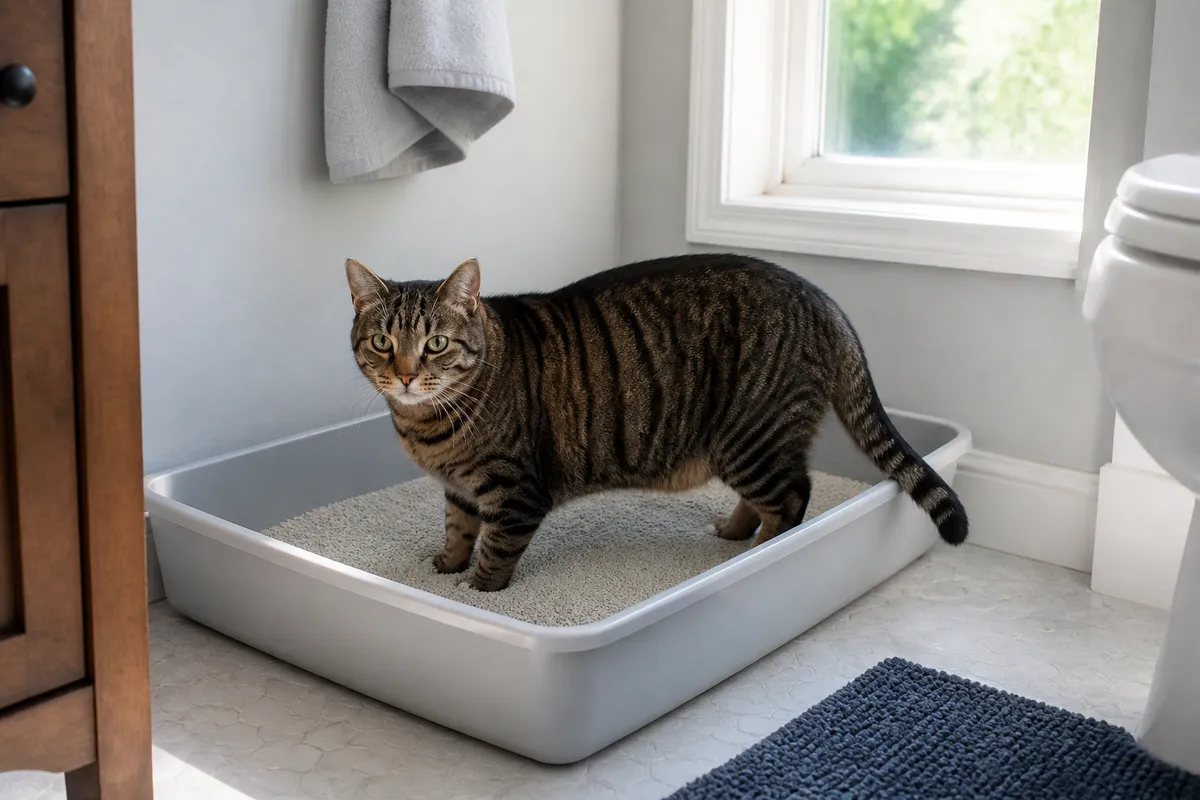
Feline experts used to warn against covered boxes across the board. Then someone tested it. In a study published in the Journal of Feline Medicine and Surgery, Dr. Emma Grigg and colleagues offered 28 cats both a covered and an uncovered box, scooped daily. As the American Veterinary Society of Animal Behavior (AVSAB) summarizes, there was no overall preference: four cats preferred covered, four preferred uncovered and the rest didn't care. The authors suggested that most cats won't mind either type if boxes are kept clean, and recommended offering a choice.
iCatCare points out the trade-offs of covered boxes. The lid keeps odor in for people, but that can make the inside smell worse for the cat, especially if soiled litter isn't removed quickly. Some cats feel vulnerable in a small space with only one exit, especially in multi-cat homes, and large cats may not have room to position themselves or dig. If you choose a covered box, iCatCare suggests removing the flap door.
Types of litter boxes compared
Here's how the common styles stack up. Whatever you pick, size and cleanliness matter more than the design.
| Type | Pros | Cons |
|---|---|---|
| Open rectangular box | Easy to scoop, easy to see when it needs cleaning, cats can see around them | Litter scatter, visible to people |
| High-sided open box | Holds in litter from enthusiastic diggers | Needs a lower entry point for small or older cats |
| Covered (hooded) box | More privacy for people, less scatter | Traps odor inside, one exit, can feel cramped |
| Low-entry box | Easy for kittens, seniors, cats with arthritis | More litter scatter |
| Storage tote or mixing tray | Very large and inexpensive, AAFP-approved alternative | Not designed for cats; smooth or cut edges needed |
| Self-cleaning box | Less scooping for you | iCatCare notes movements and noises can startle cats, and many are small |
How many litter boxes do you need?
The rule of thumb from the AAFP and ISFM: one litter box for each cat, plus one extra, in multiple locations around your home. One cat needs two boxes, two cats need three.
There's a nuance. The AAFP notes that socially bonded cats, ones that groom, play and rest together, may be more willing to share boxes. But a household can contain more than one social group, and each group needs enough resources of its own.
Spread them out. Boxes placed side by side count as one big box from your cat's point of view, according to the AAFP. In a multi-level home, put a box on each level, and for an older cat, put one on the level where it spends most of its time.
Where to put a litter box
Location makes or breaks a litter box. Cats usually prefer quiet, private places where they can't be cornered or ambushed.
- Away from food and water bowls
- Out of busy hallways and high-traffic areas
- Not in a closet or tiny room where another cat can block the only exit
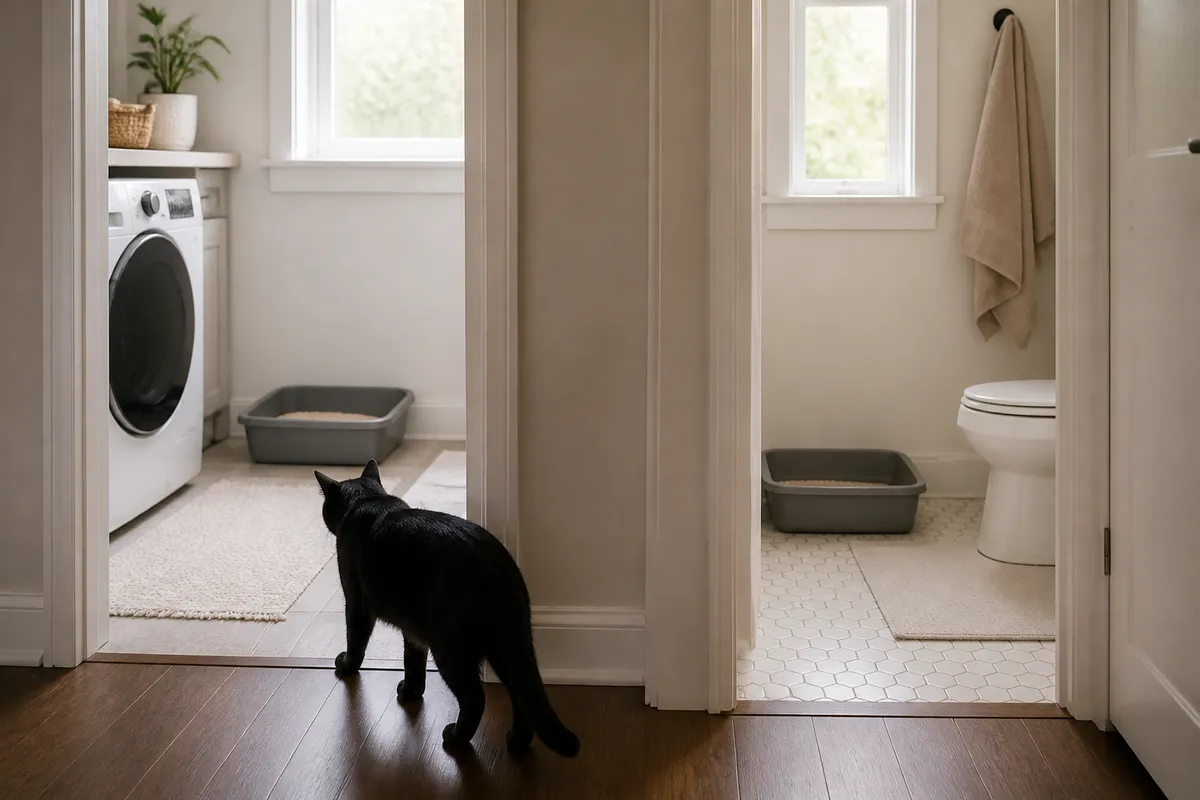
- Away from loud appliances such as furnaces and washing machines that could startle your cat
- Not right next to cat doors or full-length glass windows, where cats may feel threatened by outside cats (iCatCare)
- Boxes in different rooms, not lined up together
- Easy to reach for older cats, without stairs
Keeping litter boxes clean
Cats are less likely to use a box that's already soiled, says iCatCare. The AAFP recommends removing waste at least once a day and adding litter as needed, while iCatCare suggests scooping twice a day.
For a full clean, the AAFP says to wash the litter box every one to four weeks with soap and hot water only, avoiding strong chemicals and ammonia-based products. iCatCare gives a similar schedule: every two to four weeks with clumping litter, weekly with non-clumping. It also warns that some disinfectants that turn cloudy in water are toxic to cats, so stick to hot water and mild detergent, rinse well and dry before refilling.
Skip plastic liners and scented sprays. The AAFP notes many cats dislike liners and deodorizers, and iCatCare explains that claws catching in plastic can be unpleasant. Which litter to put in the box is covered in our cat litter guide.
Cat toilet, litter tray, litter box: same thing?
Mostly, yes. Litter tray is the British term, litter box the American one, and cat toilet is a common name for both in many countries. They all mean the same container of litter where your cat does its business.
Whatever you call it, it's worth the investment even if your cat goes outdoors. iCatCare recommends litter trays for all indoor cats and even for cats that usually toilet outside, so they always have a safe option day or night.
Common litter box mistakes
Most litter box trouble is caused by the setup, not the cat. Check this list before you blame your cat's character.
- A box that's too small, often one sold for kittens and never upgraded
- Only one box for several cats, or several boxes lined up side by side
- Putting the box next to the food bowl or in the laundry room right beside a loud machine
- Scooping every few days instead of daily
- Plastic liners, scented litter or air fresheners right next to the box
- Cleaning with ammonia-based products, which smell like urine to a cat
- Moving the box suddenly without leaving the old spot available for a while
- Ignoring a sudden change in habits instead of calling the vet
When litter box problems mean a vet visit
A cat that stops using its box isn't being spiteful. The AAFP stresses that cats eliminate outside the box because their physical, social or medical needs aren't being met, and that every cat that starts house-soiling needs a thorough physical exam and urinalysis to check for problems such as infections, cystitis, arthritis, kidney disease or diabetes.
Watch the box for warning signs, too. The Cornell Feline Health Center lists straining, frequent attempts to urinate, crying out while urinating, blood in the urine and peeing outside the box as signs of lower urinary tract problems. A cat that passes little or no urine and becomes increasingly distressed may have a urethral obstruction, which Cornell calls an absolute emergency requiring immediate veterinary treatment. Male cats are at increased risk. Don't wait until morning: call your vet or an emergency clinic right away. For other changes, see our guide on why a cat pees outside the litter box.
Frequently asked questions
How big should a litter box be?
About 1.5 times your cat's length from nose to base of tail, according to the AAFP and ISFM. Many commercial boxes are too small, so a large storage container can be a good alternative.
How many litter boxes do I need for two cats?
Three. The rule of thumb is one box per cat plus one extra, placed in different locations around the home.
Do cats prefer covered or uncovered litter boxes?
Most cats don't show a strong preference if the box is large and scooped daily, according to a study of 28 cats. A minority prefer one or the other, so offering both styles is the safest way to find out.
Where should I not put a litter box?
Avoid busy hallways, spots next to food and water, small closets where a cat can be cornered, areas next to loud appliances, and places near cat doors or glass doors where outside cats are visible.
How often should I clean the litter box?
Scoop at least once a day, ideally twice. Wash the whole box every one to four weeks with hot water and mild soap, and avoid ammonia-based or strong chemical cleaners.
Is a litter tray the same as a litter box?
Yes. Litter tray is the British term and litter box the American one. Cat toilet is another common name for the same thing.
Sources
- Feline House-Soiling: Useful Information for Cat Owners, AAFP and ISFM
- Choosing a litter tray for your cat, International Cat Care
- Research Study: Litter Box Preference in Domestic Cats, American Veterinary Society of Animal Behavior
- Feline Lower Urinary Tract Disease, Cornell Feline Health Center
Last reviewed: November 2026