Cat Scratching Post Guide: How to Pick One Your Cat Actually Uses
Gear Guides 6 min read reviewed November 2026, 3 sources
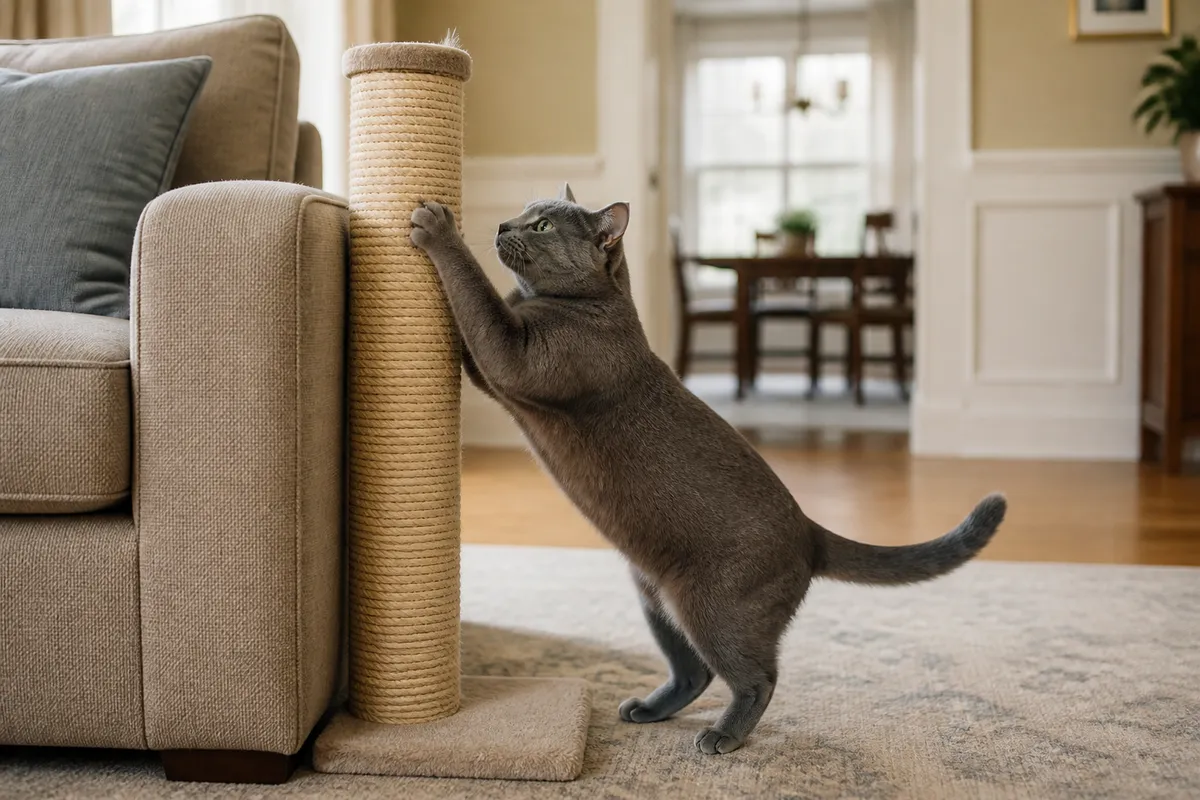
A good cat scratching post is sturdy, taller than your cat when it stretches up on its hind legs, and covered in a texture your cat likes, most often sisal rope. Put it where your cat already wants to scratch, reward every use, and your furniture gets a lot less interesting.
Why cats need to scratch
Scratching isn't bad behavior, it's essential maintenance. The American Association of Feline Practitioners (AAFP) lists three main reasons cats scratch: to renew the nail by removing the old outer layer, to mark territory visually and with scent from glands in their paws, and to stretch their limbs.
International Cat Care (iCatCare) adds that kittens start scratching from around five weeks of age, and that the scent marks left behind may give the cat a sense of safety and security. Cats often scratch more in times of stress, or right in front of you as a sign of territorial confidence.
Since you can't stop scratching, and shouldn't try, the goal is simple: give your cat a better place to do it than your couch.
- Claw care: sheds the worn outer layer of the claw
- Communication: leaves visible marks and scent
- Exercise: stretches the front legs and spine
- Comfort: scent marks can make a cat feel secure
What makes a scratching post cats actually use
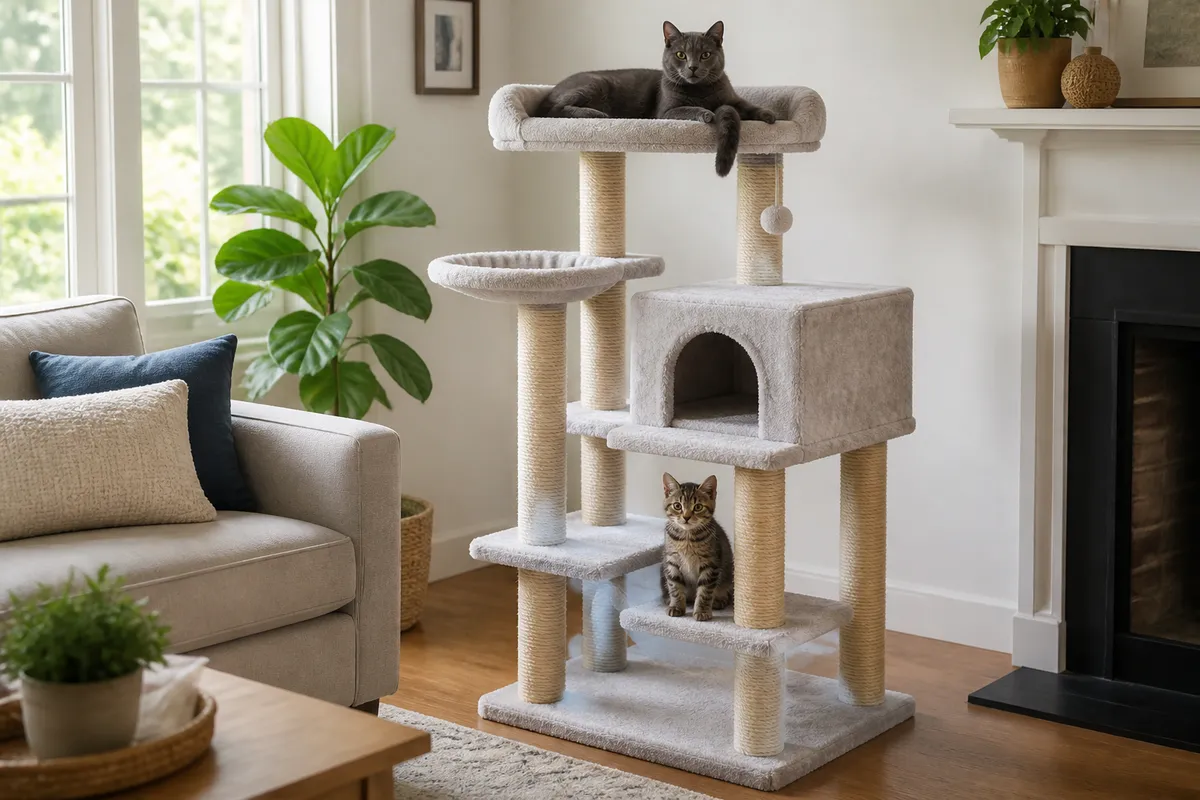
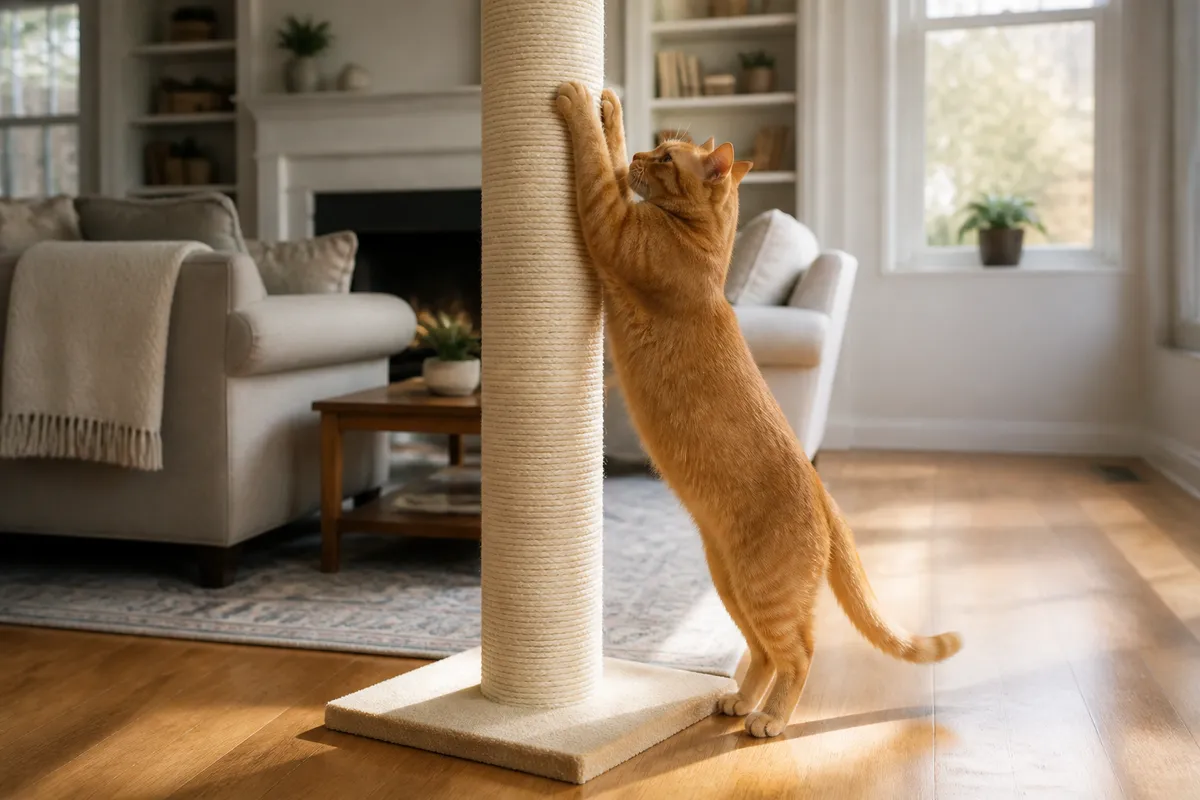
There's real research on this. An internet survey of cat owners published in the Journal of Feline Medicine and Surgery in 2016, summarized by the AAFP, found that cats preferred upright structures, posts with two or more levels, and structures taller than three feet (taller than the cat's stretched-out height) with a base narrower than three feet.
Height is the feature most cheap posts get wrong. iCatCare says a post should be as tall as your cat when it stands on its hind legs in a full stretch. A short post that wobbles every time your cat leans in is worse than useless, because it teaches your cat that the sofa is more reliable.
Stability matters just as much. The AAFP describes the ideal as a sturdy post that's taller than the cat's body length, so look for a heavy, wide base or a model you can fix to the wall.
If you're replacing an old favorite, keep it next to the new post for a while. iCatCare explains that scratching deposits a chemical message from glands between the pads, together with visible marks and discarded claw husks. Your cat's own scent on the old post is part of what makes it feel like home.
- Tall: at least your cat's full stretched-out height, ideally over three feet
- Sturdy: no wobble when you push the top
- Right texture: sisal rope for most adult cats
- Right direction: vertical for most cats, horizontal for carpet scratchers
- Right place: next to where your cat already scratches
Types of cat scratchers compared
Scratchers come in every shape, from a single upright post to floor-to-ceiling modular units, according to iCatCare. Offering more than one style is a smart move: the survey summarized by the AAFP found that unwanted scratching decreased as the number of different post types and styles in the home increased.
| Type | Best for | Watch out for |
|---|---|---|
| Tall vertical sisal post | Most adult cats, cats that scratch furniture arms | Must be tall and heavy enough not to tip |
| Multi-level post or cat tree | Cats who like to climb, multi-cat homes | Takes floor space; check stability |
| Horizontal cardboard cat scratcher | Cats that scratch rugs and carpet, kittens, seniors | Wears out and sheds bits; replace when flattened |
| Angled or ramp scratcher | Kittens and older cats | Less of a full stretch than a tall post |
| Wall-mounted scratching panel | Small apartments, cats that scratch walls or doors | Needs secure mounting |
| Wood, bark or log scratcher | Cats that scratch wood furniture or door frames | Heavy; check for splinters |
| Carpet-covered post | Some senior cats | May encourage scratching your actual carpet |
Sisal, carpet or cardboard: which scratching surface?
The AAFP says many cats prefer sisal rope, while others prefer corrugated cardboard, carpet or wood. Age seems to play a role. In the survey summarized by the AAFP, cats nine years and younger preferred rope over carpet over cardboard, while cats over nine preferred carpet, then rope, then cardboard.
iCatCare adds that kittens and senior cats may prefer softer surfaces, such as large angled or horizontal cardboard scratchers, because they offer less resistance.
The smartest strategy is to copy what your cat is already damaging. iCatCare's example: if your cat is shredding textured wallpaper at a certain height, offer a vertical scratcher with a similar texture that lets it stretch to the same level. Rug scratcher? Try a horizontal cardboard cat scratcher on the floor next to the rug.
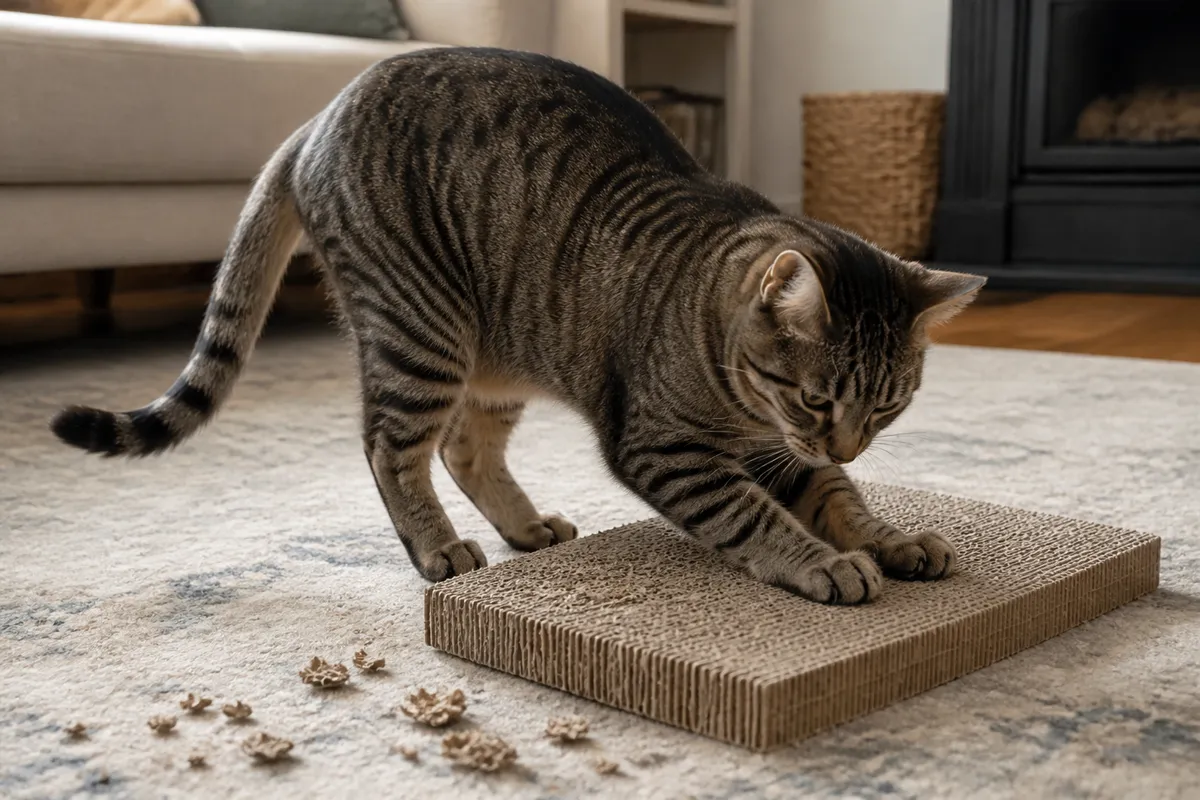
Cardboard cat scratchers: cheap, effective, disposable
Corrugated cardboard scratchers are popular for good reason. They're light, inexpensive, often double as a lounging spot, and many cats love the satisfying shred. The AAFP suggests a horizontal scratcher as a good alternative if your cat is scratching carpet.
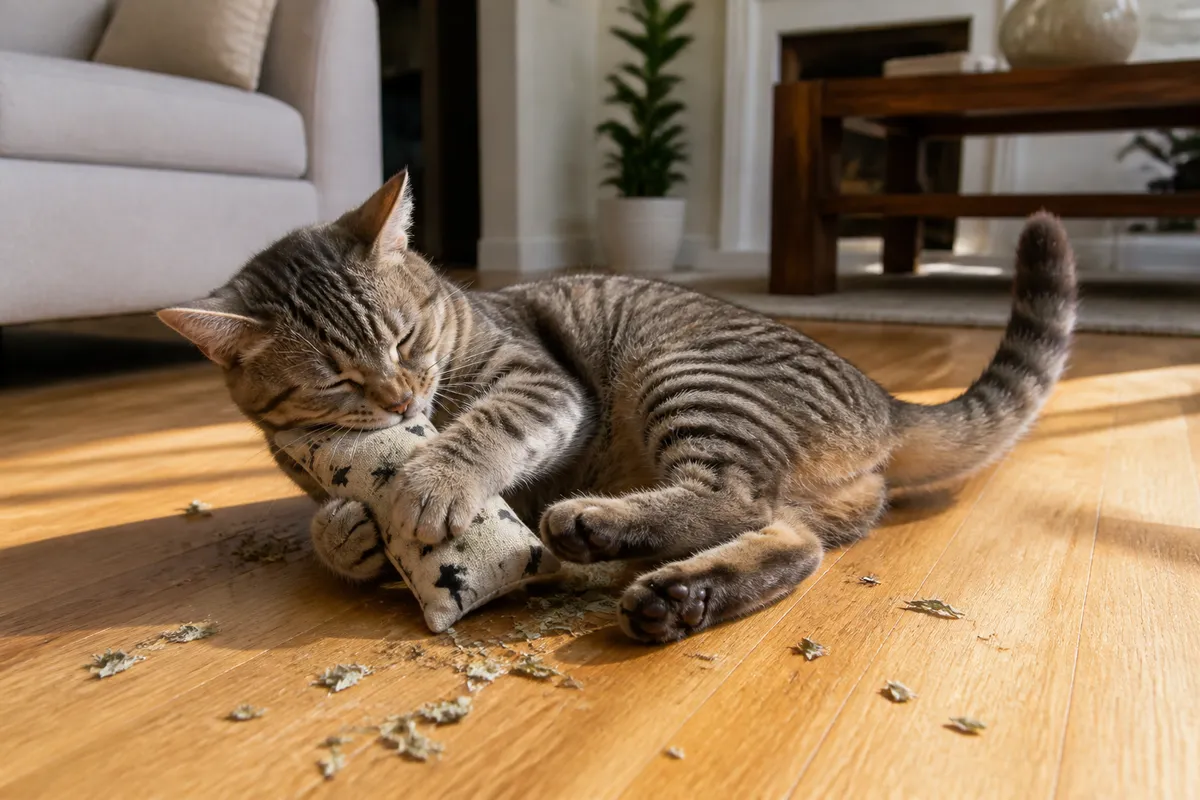
The trade-off is lifespan. Cardboard wears down and leaves crumbs, so plan to flip or replace it when the surface is flattened. A sprinkle of catnip can make a new one more appealing, if your cat responds to catnip.
Think of cardboard as a complement, not a replacement. Most cats still want at least one tall, vertical post for a full-body stretch.
Where to put a scratching post
Location is half the battle. A perfect post hidden in the laundry room won't save your sofa. The AAFP and the research it summarizes recommend these spots.
- Near where your cat sleeps, because cats often stretch and scratch when they wake up
- Directly in front of the spot your cat is scratching now, such as the sofa arm or a door frame
- Near entry doors and windows, where territory may feel challenged
- In living areas where your household spends time
- In several places around the home, not just one
- In multi-cat homes: iCatCare recommends one post per cat plus one extra, in different locations
Common scratching post mistakes
If your cat ignores a brand-new cat post, one of these is usually the reason. Most are fixed in an afternoon.
- Too short: if your cat can't stretch out fully, it will look for something taller, like the back of your sofa
- Too wobbly: a post that tips or sways once may be avoided for good
- Wrong texture: smooth plush carpet or loose fabric doesn't give a satisfying grip
- Wrong spot: tucked in a corner or a spare room instead of next to the scratched furniture
- Only one option: a single post can't cover vertical and horizontal preferences, or several cats
- Moving the old, shredded post away too early: your cat's scent marks are part of the appeal
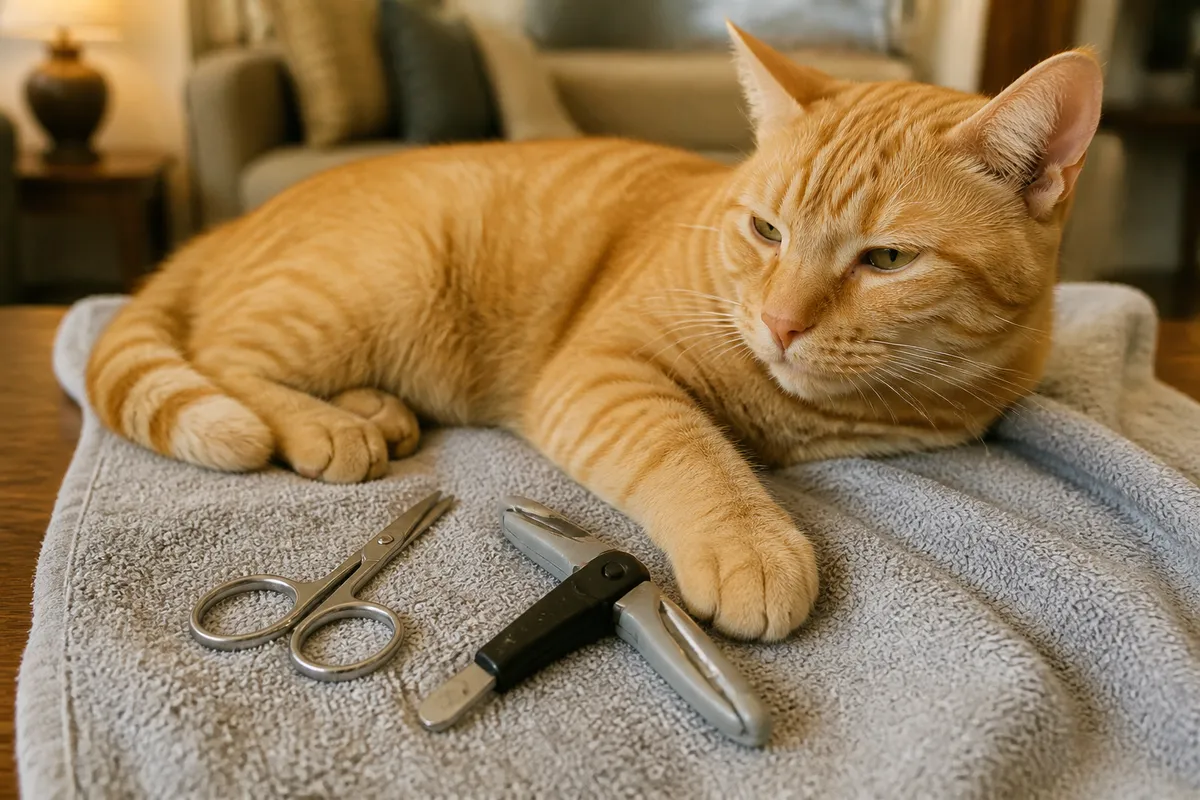
- Relying on nail trims alone: iCatCare notes trimming may limit immediate damage but doesn't meet your cat's need to scratch
How to get your cat to use a scratching post
Cats learn best through positive reinforcement. The AAFP's advice: if your cat scratches somewhere else, pick it up, take it to the scratcher and reward it, and reward immediately, within three seconds, whenever it uses the approved post. Treats, catnip, play, petting or grooming all count.
Skip punishment. In the survey summarized by the AAFP, punishment did not affect how often cats scratched in the wrong places, while positive reinforcement improved use of the right ones. Yelling or spraying water mainly teaches your cat to scratch when you're not looking.
Make the post irresistible: drag a wand toy up and down it, scratch it yourself with your fingernails to show interest, and place it in the cat's path after naps. iCatCare also suggests a synthetic feline pheromone product to help cats feel secure, which can reduce territorial scratching. Trimming claws regularly helps limit damage while your cat learns, and our guide on how to stop a cat from scratching furniture covers stubborn cases.
Frequently asked questions
How tall should a cat scratching post be?
At least as tall as your cat when it stretches up on its hind legs. Research summarized by the AAFP found cats preferred structures taller than three feet.
Do cats prefer vertical or horizontal scratchers?
Most cats like to scratch vertically, but some prefer horizontal surfaces. If your cat scratches rugs or carpet, the AAFP suggests offering a horizontal scratcher.
Is sisal or cardboard better for a cat scratcher?
Many cats prefer sisal rope, especially younger adults, while others love cardboard. Kittens and seniors often like softer cardboard scratchers. Offer both and see which gets used.
Why won't my cat use the scratching post?
It's usually too short, too wobbly, the wrong texture or in the wrong place. Move it next to where your cat already scratches, make sure it's sturdy and reward every use right away.
How many scratching posts does a cat need?
More than one helps. iCatCare recommends one per cat plus one extra in multi-cat homes, and research found unwanted scratching decreased as the variety of posts increased.
When should I replace a scratching post?
Replace or rewrap it when it starts to wobble or the surface is worn smooth. Many cats like a well-used post, so don't throw it out just because it looks shabby.
Sources
- Claw Friendly Educational Toolkit: Client Resources (Living with a Clawed Cat), American Association of Feline Practitioners
- Claw Friendly Educational Toolkit: Literature Review Summaries, American Association of Feline Practitioners
- Scratching on furniture and carpets, International Cat Care
Last reviewed: November 2026