Cat Toys: The Best Types by Play Style, Plus Safety and Rotation Tips
Gear Guides 6 min read reviewed November 2026, 4 sources
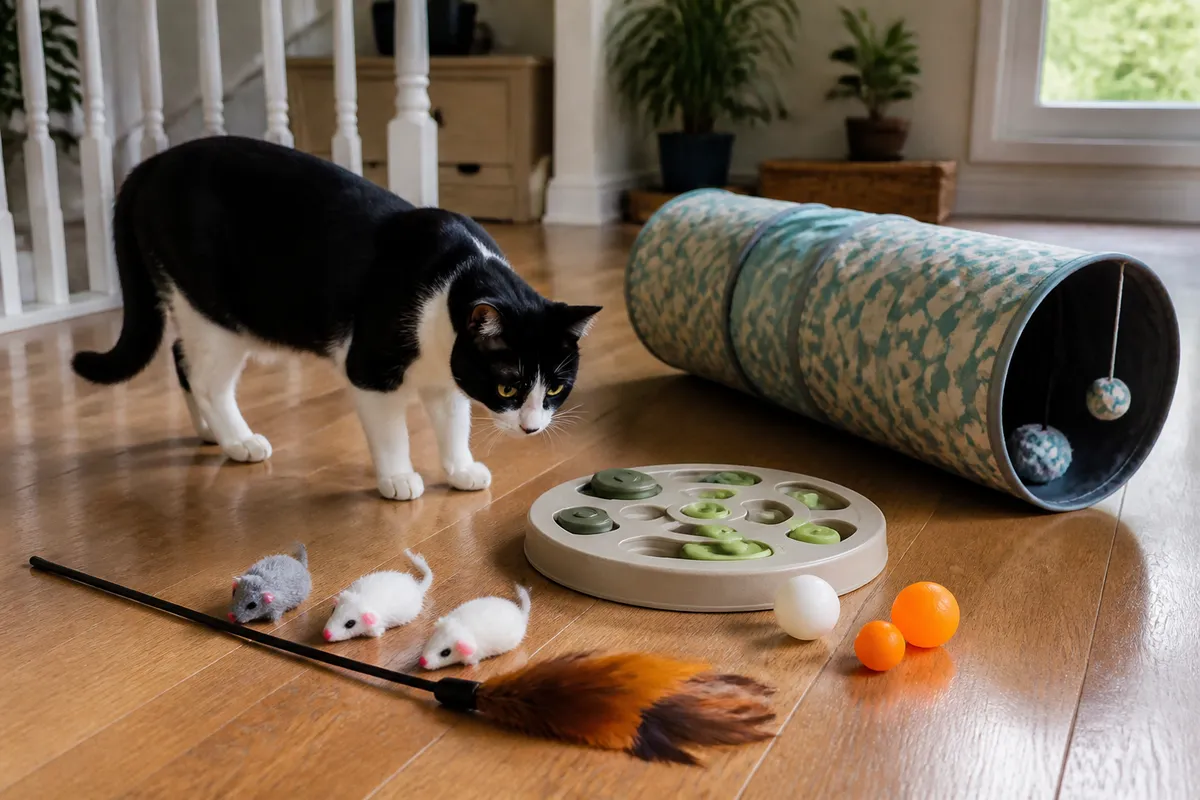
The best cat toys let your cat act out a real hunt, from stalking to the final pounce and catch, which is why wand toys and small furry mice beat almost everything else. A few well-chosen toys, rotated regularly and used in short daily play sessions, will do more for an indoor cat than a basket full of forgotten gadgets.
Why cats need toys and play
Play isn't just cute, it's how cats use their hunting instincts. International Cat Care (iCatCare) explains that play explores all parts of the predatory sequence: search, stalk, chase, pounce, catch and manipulate. Cats who live exclusively indoors need plenty of stimulation and play to avoid boredom.
Don't expect marathon sessions. iCatCare points out that cats are sprinters, so one minute of frenzied activity is a good result. Many cats are most active around dawn and dusk, so short sessions at those times often work best.
Watch for signs your cat is in the mood: spontaneous play with objects, sudden erratic movements, eyes locked on something, a crouched stalking posture or a burst of energy.
Types of cat toys compared
Every cat has its own preferences, based on texture, shape, size, scent, noise, movement and even time of day, according to iCatCare. Still, some toy types appeal to most cats. Use this overview to cover different play styles.
| Toy type | Play style | Good to know |
|---|---|---|
| Wand (fishing rod) toy with feathers or a mouse | Interactive hunting with you | Most popular with most cats; put it away after play |
| Small fur mice | Solo pouncing, tossing, carrying | Lose appeal once "killed": keep two or three and rotate |
| Balls (ping pong, crinkle) | Batting and chasing | Ping pong balls are light and the right size for a paw |
| Puzzle feeders | Foraging and problem solving | Start very simple, even an egg box with a few kibbles |
| Cat tunnel and boxes | Hiding, ambushing, exploring | Pull a wand toy through a tunnel for extra excitement |
| Electronic and motion toys | Solo chasing of erratic movement | Supervise at first and check for small parts |
| Laser pointer | Chasing | No catch at the end: finish with a toy the cat can grab |
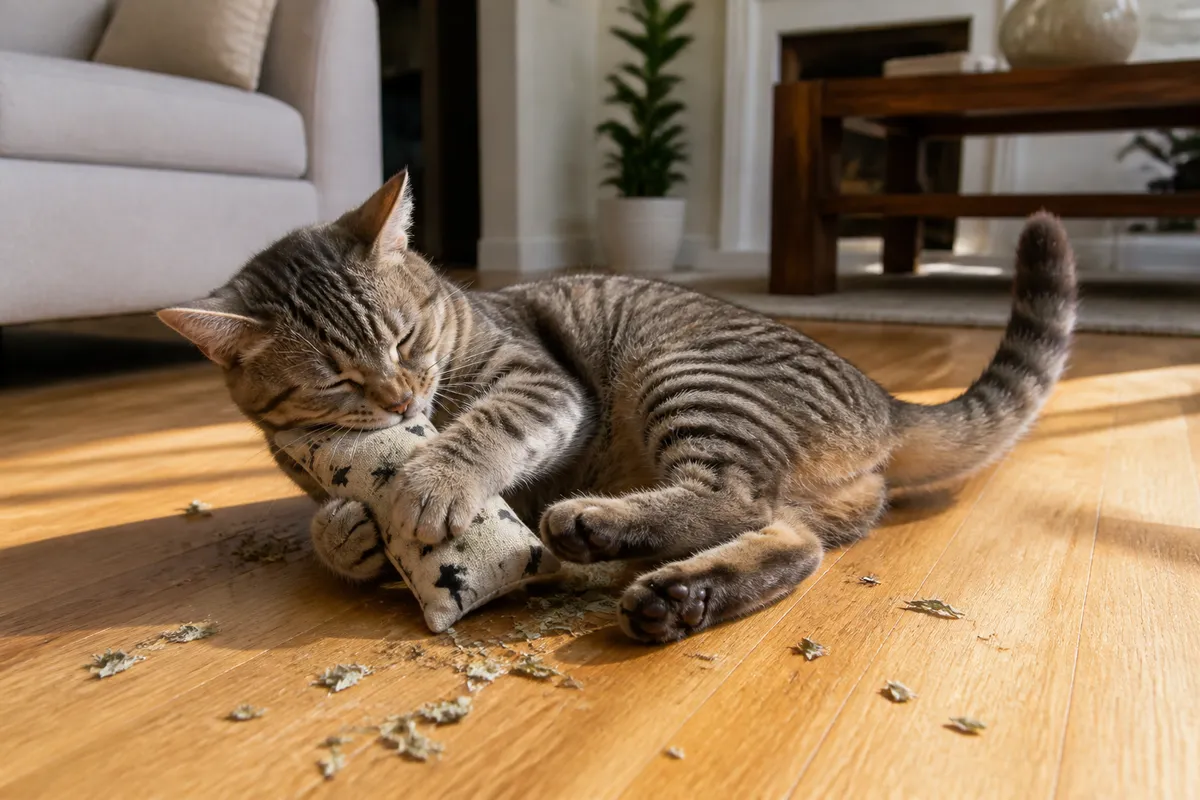
| Kicker and catnip toys | Raking with back legs, rolling | Not all cats respond to catnip |
Interactive cat toys: how to play like prey
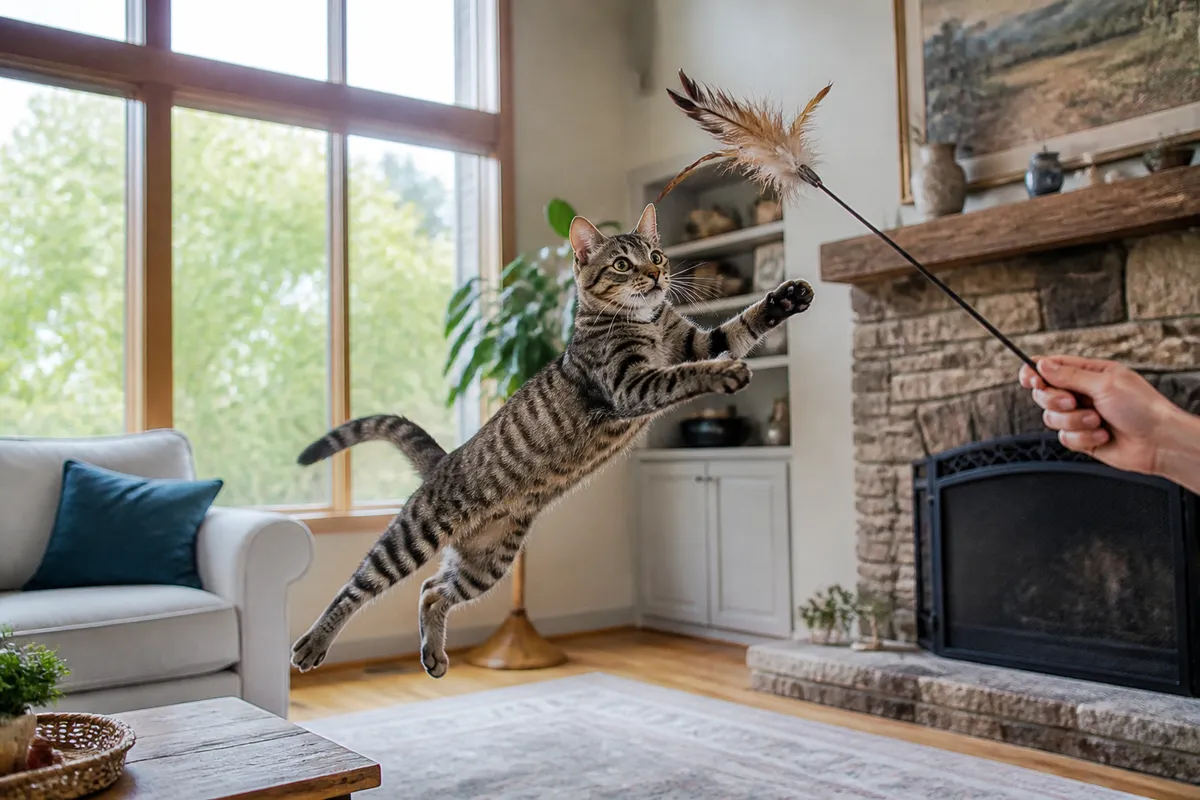
Interactive play, with you on the other end of the toy, is the gold standard. iCatCare recommends wand toys with a small toy that's as close to the real thing as possible in size and texture, such as a couple of feathers or a toy mouse. Move it in jerky, random movements, not in big predictable circles.
Think like a mouse: dart behind the sofa leg, freeze, twitch, run along the floor and disappear under a blanket. Let your cat catch the toy now and then. A hunt where the prey can never be caught gets frustrating.
That's the problem with laser pointers. iCatCare notes that a laser lets a cat stalk, chase and pounce but never catch. If your cat loves the laser, switch to a wand toy at the end so the game finishes with a real catch, and ideally a treat.
Not sure where to start? Begin with the two toy types iCatCare says appeal to most cats, a wand toy and a few small fur mice, then add a puzzle feeder or tunnel once you know your cat's style.
- Play two or more short sessions a day rather than one long one
- Mimic prey: small, erratic movements away from the cat
- Let the cat win regularly
- Wind down slowly, then offer food, which completes the hunt-eat sequence
- Store wand toys out of reach when you're done
Kitten toys: what's safe and what to skip
Kittens play hard and put everything in their mouths, so toy choice matters. iCatCare advises avoiding pipe cleaner toys, ribbons, string and balls of wool, because if swallowed they can cause the intestines to bunch up (intussusception), which needs emergency veterinary surgery.
Never use your hands or feet as toys. It seems sweet with a tiny kitten, but iCatCare and the American Association of Feline Practitioners (AAFP) both warn it teaches cats to treat fingers and toes as prey, which can lead to biting and scratching later. Wand toys keep a safe distance between you and those needle-sharp claws.
Don't worry if catnip toys get no reaction yet: iCatCare notes kittens under about three months typically don't respond to catnip. Puzzle feeding can start from around twelve weeks with a very simple puzzle, such as an open egg box with kibble inside.
Cat tunnels, boxes and solo play
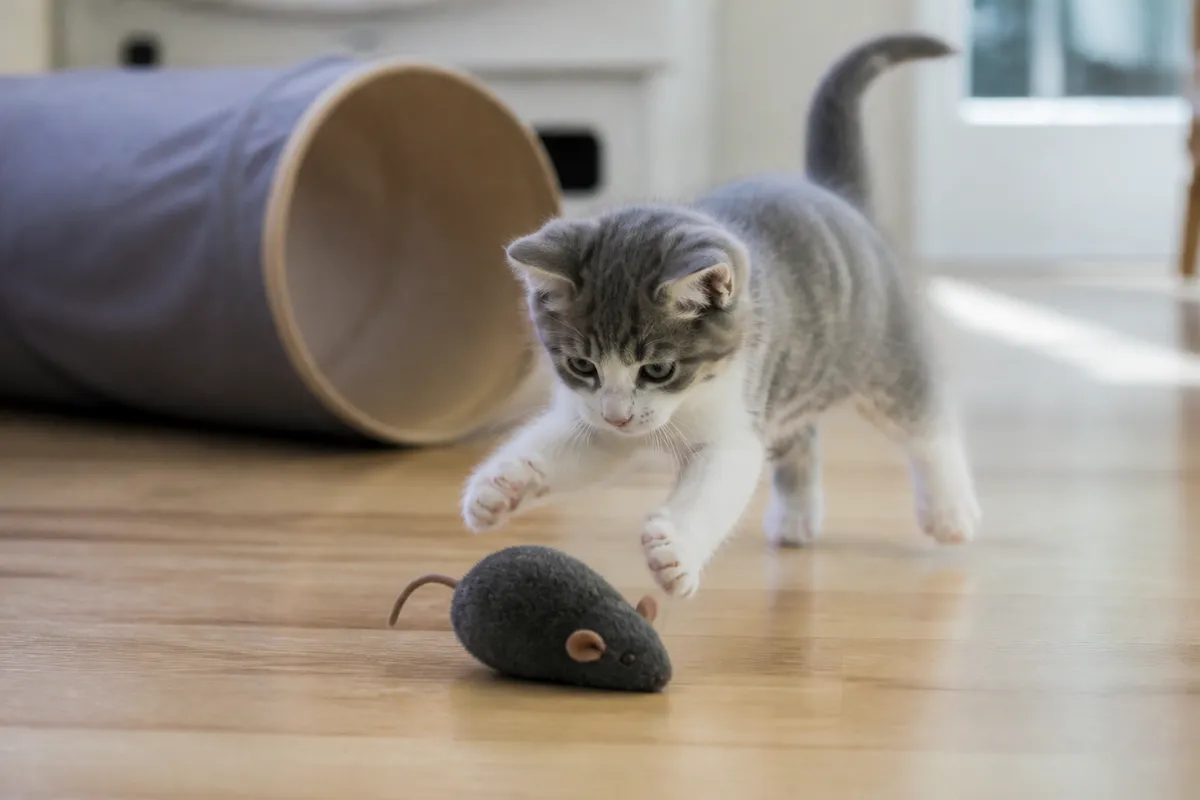
Not every play session needs you. Cardboard boxes, paper bags (handles removed) and cat tunnels give your cat places to hide, ambush and explore. iCatCare suggests giving a cat a new box to explore two or three times a week, and notes that pulling a toy through a box or tunnel makes play even more stimulating.
Solo toys are best as a supplement. Small fur mice, crinkle balls and simple electronic toys that move unpredictably can keep a cat busy while you're out, as long as they're safe to leave unsupervised. Puzzle feeders turn part of a meal into a foraging game, which suits cats who eat too fast or get bored.
Cat toy safety checklist
The AAFP and ISFM Environmental Needs Guidelines give clear safety advice for toys. Follow it and most toy-related emergencies are avoidable.
Why is string such a big deal? Veterinarian Yvette Bell explains on Vet Help Direct that one end of a swallowed thread can get trapped at the base of the tongue or in the stomach while the rest moves on, so the intestines bunch up around it. Pulling on a stuck end risks cutting through the gut, which is why it needs a vet, not tweezers.
- Put away all toys with string, elastic or other parts a cat could swallow after play
- Avoid toys with small, ingestible parts and bells, or remove them before allowing unsupervised play
- Give kittens size-appropriate toys
- Throw out toys that are coming apart, losing stuffing or shedding feathers
- Keep hair ties, rubber bands, ribbon and sewing thread out of reach
- If you see string or thread hanging from your cat's mouth, don't pull it: call your vet or an emergency clinic right away
Toy rotation: the cheapest way to beat boredom
Cats get used to the same toys quickly. The AAFP and ISFM guidelines recommend using toys on a rotating basis to prevent habituation and boredom. iCatCare makes the same point about fur mice: once one has been "killed", it soon loses its appeal, so keep several on the go and offer them one at a time.
A simple system: keep most toys in a closed box and leave out just two or three. Swap them every few days. Storing toys in a bag with a little dried catnip can make them more interesting again for cats who like it.
In multi-cat homes, the guidelines suggest putting toys in separate locations to prevent competition and playing with individual cats at separate times, so shy cats get their turn.
Rotation also helps you notice favorites. If one toy type always gets ignored, stop buying it. If the same feather wand gets your cat flying every single time, buy a spare and some replacement attachments, because a well-loved wand doesn't last forever.
Finding the best cat toys for your cat
The "best" toy is the one your cat plays with. iCatCare describes two kinds of players. Highly motivated cats play spontaneously, at any time, aren't fussy and may destroy or eat toys, so they need extra-durable, supervised toys. Cats with low motivation play only at certain times, are picky and tire quickly, so they need more patience and novelty.
Try toys of different textures, sounds and speeds and note what gets a reaction. When you order cat toys online, check sizes and materials, since photos can be misleading. A cheap feather wand and a cardboard box often outperform the fanciest gadget, and senior cats still enjoy gentle games, even lying down.
Frequently asked questions
What are the best cat toys?
Wand toys with feathers or a small mouse, small fur mice, ping pong balls and puzzle feeders appeal to most cats. The best choice depends on your cat's play style, so try a few types and rotate them.
Are laser pointers bad for cats?
They're not harmful when used carefully, but they never let the cat catch anything. International Cat Care recommends switching to a wand toy at the end so the game finishes with a real catch.
What toys are safe for kittens?
Size-appropriate soft toys, wand toys used with supervision, balls and simple puzzle feeders. Avoid string, ribbon, wool and pipe cleaners, which can cause serious intestinal problems if swallowed.
How often should I play with my cat?
Short, frequent sessions work best, since cats are sprinters. A few minutes of active play once or twice a day, ideally at dawn or dusk, suits most cats.
Why does my cat ignore new toys?
The toy may not match your cat's preferred texture, size or movement, or the cat may simply need time. Try moving it like prey, adding catnip, or rotating toys so each one feels new again.
Are cat tunnels worth it?
For many cats, yes. Tunnels give them a place to hide and ambush, and pulling a wand toy through one makes interactive play more exciting.
Sources
- Playing with your cat, International Cat Care
- AAFP and ISFM Feline Environmental Needs Guidelines, American Association of Feline Practitioners / International Society of Feline Medicine
- Claw Friendly Educational Toolkit: Client Resources, American Association of Feline Practitioners
- My cat's swallowed some string, should I pull it out?, Vet Help Direct (Yvette Bell, BVetMed MRCVS)
Last reviewed: November 2026