Cat Nail Clippers: Which Type to Choose and How to Trim Without Hitting the Quick
Grooming 6 min read reviewed November 2026, 4 sources
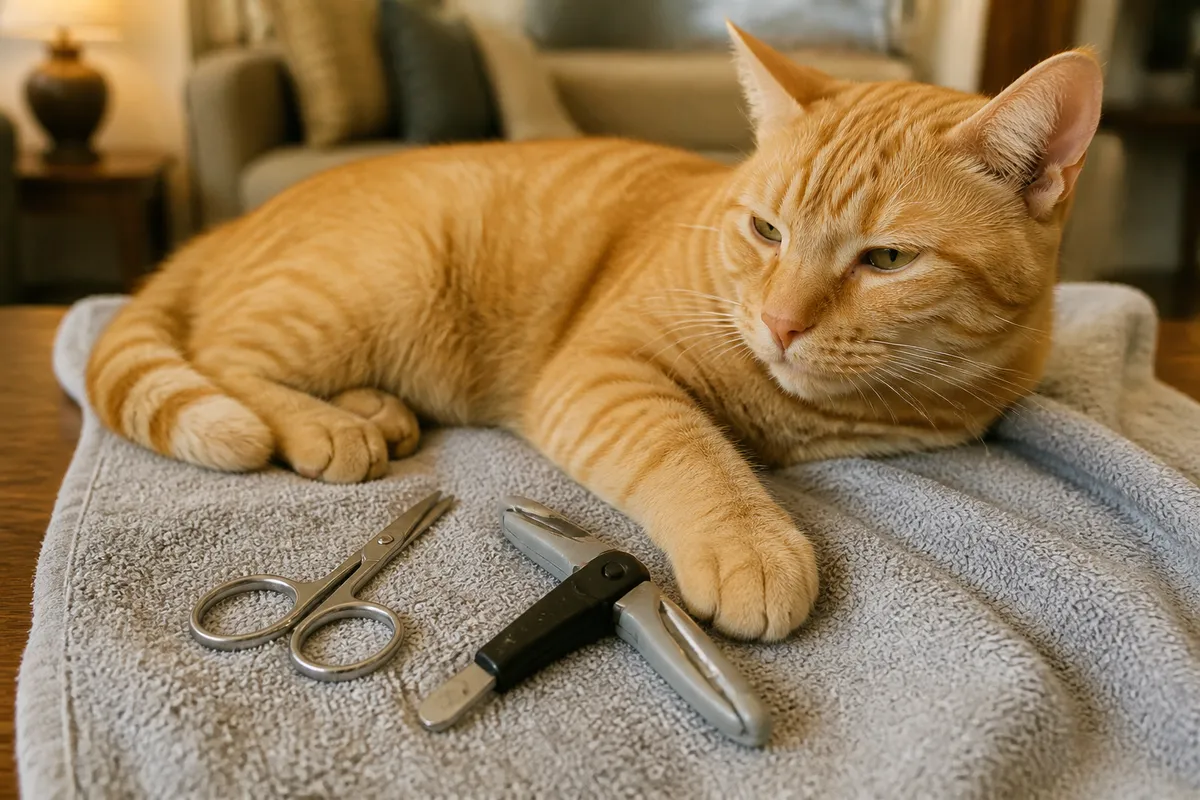
The best cat nail clippers for most owners are small scissors-style clippers made for cats, because they give you a clear view of the claw and a clean cut. Pair them with patience: trim only the sharp tip, stay well away from the pink quick, and do one or two claws at a time until your cat accepts the routine. Here is how to pick the right clipper and use it step by step.
Types of cat nail clippers compared
There are three main styles of cat nail clippers. All of them work if they are sharp and sized for cat claws, which are thinner and more curved than dog nails. Dull blades crush and splinter the nail instead of cutting it, which is uncomfortable for your cat.
VCA Animal Hospitals notes that many people prefer small scissors-style clippers made for cats. Washington State University's veterinary hospital calls the guillotine type the easiest style to use on cats and recommends scissors-style trimmers for dewclaws. In practice, pick the one that feels comfortable in your hand and lets you see exactly where you are cutting.
Human nail clippers can work on small claws in a pinch, but keep a separate pair just for your cat to avoid spreading infection.
| Clipper type | How it works | Best for |
|---|---|---|
| Scissors-style | Two small curved blades meet when you squeeze | Most cats, kittens, dewclaws; good view of the cut |
| Guillotine-style | Nail goes through a ring, a blade slides across | Owners who like a firm, one-motion cut on average claws |
| Plier-style | Spring-loaded handles with curved blades | Larger or thicker claws, owners who want more grip |
| Nail grinder | Rotating file sands the tip down | Cats who tolerate noise; smoothing after clipping |
| Human nail clipper | Flat clipper for people | Emergencies only; keep a separate pair for the cat |
What matters when buying cat nail clippers
A good pair of cat nail clippers does not need to be fancy. Focus on these points:
Keep the clippers in the same place with treats and styptic powder, so you can grab everything the moment your cat is relaxed. Replace or sharpen clippers when they start to squeeze instead of slice through the claw, which usually shows as frayed or split tips after a trim.
- Sharp stainless steel blades that cut cleanly instead of crushing
- Small size: blades sized for cat claws, not large dogs
- Non-slip handle that fits your hand and gives control
- A safety stop or guard, if you are nervous about cutting too much
- Easy to clean and keep dry so the blades stay sharp
- Styptic powder in your kit before you start, just in case
Find the quick before you cut
Every claw has a quick: the pink part near the base that contains nerves and blood vessels. Cutting into it hurts and bleeds. The ASPCA's advice is simple: cut only the white tip, and if in doubt, cut less.
On white or clear claws the quick is easy to see as a pink triangle. Washington State University suggests staying about 2 mm away from it. On dark claws you cannot see the quick, so VCA recommends trimming only up to where the nail starts to curve or hook downward, and making several small cuts rather than one big one.
To extend a claw, gently press the toe pad between your thumb and finger. Cats have retractable claws, so they stay hidden until you press. Do not forget the dewclaw on the inside of each front leg. It never touches the ground, so it does not wear down and can grow into the skin if neglected.
How to trim cat nails step by step
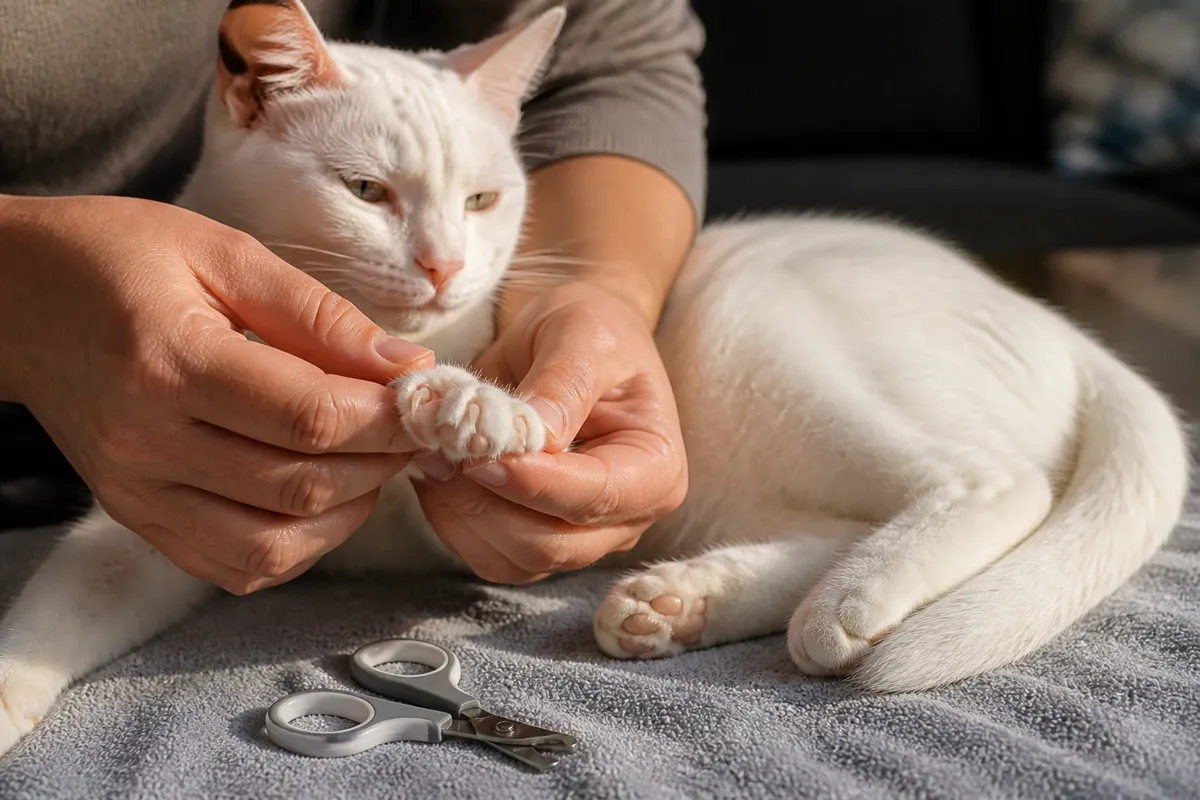
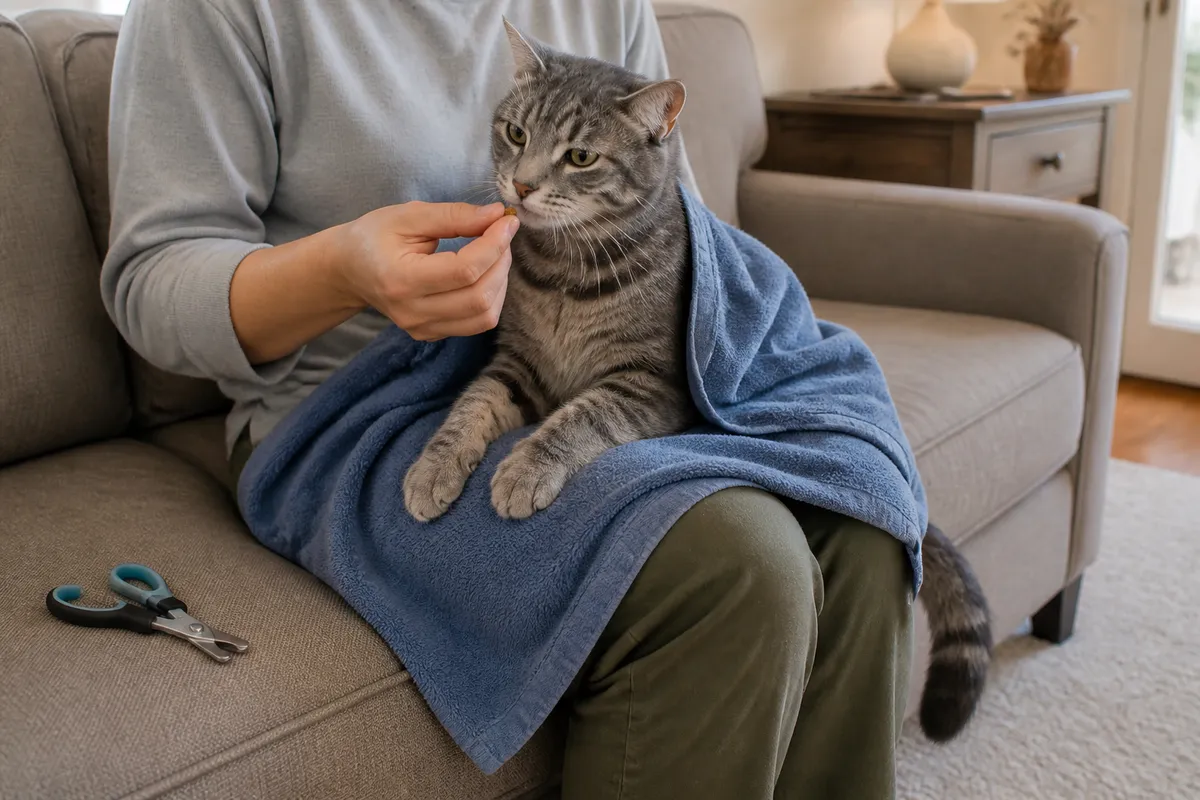
Choose a calm moment, for example when your cat is sleepy after a meal, in a quiet room without other pets or birds outside the window. Sit with your cat on your lap or on a towel on the table.
Then work like this:
- Hold one paw gently and press the pad to extend a claw
- Check where the quick is (or where the nail starts to curve on dark claws)
- Position the clipper so it cuts from top to bottom, not side to side, which reduces splintering
- Snip only the sharp, clear tip in one smooth squeeze
- Release the paw, praise your cat and give a treat
- Stop after one or two claws if your cat is new to this, and continue another day
How often to trim and when cats need help
Advice ranges a little. The ASPCA suggests trimming every 10 days to two weeks, while VCA says most indoor cats benefit from trims every two to four weeks. Watch your own cat: if claws catch on carpet or you hear clicking on hard floors, it is time.
Outdoor cats often wear their claws down by climbing. Indoor cats rely on scratching posts, and some still need regular trims. Older cats are often less active and scratch less, so their claws can grow thick and curl back into the paw pads, which can cause pain and infection. Check senior paws often.
Kittens are the easiest students. Their claws are tiny and sharp, so a scissors-style clipper or even a small human clipper reserved for the cat works well. Short, frequent sessions now teach a kitten that paw handling is normal, which pays off for the rest of its life. Long-haired cats need a little more care: part the fur around each toe before you cut, so you do not catch hair in the blades.
If your cat panics, fights hard or you cannot see the quick at all, ask your vet or a groomer to show you the technique or do the trim. There is no prize for doing it alone.
How to get a reluctant cat used to nail clippers
Most cats are not born fans of pedicures. The ASPCA recommends a slow, reward-based approach over several days or weeks: first handle one paw for a few seconds, press a pad gently, and give a treat. Work up to all ten front toes before you ever pick up the clipper.
Next, let your cat get used to the sound. Sit with the cat on your lap and clip a piece of uncooked spaghetti with the cat nail clippers, rewarding calm curiosity. Then trim a single claw and reward right away. Starting in kittenhood makes all of this much easier.
Never punish, scold or rush. Do not trim when your cat is agitated or when you are stressed, and keep restraint to a minimum. A towel wrapped loosely around the body helps some cats feel secure.
What to do if you cut the quick
It happens to careful owners too. Stay calm, because your cat will read your reaction. Press a pinch of styptic powder onto the tip of the nail to stop the bleeding. If you do not have any, cornstarch or flour can help in a pinch, as VCA notes. Without styptic powder, Washington State University says bleeding may take about five minutes to stop.
End the session there, give a treat, and try again another day with smaller cuts. Call your vet if the bleeding does not stop, if a nail is cracked or torn, or if a toe looks swollen or sore in the days after.
Nail trims, scratching and the declawing question
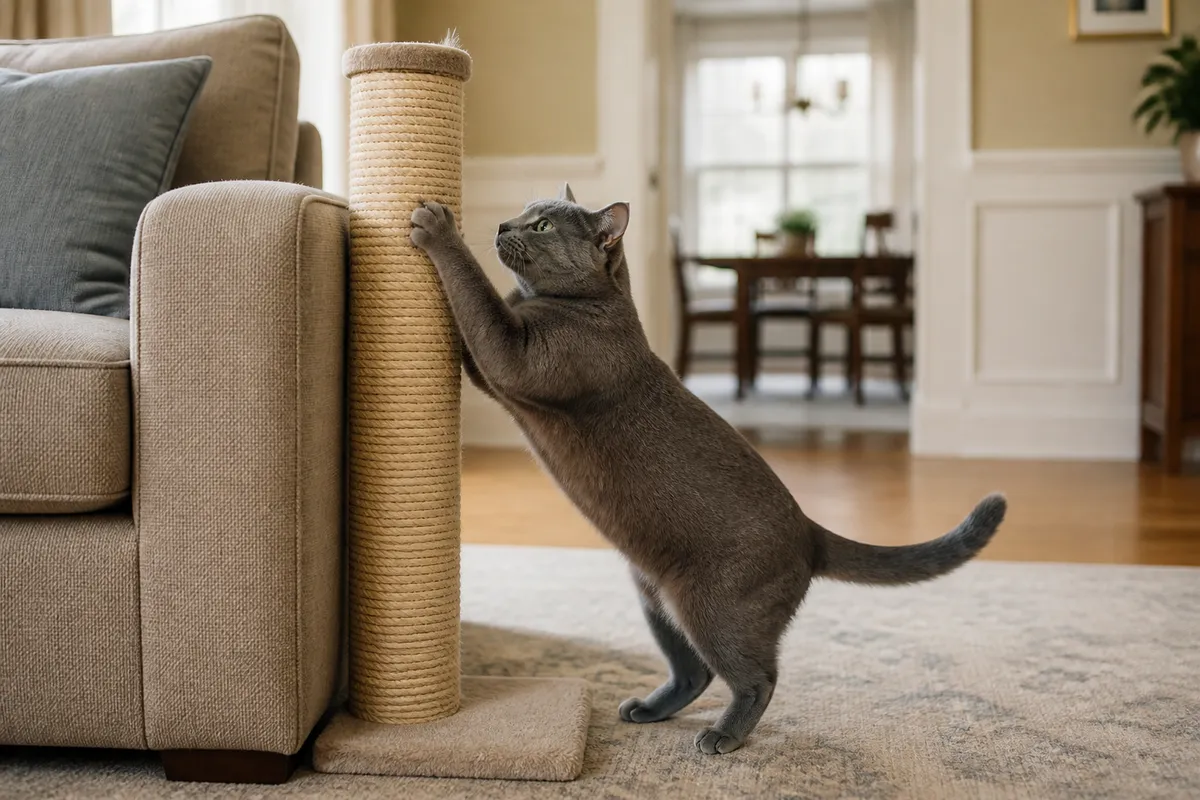
Regular trims blunt the tips and reduce damage to furniture and skin, but cats still need to scratch. Scratching marks territory, stretches muscles and sheds the worn outer layers of the claw, so keep good scratching posts around the house.
Trimming is the humane alternative to declawing. The ASPCA strongly discourages declawing because it amputates the end of each toe. Our guides on scratching posts and declawing go deeper into both topics.
Frequently asked questions
What are the best cat nail clippers for beginners?
Small scissors-style clippers made for cats are a good start because you can see exactly where you cut. Guillotine-style clippers also work well for many owners. Whichever you choose, it should be sharp and sized for cat claws.
Can I use human nail clippers on my cat?
They can work on small claws in an emergency, but cat clippers are shaped for curved claws and crush them less. If you use human clippers, keep a separate pair only for your cat.
How do I trim black cat nails without hitting the quick?
You cannot see the quick on dark claws, so trim tiny bits at a time and stop at the point where the nail starts to curve downward. Several small cuts are safer than one big one.
How short should I cut my cat's nails?
Only the sharp, clear tip. On light claws, stay about 2 mm away from the pink quick. When unsure, cut less and trim again in a week or two.
Is a nail grinder better than clippers for cats?
Some cats accept a grinder well and it leaves smooth edges, but many dislike the noise and vibration. Clippers are quicker and quieter. A grinder or nail file is handy to smooth a tip after clipping.
Do I need to trim my cat's back claws?
Back claws usually grow more slowly and wear down more, so they need trimming less often. Check them during each session and trim the tips when they get sharp or long.
Sources
- How to Trim a Cat's Nails, VCA Animal Hospitals
- Cat Grooming Tips, ASPCA
- How to clip a cat's nails, Washington State University Veterinary Teaching Hospital
- Position Statement on Declawing Cats, ASPCA
Last reviewed: November 2026