Automatic Cat Feeder Guide: Timed, Microchip and Gravity Feeders Compared
Gear Guides 6 min read reviewed November 2026, 5 sources
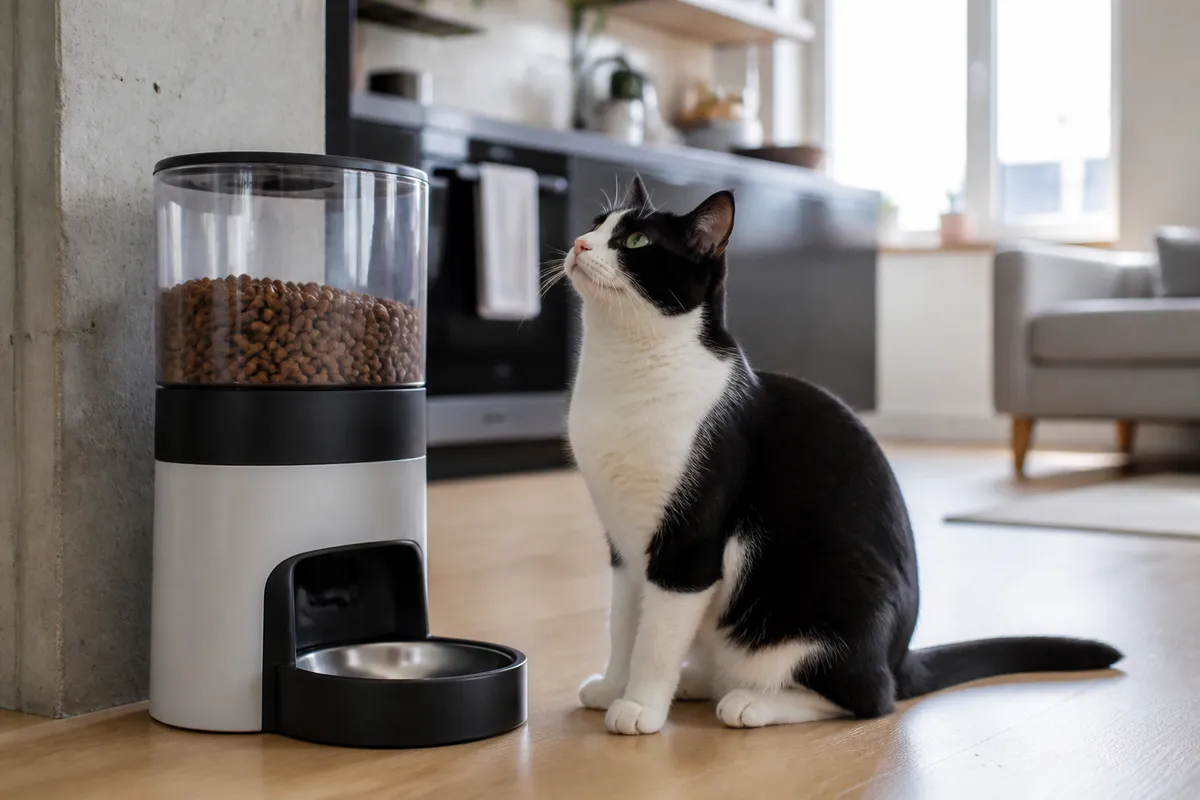
An automatic cat feeder releases measured portions on a schedule, which helps you serve small, regular meals even when you're at work or asleep, and feline guidelines specifically mention timed feeders as a way to promote small, frequent meals. Timed feeders suit most single-cat homes, microchip feeders solve the food-stealing problem in multi-cat homes, and simple gravity feeders are mainly a convenience that can lead to overeating.
Why an automatic feeder can be good for your cat
Cats are natural snackers rather than one-big-dinner eaters. The AAFP and ISFM feline environmental needs guidelines recommend letting cats express their predatory behavior through feeding, and list puzzle feeders and timed feeders as tools to promote small and frequent meals.
Most indoor cats get the opposite: one big breakfast, a long wait, and an owner who gets serenaded at 5 a.m. An automatic cat feeder spreads the same daily amount over several smaller meals. VCA Animal Hospitals notes that some cats, especially those that beg between meals or eat only small amounts at a time, do better with three to four meals a day, which is hard to manage by hand on a workday.
A feeder also helps with portion control. VCA does not recommend free-choice feeding, because it can encourage binge eating and obesity. A feeder that dispenses measured portions keeps the calorie count honest. Our guide on how much to feed a cat explains how to calculate the daily amount.
Types of cat feeders compared
"Cat feeder" covers very different devices. Pick the type by the problem you need to solve.
| Type | How it works | Best for | Watch out for |
|---|---|---|---|
| Timed dry-food feeder | Hopper releases set portions of kibble at programmed times | Most single-cat homes, workdays, early risers | Jams with odd kibble shapes; needs a power backup |
| Smart or app feeder | Timed feeder controlled by phone, often with feeding log or camera | Owners who travel or want a record | Wi-Fi outages; make sure it still runs its schedule offline |
| Wet-food timed feeder | Rotating trays or sealed compartments open on a timer | Cats on wet food, one or two meals while you're out | Food sits at room temperature; limited number of meals |
| Microchip feeder | Lid opens only for a registered cat's microchip or tag | Multi-cat homes, special diets, food thieves | Training needed; check that it reads your cat's chip type |
| Gravity feeder | Reservoir refills the bowl as the cat eats | Short-term backup | No portion control; easy to overeat |
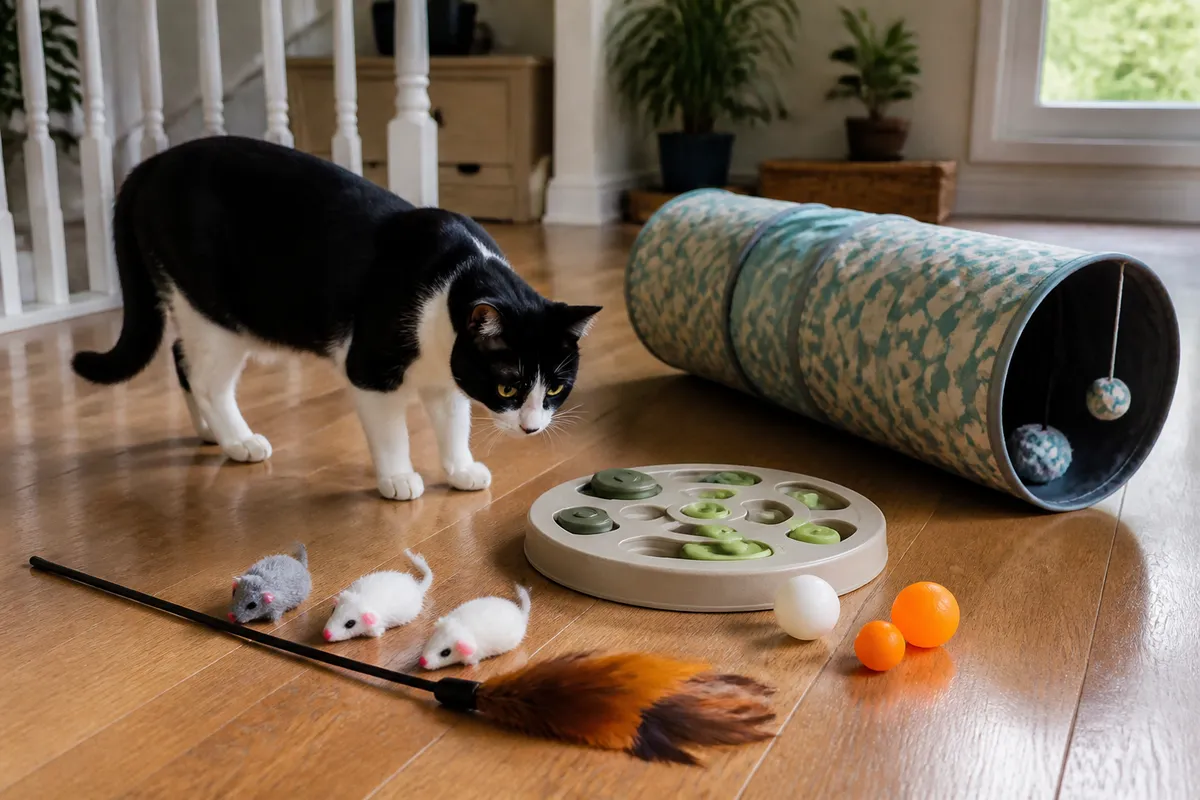
| Puzzle feeder | Cat works food out of a toy or maze | Fast eaters, bored indoor cats | Not timed; combine with measured portions |
What to check before buying an automatic cat feeder
A feeder is only as good as its worst day. Check these points before you trust it with your cat's dinner.
- Portion accuracy: can you set small portions, and does the feeder dispense the same amount each time? Test it with a kitchen scale
- Kibble size and shape: very small, large or oddly shaped kibble can jam some dispensers; check the manufacturer's size range
- Power backup: battery backup keeps meals coming during a power outage
- Works offline: smart feeders should keep their schedule if Wi-Fi drops
- Lid and hopper lock: a determined cat will try to break in; look for a latch and a sturdy, non-tipping base
- Easy cleaning: a removable, dishwasher-safe bowl and hopper; oily kibble residue goes stale
- Stainless steel or ceramic bowl: easier to keep clean than scratched plastic
- Noise: a loud motor can scare shy cats; a quiet one is less likely to be ignored
- Microchip models: confirm compatibility with your cat's chip, or use the included tag
Microchip cat feeders for multi-cat homes
If one cat is on a prescription diet and the other is a food thief, a microchip feeder is the fix that actually works. Cats Protection notes that a microchip can communicate with certain cat flaps or feeders, allowing selective entry and feeding. The lid opens only when the registered cat puts its head in, and closes when it leaves.
This fits feline guidelines anyway. The AAFP and ISFM recommend that every cat in a household has its own separate feeding station, and Cornell suggests feeding cats separately or in different parts of the house if needed. Place each feeder in its own quiet spot rather than side by side, so a shy cat isn't eating under the stare of the household bully.
Gravity feeders: the convenient trap
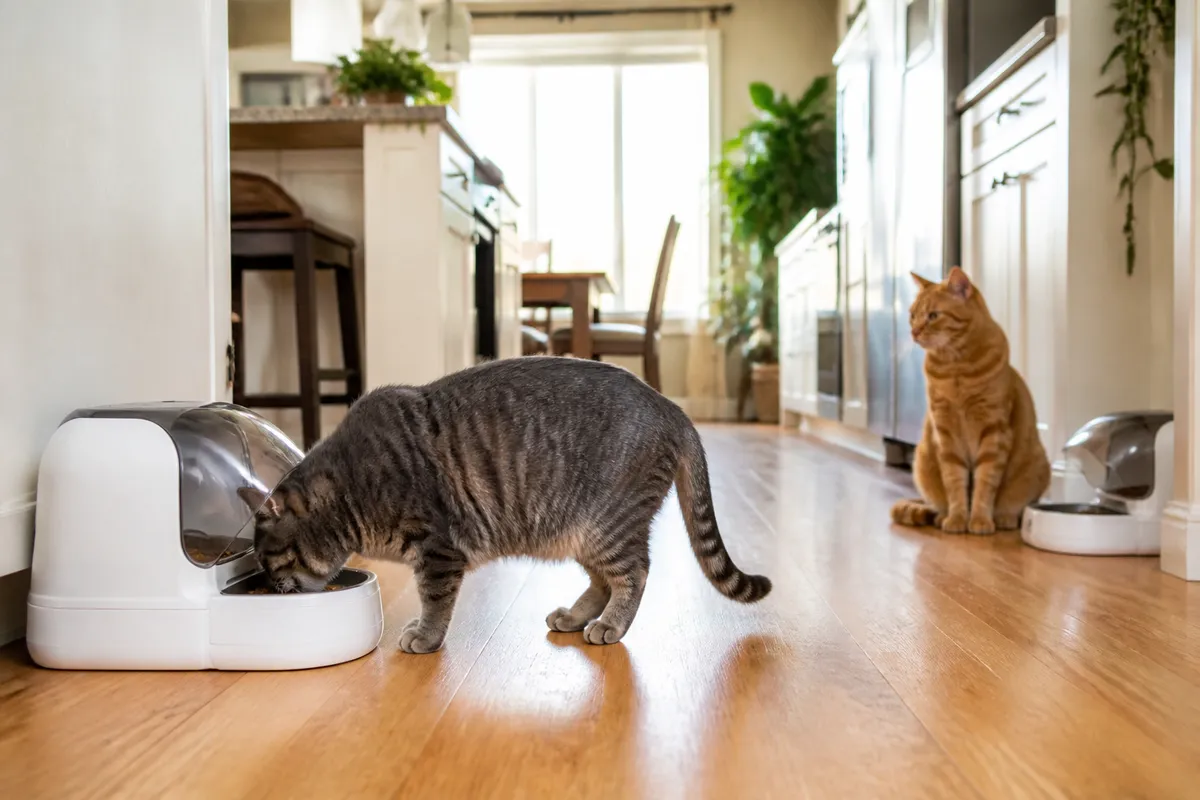
Gravity feeders are cheap and simple: a container sits above a bowl and refills it as food is eaten. That's exactly the problem. It's free-choice feeding, which Cornell says can result in overeating and inappropriate weight gain for many cats.
They can make sense as a short backup or for a cat your vet says can free-feed without gaining. If you use one, fill it with the measured daily portion only, not the whole bag, and replace leftover food with fresh food daily as Cornell recommends for any food left out.
Can an automatic feeder replace a cat sitter?
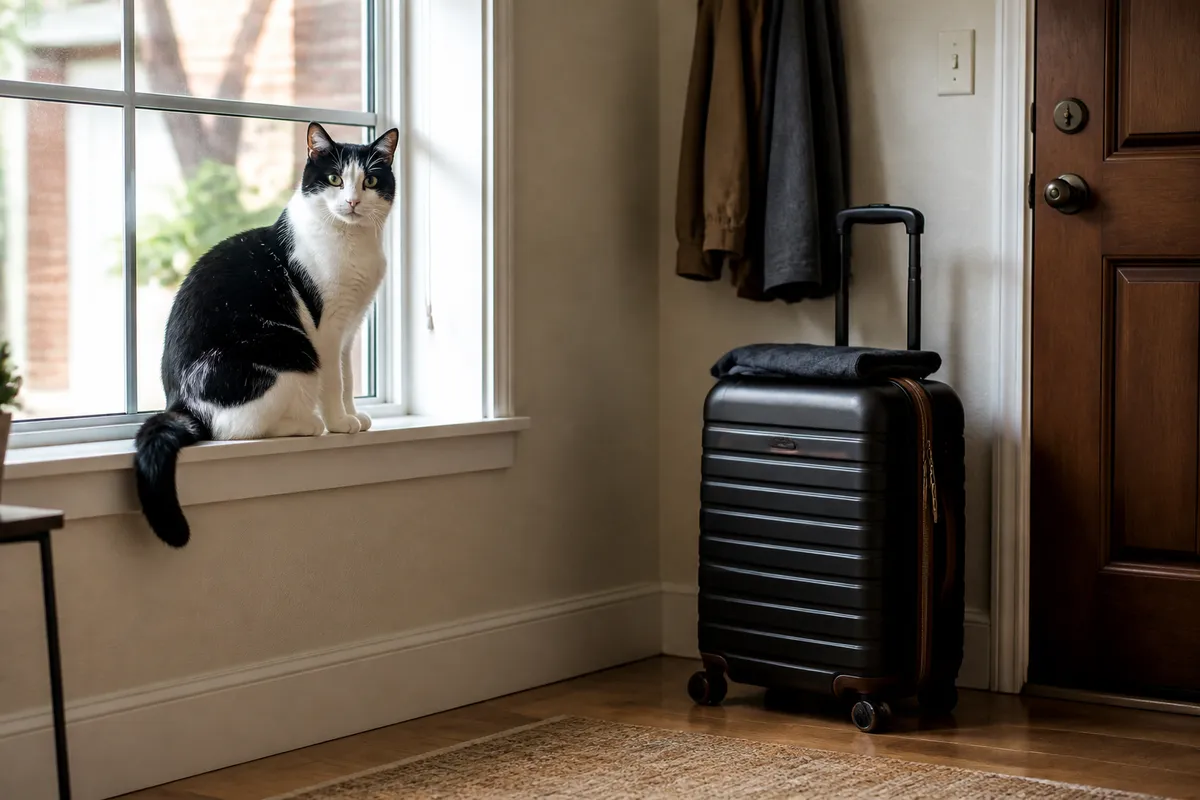
For a workday or one night, a reliable feeder plus plenty of fresh water is often fine for a healthy adult cat. For anything longer, no. A feeder can't notice that your cat hasn't eaten, can't scoop the litter box and can't spot that the fountain stopped working.
Before trusting a feeder overnight, run it for at least a week while you're home. Check that every meal drops, that your cat eats it, and that the portions match what you set. VCA notes that leftover food, whether all or part of a meal, is an important signal that something is wrong, and a feeder log can help you notice that pattern. For trips, plan a person; our guide to finding a cat sitter covers the options.
- Always provide plenty of fresh water, ideally from more than one source
- Fill the hopper with fresh food before a trip, not stale leftovers
- Keep fresh batteries in the backup compartment
- Have someone check in daily if you're away overnight
Where to put an automatic cat feeder
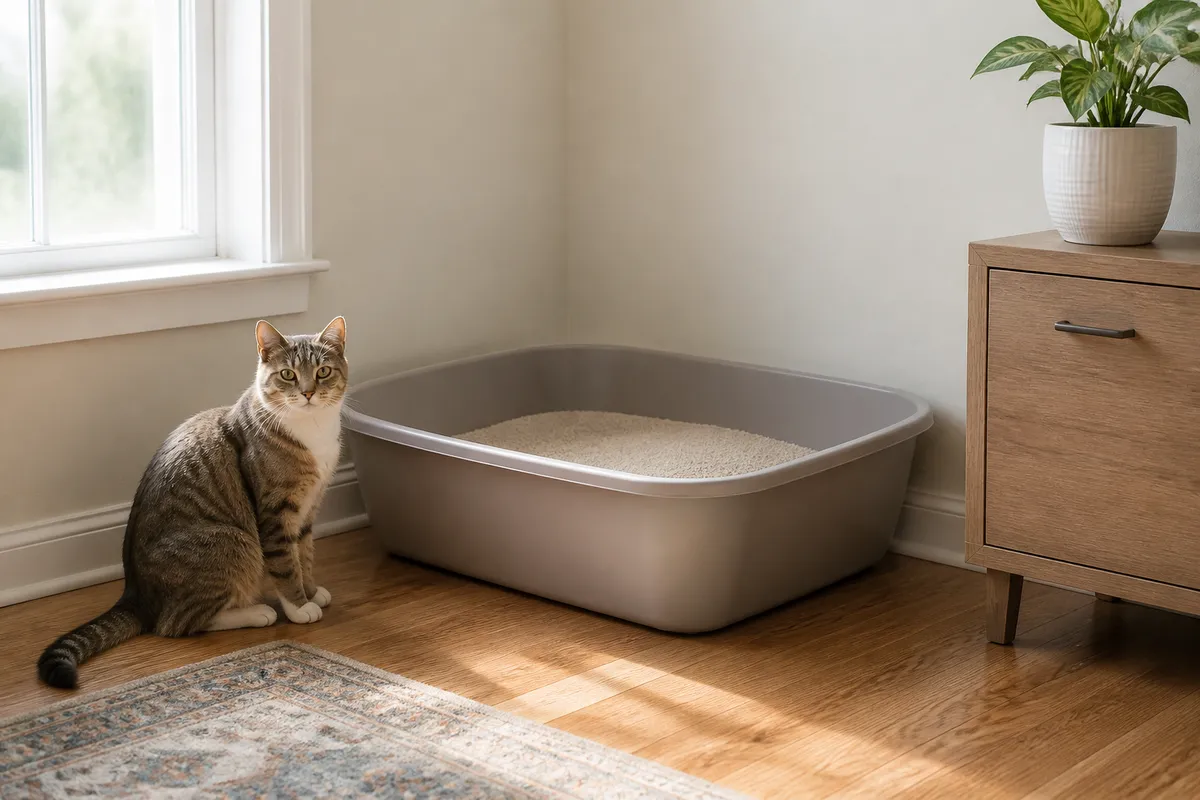
Location decides whether a feeder gets used calmly or becomes a source of stress. VCA's environmental guidance for young cats notes that the food bowl should not be near the litter box, and the AAFP and ISFM recommend keeping key resources such as food, water and litter in separate places. A quiet corner of the kitchen with no heavy foot traffic is usually ideal.
Put the feeder on a flat, non-slip surface near an outlet if it needs power, and keep the water bowl or fountain a few feet away rather than right next to it. Avoid spots next to a loud washing machine or a door the dog barrels through. In multi-cat homes, give each cat its own feeder in a separate area so nobody has to eat while guarding the bowl.
How to get your cat to use an automatic feeder
Most cats accept a feeder within days, especially once they link the sound to food. Nervous cats may need a gentler start.
- Set it up switched off first, in the usual feeding spot, and put a few treats in the bowl
- Run the first meals while you're home, so you can see how your cat reacts to the motor
- Pair the dispensing sound with your presence for a few days; the sound soon means dinner
- For microchip feeders, use the training mode that keeps the lid open at first, then gradually closes it
- Keep the total daily amount the same: subtract feeder meals from what you serve by hand
- If your cat won't eat from the feeder at all, go back to hand feeding and try again more slowly. A cat that stops eating needs a vet's advice
Common feeder mistakes
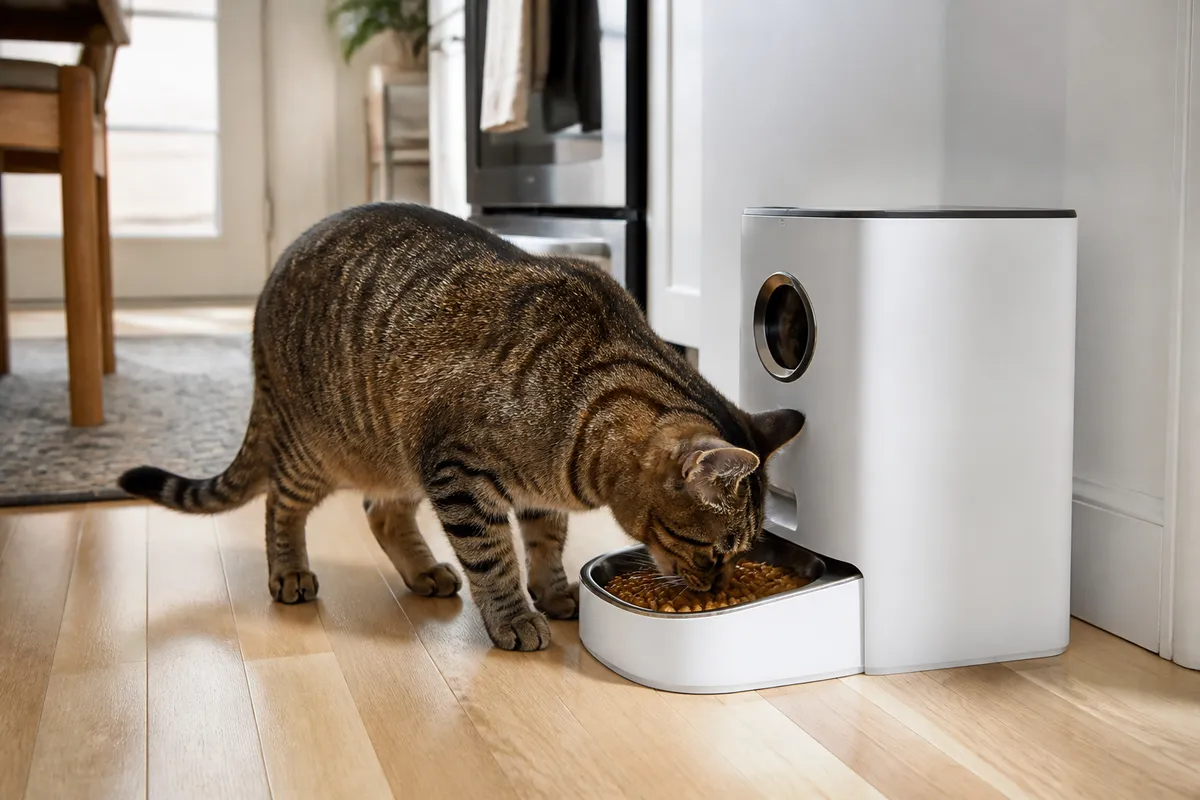
The most common mistake is doubling up: the feeder serves breakfast, and a family member who didn't know serves it again. Agree on who programs the feeder and stick a note on the fridge. The second is never cleaning it; wash the bowl daily and the hopper regularly, because oily residue goes rancid. The third is setting it and forgetting it. Recheck your cat's weight every few weeks and adjust the portion, since needs change with age, activity and neutering.
Frequently asked questions
Are automatic cat feeders good for cats?
Yes, when used for measured, timed portions. Feline environmental guidelines list timed feeders as a way to promote small, frequent meals. They are not a replacement for daily human checks, fresh water and litter box care.
What is the best automatic cat feeder?
The best automatic cat feeder is the one that matches your situation: a timed dry-food feeder with battery backup for most homes, a microchip feeder for multi-cat homes or special diets, and a wet-food tray feeder for cats that eat only wet food. Accurate portions and easy cleaning matter more than app features.
Can I leave my cat alone for a weekend with an automatic feeder?
It's not recommended to rely on a feeder alone. A healthy adult cat may manage a night, but someone should check in daily to make sure the cat eats, water is available, the feeder works and the litter box is clean.
Can you use wet food in an automatic feeder?
Only in feeders designed for it, usually with rotating trays or sealed compartments. Wet food spoils at room temperature, so limit it to meals within a few hours and clean the trays after every use.
How do microchip cat feeders work?
The feeder reads the registered cat's microchip or a collar tag and opens the lid only for that cat. It's a good way to keep one cat out of another's food, for example when one cat is on a prescription diet.
Are gravity cat feeders bad?
They aren't harmful in themselves, but they allow unlimited eating, and many cats overeat and gain weight with free access. If you use one, fill it with only the measured daily amount.
Sources
- AAFP and ISFM Feline Environmental Needs Guidelines, American Association of Feline Practitioners / International Society of Feline Medicine
- Feeding Times and Frequency for Your Cat, VCA Animal Hospitals
- How often should you feed your cat?, Cornell Feline Health Center
- Choosing a Cat Collar, Cats Protection
- Environmental needs of young cats, VCA Animal Hospitals
Last reviewed: November 2026