Cat Sitter, Boarding or a Friend? How to Choose Care While You're Away
Home & Living 6 min read reviewed November 2026, 5 sources
A cat sitter who visits or stays in your home is usually the least stressful option for a cat, because most cats find moving to a new place far more upsetting than a few days without their humans. Cat boarding can work for some cats, and a trusted friend is great if they really show up. Here is how to compare the options, find a sitter you can trust and prepare everything so your cat barely notices you left.
Cat sitter, cat boarding or a friend: which is best?
Cats are territorial. The UK animal charity Blue Cross points out that, unlike dogs, cats can find it very stressful to move from place to place, so care in your own home is usually the gentlest choice. Whoever looks after your cat should either stay in your home or visit at least twice a day to feed and check on the cat.
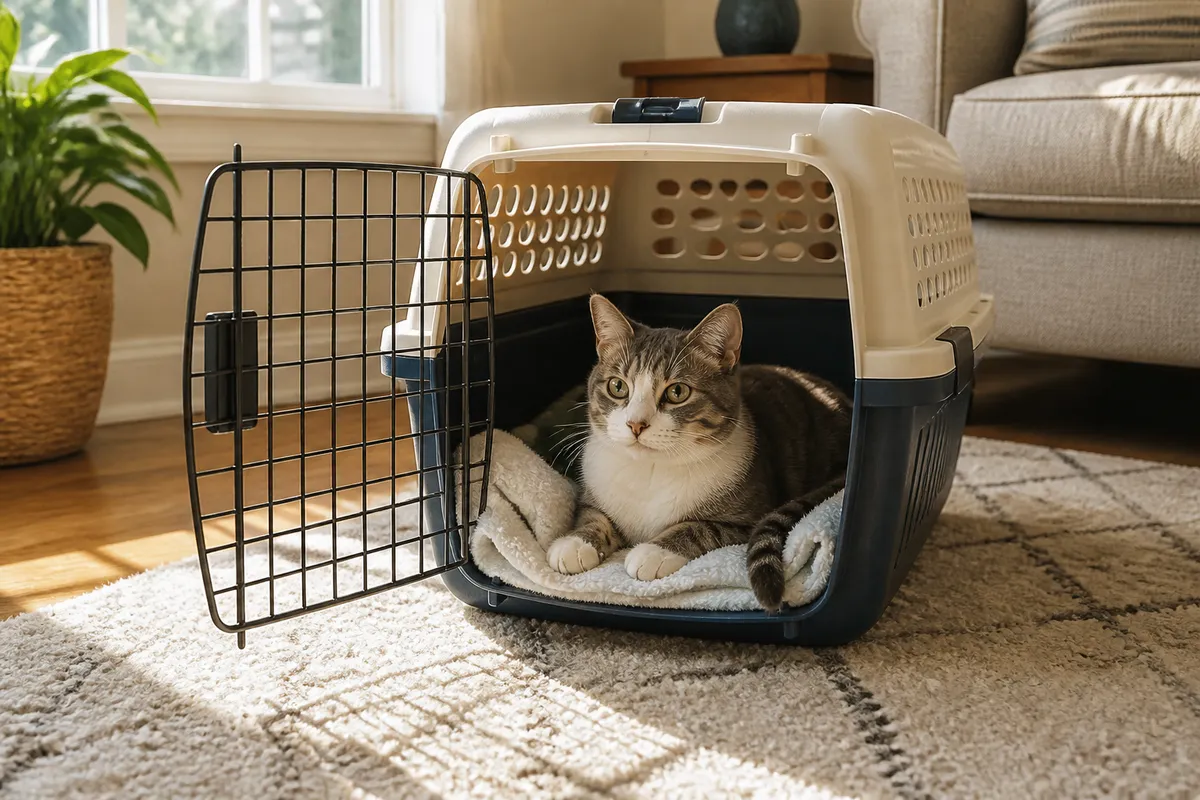
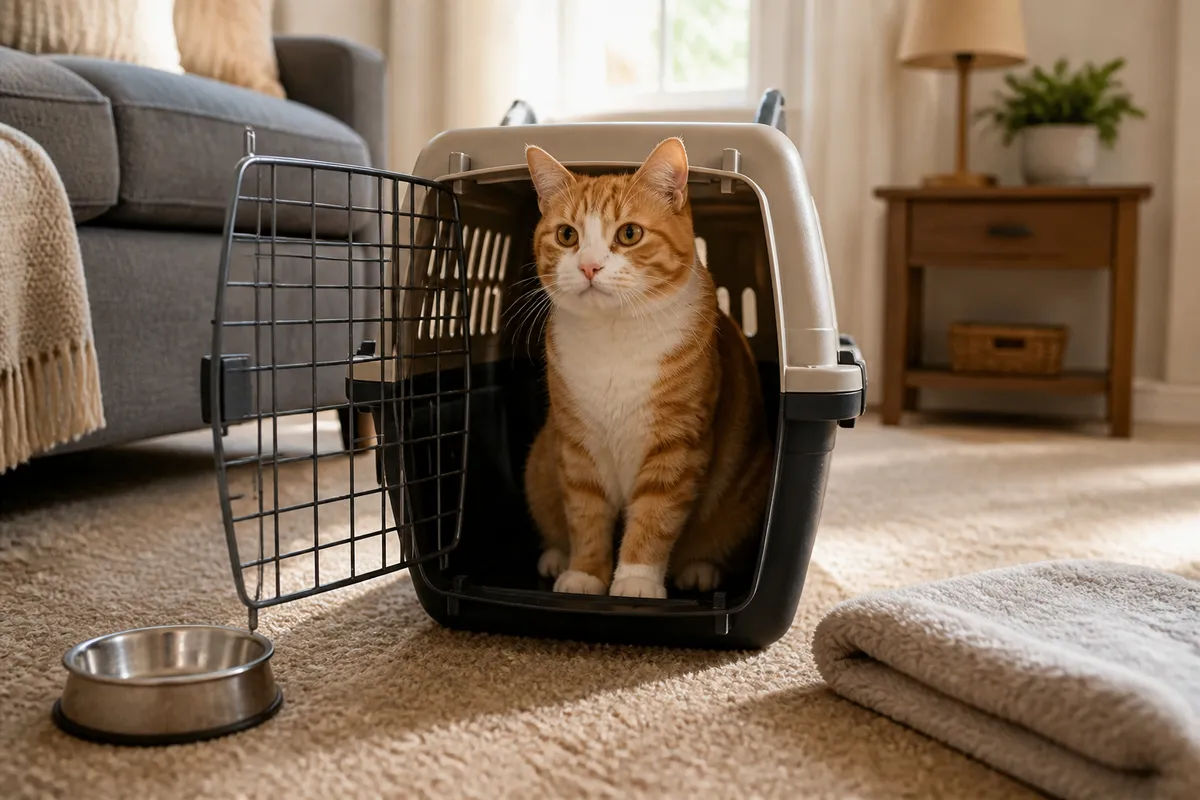
Boarding catteries suit some cats, especially those who need medication several times a day or close monitoring. But many cats find a cattery stressful, so it is worth trying a short stay before a long vacation.
| Option | Pros | Cons | Best for |
|---|---|---|---|
| Friend or family member | Cat often knows them, low or no cost, stays at home | Reliability varies, may lack experience with sick cats | Short trips, healthy and easygoing cats |
| Professional cat sitter (visits) | Cat stays in its territory, experienced, usually insured | Cat is alone between visits, costs per visit | Most healthy adult cats |
| House sitter (stays overnight) | Company all day, home looks lived in | Most expensive, you need to trust them with your home | Long trips, cats who hate being alone, multi-pet homes |
| Cat boarding (cattery or vet) | Staff on site, easy to monitor medical needs | New place, sounds and smells can stress cats | Cats on frequent medication, homes where no sitter is available |
What a good cat sitter does
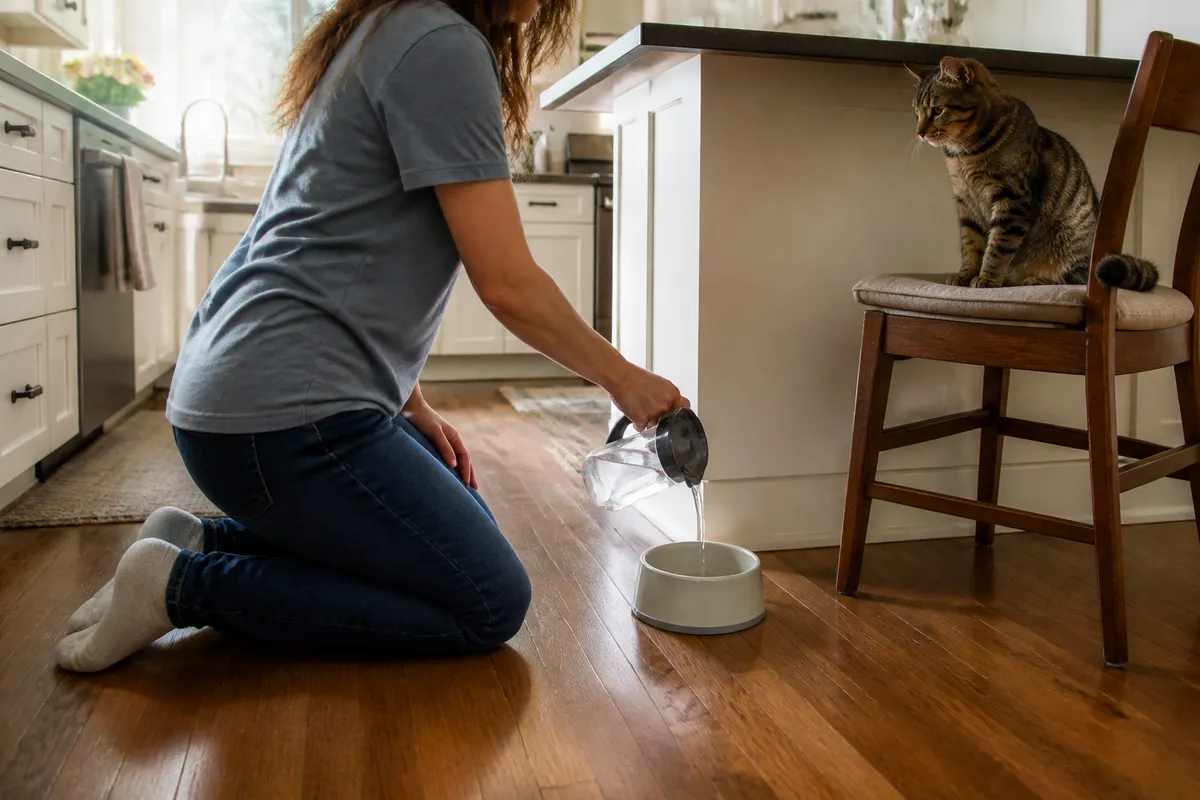
A cat sitter should do more than refill the bowl. Every visit should include fresh food and water, scooping the litter box, a quick health check and some play or cuddle time if your cat likes it. A good sitter also notices problems: a cat who has not eaten, is hiding more than usual, is vomiting or is straining in the litter box.
For most cats, two visits a day are a sensible minimum. Cats on medication, kittens, seniors and anxious cats may need longer or more frequent visits, or a house sitter who stays overnight.
How to find a cat sitter you can trust
Humane World for Animals suggests starting with professional pet-sitting associations such as the National Association of Professional Pet Sitters and Pet Sitters International, which list members online, then reading reviews. Personal recommendations are just as valuable: ask your vet, neighbors and local humane societies, whose staff sometimes pet sit on the side.
Before you hand over your keys, interview each candidate by phone or video and then schedule a meet-and-greet at your home so you can watch how they handle your cat. Ask for references and proof that they are bonded and insured; Humane World also mentions a criminal background check as an option.
- How long have you been pet sitting, and how much experience do you have with cats?
- What is your backup plan if you are sick or cannot make a visit?
- Are you comfortable giving pills, liquid medication or insulin?
- What would you do if my cat stopped eating or started vomiting?
- Will you send a message or photo after every visit?
- Are you bonded and insured, and do you have references?
Cat boarding: how to choose a good cattery
If cat boarding is the right choice, start looking early, because good catteries book up fast, especially around holidays. Blue Cross recommends getting personal recommendations, checking licensing where your local rules require it and dropping by without an appointment to see what the place is really like.
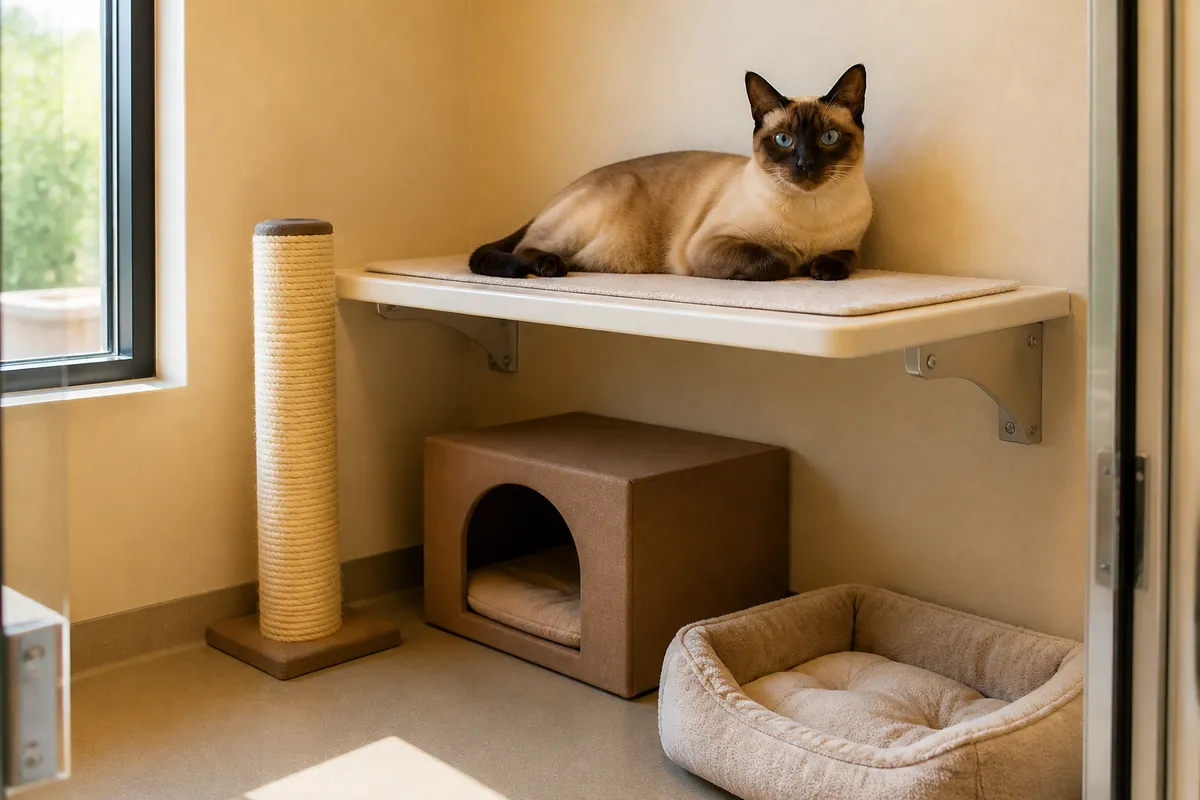
- The living area is warm, secure, clean and dry, and it does not smell bad
- Each pen has a scratching post, a place to hide, a resting shelf, toys and a large litter tray
- Cats who do not know each other cannot touch or stare at each other
- Staff ask detailed questions about your cat's food, litter and routine
- Proof of vaccination is required for every cat
- There is a clear procedure for contacting a vet and you in an emergency
What does a cat sitter cost?
Prices vary a lot by city, the length of each visit, the number of pets and holiday surcharges, so ask several sitters for a written quote. For comparison, the ASPCA's pet cost estimate counts about $25 per day for boarding a cat. Humane World advises against simply choosing the cheapest option: you are paying for someone trustworthy who comes into your home and can handle an emergency.
Ask in advance what is included. Some sitters charge extra for medication, extra cats, bringing in the mail or watering plants, and many require a key exchange visit before the first booking.
Getting your cat ready before you leave
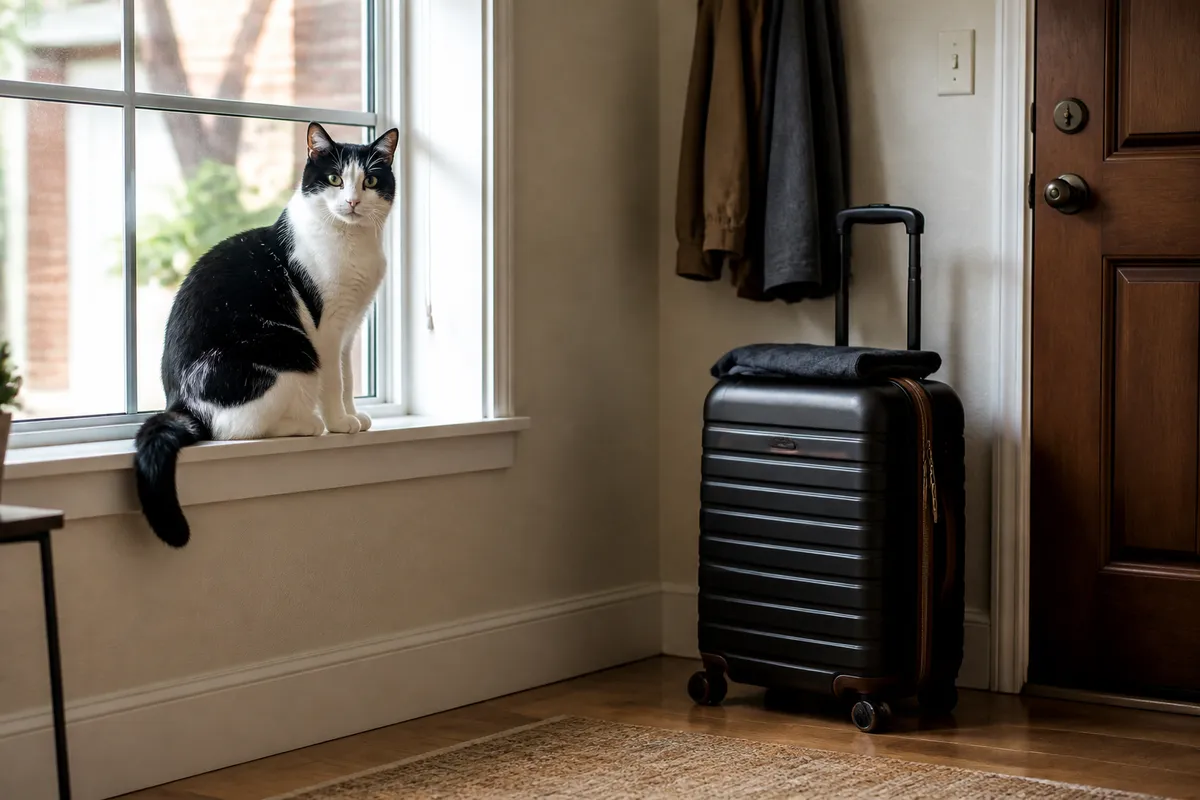
Cats notice suitcases. You can make the change easier by keeping the daily routine as normal as possible in the days before you go: same feeding times, same play sessions, no new food or litter right before a trip.
Book a trial visit with a new sitter while you are still home, or a short trial stay at a boarding facility. That way your cat meets the person or place once without the added stress of you being gone, and you can see how it reacts. Humane World for Animals also recommends that cats wear a collar and tag with current contact details and be microchipped, wherever they spend the holidays, because a door opened by someone new is a classic moment for an escape. Check that the chip registration has your current phone number before you leave.
- Stock up on enough food, litter and medication for your trip plus a few extra days
- Clean the litter boxes and refill them with fresh litter the day you leave
- Leave a worn T-shirt or blanket in your cat's favorite spot
- Close off rooms or closets where a shy cat could hide and not be found
Checklist: what to prepare for your cat sitter
A written care sheet means your sitter does not have to guess. Blue Cross recommends sharing your vet's details, any medical conditions, medication instructions, your cat's feeding routine, its microchip information and any behavior quirks. Leave it in a visible place and send a copy by text.
- Your phone number and an emergency contact who can make decisions if you cannot be reached
- Your vet's name, phone number and the nearest 24-hour emergency vet clinic
- Feeding amounts and times, treats allowed, and where the food is stored
- Medication, how to give it and what to do if a dose is missed
- Where the litter supplies, cleaning products and carrier are kept
- Your cat's favorite hiding spots, so the sitter can find it on every visit
- Microchip number, a recent photo and extra food in case your trip runs long
- Notes on escape artists: which doors and windows to keep shut
Cat walker, camera check-ins and red flags
Some people look for a cat walker, someone who takes a harness-trained cat outside on a leash. The AAFP notes that walking a cat on a harness and leash can give it a more stimulating environment while limiting outdoor risks, but only do it if your cat is already comfortable on a harness and the sitter has experience. Most indoor cats are happier with play sessions inside.
Humane World suggests asking your sitter for notes or photos after each visit and, if you have a doorbell camera, checking that visits happen at the agreed times. Warning signs include messes left in the house, treats and toys that were never touched and vague reports about your cat. Our cat camera guide covers ways to check in remotely.
Frequently asked questions
How often should a cat sitter visit?
For most healthy adult cats, at least twice a day is a good rule. Kittens, senior cats, cats on medication and anxious cats may need longer visits, more of them or an overnight house sitter.
Is cat boarding or a cat sitter better?
For most cats a sitter in their own home is less stressful, because cats are territorial and dislike moving to new places. Boarding can be a good option for cats who need frequent medication or close monitoring.
Can I leave my cat alone for a weekend?
Even with an automatic feeder, a cat should not be left without anyone checking in. Feeders and water fountains can fail, and a cat can get sick or stuck. Arrange at least one visit a day, ideally two.
How much does cat boarding cost?
It depends on the facility and region. The ASPCA's cost estimate counts about $25 per day for boarding a cat, but many catteries and vet clinics charge more, especially for medication or holiday stays. Ask for a written quote.
What should I ask a cat sitter before hiring?
Ask about their experience with cats, their backup plan, whether they can give medication, what they would do in an emergency, how they report on visits and whether they are bonded and insured. Then do a meet-and-greet with your cat.
Sources
- How to Choose a Pet Sitter + How to Prepare, Humane World for Animals
- Boarding Cattery and Alternatives, Blue Cross
- Cutting Pet Care Costs (2021 cost estimate), ASPCA
- 2024 Indoor/Outdoor Lifestyle Position Statement, American Association of Feline Practitioners
- Holiday Safety Tips for Pets, Humane World for Animals
Last reviewed: November 2026