Cat Litter Types Compared: Clay, Crystal, Wood, Paper and Tofu
Gear Guides 6 min read reviewed November 2026, 3 sources
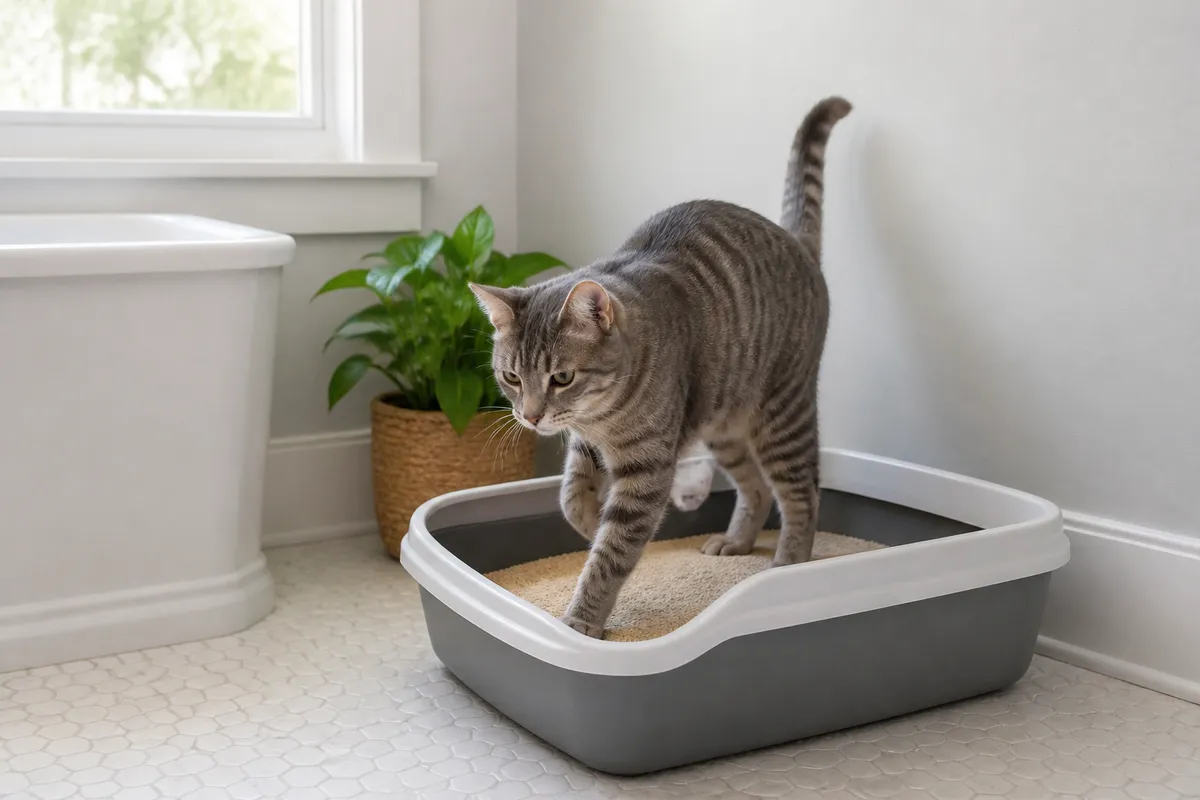
The best cat litter is the one your cat happily uses, and for most cats that means a soft, fine, unscented litter that clumps. Feline vets and cat welfare charities agree on that baseline, then each material has trade-offs in odor control, dust, tracking and how often you have to replace it.
What makes a good cat litter, from your cat's point of view
Your cat's opinion counts more than the packaging. The American Association of Feline Practitioners (AAFP) and the International Society of Feline Medicine (ISFM) note that many cats dislike aromatic or dusty litters, litter deodorizers and box liners, and that most cats prefer soft, unscented clumping litters.
International Cat Care (iCatCare) explains why: the domestic cat's ancestor is a desert-dwelling wildcat, so a fine, sand-like litter is likely closest to what cats instinctively favor. Litter preferences also develop early in kittenhood, so many cats are happiest with the material they grew up with.
Practical tip: when you adopt, ask the shelter or breeder which litter the cat is used to and start with that. You can switch gradually later.
- Fine, soft, sand-like texture
- Unscented
- Low dust
- Clumping, so waste is easy to remove completely
- Familiar to your cat
Cat litter types compared
Cat litter is made from clay and other minerals, silica, wood, paper, corn, tofu and other plant materials. Cats Protection, the UK cat welfare charity, sums up the main trade-offs of each, and iCatCare adds that many newer materials are lightweight, biodegradable and good at neutralizing odor.
Clumping or not is the other big choice. Clumping litter makes it easy to remove urine and feces promptly, which keeps the box cleaner. Non-clumping litter absorbs moisture but can't be scooped as completely, so Cats Protection notes it may need replacing more often. Clumping cat litter has its own detailed guide.
| Type | Texture | Odor and moisture | Dust | Good to know |
|---|---|---|---|---|
| Clay or mineral (clumping or non-clumping) | Often fine and soft | Clumping versions let you remove urine completely | Some products are quite dusty | Non-clumping needs full changes more often |
| Silica (crystal) | Crystals feel different under the paws | Highly absorbent, effective at controlling moisture and odor | Check the product | Won't suit every cat |
| Wood pellets | Larger, harder pellets | Varies by product | Check the product | Less likely to stick to paws; may feel uncomfortable to some cats |
| Paper | Soft | Varies by product | Usually low | Gentle on sensitive paws, but not sand-like |
| Tofu, corn and other plant-based | Relatively soft | Varies by product | Often low | Often biodegradable |
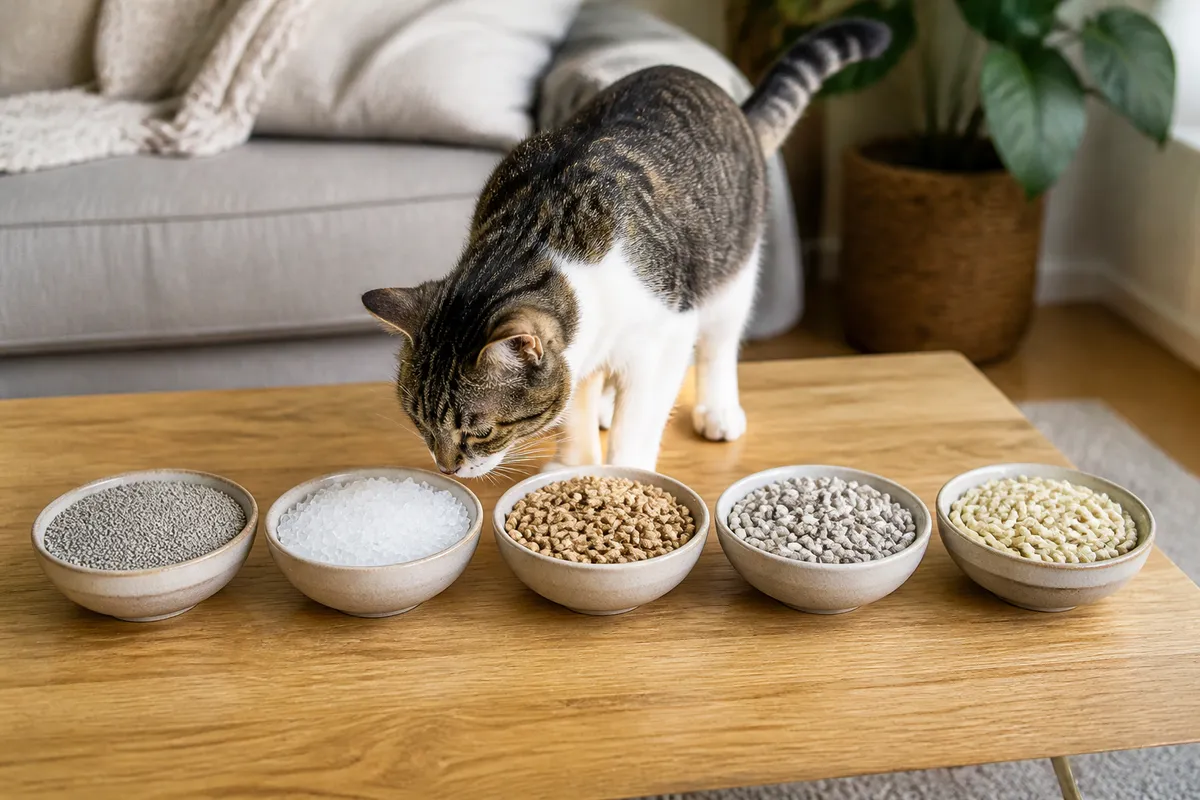
Cat litter sand: why texture matters so much
When people search for cat sand or cat litter sand, they're usually looking for exactly what most cats want: a fine, sandy feel that's easy to dig. Cats Protection says many cats prefer a fine, sand-like texture that feels soft beneath their paws, and that many clumping litters have it.
Texture problems show up in behavior. Cats Protection lists the warning signs: hesitating before getting in, not digging or covering, spending very little time in the box, shaking the paws a lot afterwards, or perching on the edge so as few paws as possible touch the litter. Some cats keep peeing in the box but poop elsewhere.
Before you blame the litter, though, rule out health problems. Any sudden change in litter box habits deserves a call to your vet, because peeing outside the box is often medical. Our guide on a cat peeing outside the litter box covers that in detail.
Scented litter, dust and deodorizers
Scented litter is made for human noses. Cats Protection points out that cats have a highly sensitive sense of smell, so a fragrance that seems mild to us can be overwhelming to them and may even put them off the box. iCatCare agrees that cats can find scented litters and deodorants overpowering, which can lead to house soiling.
Dust is the other thing to check. Cats Protection notes that clay-based products are among the dustier ones, and that low-dust litter matters especially for cats with respiratory conditions such as feline asthma. If your cat has a health condition, ask your vet which litter suits it.
The best odor control isn't perfume, it's cleaning. Scoop often and the box simply doesn't get the chance to smell. If odor is your main concern, see our guide to the best cat litter for odor.
Best litter for kittens, seniors and sensitive cats
Life stage changes the answer. For kittens, Cats Protection recommends avoiding clumping litter, because kittens explore with their mouths and swallowing clumping litter could potentially cause a gastrointestinal blockage. Choose a soft, non-clumping litter until your kitten is older, ideally the one it already knows.
Older cats may find rough litters, including some gravel and wood pellet products, uncomfortable, so a softer, finer litter is often easier. Pair it with a low-sided box for cats with arthritis.
Some silica litters change color to signal changes in urine. Cats Protection notes these shouldn't replace veterinary advice: if you see a change or have health concerns, contact your vet.
- Kittens: soft, non-clumping, familiar litter
- Adults: most prefer soft, unscented clumping litter
- Seniors and cats with arthritis: soft, fine litter in a low-entry box
- Cats with asthma or other respiratory problems: low-dust litter, ask your vet
- After surgery or with medical needs: follow your vet's instructions
How much litter to use and how often to change it
Depth matters. iCatCare says research shows cats prefer a depth of approximately 3 cm (a little over an inch), and Cats Protection gives the same figure, noting that individual cats may have their own preferences. If your cat digs to the bottom and seems frustrated, try a little more.
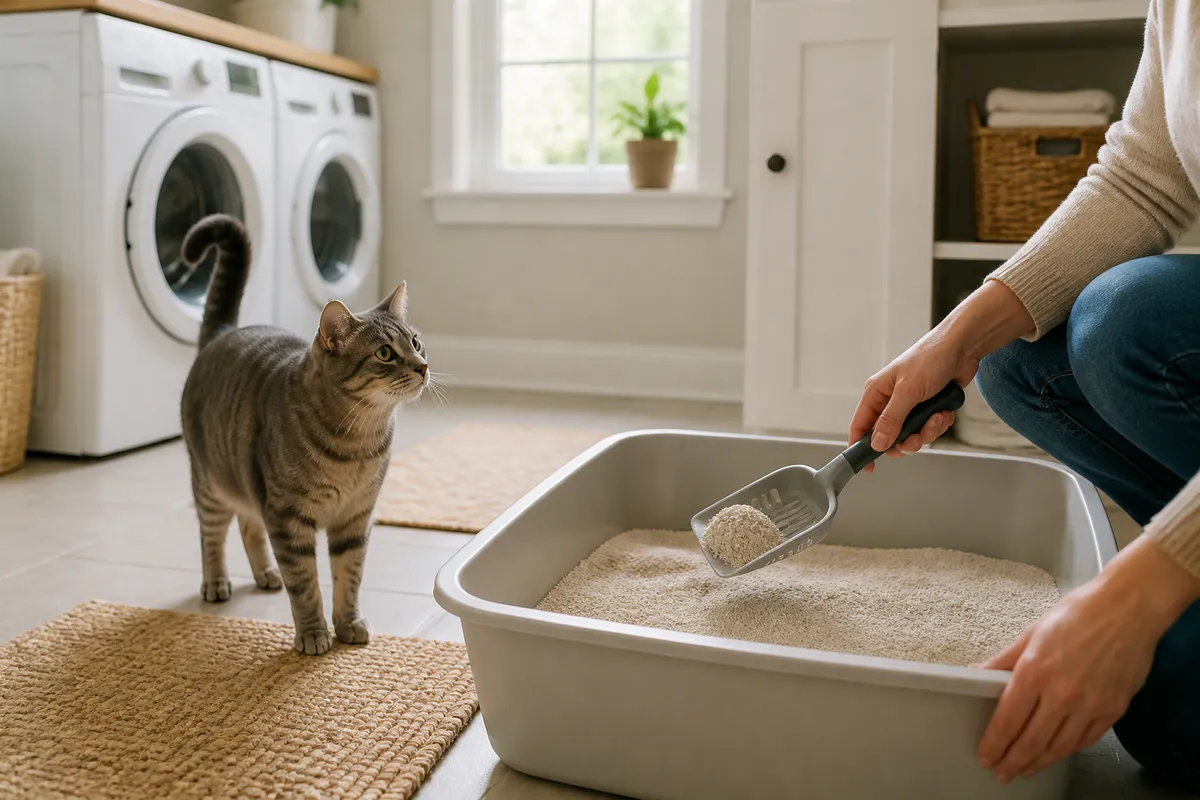
Scooping is non-negotiable. The AAFP and ISFM recommend removing waste at least once a day and adding litter as needed, while iCatCare and Cats Protection suggest twice a day. For a full change, iCatCare advises completely emptying and washing the box every 2 to 4 weeks with clumping litter and weekly with non-clumping litter.
Wash with hot water and a mild, unscented detergent. The AAFP and ISFM say to avoid strong chemicals and ammonia-based products, and iCatCare warns that some disinfectants that turn cloudy in water are toxic to cats. Rinse and dry the box thoroughly before refilling.
Common cat litter mistakes
Most litter box complaints trace back to a handful of habits. They're easy to fix once you spot them.
- Using box liners: the AAFP and ISFM note many cats dislike them, and iCatCare adds that claws catching in plastic can be unpleasant
- Sprinkling litter deodorizers or powders on top instead of scooping more often
- Filling the box too shallow to dig, or so deep that the cat sinks in
- Washing the box with strongly scented or ammonia-based cleaners
- Choosing a dusty litter for a cat with asthma or other breathing problems
- Switching litter, box and location all at once
- Leaving waste in the box: cats are less likely to use a box that's already soiled
How to switch cat litter without drama
If your cat is happily using its current litter, there may be no reason to change. If you do switch, go slowly. Cats Protection suggests mixing a small amount of the new litter into the old and increasing the proportion over at least a week.
Even better, run a taste test. The AAFP and ISFM suggest offering multiple boxes with different litters and depths to see which your cat prefers. Put the new litter in one box and keep the familiar litter in another, and your cat will tell you the winner.
Change one thing at a time. A new litter, a new box and a new location all at once makes it impossible to know what your cat is objecting to.
Frequently asked questions
What is the best cat litter?
There's no single best brand, but most cats prefer a soft, fine, unscented clumping litter. Start with what your cat already knows, and if you want to try something new, offer it in a second box and let your cat decide.
Is kitty litter the same as cat litter?
Yes. Kitty litter is simply another name for cat litter, the material that goes in the litter box.
Can kittens use clumping litter?
Cats Protection advises avoiding clumping litter for kittens, because they explore with their mouths and swallowing clumping litter could cause a blockage. A soft non-clumping litter is safer until they're older.
How deep should cat litter be?
About 3 cm, a little over an inch, according to iCatCare and Cats Protection. Some cats like it a bit deeper, so adjust if your cat seems unhappy.
Is scented cat litter bad for cats?
It isn't automatically harmful, but many cats dislike strong scents, and fragrances can discourage them from using the box. Unscented litter plus frequent scooping is the safer choice.
How often should I change cat litter completely?
Scoop at least once, ideally twice a day. iCatCare recommends emptying and washing the box every 2 to 4 weeks with clumping litter and weekly with non-clumping litter.
Sources
- How to choose the best cat litter for your cat, Cats Protection
- Choosing a litter tray for your cat, International Cat Care
- Feline House-Soiling: Useful Information for Cat Owners, AAFP and ISFM
Last reviewed: November 2026