Flea Treatment for Cats: How to Spot Fleas and Choose a Safe Treatment
Health 7 min read reviewed November 2026, 4 sources
Effective flea treatment for cats has two parts: a cat-specific product your vet recommends, and cleaning your home, because most of the flea life cycle happens in carpets and bedding, not on the cat. Never use a dog flea product on a cat, since some contain permethrin, which can poison cats. Below you will learn how to confirm fleas, how the main treatment types work, and how to break the cycle for good.
Fleas on cats: how to tell if your cat has them
Fleas are tiny, fast, dark brown insects. You may never see one, because cats are excellent groomers and swallow many of them. Instead, look for the signs they leave behind.
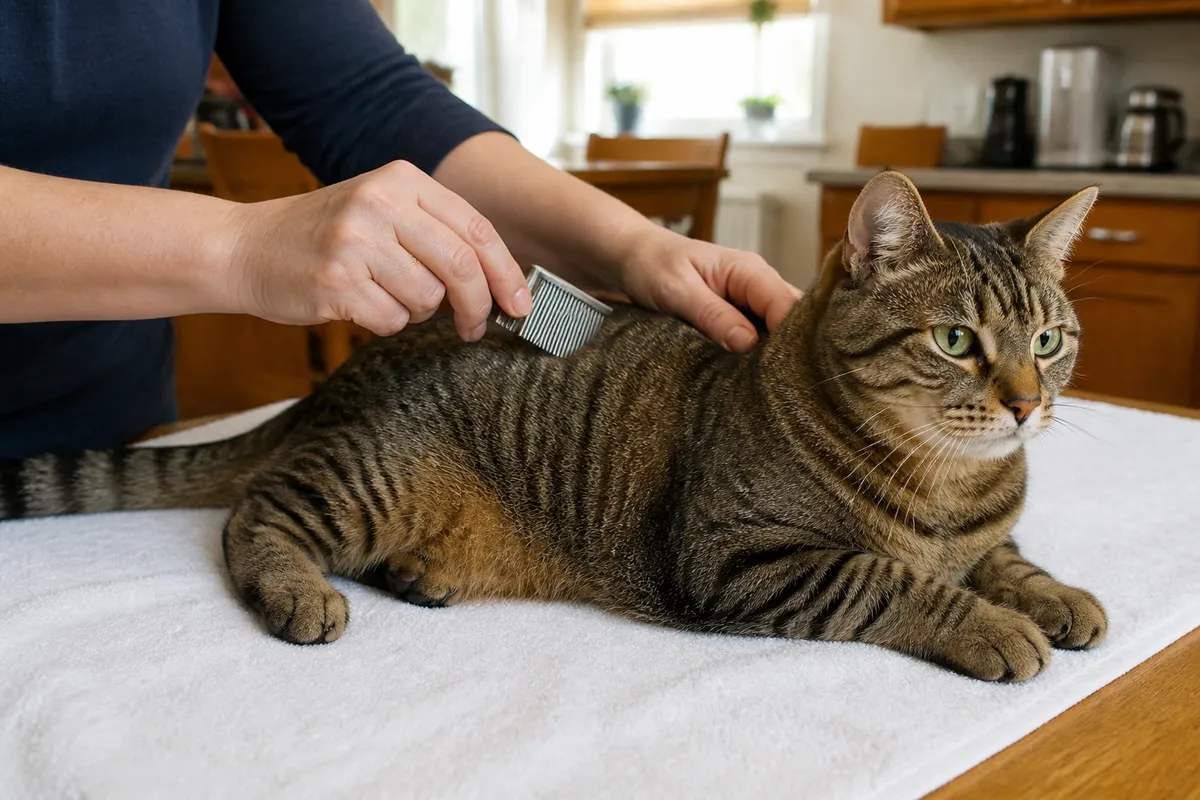
The classic clue is flea dirt: black specks in the coat that are actually flea droppings made of digested blood. Comb your cat over a white paper towel with a fine-toothed flea comb, then dampen the specks. If they smear reddish brown, you are looking at flea dirt.
According to the Cornell Feline Health Center, bites are most common on the back of the neck and at the base of the tail. Some cats show only mild itching, while others react much more strongly.
- Scratching, nibbling or overgrooming, especially at the neck, back and tail base
- Black specks (flea dirt) in the coat or on bedding
- Small red, crusty bumps along the back (common with flea allergy)
- Thinning fur or bald patches from overgrooming
- Rice-like segments near the tail, a sign of tapeworms spread by fleas
- Itchy bites on the people in the house
Why fleas are more than an itch
Fleas are not just annoying. Cornell lists several problems they can cause: flea allergy dermatitis, a strong itchy skin reaction in sensitive cats; anemia from blood loss in heavy infestations, which is especially dangerous for kittens; and tapeworms, which cats swallow when they groom infected fleas.
Fleas can also carry Bartonella henselae, the bacterium behind cat scratch disease in people. That is one more reason to treat quickly and keep prevention going.
Indoor cats are not immune. Fleas hitch a ride indoors on dogs and other pets, and Cornell warns that one or two fleas brought inside can quickly become thousands. VCA notes that homes with carpets and central heating let fleas breed all year round.
Understand the flea life cycle before you treat
This is the reason so many flea treatments seem to fail. Adult fleas live on your cat, but their eggs fall off into carpets, cracks, furniture and pet beds. The eggs hatch into larvae that hide deep in fibers, then spin cocoons. Pupae can wait weeks to months before hatching, which is why new fleas keep appearing after you treat the cat.
Cornell explains that one female can lay at least 20 eggs a day under ideal conditions. VCA says the whole cycle can take as little as about two weeks in ideal conditions or up to a year in poor ones, and recommends continuing flea control on all pets for three to six months after an infestation.
| Stage | Where it lives | What helps |
|---|---|---|
| Egg | Falls off the cat into bedding, carpets, furniture | Vacuuming, hot washing of bedding, products with an insect growth regulator |
| Larva | Deep in carpet fibers, floor cracks, under furniture | Thorough vacuuming, home treatment your vet or a pro recommends |
| Pupa (cocoon) | Protected in carpets and cracks for weeks to months | Repeated vacuuming (vibration triggers hatching) and patience |
| Adult | On the cat, feeding on blood | Cat-specific treatment chosen with your vet, flea comb |
Types of flea treatment for cats compared
Cat flea products come in several forms. VCA notes that oral and topical products are often preferred because cats hate sprays. Many are given monthly or every three months, some kill adult fleas, some stop eggs and larvae from developing, and some do both. Several also cover ticks, ear mites, heartworm or intestinal worms.
Flea shampoos and powders kill fleas present at the time but have little lasting effect. Collars can be convenient, but some cause skin reactions. Whatever the form, the product must be labeled for cats and for your cat's age and weight.
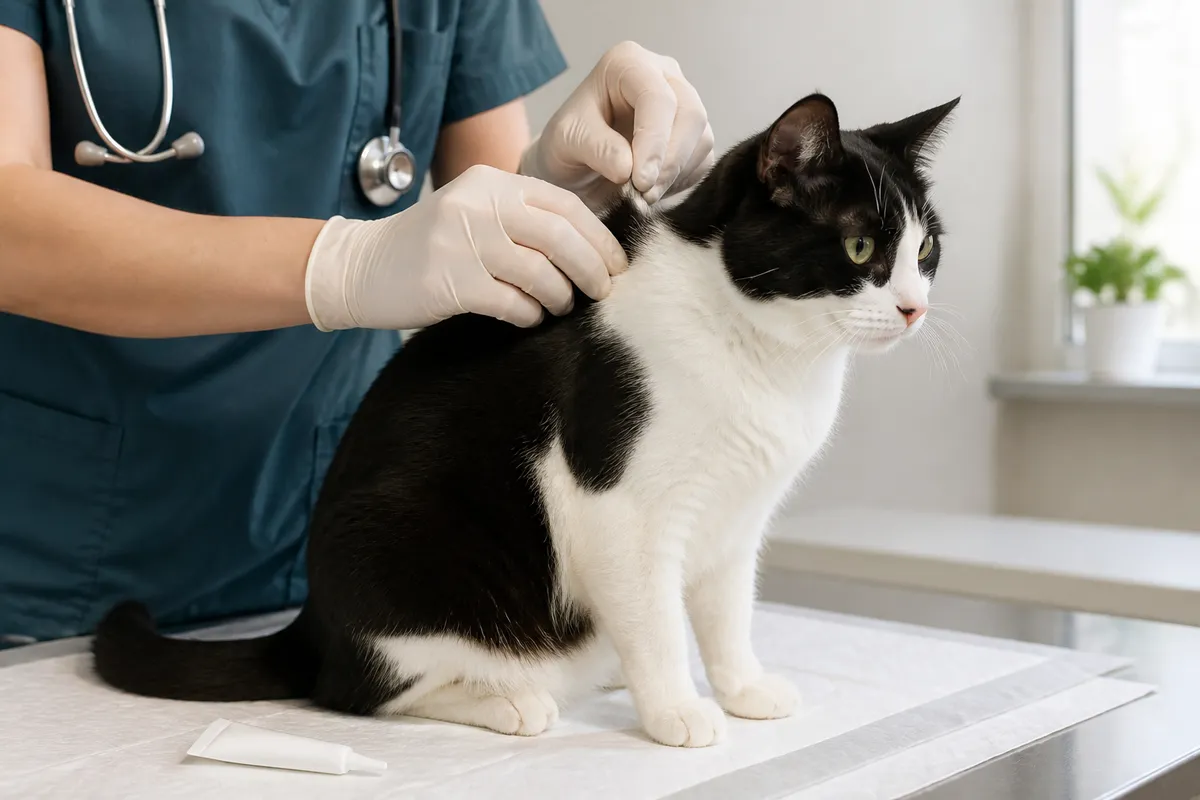
- Spot-on (topical) liquids: applied to the skin at the back of the neck
- Oral tablets or chews: given by mouth, they work through the bloodstream
- Flea collars: release active ingredients over weeks or months
- Flea shampoos and sprays: quick knockdown, short-lived effect
- Flea comb: safe for any age, useful for checking and removing fleas, not a cure on its own
Best flea treatment for cats? What the brand names mean
There is no single best flea treatment for cats. The right product depends on your cat's age, weight, health, lifestyle and which other parasites you need to cover. That is a decision for your vet, who also sets the dose.
You will hear many brand names. According to the FDA, Revolution Plus, Bravecto and Bravecto Plus spot-ons and the oral Credelio tablet for cats belong to the isoxazoline class. The FDA considers this class safe and effective, but it has been linked to neurologic side effects such as muscle tremors, wobbliness and seizures in some animals, so your vet will review your cat's history first.
Names like Frontline and Frontline Plus, Advantage and Advantage Multi, Revolution, Cheristin and Capstar use other active ingredients. Some are spot-ons, some are tablets, some kill only adult fleas for a short time, and some also protect against worms or ear mites. Ask your vet which fits your cat instead of choosing by advertising.
Never use dog flea products on cats
This is the most important safety rule. Many dog flea products contain permethrin, a pyrethroid that cats cannot break down well. The AAFP and ISFM warn that dog products typically contain 45 to 60 percent permethrin, a level that can cause drooling, restlessness, muscle tremors, seizures and death in cats.
Cats can also be poisoned indirectly by grooming or snuggling with a dog that was just treated. Keep cats away from treated dogs as the label directs, and never split a dog dose for a cat. If you think your cat was exposed, call your vet, an emergency clinic or the ASPCA Animal Poison Control Center at (888) 426-4435 (a consultation fee may apply) right away, even before symptoms appear.
What you can safely do at home right now
You do not have to wait for the vet appointment to start making progress, as long as you stick to steps that cannot hurt your cat. The goal is to remove adult fleas, stop new ones from hatching and keep your cat comfortable until you have the right product.
Comb your cat daily with a fine-toothed flea comb, working from the head toward the tail and paying extra attention to the neck and tail base. Dip the comb into a cup of warm, soapy water after each pass so the fleas drown instead of jumping back. Count what you find: the number helps your vet judge how heavy the infestation is.
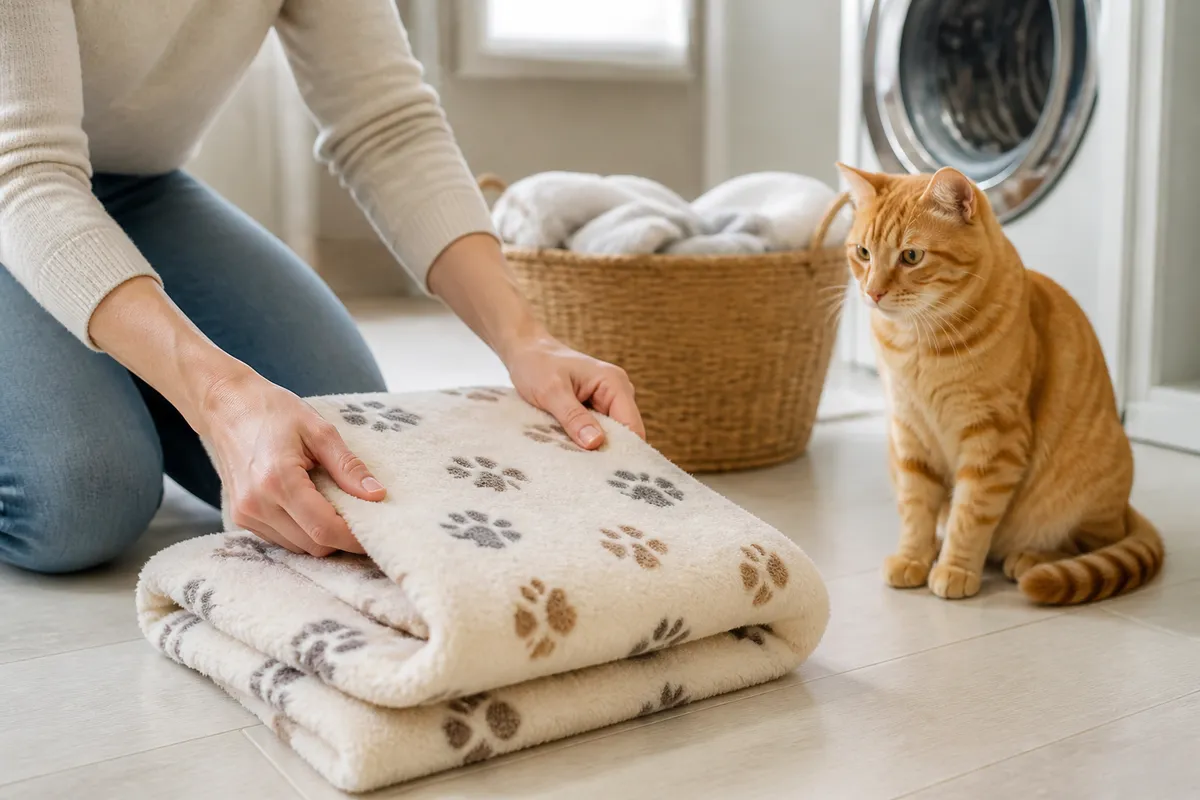
At the same time, start the household cleanup described below, and wash your cat's favorite blankets. Skip anything that is not clearly made for cats. Essential oils, garlic, vinegar sprays, human lice shampoo and dog products can all irritate or poison cats, and some are a lot more dangerous than the fleas.
- Comb daily and drown the fleas in soapy water
- Write down how many fleas or specks of flea dirt you find
- Wash bedding and throws, vacuum floors and furniture
- Check every other pet in the household
- Book a vet visit, and bring the names of any products you already used
Kitten flea treatment: extra caution
Fleas are especially dangerous for kittens, because their small bodies cannot afford the blood loss. Every flea product has a minimum age and weight on its label, and many are not approved for very young kittens.
If you find fleas on a kitten, call your vet before using anything. In the meantime, you can comb the kitten with a flea comb, drop the fleas into soapy water, and keep the kitten warm and fed. Do not use adult cat products, essential oils or home remedies. Pale gums, weakness or a cold, lethargic kitten is an emergency.
How to treat your home and prevent fleas
Treating only the cat lets the next generation hatch from the carpet. Cornell and VCA both stress treating the environment at the same time. Treat every dog and cat in the household, not only the one that is scratching.
Prevention is easier than eradication. VCA recommends year-round, vet-recommended flea prevention for cats that go outdoors, and indoor cats that share a home with dogs benefit too.
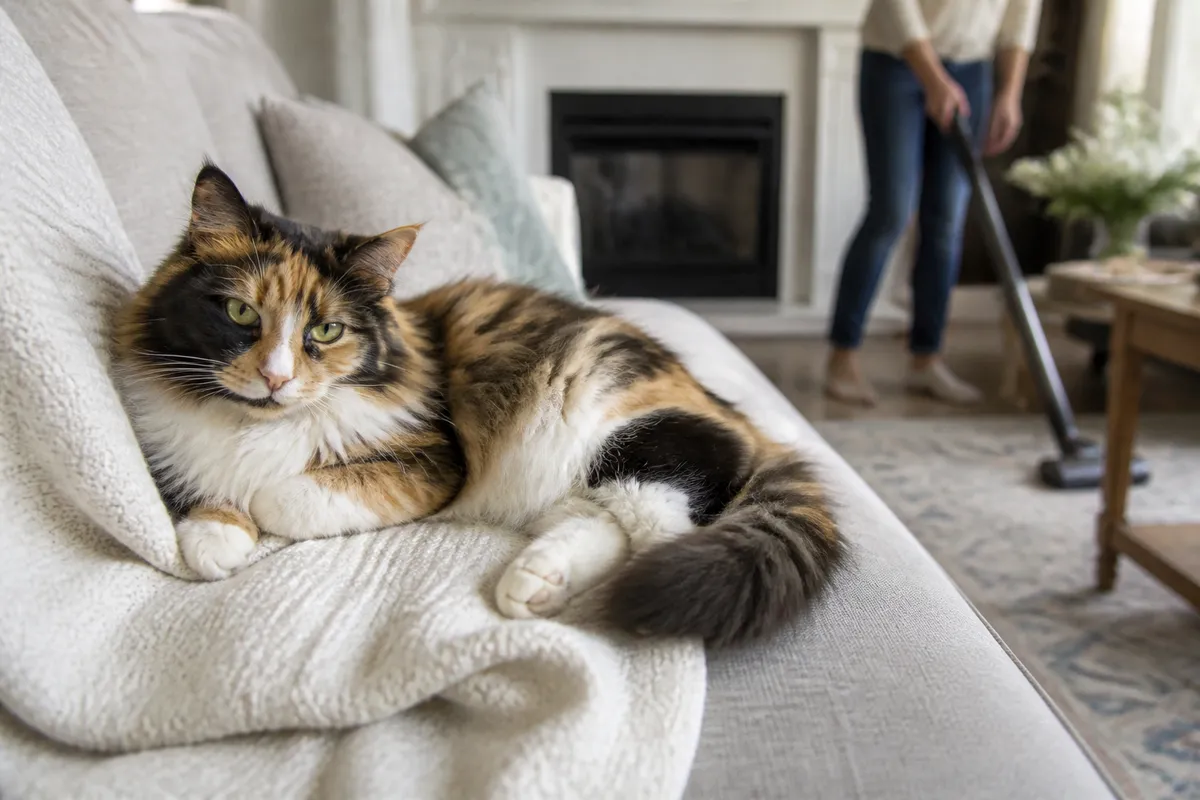
- Vacuum carpets, rugs, upholstery and floor cracks daily for a few weeks, then discard the bag or empty the canister outside
- Wash pet bedding, throws and washable covers in hot water
- Ask your vet or a pest professional about cat-safe home sprays with an insect growth regulator; keep cats out until dry
- Continue treatment on all pets for three to six months after an infestation
- Keep a flea comb handy and check your cat weekly
Frequently asked questions
How do I know if my indoor cat has fleas?
Comb your cat over a white paper towel with a flea comb and look for black specks. Wet them: if they turn reddish brown, it is flea dirt. Scratching at the neck and tail base and itchy bites on people are other clues.
Can I use a dog flea treatment on my cat?
No. Many dog products contain permethrin at concentrations that can cause tremors, seizures and death in cats. Use only products labeled for cats, and call your vet or the ASPCA Animal Poison Control Center right away if exposure happened.
Do flea shampoos for cats work?
A cat-safe flea shampoo kills fleas present at bath time, but it has little lasting effect. Without ongoing treatment and home cleaning, new fleas hatch within days. Many cats also find baths very stressful.
How long does it take to get rid of fleas on cats?
Usually weeks to months, because eggs and cocoons keep hatching in the home. VCA recommends continuing flea control on all pets for three to six months after an infestation while you vacuum and wash bedding.
Is Revolution Plus or Bravecto better for cats?
There is no general winner. Both are prescription products, and the FDA lists them in the isoxazoline class, which has been linked to neurologic side effects in some animals. Your vet picks the product and dose based on your cat's age, weight, health and parasite risks.
Can fleas make people sick?
Flea bites itch, and fleas can carry Bartonella henselae, the cause of cat scratch disease. Treating your cat, cleaning the home and washing hands after handling a flea-infested pet lower the risk.
Sources
- Fleas, Cornell Feline Health Center
- Flea Control in Cats, VCA Animal Hospitals
- Fact Sheet for Pet Owners and Veterinarians about Potential Adverse Events Associated with Isoxazoline Flea and Tick Products, U.S. Food and Drug Administration
- Permethrin Poisoning and Cats, American Association of Feline Practitioners
Last reviewed: November 2026
This guide does not replace an exam by a veterinarian. If you are unsure, call your vet.