Catfood Guide: How to Choose a Good Cat Food Without Falling for Marketing
Food & Nutrition 7 min read reviewed November 2026, 5 sources
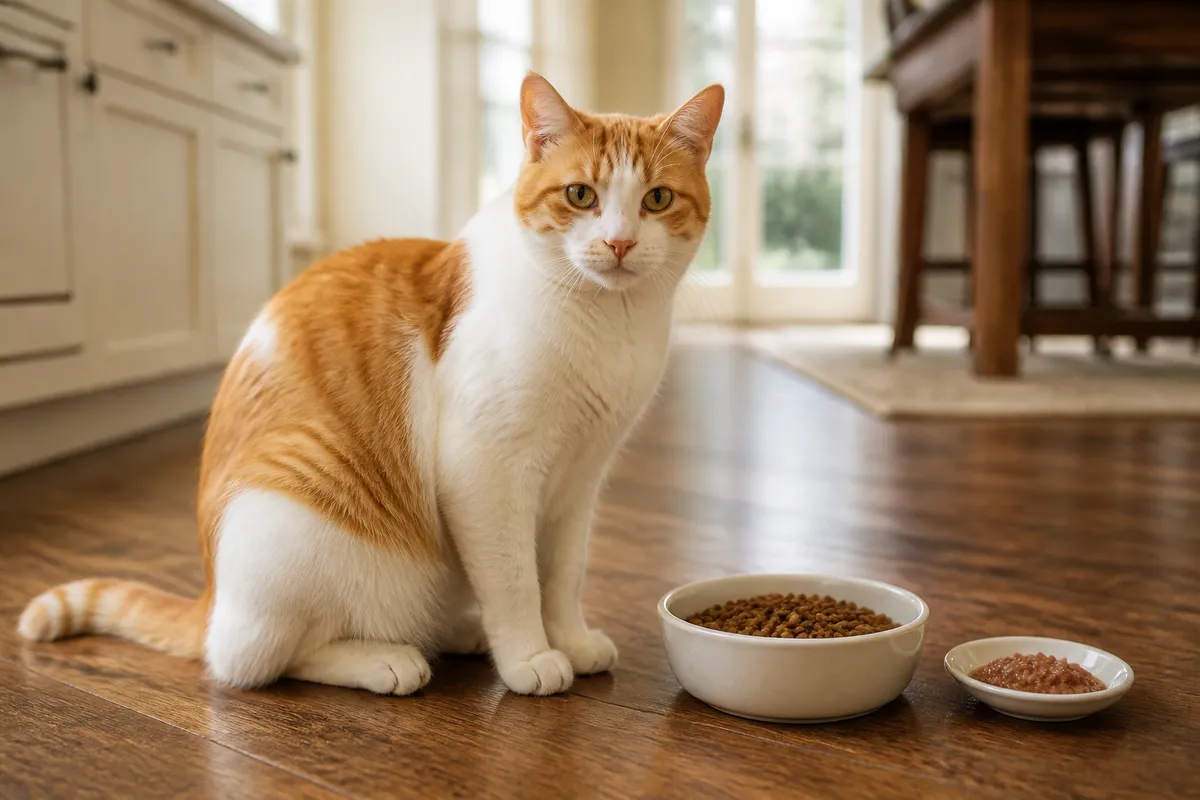
Good catfood is any food labeled "complete and balanced" for your cat's life stage under AAFCO standards, made by a company that can answer basic questions about its nutritionists and quality control. Price, buzzwords and pretty packaging tell you far less. Here's how to read a label like a vet would and pick a food your cat will actually eat.
What cats need from their food
Cats are obligate carnivores. The Cornell Feline Health Center explains that they rely on nutrients found only in animal products and evolved eating prey that is high in protein, moderate in fat and low in carbohydrates. Their diet still needs those general proportions today.
On top of that, cats need more than a dozen other nutrients, including vitamins, minerals, fatty acids and amino acids. More isn't automatically better. Cornell warns that supplements are usually unnecessary with a complete and balanced diet, can even be harmful, and should never be given without your veterinarian's approval.
Needs also shift over a lifetime. Cornell lists kittenhood, adulthood, pregnancy and lactation as stages with different requirements, which is why the label has to say which stage a food is for. If you live with several cats of different ages, Cornell notes that a food formulated for all life stages can simplify things, though our kitten food guide covers what growing cats need in detail.
And don't forget water. Cats should have access to clean, fresh water at all times, whatever food they eat.
- Animal-based protein as the foundation
- Moderate fat, few carbohydrates
- Essential vitamins, minerals, fatty acids and amino acids in the right ratios
- Fresh water available around the clock
- No extra supplements unless your vet recommends them
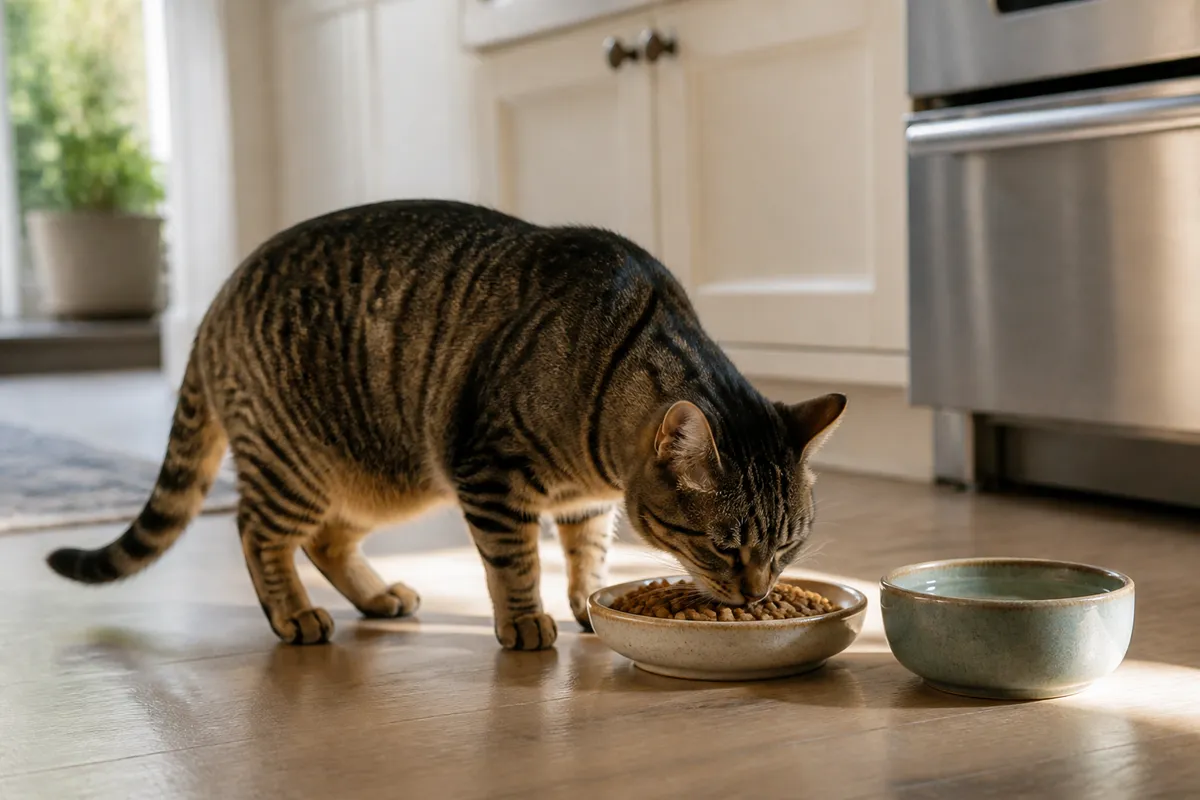
Types of cat food: dry biscuits, semi-moist and canned
Commercial cat foods come in three basic forms. Cornell describes how they differ in water content, protein level, calorie density, palatability and digestibility. Dry food, which you'll also hear called cat biscuits or kibble, is the most budget-friendly and can be left out without drying out. Canned food is the most expensive but a good dietary source of water and very palatable.
Which is better for your cat depends on health, preferences and budget, and many cats do well on a mix. That decision has its own detailed guide on wet vs. dry cat food. For choosing a good product, the format matters less than what's on the label.
| Type | Water content | Upsides | Watch out for |
|---|---|---|---|
| Dry (kibble, biscuits) | 6 to 10 percent | Relatively inexpensive, convenient, stays fresh in the bowl | Store airtight, cool and dry; check the expiration date |
| Semi-moist | About 35 percent | More appealing to some cats than dry, mid-range cost | Dries out and can turn rancid once opened |
| Canned (wet) | At least 75 percent | Highly palatable, a good source of water, many varieties for picky eaters | Most expensive; refrigerate opened portions |
How to read a cat food label
The Association of American Feed Control Officials (AAFCO) writes the model rules that most states have adopted for pet food labels, and the FDA's labeling requirements apply to all products sold across state lines. That means every can or bag has to show the same core information, which makes comparing foods much easier.
According to AAFCO, the ingredient list must show all ingredients in descending order by weight. Cornell suggests looking for foods with meat, meat byproducts or seafood among the first few ingredients, as a sign that the food probably contains enough animal-source ingredients.
- Product name and species (a picture of a cat alone isn't enough)
- Net quantity in the container
- Guaranteed analysis: minimum or maximum amounts of certain nutrients
- Ingredient list in descending order by weight
- Nutritional adequacy statement (the AAFCO statement)
- Feeding directions for complete and balanced foods
- Name and address of the manufacturer or distributor
The AAFCO statement: the most important line on the bag
AAFCO calls the nutritional adequacy statement perhaps the most important part of the label. It's usually in small print on the back or side. "Complete" means the food contains all required nutrients, and "balanced" means they're present in the correct ratios.
The statement also names a life stage: gestation/lactation, growth, maintenance (adult) or all life stages. The World Small Animal Veterinary Association (WSAVA) notes that foods for all life stages are formulated to meet the needs of reproduction and growth, so they're suitable for kittens but may be richer than a sedentary adult needs. There's no separate AAFCO life stage for seniors, so a senior food still has to meet adult maintenance or all life stages requirements.
There are two ways a company can back up the claim. The food can be formulated to meet the AAFCO Cat Food Nutrient Profiles, or it can pass an AAFCO feeding trial with real cats. Both are acceptable, and the statement tells you which was used.
If the label says "for intermittent or supplemental feeding only", the food is not complete and balanced. AAFCO gives the example of a can of tuna sold for cats that lacks the necessary vitamins and minerals. WSAVA advises that such products should make up only a small portion of the diet, 10 percent or less, unless your vet prescribes otherwise.
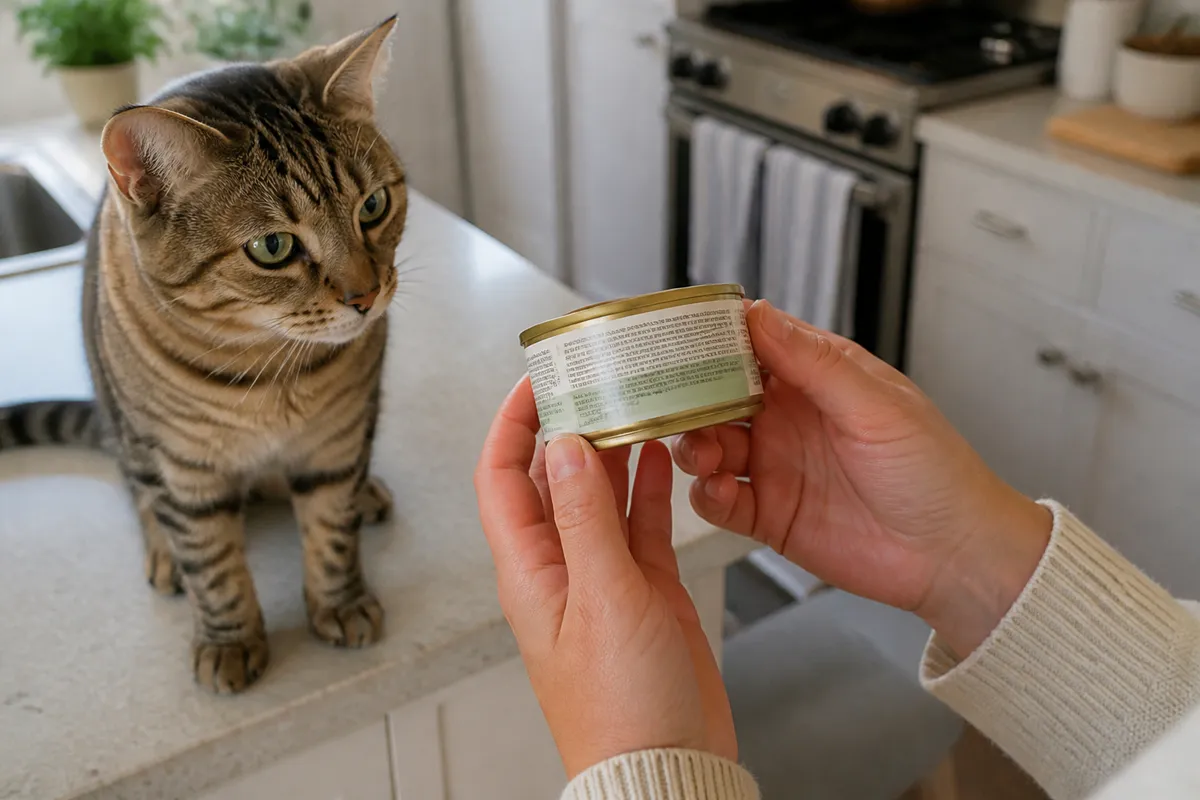
What product names really mean
The words in a product's name follow strict rules, and they say a lot about how much of the named ingredient is inside. Once you know them, "Chicken Cat Food" and "Cat Food with Chicken" stop looking like the same thing.
| Name pattern | Example | Minimum amount of the named ingredient |
|---|---|---|
| Named ingredient alone (95% rule) | Chicken and Rice Cat Food | At least 95% of the product, not counting water for processing; at least 70% counting water |
| Dinner, entree, platter (25% rule) | Salmon Dinner | At least 25% not counting added water, and at least 10% of the total product |
| "With" (3% rule) | Cat Food with Tuna | At least 3% of each named ingredient |
| "Flavor" | Beef Flavor Cat Food | Only enough of an ingredient to provide the flavor |
Marketing words and trends to look at twice
WSAVA's guidelines point out that labels may include marketing images and phrases designed to sell, not inform, and that unregulated terms such as "holistic" or "premium" are of little practical value for judging nutrition. A beautiful photo of a salmon fillet on the bag doesn't change what the AAFCO statement says.
Raw diets deserve extra caution right now. AAHA, the American Animal Hospital Association, reported that cats became infected with H5N1 bird flu and died after eating commercial raw pet foods in several states. In response, the FDA now requires covered cat and dog food manufacturers that use uncooked or unpasteurized animal ingredients to consider H5N1 in their food safety plans. If you're thinking about raw food, talk it through with your vet first.
Homemade food is another area where good intentions can backfire. Cornell notes that a home recipe may not contain the right quantities and proportions of nutrients, and recommends commercial complete and balanced foods unless your veterinarian recommends a home-formulated recipe for medical reasons.
Questions to ask a cat food company
WSAVA's Global Nutrition Committee suggests a short checklist for judging the company behind the food. You can usually find answers on the brand's website or by calling the phone number on the bag. If a manufacturer cannot or will not answer, WSAVA advises veterinarians and owners to be cautious about feeding that brand.
WSAVA also says a pet food company should be able to provide an average or typical analysis for all essential nutrients, not just the few printed on the bag. Calorie information is required on US labels, which makes comparing portion sizes between foods much easier.
- Do you employ a qualified nutritionist (a PhD in animal nutrition or board certification in veterinary nutrition)? What is their name?
- Who formulates your diets?
- What quality control do you use for ingredients and finished products?
- What research have you done, and is it published in peer-reviewed journals?
- How many calories are in a can or cup?
- Do you make the food yourselves ("Made by") or use another manufacturer ("Made for" or "Distributed by")?
Switching and storing cat food
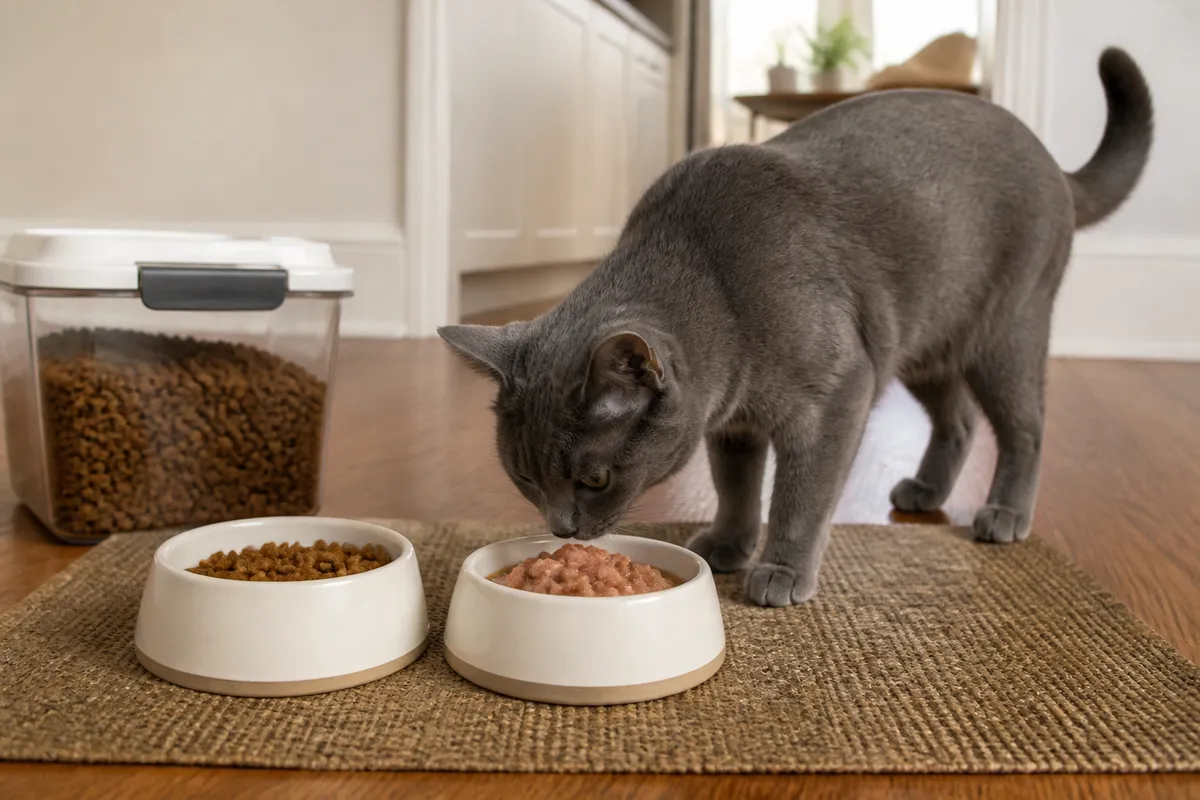
Changing foods too quickly can upset your cat's stomach. International Cat Care recommends switching gradually and letting the cat set the pace: some accept a new diet in 5 to 7 days, others need 2 to 8 weeks. Start by offering both foods at the same time in separate bowls, about 75 percent old food and 25 percent new, because many cats don't like two foods mixed together. Then slowly shift the ratio.
If your cat refuses the new food, slow down rather than holding out. A cat that stops eating altogether needs attention, and our guide on a cat that won't eat explains when to call the vet.
Storage matters too. Cornell advises keeping dry food in a cool, dry place, ideally in an airtight container, and not feeding it past the expiration date, because long storage reduces vitamin potency and makes fats more likely to go rancid. Refrigerate opened canned food.
- Days 1 onward: old and new food in separate bowls, about 3 parts old to 1 part new
- Increase the new food only as fast as your cat accepts it
- Reluctant cat: offer a little new food as a reward after play
- Dry food: airtight container, cool and dry place, check the date
- Canned food: refrigerate leftovers
Frequently asked questions
What is the best catfood?
There's no single best brand. Look for a food labeled complete and balanced for your cat's life stage, from a company that employs a qualified nutritionist and can answer questions about quality control. Then choose the format and flavor your cat actually eats and does well on.
Are cat biscuits a complete diet?
They can be. Cat biscuits is another name for dry food or kibble, and many dry foods are complete and balanced. Check the AAFCO statement on the bag, because some biscuit-style products are treats meant for intermittent feeding only.
What does "complete and balanced" mean on cat food?
It means the food contains all the nutrients a cat needs (complete) in the correct ratios (balanced) for the life stage named on the label. The company proves this either by formulating to AAFCO nutrient profiles or by passing an AAFCO feeding trial.
Is expensive cat food better?
Not automatically. A higher price doesn't guarantee better nutrition. The AAFCO statement and the company's answers to WSAVA's questions about nutritionists and quality control tell you more than the price tag.
Can I feed my adult cat kitten food?
Foods for growth or all life stages are formulated for kittens and reproduction, so they're usually richer than an adult needs. An adult maintenance food is generally the better fit for a healthy adult, but ask your vet if your cat has special needs.
How long does opened cat food last?
Cornell recommends refrigerating any unused portion of opened canned food. Keep dry food in an airtight container in a cool, dry place and don't use it past its expiration date.
Sources
- Feeding Your Cat, Cornell Feline Health Center
- How to Understand a Dog or Cat Food Label, Association of American Feed Control Officials (AAFCO)
- WSAVA Global Nutrition Committee: Guidelines on Selecting Pet Foods, World Small Animal Veterinary Association
- How to change your cat's food to a new diet, International Cat Care
- FDA requires cat and dog food manufacturers to include H5N1 in food safety plans, AAHA Trends Magazine
Last reviewed: November 2026